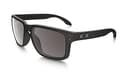
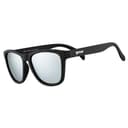
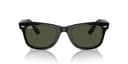
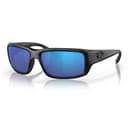
How to choose any pair of sunglasses
Work through four questions in order, because the first one is the only one that isn’t optional.
1. Does it block 100% of UV?
This is the whole point of sunglasses as eye protection, and it is the one spec you should never compromise. Look for UV400 or “100% UVA/UVB” on the label. Crucially, a dark lens is not the same as a protective one — a tinted lens with no UV filter makes your pupils dilate and lets more UV in, which is worse than no sunglasses at all. Every pair above clears this bar. We cover the science in our UV protection guide.
2. Do you need polarization?
Polarized lenses kill reflected glare off flat surfaces — water, wet roads, car hoods. If you fish, boat, drive a lot, or spend time near water or snow, polarization is worth paying for. If you mostly want everyday sun cover, or you read LCD screens (some dashboards and phones dim through a polarized lens), you may not need it. Our polarized vs non-polarized comparison walks through the trade-off.
3. What tint suits your light?
Gray keeps colors true and is the safe all-rounder. Copper, amber and rose tints lift contrast — great for golf, driving and overcast days. Darker isn’t always better; the tint’s job is to match the light you’re in. Our lens colors guide has the full tint-by-condition table.
4. Does the frame fit your face and your life?
A frame should contrast your face shape — angular frames on a round face, softer frames on an angular one — and match how you’ll use it. A grippy sport wrap is wasted on a coffee-shop wearer, and a delicate acetate frame won’t survive a trail run. Our face-shape guide covers the fit rules, our size guide covers the numbers printed inside the temple arm, and if you wear prescription glasses, you want a fit-over pair.
5. How much should you actually spend?
Three budgets are defensible. Around $30 buys a genuinely polarized, genuinely UV400 pair — the right answer for most people, and especially anyone who loses sunglasses; our budget roundup covers the field. Around $150–200 buys a heritage frame you will still want in a decade. Above $250 only makes sense when the lens is doing specialist work you can name. Our honest breakdown of what expensive sunglasses buy works through where the money genuinely goes — and if you are buying for someone else, our sunglasses gift guide covers the fit gamble.
Shopping by who is wearing them? We have dedicated roundups for men and women, both in our everyday sunglasses hub.