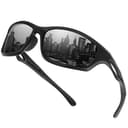
How to choose sunglasses for fishing
On the water, three things decide what you actually see — and a fourth decides whether the pair survives the trip. Here is the order to think about them.
1. Polarization is non-negotiable
Everything else is secondary to this. A polarized lens blocks the horizontally-polarized glare that reflects off a flat water surface, which is what turns the water from an opaque mirror into something you can see into. That is the difference between spotting a cruising fish or a submerged log and never knowing it was there. It also cuts the harsh, all-day glare that fatigues your eyes on bright water. If you buy nothing else on this list, buy polarized — our polarized sunglasses guide explains the physics, and it is the same reason polarization helps so much for driving, where the glare comes off wet roads and car hoods.
2. Glass versus polycarbonate
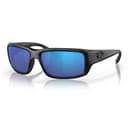
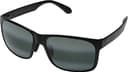
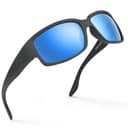
Once you have polarization, lens material is the next real fork. Optical glass — Costa’s 580G is the standard-bearer — delivers the sharpest edge-to-edge clarity and shrugs off scratches better than any plastic, which is why serious anglers pay for it. The costs are real: glass is heavier on your nose over a long day, and it is the priciest way to see fish. Polycarbonate (and its cousins) is lighter, far cheaper and more impact-resistant, so a value pick like the KastKing or a budget Duduma gets you genuine polarized glare control for a fraction of the price. The clarity is not glass-grade, but for a backup pair or a first fishing pair, the glare cutting is genuinely there. If your shortlist is down to the two premium brands here, our Costa vs Maui Jim comparison weighs Costa’s 580G glass against Maui Jim’s lighter, color-boosting lens directly.
3. Tint for the water you fish
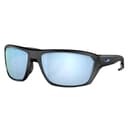
Warm tints do the heavy lifting on the water. Copper, amber and brown lenses raise contrast against the blue-green background of most lakes and inshore water, making fish, structure and bottom changes easier to pick out; they are the default for sight-fishing. On bright, open, offshore water a gray or gray-green base tames overall brightness while a mirror coating knocks back the top-end glare. Tuned tints like Oakley’s Prizm Deep Water combine polarization with contrast enhancement for the same goal. Our lens colors guide has the full rundown if you want to match a tint to your water.
4. Coverage, fit and keeping them out of the drink
A fishing frame should block glare sneaking in from the sides and stay on when you lean over the gunwale. Look for a wrap shape or removable side shields, a grippy nose and temple rubber that holds when your hands and face are wet, and a retainer or leash so a dropped pair does not go straight to the bottom — the Oakley Split Shot even ships with one. A frame that floats on its own is the other route, and our floating sunglasses roundup covers which ones state a UV rating alongside the buoyancy claim. If you are building out a kit for time on the water and the road, our sport sunglasses hub maps the pairs to each use.
5. Read the brand that actually publishes its lens specs
One useful shortcut in this category: a few tackle brands document their lenses far better than the eyewear brands do, because they are talking to anglers rather than to shoppers. KastKing publishes a lens material, a thickness in millimeters and a named coating per model — and the figures are not the same across its line, which is the kind of thing a marketplace listing will never tell you. Our KastKing sunglasses review reads two of those spec sheets side by side and explains which model that makes the right buy for a boat.