Shade & Temple

Best Sunglasses for Golf

The best sunglasses for golf, compared on the specs that actually help you score — contrast tint, why golf lenses skip polarization, and a grip that holds through a full swing. A pick for every budget.

By Stephen V.Last updated How we pick

A golf lens is a reading tool, not just sun cover. Across eighteen holes your eyes are doing real work — tracking a white ball against bright sky and dark turf, and picking up the subtle grain and slope that tell you how a green will break. The right tint makes that work easier by lifting contrast: a lens like Oakley’s Prizm Golf is tuned to separate the greens of the fairway from the browns of the rough, so the ground reads as texture instead of a flat green wash.

Here is the part that surprises people: good golf sunglasses are deliberately notpolarized. Polarization strips out reflected light — and on a green, that faint sheen off the grass is exactly the information you use to see which way a putt will roll. Take it away and the surface goes dead and hard to read. So a golf lens leans on tint for contrast, skips polarization on purpose, and rides in a frame grippy enough to stay put through the top of your backswing. Every pick below blocks 100% of UV; from there we compare the things that change what you see. Prices are pulled live and dated — tap through for the current number.

How this is funded:we earn a commission if you buy through our links, at no extra cost to you. It never changes which product we recommend, and we’ll tell you when we’d skip one. Full disclosure.

Quick picks

Ranked on lens spec, UV protection, tint fit and buyer value. Select a row to jump to the full write-up. We have not field-tested these — here is exactly what we do instead.

#ProductBest forPrice
1
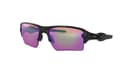
Oakley Flak 2.0 XL Prizm Golf

Oakley Flak 2.0 XL Prizm Golf

The reference golf sunglass. The Prizm Golf tint is tuned to boost the contrast between the fairway, the rough and the sky, so the ball and the contours of the green pop. A half-frame keeps your view open on a swing, and the Plutonite lens blocks 100% UV. Non-polarized, which is the right call for reading greens.

Best overall
$214.00 · View on Amazon

Price as of July 18, 2026. #ad How we’re funded

2
Tifosi Seek FC 2.0

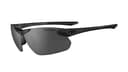
Tifosi Seek FC 2.0

The value-sport benchmark. Tifosi builds Grilamid TR-90 frames and decentered, shatterproof polycarbonate lenses at a fraction of the premium brands, with hydrophilic rubber that grips harder as you sweat. The Seek FC's larger lens suits golf and everyday sport; not polarized in this trim.

Best value
$39.95 · View on Amazon

Price as of July 18, 2026. #ad How we’re funded

3
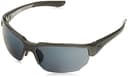
Under Armour Blitzing Wrap

Under Armour Blitzing Wrap

A wrap-style sport frame built for wider faces and higher-tempo activity, with a grippy rubberized nose and temples. A sensible mid-price step up from the budget sport brands when you want more coverage and a more secure hold than a lifestyle frame gives.

Best for wide faces
$62.00 · View on Amazon

Price as of July 18, 2026. #ad How we’re funded

4
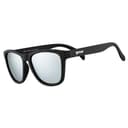
goodr OG

goodr OG

The best $25–35 in sunglasses. The OG is genuinely polarized, UV400, and its rubberized grip coating means it doesn't bounce or slide on a run — the reason it became runners' cult favorite. A squared retro shape that flatters round faces, in dozens of colorways. The value pick, full stop.

Best budget
$30.00 · View on Amazon

Price as of July 18, 2026. #ad How we’re funded

5
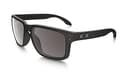
Oakley Holbrook OO9102

Oakley Holbrook OO9102

The frame that bridges sport and street. The squared-off Holbrook is built on Oakley's O Matter frame and Plutonite lens, which blocks 100% of UV on its own. This base SKU isn't polarized — Oakley sells Prizm and polarized versions if you want them.

Best course-to-clubhouse
$139.20 · View on Amazon

Price as of July 18, 2026. #ad How we’re funded

The picks in full

#1Best overall

Oakley Flak 2.0 XL Prizm Golf

The reference golf sunglass. The Prizm Golf tint is tuned to boost the contrast between the fairway, the rough and the sky, so the ball and the contours of the green pop. A half-frame keeps your view open on a swing, and the Plutonite lens blocks 100% UV. Non-polarized, which is the right call for reading greens.

Strengths

  • Prizm Golf tint lifts turf-and-sky contrast to help you read the green
  • Half-frame and open top keep your sightline clear on a swing
  • Grippy Unobtainium earsocks stay put when you sweat

Trade-offs

  • Premium price
  • Non-polarized (correct for golf, but not a do-everything glare lens)
Lens featurePrizm Golf contrast tint, 100% UV
PolarizedNo
Lens tintPrizm Golf
Frame materialO Matter (nylon)
UV protection100% UV (Plutonite, to 400nm)
Best forGolf, Cycling, Running

Spec note. Prizm Golf is a non-polarized tint Oakley engineered to enhance the contrast of grass and dirt against the sky; polarization is deliberately omitted so subtle green contours stay visible.

Specs read from the product listing, on July 18, 2026. “Not published” means the brand does not state that figure.

#2Best value

Tifosi Seek FC 2.0

The value-sport benchmark. Tifosi builds Grilamid TR-90 frames and decentered, shatterproof polycarbonate lenses at a fraction of the premium brands, with hydrophilic rubber that grips harder as you sweat. The Seek FC's larger lens suits golf and everyday sport; not polarized in this trim.

Strengths

  • Grilamid TR-90 frame and glare-guard hydrophilic nose/temple grips
  • Shatterproof decentered polycarbonate lenses block 100% UVA/UVB
  • A quarter the price of the premium sport brands

Trade-offs

  • This lens is not polarized
  • Fit runs medium — large heads may want the wider Tifosi frames
Lens featureTR-90 frame, 100% UVA/UVB, sweat-grip
PolarizedNo
Lens tintNot published
Frame materialGrilamid TR-90
UV protection100% UVA/UVB
Best forGolf, Everyday sport, Cycling

Spec note. Tifosi lists shatterproof, decentered polycarbonate lenses with 100% UVA/UVB protection and hydrophilic rubber grips.

Specs read from the product listing, on July 18, 2026. “Not published” means the brand does not state that figure.

#3Best for wide faces

Under Armour Blitzing Wrap

A wrap-style sport frame built for wider faces and higher-tempo activity, with a grippy rubberized nose and temples. A sensible mid-price step up from the budget sport brands when you want more coverage and a more secure hold than a lifestyle frame gives.

Strengths

  • Wrap coverage and rubberized grip hold up during activity
  • Suits wider faces that swim in narrow lifestyle frames
  • Mid-price — more frame than the sub-$25 brands

Trade-offs

  • Check the specific lens SKU for polarization — not all trims are polarized
  • Sport-wrap styling doesn't cross over to dressy wear
Lens featureWrap coverage, rubberized grip
PolarizedNot published
Lens tintNot published
Frame materialNot published
UV protection100% UVA/UVB
Best forRunning, Golf, Wide faces

Spec note. Polarization varies by Blitzing lens SKU; confirm the specific colorway's lens before buying if glare control matters.

Specs read from the product listing, on July 18, 2026. “Not published” means the brand does not state that figure.

#4Best budget

goodr OG

The best $25–35 in sunglasses. The OG is genuinely polarized, UV400, and its rubberized grip coating means it doesn't bounce or slide on a run — the reason it became runners' cult favorite. A squared retro shape that flatters round faces, in dozens of colorways. The value pick, full stop.

Strengths

  • Genuinely polarized and UV400 at a sub-$35 price
  • No-slip, no-bounce grip coating stays put on a run
  • Squared retro shape flatters round faces; dozens of colors

Trade-offs

  • One size — a narrow face may find the OG a touch wide
  • Plastic frame and standard lens won't match a glass premium lens for clarity
Lens featurePolarized, UV400, no-slip grip
PolarizedYes
Lens tintVaries by colorway
Frame materialPolycarbonate (plastic)
UV protectionUV400
Best forRunning, Everyday, Round faces

Spec note. goodr lists the OG as polarized with UV400 protection and a no-slip coating; colorways change but the lens spec is consistent.

Specs read from the product listing, on July 18, 2026. “Not published” means the brand does not state that figure.

#5Best course-to-clubhouse

Oakley Holbrook OO9102

The frame that bridges sport and street. The squared-off Holbrook is built on Oakley's O Matter frame and Plutonite lens, which blocks 100% of UV on its own. This base SKU isn't polarized — Oakley sells Prizm and polarized versions if you want them.

Strengths

  • Plutonite lens blocks 100% of UV (UVA, UVB and UVC to 400nm)
  • Squared shape flatters round faces and stays out of your lashes
  • Huge range of Prizm and polarized lens upgrades

Trade-offs

  • This base SKU is a non-polarized warm-gray lens
  • Premium price before you add a Prizm or polarized lens
Lens feature100% UV Plutonite lens, squared O Matter frame
PolarizedNo
Lens tintWarm Gray
Frame materialO Matter (nylon)
UV protection100% UV (Plutonite, to 400nm)
Best forEveryday, Golf, Driving, Round & oval faces

Spec note. Oakley's Plutonite lens material filters 100% of UVA, UVB and UVC and harmful blue light up to 400nm regardless of tint.

Specs read from the product listing, on July 18, 2026. “Not published” means the brand does not state that figure.

How to choose sunglasses for golf

Golf is a contrast game played in changing light, so the decisions that matter are different from picking an everyday pair. Work through four things in order — and note that only the first, UV protection, is truly non-negotiable.

1. Chase contrast, not darkness

The single most useful thing a golf lens can do is make the course easier to read. A neutral gray tint dims everything evenly, which is comfortable but flat. Warmer tints — copper, amber, rose, and the tuned dyes Oakley sells as Prizm Golf— do something more useful: they boost the difference between green grass, brown dirt and blue sky, so the fairway, the rough and the contours of a green separate out visually. That is why the Flak 2.0 Prizm Golf is the reference pair here, and why a darker lens is not automatically a better one. If you want the full breakdown of what each tint does, our lens colors guide has the tint-by-condition table.

2. Skip polarization on the course

This is the counterintuitive rule that separates a real golf lens from a generic sport one. Polarized lenses cut reflected glare off flat surfaces — which is wonderful on water and wet roads, and the wrong choice on a green. The low sheen bouncing off the grass carries the information you use to read speed and break; a polarized filter erases it, so the putting surface looks uniformly matte and you lose the visual cues to slope. Every dedicated golf tint above is non-polarized for exactly this reason. If you want to understand the trade-off before you commit, our polarized sunglasses guide explains what polarization removes and when you actually want it back.

3. Fit that survives a swing

A golf frame has one physical job the coffee-shop pair never faces: it has to stay planted while you rotate hard and look up to track the ball. Two features do that work. First, grip — rubberized nose pads and temple tips (Oakley calls its version Unobtainium) that hold harder as you sweat, so the frame does not creep down your nose on the back nine. Second, an open sightline — a half-frame or top-rimless design keeps the frame edge out of your upper field of view so nothing clips your look at the ball on address. If you have a wider face, prioritize a frame built for it, like the Under Armour wrap, over squeezing into a narrow lifestyle frame.

4. Match the pair to how you play — and skip the wrong one

If you play often and care about reading greens, a tuned contrast tint like Prizm Golf earns its price. If you play a few times a year, a value sport frame such as the Tifosi Seek FC gives you the grip and 100% UV protection without the premium. Want one pair for the round and the clubhouse afterward? A squared frame like the Holbrook crosses over. The one pairing to avoid is a heavily polarized wraparound bought “for sport” — great for fishing, but it will flatten the greens you are trying to read. For the wider view of activity eyewear, see our sport sunglasses hub.
Frequently asked questions

Should golf sunglasses be polarized?

No — and this is the one place most buyers get it wrong. Polarization removes reflected glare, including the faint sheen off the grass that tells you how a green breaks. Take it away and the putting surface looks flat and is harder to read. Dedicated golf lenses like Prizm Golf are deliberately non-polarized so those slope cues stay visible. Save polarization for fishing and driving.

What lens color is best for golf?

A warm, contrast-boosting tint rather than a dark neutral one. Copper, amber, rose and tuned dyes like Oakley's Prizm Golf lift the difference between green turf, brown rough and blue sky, so the course reads as texture instead of a flat wash. Gray keeps colors true but adds no contrast. Our lens colors guide has a full table of tint versus condition.

Is Prizm Golf actually worth it, or is it marketing?

It is a real tint engineered to enhance grass-and-sky contrast, and if you play often and want help reading greens, most golfers find the difference genuine. That said, any warm high-contrast tint moves in the same direction. If you play occasionally, a value sport frame with a copper or amber lens gets you most of the benefit for far less money.

Will sunglasses stay on during my golf swing?

A dedicated sport frame will; a loose lifestyle pair may not. Look for rubberized nose pads and temple grips that hold harder as you sweat, plus a snug wrap that keeps the frame planted when you rotate and look up. If a pair slides down your nose on a hot walk, it will slide during a swing too.

Can I just wear my everyday sunglasses for golf?

You can, but two things may hold you back. If they are polarized, they will flatten the greens you are trying to read. And if they are a delicate lifestyle frame with no grip, they may creep or shift on your swing. A non-polarized, contrast-boosting lens in a grippy frame is what makes a real difference on the course.

Sources

Keep reading