Shade & Temple

Best Sunglasses for Running

The best sunglasses for running, compared on what you actually feel over the miles — light weight, a no-bounce grip that holds when you sweat, venting, and coverage. A pick for every budget.

By Stephen V.Last updated How we pick

Running sunglasses are chosen by feel, not by looks. The pair that wins is the one you forget you are wearing after the first mile — which means the specs that matter are physical: how light the frame is, whether it bounces or slides once you start sweating, how well it vents so the lenses do not fog on a climb, and how much it shields low sun and wind without turning into a heavy wrap. Style is a distant afterthought; a few grams and a nose pad that grips when wet decide whether a pair is a joy or a nuisance over an hour.

The grip point deserves special mention. The best running frames use hydrophilicnose pads and temple tips — a rubber that actually grips harderas it gets damp — so the frame stays planted exactly when sweat would make a lesser pair creep down your nose. Polarization, by contrast, is optional here: some runners skip it deliberately so they can still read the texture of a wet road or the depth of a puddle. Every pick below blocks 100% of UV; from there we weigh weight, grip and coverage, with picks from a cult budget favorite to a premium shield. Prices are pulled live and dated — tap through for the current number.

How this is funded:we earn a commission if you buy through our links, at no extra cost to you. It never changes which product we recommend, and we’ll tell you when we’d skip one. Full disclosure.

Quick picks

Ranked on lens spec, UV protection, tint fit and buyer value. Select a row to jump to the full write-up. We have not field-tested these — here is exactly what we do instead.

#ProductBest forPrice
1
goodr OG

goodr OG

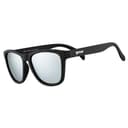
The best $25–35 in sunglasses. The OG is genuinely polarized, UV400, and its rubberized grip coating means it doesn't bounce or slide on a run — the reason it became runners' cult favorite. A squared retro shape that flatters round faces, in dozens of colorways. The value pick, full stop.

Best overall
$30.00 · View on Amazon

Price as of July 18, 2026. #ad How we’re funded

2
Tifosi Swank

Tifosi Swank

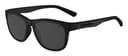
A lightweight lifestyle-sport crossover that's light enough to forget on a run and casual enough to wear after. Grilamid frame, shatterproof polycarbonate lens, 100% UVA/UVB — for around the price of a takeout meal. The runner's value pick when you don't want a full shield.

Best lightweight value
$25.00 · View on Amazon

Price as of July 18, 2026. #ad How we’re funded

3
Knockaround Fast Lanes Sport

Knockaround Fast Lanes Sport

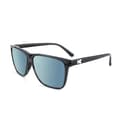
Knockaround's sportier frame — a slightly wrapped, grippier take on the Premiums that suits running and active wear better than the flat classic. Polarized and UV400, still cheap. The value sport pick when goodr's shape isn't for you.

Best cheap sport
$38.00 · View on Amazon

Price as of July 18, 2026. #ad How we’re funded

4
Oakley Radar EV Path Prizm

Oakley Radar EV Path Prizm

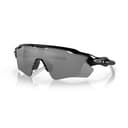
The performance shield for runners and cyclists who want maximum coverage and a taller lens. The Prizm tint sharpens contrast, the frame is featherweight O Matter, and the open-edge lens keeps your peripheral view clear. Non-polarized, which most runners prefer for reading the road surface.

Best premium performance
$244.00 · View on Amazon

Price as of July 18, 2026. #ad How we’re funded

5
Torege Polarized Sports

Torege Polarized Sports

Another budget sport staple, often sold with interchangeable lenses. Polarized main lens, UV400, TR90 frame — the appeal is getting a low-light and a bright-light lens in one cheap kit. A sensible first sport pair for someone testing whether they'll use them.

Best budget
$19.99 · View on Amazon

Price as of July 18, 2026. #ad How we’re funded

The picks in full

#1Best overall

goodr OG

The best $25–35 in sunglasses. The OG is genuinely polarized, UV400, and its rubberized grip coating means it doesn't bounce or slide on a run — the reason it became runners' cult favorite. A squared retro shape that flatters round faces, in dozens of colorways. The value pick, full stop.

Strengths

  • Genuinely polarized and UV400 at a sub-$35 price
  • No-slip, no-bounce grip coating stays put on a run
  • Squared retro shape flatters round faces; dozens of colors

Trade-offs

  • One size — a narrow face may find the OG a touch wide
  • Plastic frame and standard lens won't match a glass premium lens for clarity
Lens featurePolarized, UV400, no-slip grip
PolarizedYes
Lens tintVaries by colorway
Frame materialPolycarbonate (plastic)
UV protectionUV400
Best forRunning, Everyday, Round faces

Spec note. goodr lists the OG as polarized with UV400 protection and a no-slip coating; colorways change but the lens spec is consistent.

Specs read from the product listing, on July 18, 2026. “Not published” means the brand does not state that figure.

#2Best lightweight value

Tifosi Swank

A lightweight lifestyle-sport crossover that's light enough to forget on a run and casual enough to wear after. Grilamid frame, shatterproof polycarbonate lens, 100% UVA/UVB — for around the price of a takeout meal. The runner's value pick when you don't want a full shield.

Strengths

  • Very light Grilamid frame — easy to forget you're wearing it
  • Shatterproof polycarbonate lens, 100% UVA/UVB
  • Looks normal enough for post-run coffee

Trade-offs

  • Fixed, non-polarized lens in this base trim
  • Less coverage than a wraparound shield for fast descents
Lens featureLightweight Grilamid, 100% UVA/UVB
PolarizedNo
Lens tintNot published
Frame materialGrilamid
UV protection100% UVA/UVB
Best forRunning, Everyday, Casual sport

Spec note. Tifosi lists a lightweight Grilamid frame with a shatterproof polycarbonate lens and 100% UVA/UVB.

Specs read from the product listing, on July 18, 2026. “Not published” means the brand does not state that figure.

#3Best cheap sport

Knockaround Fast Lanes Sport

Knockaround's sportier frame — a slightly wrapped, grippier take on the Premiums that suits running and active wear better than the flat classic. Polarized and UV400, still cheap. The value sport pick when goodr's shape isn't for you.

Strengths

  • Polarized and UV400 with a light sport wrap
  • Grippier fit than the flat Premiums for activity
  • Still inexpensive

Trade-offs

  • Not as no-slip as a dedicated running frame
  • Budget hinges and coatings
Lens featurePolarized, UV400, light sport wrap
PolarizedYes
Lens tintVaries by colorway
Frame materialPolycarbonate (plastic)
UV protectionUV400
Best forRunning, Everyday sport, Budget

Spec note. Knockaround lists the Fast Lanes Sport as polarized with UV400 protection.

Specs read from the product listing, on July 18, 2026. “Not published” means the brand does not state that figure.

#4Best premium performance

Oakley Radar EV Path Prizm

The performance shield for runners and cyclists who want maximum coverage and a taller lens. The Prizm tint sharpens contrast, the frame is featherweight O Matter, and the open-edge lens keeps your peripheral view clear. Non-polarized, which most runners prefer for reading the road surface.

Strengths

  • Tall, open-edge lens maximizes upper-field vision when your head is down
  • Very light O Matter frame with grippy earsocks
  • Prizm Road tint lifts contrast on pavement and trail

Trade-offs

  • Big, unmistakably athletic look off the road
  • Premium price; polarization not offered on the standard Prizm Road
Lens featurePrizm tint, tall shield lens, 100% UV
PolarizedNo
Lens tintPrizm
Frame materialO Matter (nylon)
UV protection100% UV (Plutonite, to 400nm)
Best forRunning, Cycling, Trail

Spec note. The Radar EV raised the lens height over the original Radar for more upper-field coverage; the Prizm Road tint is non-polarized.

Specs read from the product listing, on July 18, 2026. “Not published” means the brand does not state that figure.

#5Best budget

Torege Polarized Sports

Another budget sport staple, often sold with interchangeable lenses. Polarized main lens, UV400, TR90 frame — the appeal is getting a low-light and a bright-light lens in one cheap kit. A sensible first sport pair for someone testing whether they'll use them.

Strengths

  • Polarized main lens plus interchangeable options in many kits
  • UV400 on a light TR90 frame
  • Very inexpensive entry into sport eyewear

Trade-offs

  • Interchangeable low-light lenses are often non-polarized
  • Budget build and clarity
Lens featurePolarized, UV400, interchangeable lenses
PolarizedYes
Lens tintNot published
Frame materialTR90
UV protectionUV400
Best forRunning, Cycling, Budget

Spec note. Torege lists a polarized main lens with UV400; check which lenses in a swap kit are polarized, as the clear/low-light lenses usually are not.

Specs read from the product listing, on July 18, 2026. “Not published” means the brand does not state that figure.

How to choose sunglasses for running

Comfort over distance is the whole brief. Four things decide it — and, as always, only UV protection is truly non-negotiable; the rest is about how the pair feels at mile six.

1. Weight and a no-bounce grip

A few grams you would never notice at a desk become obvious on a run, and a frame that bounces with every footstrike is maddening. This is why lightweight materials like Grilamid and O Matter dominate the category, and why grip matters more than almost anything else. Look for a hydrophilicnose piece and temple tips — rubber engineered to hold tighter as it gets sweaty — or a rubberized coating like the one that made the goodr OGa runners’ cult pick. If a pair slides down your nose on a warm walk, it will bounce on a run.

2. Coverage and venting

Coverage keeps low morning-and-evening sun, wind and grit out of your eyes; venting keeps the lenses clear. A taller, more wraparound lens — like the shield on the Oakley Radar EV — gives you more protection when your head is down and more upper-field view when you look up, which matters on a road or a technical trail. The trade-off is that a sealed wrap can trap warm air and fog on a humid climb, so frames built for running leave gaps and channels for airflow. Match the amount of coverage to your runs: a full shield for fast, exposed miles; a lighter frame like the Tifosi Swank for easy everyday ones.

3. Tint for changing light

Runners move through shifting light — sun to shade, open road to tree cover — so a versatile tint beats a very dark one. A contrast-boosting tint (rose, amber or a tuned road lens) helps you pick out cracks, curbs and roots, while a neutral gray keeps things comfortable in flat, bright conditions. If you run in genuinely low light, remember that a dark lens is the wrong tool; you want a light or clear lens, or none at all. Our lens colors guide lays out which tint suits which conditions.

4. Polarized, or not, for running

This is genuinely a preference call, unlike fishing where polarization is mandatory. Polarized lenses cut glare off wet pavement and car hoods, which many road runners like. But some runners deliberately choose non-polarizedlenses so they can still read the sheen on a wet road or judge the depth of a puddle — information polarization removes — and trail runners often prefer non-polarized to keep dappled ground legible. Neither is wrong. Our polarized sunglasses guide walks through the trade-off, and the wider sport sunglasses hub maps pairs to each activity.

Frequently asked questions

Should running sunglasses be polarized?

It is optional, unlike fishing where it is essential. Polarized lenses cut glare off wet roads and car hoods, which many road runners appreciate. But some runners choose non-polarized on purpose so they can still read the texture and depth of a wet road or puddle, and trail runners often prefer non-polarized on dappled ground. Pick based on where you run, not on a rule.

How do I keep sunglasses from bouncing when I run?

Weight and grip are the whole answer. Choose a light frame and, more importantly, one with hydrophilic rubber nose pads and temple tips — a material that grips harder as it gets sweaty — or a rubberized no-slip coating like goodr's. A snug, slightly wrapped fit helps too. A quick test: if a pair slides on a warm walk, it will bounce on a run.

Do running sunglasses need to be expensive?

No. Some of the most-loved running sunglasses are inexpensive, because the qualities that matter for running — light weight and a no-slip grip — do not require a premium price. A budget pair with a genuine no-bounce coating outperforms a heavy, slippery designer frame on a run. You pay more for a taller shield lens, tuned tints and premium build, not for the core running experience.

What lens color is best for running?

A versatile contrast tint beats a very dark one, because runners move through changing light. Rose, amber and tuned road tints help you spot cracks, curbs and roots; neutral gray is comfortable in flat, bright sun. If you run in low light, skip the dark lens entirely and use a clear or light one. Our lens colors guide has a tint-by-condition table.

How do I stop my sunglasses fogging up when I run?

Fog comes from trapped warm, humid air, so airflow is the fix. Choose a frame with venting — gaps or channels in the lens and frame that let air move — rather than a fully sealed wrap. Keeping the lenses slightly off your face and not stopping abruptly in humid conditions helps too. Frames designed for running usually build this venting in.

Sources

Keep reading