Lens & Tech Guide
The science behind the marketing — polarization, lens tints, UV standards and how VLT decides which lens suits which light. Plain-language explainers, each cited to the standard or the authority.
Sunglasses marketing is built on words that sound technical but rarely get explained — polarized, UV400, mirror, contrast, HD. This hub cuts through it. There are really only three lens facts that decide whether a pair is right for you, and once you can read them off a label, most of the marketing stops mattering. The rest is style and fit.
The three facts are polarization (does the lens cut reflected glare?), tint and VLT (what color is the lens and how much light does it let through?), and UV protection (does it actually block the ultraviolet that damages your eyes?). They’re independent — a lens can be dark but let UV through, or polarized but the wrong tint for what you do. The single most common buying mistake is treating a darker lens as a safer one, when darkness and protection have nothing to do with each other.
Each explainer below takes one of these and cites it to the standard or the eye-health authority behind it, rather than to a brand’s marketing. Below the guides, there’s a short buyer’s guide to the three specs in the order you should check them — so the next time you’re looking at a product page, you know exactly which words are load-bearing and which are noise.
Beyond those three, four more explainers cover the words that come up next. Photochromic lenses change their own tint with ultraviolet, which is brilliant on a trail and nearly useless in a car. Mirror coatings are neither UV protection nor polarization, despite what most listings imply. Glass versus polycarbonate is the material trade behind Costa’s 580G and 580P and most premium lens decisions. And if you simply want to know whether the pair in your bag is genuinely polarized, our one-minute polarization test settles it with a phone screen.
Four newer guides answer the questions that come up once you start reading labels properly. Lens categories 0-4 decode the number printed inside the temple, which describes darkness and says nothing about UV. Do polarized lenses block UV? answers the single most common misconception in eyewear. Spotting fake sunglasses matters because a counterfeit copies the logo and the UV400 sticker but not the lens. And cleaning sunglasses properly is the cheapest way to make a good lens last, because most scratches are self-inflicted.
Two more answer questions readers arrive with rather than questions about labels. Sunglasses vs goggles settles the mountain decision on the only basis that holds up — a goggle seals and a sunglass ventilates, so wind, snowfall and how hard you are breathing decide it. And sunglasses for blue eyes starts from a fact the AAO publishes: a light-coloured iris is one of the listed causes of raised light sensitivity, which makes lens category the decision and tint colour an afterthought.
Everything in Lens Guide

What Are Polarized Sunglasses?
How a polarizing filter cuts reflected glare, when it genuinely helps, and the one time you should take it off.
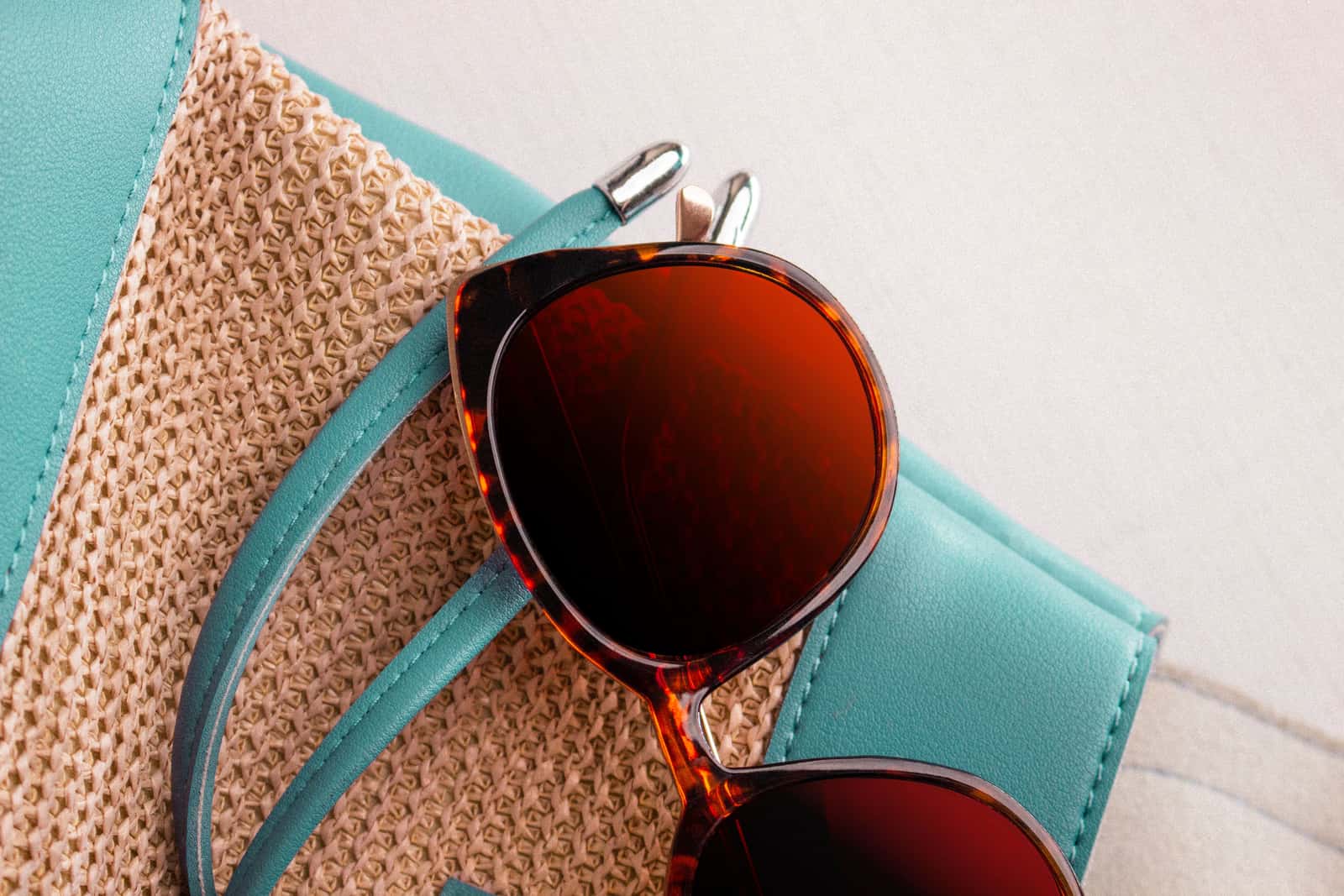
Sunglass Lens Colors, Explained
What each tint does to contrast and color — gray, copper, amber, green, rose — and the best lens color for each condition, in one table.
UV Protection & Sunglasses (UV400, Explained)
What UV400 and 100% UVA/UVB actually mean, why a dark lens without UV is worse than none, and the label to look for.
Polarized vs Non-Polarized Sunglasses
A side-by-side on glare, screen visibility, cost and best-use — so you know which one you actually need.
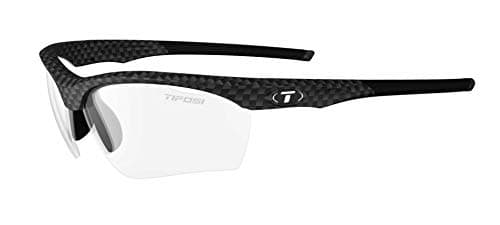
Photochromic Sunglasses, Explained
Lenses that darken in sunlight and clear in shade — how the chemistry works, the one place they barely react, and which pairs actually do it well.
Our top pick
Tifosi Vero Fototec
$89.95 · View on AmazonPrice as of October 20, 2026. #ad How we’re funded
Mirrored Sunglasses: What the Coating Actually Does
A mirror coating is not UV protection and it is not polarization — here is what it genuinely changes, and when it is worth paying for.
How to Tell If Sunglasses Are Polarized
Four tests you can run in under a minute — with a phone screen, a second pair, a car window or a puddle — to prove a lens is really polarized.
Glass vs Polycarbonate Sunglass Lenses
Clarity and scratch resistance against weight and impact safety — the trade that decides Costa 580G vs 580P and most premium lens choices.
Sunglass Lens Categories 0-4, Explained
The number printed inside the temple tells you how much visible light a lens blocks — and nothing at all about UV. What each category means and which one you need.
Do Polarized Sunglasses Block UV?
Not automatically — polarization and UV filtering are separate technologies that usually arrive together. Why that matters, and how to verify a pair you own.
How to Clean Sunglasses Without Scratching Them
Most lens scratches are self-inflicted and come from the same three habits. The five-step method that works, and what quietly destroys a coating.

How to Spot Fake Sunglasses
Counterfeits copy the logo, not the lens — and a fake UV400 sticker guarantees nothing. Seven checks to run before you buy, and what to do if you already did.
Sunglass Frame Materials, Compared
Acetate, TR-90, nylon, monel, titanium — what each material does to weight, durability, adjustability and heat tolerance, and which one your face and habits actually need.
Base Curve and Wrap, Explained
The spec that decides whether a wraparound feels immersive or makes you seasick — 4, 6 and 8 base curves, why almost nobody publishes the number, and how to work it out yourself.
Sunglasses Repair, Warranties and Replacement Lenses
What Maui Jim, Costa, Oakley and Ray-Ban each actually cover, why scratched lenses are excluded from all four, what a re-lens costs, and the federal rule that protects aftermarket repairs.
Sunglass Lens Coatings, Explained
Anti-reflective, mirror, hydrophobic, scratch-resistant and flash — five coatings sold on one lens doing five unrelated jobs, and only two worth paying extra for.
Photochromic vs Polarized Sunglasses
Not competing versions of the same thing — one changes how dark the lens is, the other changes which light gets through. Which problem each solves.
Night Driving Glasses: Do They Work?
Yellow night-driving lenses are sold on a promise that runs against the physics. What the eye-health authorities say, and what genuinely reduces headlight glare.
How to Test Sunglasses for UV Protection
You cannot see ultraviolet, which is why every home test circulating online is unreliable. What can be checked, and the one conclusive test that is free.
Do Sunglasses Expire?
Nothing on a pair of sunglasses has a use-by date, and the honest answer to whether UV protection fades is that nobody has shown it does. What genuinely ends a pair's life.
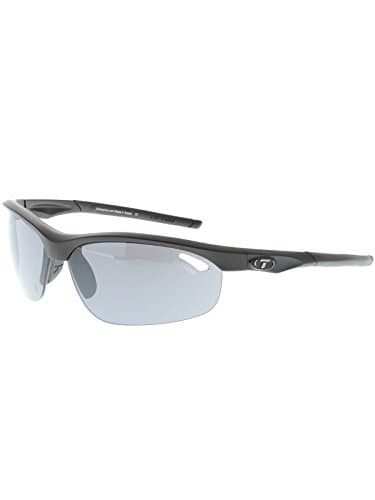
Best Anti-Fog Sunglasses
Fog is warm, damp air meeting a colder lens — so airflow beats coatings, and the brands that publish a vent claim are not the ones you would guess. Six picks, and the frames to avoid.
Our top pick
Tifosi Veloce (Interchangeable 3-Lens)
$79.95 · View on AmazonPrice as of October 20, 2026. #ad How we’re funded
Do Sunglasses Block Blue Light?
Yes — and far more of it than any screen ever emits, because the sun is the blue-light source that matters. Which is also why sunglasses are the wrong tool for your monitor.
Sunglasses vs Goggles
A goggle seals and a sunglass ventilates, which is the whole difference — so the decision is about wind, precipitation and how hard you are breathing, not about which is better.
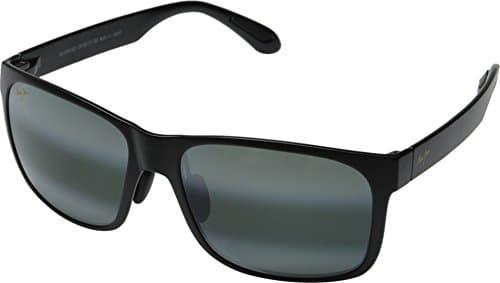
Best Sunglasses for Blue Eyes
Ophthalmologists list a light-coloured iris among the causes of raised light sensitivity. What follows is a decision about lens category — not about which tint flatters your eyes.
Our top pick
Maui Jim Red Sands Polarized
$259.00 · View on AmazonPrice as of October 20, 2026. #ad How we’re funded
Best Photochromic Sunglasses
Lenses that darken in sun and clear in shade — genuinely useful if you ride, run or hike through changing light, and close to useless if you bought them for the car. Five picks, and the ultraviolet reason behind that split.
Our top pick
Tifosi Vero Fototec
$89.95 · View on AmazonPrice as of October 20, 2026. #ad How we’re funded
Best Sunglasses for Bright Sunlight
Four specs decide how a lens copes with punishing light, and the one everybody shops on — how dark it looks — is the least important of them. Ranked in the order that helps, so the top pick is not the darkest.
Our top pick
Maui Jim Red Sands Polarized
$259.00 · View on AmazonPrice as of October 20, 2026. #ad How we’re funded
Do Sunglasses Prevent Cataracts?
Narrower than either the marketing or the sceptics make it: ultraviolet exposure is a risk factor for cataract and blocking it removes that factor, but age is the dominant cause and no lens is a vaccine.
Polarized Sunglasses and Screens
Your lens is not faulty and neither is your phone. The display has already polarized its own light and your lens filters by the same property — which is exactly why turning the phone sideways fixes it.
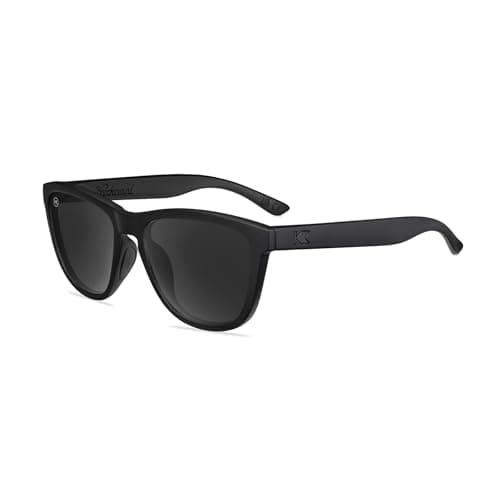
What Does UV400 Mean?
It means the lens blocks ultraviolet up to 400 nanometers, which is essentially all of it. The number is a floor, it is invisible, and the two things people assume it implies — darkness and polarization — have nothing to do with it.
Our top pick
Knockaround Premiums (Polarized)
$37.99 · View on AmazonPrice as of October 20, 2026. #ad How we’re funded
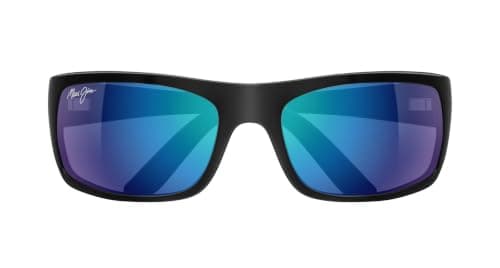
Mirrored vs Polarized Sunglasses
Not rival upgrades — a mirror is a coating on the outside of the lens and polarization is a filter inside it, so you can have both. If you can only have one, take polarized.
Our top pick
Maui Jim Peahi
$289.00 · View on AmazonPrice as of October 20, 2026. #ad How we’re funded
Do You Need Sunglasses on Cloudy Days?
Cloud cuts brightness far more than it cuts ultraviolet, so an overcast day can carry a real dose while feeling mild. Judge it on the UV index, not the glare — and if your light keeps changing, buy a photochromic lens.
Our top pick
Tifosi Vero Fototec
$89.95 · View on AmazonPrice as of October 20, 2026. #ad How we’re funded
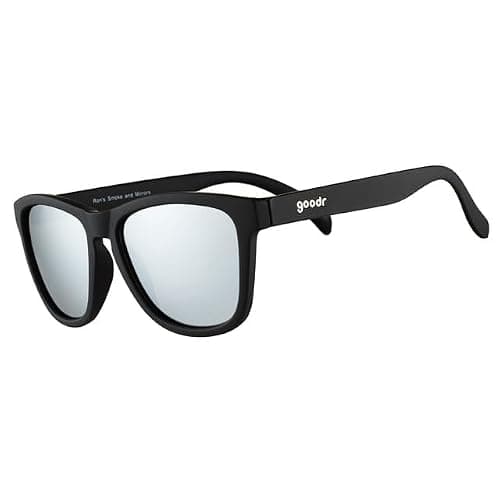
Do Sunglasses Damage Your Eyes?
No — and the honest exception is one product rather than a habit: a dark lens with no stated ultraviolet rating, which opens your pupil while letting UV through.
How to Store Sunglasses
Lenses up, case closed, never in a hot car, never pushed onto your head. Almost all sunglasses damage happens during storage rather than during wear.
The three lens specs that matter
1. Polarization: for glare, not for everything
A polarized lens has a filter that blocks the horizontally-oriented light reflecting off flat surfaces — water, wet roads, snow — which is what you experience as harsh glare. It’s the right call for fishing, boating and daytime driving, and the wrong call for reading a golf green or an LCD dashboard, where you actually want that surface detail. It is not a quality tier and it is not the same as UV protection. Our polarized sunglasses guide explains the mechanism, and the polarized vs non-polarized comparison helps you decide which one you need.
2. Tint and VLT: contrast versus true color
Tint is the lens color; VLT (visible light transmission) is the percentage of light it lets through, so a low VLT is a dark lens for bright days and a high VLT is a light lens for overcast conditions. Gray keeps colors accurate and is the safe all-rounder; warm tints like copper, amber and rose boost contrast, which helps on the fairway or the trail. The right tint depends on the light you’re in, not on which looks coolest — our lens colors guide lays out what each color does in one table.
3. UV400: the one spec you never skip
This is the spec that protects your eye health, and it’s completely separate from how dark or polarized a lens is. Look for UV400 or 100% UVA/UVB on the label — that’s the line that means the lens blocks the ultraviolet linked to cataracts and other damage. A dark, tinted lens with no UV rating is arguably worse than no sunglasses, because it opens your pupils while letting UV in. Our UV protection guide explains why, and what the label actually has to say.
Where the three specs meet a real purchase
Three pages on this hub take the theory above and spend money with it. If light keeps changing on you — dawn starts, tree cover, a long mixed-light ride — our photochromic roundup ranks the lenses that adapt, and says plainly why they barely work behind a car windscreen. If the problem is simply that it is too bright, best sunglasses for bright sunlight ranks on all four specs at once and puts darkness last, which is the opposite of how the category sells itself. And if you are buying sunglasses mainly because you have been told to, do sunglasses prevent cataracts gives the narrow, honest version of what the protection is actually buying you.
One more that belongs here rather than in a FAQ: if your phone screen goes black when you put your sunglasses on, nothing is broken, and polarized sunglasses and screens explains the physics in a paragraph — along with the free fix, and the cases (dashboards, head-up displays, cockpits) where there is no fix and a non-polarized pair is the better answer.