Shade & Temple

Best Anti-Fog Sunglasses

Fog is warm, damp air hitting a lens that is colder than it is. That makes airflow the specification that decides this category, not lens quality or price — and it means the best pair you own for blocking wind is very likely the worst pair you own for fogging.

By Stephen V.Last updated How we pick

Almost everything sold as “anti-fog” is sold as a coating, and almost every pair that genuinely stays clear does it with holes. That is the short version of this page. Fog is condensation: the National Weather Service defines the dew point as the temperature air has to be cooled to before it is carrying all the water it can hold, and below that point “water vapor would have to come out of the atmosphere in the liquid form”. Warm, damp air from your face meets a lens that is a few degrees colder, the air right at the lens drops below its dew point, and the water comes out of it onto the glass. Nothing about the lens caused that. The air did.

Which is why the ranking below is built on airflow first. The two brands that publish the clearest fogging claims describe the same fix in different words: Tifosi says on its own product pages that its “vented lenses prevent fogging”, and Julbo — explaining a goggle rather than a sunglass — says condensation forms “during thermal shocks (cold/hot) or when the intensity of your day increases (sweating, facial heat)” and answers it by physically moving the lens to create air circulation. NIOSH reaches the same conclusion from the safety side, recommending vented eye protection with an anti-fog coating and noting that newer designs “Improve airflow to help prevent fogging”.

There is a cost to all of this, and it is the part the category never mentions: a vent is a hole, and a hole passes wind and grit as happily as it passes water vapor. Our dry-eye roundup ranks sealed foam-gasket frames at the top for exactly the opposite reason. If your eyes water and sting in wind, buy that page’s picks and accept some fog. If fog is the thing ruining your ride, buy this page’s and accept some wind. You cannot have both in one frame. Every pick below states a UV rating, every one was confirmed in stock on the day this page was published, and prices are pulled live and dated.

How this is funded: we earn a commission if you buy through our links, at no extra cost to you. It never changes which product we recommend, and we’ll tell you when we’d skip one. Full disclosure.

Quick picks

Ranked on lens spec, UV protection, tint fit and buyer value. Select a row to jump to the full write-up. We have not field-tested these — here is exactly what we do instead.

#ProductBest forPrice
1
Tifosi Veloce (Interchangeable 3-Lens)

Tifosi Veloce (Interchangeable 3-Lens)

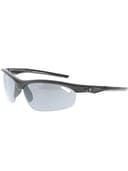
The frame to buy if fogging is the actual problem you are trying to solve. Tifosi states it plainly on its own product page — the Veloce runs large lens vents and 'vented lenses prevent fogging' — and it is one of the very few sunglasses, as opposed to safety glasses, where the brand makes that claim in its own words rather than leaving it to a marketplace bullet. The three-lens kit is the other half: a smoke lens for glare, AC Red for flat light, and a genuinely clear lens for the dawn starts and humid evenings when a dark tint is the wrong tool and fog is at its worst.

Best overall
$79.95 · View on Amazon

Price as of October 20, 2026. #ad How we’re funded

2
Tifosi Crit Polarized Fototec

Tifosi Crit Polarized Fototec

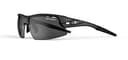
The rare lens that is photochromic AND polarized at once — it adapts to changing light and still kills the glare bouncing off wet tarmac. That combination usually costs a great deal more. The trade-off is that a polarized photochromic never goes truly clear, so this is a bright-conditions lens, not a dawn one.

Best vented lens with glare control
$99.95 · View on Amazon

Price as of October 20, 2026. #ad How we’re funded

3
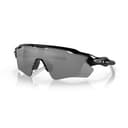
Oakley Radar EV Path Prizm

Oakley Radar EV Path Prizm

The performance shield for runners and cyclists who want maximum coverage and a taller lens. The Prizm tint sharpens contrast, the frame is featherweight O Matter, and the open-edge lens keeps your peripheral view clear. Non-polarized, which most runners prefer for reading the road surface.

Best for hard efforts
$244.00 · View on Amazon

Price as of October 20, 2026. #ad How we’re funded

4
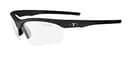
Tifosi Vero Fototec

Tifosi Vero Fototec

A photochromic lens for people who keep starting rides or runs in shade and finishing them in glare. Fototec is Tifosi's light-reactive tint: it darkens in UV and clears when you drop back into tree cover, so one lens covers the whole outing. The Light Night version starts nearly clear, which makes it the dawn-and-dusk pick rather than the midday one.

Best for smaller faces
$89.95 · View on Amazon

Price as of October 20, 2026. #ad How we’re funded

5
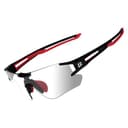
ROCKBROS Photochromic Sports Sunglasses

ROCKBROS Photochromic Sports Sunglasses

The cheapest honest way to try a photochromic lens. ROCKBROS lists a 22g UV400 light-reactive lens with an optional prescription insert behind it — which is the real story here, because a photochromic sport lens for people who wear glasses normally costs several times this. Budget coatings and a longer tint-transition than a premium lens are the price you pay.

Best budget
$29.99 · View on Amazon

Price as of October 20, 2026. #ad How we’re funded

6
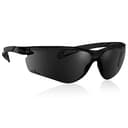
NoCry Dark Tinted Safety Sunglasses

NoCry Dark Tinted Safety Sunglasses

The default cheap pair for outdoor trades. Certified ANSI Z87.1, dark tinted, with anti-fog and anti-scratch coatings and a stated UV protection claim — at a price where losing a pair off a roof is an inconvenience rather than an expense. The anti-fog matters more than it sounds if you work in a mask or a respirator.

Best for masks, respirators and work
$13.99 · View on Amazon

$15.9913% off

Price as of October 20, 2026. #ad How we’re funded

The picks in full

#1Best overall

Tifosi Veloce (Interchangeable 3-Lens)

The frame to buy if fogging is the actual problem you are trying to solve. Tifosi states it plainly on its own product page — the Veloce runs large lens vents and 'vented lenses prevent fogging' — and it is one of the very few sunglasses, as opposed to safety glasses, where the brand makes that claim in its own words rather than leaving it to a marketplace bullet. The three-lens kit is the other half: a smoke lens for glare, AC Red for flat light, and a genuinely clear lens for the dawn starts and humid evenings when a dark tint is the wrong tool and fog is at its worst.

Strengths

  • Tifosi's own page states vented lenses prevent fogging, with large vents for airflow
  • UV400 lenses stated to block UVA and UVB, at 28 grams
  • Three interchangeable lenses including a clear one, so low light is covered too
  • Hydrophilic rubber ear and nose pads that grip harder as you sweat

Trade-offs

  • None of the three lenses in this kit is polarized — reflected glare off water or wet road is untouched
  • Vents are holes: they pass wind and grit as readily as they pass water vapor, which is the wrong trade if your problem is dry eye rather than fog
  • Costs more than a vented budget wrap that makes the same claim on the listing alone
Lens featureVented lenses, UV400, 28g, three interchangeable lenses
PolarizedNo
Lens tintSmoke / AC Red / Clear (interchangeable)
Frame materialNot published
UV protectionUV400 (UVA/UVB)
Best forCycling, Running, Humid conditions, Changing light

Spec note. Tifosi's own Veloce page states 'large vents for maximum airflow and debris protection', 'vented lenses prevent fogging and maintain crystal-clear vision', 'UV400 lenses block harmful UVA and UVB rays', 'just 28 grams', 'interchangeable lenses for quick swaps as conditions change' and 'hydrophilic rubber ear and nose pads ensure a secure, no-slip grip that increases as you sweat'. The page does not state the frame material, so that field is null.

Specs read from the product listing, on September 29, 2026. “Not published” means the brand does not state that figure.

#2Best vented lens with glare control

Tifosi Crit Polarized Fototec

The rare lens that is photochromic AND polarized at once — it adapts to changing light and still kills the glare bouncing off wet tarmac. That combination usually costs a great deal more. The trade-off is that a polarized photochromic never goes truly clear, so this is a bright-conditions lens, not a dawn one.

Strengths

  • Photochromic and polarized together — adaptive tint plus glare control
  • Cuts reflected glare off wet road, cars and water
  • Grilamid frame with hydrophilic grips, 100% UVA/UVB

Trade-offs

  • Never clears fully, so it is too dark for genuine low light
  • Costs more than a plain Fototec lens
Lens featurePolarized + Fototec photochromic, 100% UVA/UVB
PolarizedYes
Lens tintPolarized Fototec (light-reactive)
Frame materialGrilamid
UV protection100% UVA/UVB
Best forCycling, Driving, Hiking, Changing light

Spec note. Amazon lists this Crit as a polarized Fototec lens — Tifosi's photochromic tint layered with a polarizing filter, so it adapts to light and cuts reflected glare.

Specs read from the product listing, on August 10, 2026. “Not published” means the brand does not state that figure.

#3Best for hard efforts

Oakley Radar EV Path Prizm

The performance shield for runners and cyclists who want maximum coverage and a taller lens. The Prizm tint sharpens contrast, the frame is featherweight O Matter, and the open-edge lens keeps your peripheral view clear. Non-polarized, which most runners prefer for reading the road surface.

Strengths

  • Tall, open-edge lens maximizes upper-field vision when your head is down
  • Very light O Matter frame with grippy earsocks
  • Prizm Road tint lifts contrast on pavement and trail

Trade-offs

  • Big, unmistakably athletic look off the road
  • Premium price; polarization not offered on the standard Prizm Road
Lens featurePrizm tint, tall shield lens, 100% UV
PolarizedNo
Lens tintPrizm
Frame materialO Matter (nylon)
UV protection100% UV (Plutonite, to 400nm)
Best forRunning, Cycling, Trail

Spec note. The Radar EV raised the lens height over the original Radar for more upper-field coverage; the Prizm Road tint is non-polarized.

Specs read from the product listing, on July 18, 2026. “Not published” means the brand does not state that figure.

#4Best for smaller faces

Tifosi Vero Fototec

A photochromic lens for people who keep starting rides or runs in shade and finishing them in glare. Fototec is Tifosi's light-reactive tint: it darkens in UV and clears when you drop back into tree cover, so one lens covers the whole outing. The Light Night version starts nearly clear, which makes it the dawn-and-dusk pick rather than the midday one.

Strengths

  • Fototec lens darkens and clears on its own as light changes
  • Light Night tint starts almost clear, so it works at dawn and dusk
  • Grilamid TR-90 frame with hydrophilic grips, 100% UVA/UVB

Trade-offs

  • Photochromic lenses barely react behind a car windshield, which blocks most UV
  • Not polarized, so it does not cut reflected glare off water
Lens featureFototec photochromic lens, Grilamid TR-90, 100% UVA/UVB
PolarizedNo
Lens tintLight Night Fototec (light-reactive)
Frame materialGrilamid TR-90
UV protection100% UVA/UVB
Best forCycling, Running, Hiking, Changing light

Spec note. Tifosi's Fototec lenses are photochromic — they darken in response to UV and lighten again indoors or in shade. Light Night is the lightest-starting tint in the range.

Specs read from the product listing, on August 10, 2026. “Not published” means the brand does not state that figure.

#5Best budget

ROCKBROS Photochromic Sports Sunglasses

The cheapest honest way to try a photochromic lens. ROCKBROS lists a 22g UV400 light-reactive lens with an optional prescription insert behind it — which is the real story here, because a photochromic sport lens for people who wear glasses normally costs several times this. Budget coatings and a longer tint-transition than a premium lens are the price you pay.

Strengths

  • Photochromic UV400 lens at a fraction of a premium light-reactive pair
  • 22g stated weight — barely there on a long ride
  • Includes a myopia insert frame for prescription wearers

Trade-offs

  • Budget lens coatings scratch faster than a Tifosi or Oakley
  • Not polarized, and the tint transition is slower than premium photochromics
Lens featurePhotochromic UV400 lens, 22g, prescription insert
PolarizedNo
Lens tintPhotochromic (light-reactive)
Frame materialTR90
UV protectionUV400
Best forCycling, Running, Fishing, Prescription insert

Spec note. ROCKBROS lists a 22g photochromic UV400 lens supplied with a myopia (prescription) insert frame.

Specs read from the product listing, on August 10, 2026. “Not published” means the brand does not state that figure.

#6Best for masks, respirators and work

NoCry Dark Tinted Safety Sunglasses

The default cheap pair for outdoor trades. Certified ANSI Z87.1, dark tinted, with anti-fog and anti-scratch coatings and a stated UV protection claim — at a price where losing a pair off a roof is an inconvenience rather than an expense. The anti-fog matters more than it sounds if you work in a mask or a respirator.

Strengths

  • Certified ANSI Z87.1 with anti-fog and anti-scratch coatings
  • Under fifteen dollars, so buying three is a reasonable plan
  • Adjustable temples get the lens close enough to seal against dust

Trade-offs

  • The listing states UV protection but does not publish a UV400 or percentage figure
  • Not polarized — no help against glare off wet concrete or sheet metal
Lens featureANSI Z87.1 certified, anti-fog, dark tint
PolarizedNot published
Lens tintDark tint
Frame materialNot published
UV protectionNot published
Best forConstruction, Outdoor work, Cycling, Yard work

Spec note. The listing states ANSI Z87.1 certification with anti-fog and anti-scratch lenses and UV protection, but does not publish a specific UV400 or percentage rating — so we do not claim one.

Specs read from the product listing, on August 11, 2026. “Not published” means the brand does not state that figure.

How to choose anti-fog sunglasses

Five criteria, in the order they actually decide the purchase. The first one is worth more than the other four put together, and the last one is the reason most people are disappointed by a pair marketed on its coating.

1. Airflow through the frame, not a coating on the lens

Condensation needs a surface colder than the dew point of the air touching it. Moving air fixes that in two ways at once: it carries the humid air away from the lens before it can give up its water, and it keeps the lens closer to the temperature of the air around it. That is why a pair fogs at a traffic light and clears fifty yards later, and why nothing you buy will stop a pair fogging when you stand still in a warm, wet climate.

In a frame, airflow comes from three features. Vents — actual slots cut in the top edge of the lens or the brow of the frame — are the most effective and the easiest to verify, because you can see them. Tifosi states the mechanism outright on the Veloce (“large vents for maximum airflow and debris protection”) and on the Crit (“vented, shatterproof, and scratch-resistant lenses increase airflow to eliminate fogging”). Standoff is the gap between the lens and your brow and cheekbones, which is why a tall shield lens on a sport frame fogs less than a small lens sitting close to the face. And a high frame position is the free version of both: the AAO’s own advice for glasses fogging behind a mask is that “Pushing your glasses forward on your nose will allow more air to circulate”.

2. Who actually publishes an anti-fog claim — and who does not

This is the finding that surprised us while building this page. Anti-fog is a standard, published, named feature in industrial eyewear and a near-silent one in sunglasses. Ergodyne, which sells to site crews rather than to runners, describes its Fog-Off+ lens as a three-layer construction with the UV filter in the middle layer and anti-fog performance built into the inner surface, sold on keeping vision clear “through temperature shifts, high humidity, face coverings and more”. NIOSH, advising on eye protection for infection control, simply assumes the coating exists and tells you to buy it.

Go looking for the same claim from a sunglasses brand and it mostly is not there. Across the frames in this site’s registry, Tifosi is the only mainstream sunglasses maker whose own website gave us a fogging claim we could read model by model — and, crucially, it does not make that claim for every model. The Veloce, Crit and Vero pages all name vents; the brand’s own Seek FC 2.0 page states hydrophilic pads and “full UVA and UVB protection” and says nothing about vents or fog at all. That inconsistency is what makes the claim worth something. A brand that says “anti-fog” about everything is telling you nothing.

Three of the six picks above are therefore Tifosi frames, and we would rather state the reason than pad the list with frames that have no published claim behind them. They are not interchangeable: one is a three-lens kit, one is polarized and photochromic, one is cut for a smaller face.

One pick is here without a brand claim, and it is fair to say so. The Oakley Radar EV Path earns its place on geometry rather than on marketing: a tall shield lens standing off the brow, open at the top and bottom, which is the shape this page argues for. We would have liked to quote what Oakley itself says about ventilation on it, and we cannot — oakley.com returned 403 on every URL we tried on this visit, as it has on previous ones, so the only dated source we hold for that frame is its retail listing and the 100% UV figure recorded in our registry. Read its award as “the right shape”, not as “the brand promises it will not fog”.

3. A marketplace bullet is not a brand claim

Search “anti-fog sunglasses” on any marketplace and you will find the phrase in hundreds of listing titles, most of them unattached to anything the manufacturer says. We ran into a clean example of the gap while researching this page. Ergodyne’s Skullerz ODIN is sold on Amazon under a title that includes both “Polarized” and “Anti Fog”. Ergodyne’s own product page for the base ODIN lists the impact and optical standards it meets and a lens that “filters 99.9 percent of harmful UVA, UVB and UVC rays” — and sells anti-fog as a separate model line, the ODIN-AF, with the enhanced version carrying the Fog-Off+ lens. Polarized is a separate line too.

We are not accusing anyone of anything: marketplace titles are often assembled from a family of SKUs. But it is why the ODIN is not a pick on this page even though it sits in our registry and even though its listing says anti-fog. If you want a coating, buy the model the brand actually sells as the anti-fog model, and check the brand’s own page before you do. The same rule is the spine of our guide to spotting fake sunglasses: the claim is only as good as the party making it.

4. The frames that fog worst are the ones that protect best

Rank the eyewear in this site’s registry by how well it seals your eyes off from moving air and you have produced, almost exactly, a ranking of how badly each one fogs. From worst to best:

  • Fit-overs and OTG shells — the largest trapped air pocket of anything you can wear, plus a second pair of lenses inside it giving the water two more surfaces to land on. If you wear sunglasses over prescription glasses and fog is your complaint, that is the cause; our fit-over guide covers the alternatives, and a prescription pair removes the inner lenses from the equation entirely.
  • Foam-gasketed riding and motorcycle frames — the foam is there to stop wind reaching your eyes, and it stops airflow reaching the lens with equal efficiency. On some frames — the Bobster Road Hog II among them — the foam is removable, which is exactly what that feature is for: take it out for slow, humid riding and put it back for cold, dry, fast miles.
  • Tight full-wrap frames with no vents — a big lens sitting close to the brow with nowhere for air to escape. This is the most common failure in the category, because wrap and coverage are what buyers are told to look for.
  • Vented sport frames — what this page recommends.
  • Small, open frames with big gaps — a classic acetate or metal frame with a lot of air around it barely fogs at all. It also does very little to keep wind, dust or peripheral light out, which is why nobody runs in one.

NIOSH states the same trade in one sentence from the safety-equipment side: goggles “must fit snugly around the eyes and brow” for optimal performance, and directly-vented goggles “can let splashes in”, which is why indirect venting exists at all. Protection and ventilation pull against each other. Every honest recommendation in this category is a choice about which one you need more today.

5. Everything that has nothing to do with fog

Polarization does not affect fogging. Neither does lens color, mirror coating, photochromic tint or lens category. Condensation forms on a polarized lens exactly as readily as on a plain one, and a mirrored lens is not a thermal barrier. If a listing implies otherwise, that is marketing. The one lens property that changes anything is surface: a dedicated anti-fog treatment on the inner face makes the water spread into a thin, transparent film instead of beading into droplets that scatter light. The fog is still there. You can just see through it.

We would rather you spent the money on the right frame than on the right tint. Our guide to lens coatings covers what each of the five coatings sold on a modern lens actually does, and which two are worth paying extra for.

How to stop sunglasses fogging up — without buying anything

Most fogging complaints are solved for free, and it is worth working through this list before you replace a pair you otherwise like.

  1. Push the frame forward on your nose. The single most effective free fix, and the one the AAO gives first: moving the lens a few millimeters away from your face opens an air path at the top and bottom. If the frame will not stay forward, the temples need bending — our adjustment guide has the method.
  2. Stop putting them on your head. A frame parked in your hair for ten minutes comes back warm and damp, and goes straight onto a face that is also warm and damp. Put them on a table, in a case, or on your collar.
  3. Mind the thermal shock. Julbo names it directly. Going from a heated car or a warm house into cold air puts a cold lens in front of warm breath, which is the worst possible arrangement. Let the frame cool outside for a minute before you put it on, rather than carrying it out on your face.
  4. Fix the mask or buff, not the glasses. If you fog when wearing a face covering, the AAO’s fix is a better seal at the top — pinch the mask to the shape of your nose, or tape the gap — or resting the frame on top of the mask so your breath is directed down and away.
  5. Keep moving, and accept the stops. You are going to fog at traffic lights, at the top of climbs and between sets. No pair of sunglasses prevents that; the good ones just clear quickly once air is moving again. Judge a frame on how fast it recovers, not on whether it ever fogs.
  6. Clean the inner surface properly. A film of sunscreen, sweat salt or skin oil gives water something to cling to. Clean the way the AAO recommends — mild detergent and a cloth made for lenses, never a tissue or a shirt tail — which our cleaning guide covers step by step.

Does anti-fog spray work on sunglasses?

It can, and we do not sell one, so take this as it is meant. The AAO’s own page on foggy glasses says that “An anti-fogging solution or even gently washing your lenses with soap and water before wearing them may help” — note the hedge, which is theirs, not ours. The mechanism for both is the same one described above: leave a surfactant film on the lens and the condensation spreads out instead of beading.

Two honest warnings. First, this is a treatment, not a modification: it washes off, and how long it lasts depends on the product, the humidity and how often you wipe the lens. None of the brands behind the picks on this page publishes a durability figure for any anti-fog treatment, and we are not going to invent one. Second, some wipe-on products are alcohol-based, and repeated alcohol on a lens is exactly what our cleaning guide warns takes coatings off — which matters most on a mirrored or flash-coated lens. Test on a cheap pair first. If your frame is a vented one, you probably will not need it at all.

By activity: where fog actually bites

Running and cycling

The classic case, because the fog arrives precisely when you slow down: at the top of a climb, at the lights, at the end of an interval. A vented frame is the whole answer here, and a photochromic lens is the useful companion feature, since the humid, low-light mornings that fog worst are also the ones where a dark tint is wrong. Our running and cycling roundups rank the same frames on their primary jobs.

Motorcycling

The hardest case on this list, because a helmet adds a second sealed chamber and because riders often want the foam gasket that causes the problem. Below about walking pace there is no airflow at all, and the moment you stop at a junction on a damp evening the visor and the lens fog together. The practical answer is a vented frame with the foam left out in humid weather, plus a helmet visor cracked open at low speed. Our motorcycle roundup covers the wind-versus-fog trade in more detail, including the frames with removable foam.

Skiing, snowboarding and cold weather

Cold is the enemy, because the colder the lens the smaller the temperature gap needed to condense the air. This is the one category where the honest answer is often not sunglasses: Julbo’s own explanation of goggle fogging notes that its goggles combine an anti-fog treatment, ventilation and a dual-lens system, and a double lens with an insulating air gap between the two panes is something no sunglass lens has. For lift-served skiing in bad weather, a goggle wins. For spring touring and bright, still days, a vented sunglass is better and lighter. Our snow roundup makes that call condition by condition.

Work, masks and respirators

A respirator or dust mask directs a continuous stream of warm, saturated air up onto the lens, which is why this is the one setting where a published anti-fog coating genuinely outranks ventilation — you cannot out-ventilate a mask. This is also the setting where the coating is easy to buy, because industrial brands publish it. One caution worth repeating: the Z87.1 mark on a pair of safety glasses certifies impact and optical performance. It is not a fogging rating, and Ergodyne’s own technology page lists exactly those impact and optical standards alongside its anti-fog claim rather than a standard for fog. Our Z87.1 roundup explains what the marking system does and does not promise.

Tennis, pickleball and court sports

Humidity plus stop-start effort plus a frame worn close to the face. The fix is the same vented frame, and the useful extra is a lens you can see through in flat light — a dark tint on a humid, overcast morning is two problems at once. The sport pages for tennis and pickleball cover tint choice for tracking a ball.

Rowing, and the worst case on this page

Rowing combines everything that causes fog: a very high heat output, a boat moving slowly enough that almost no air passes the lens, cold water a hand’s width below your face, and both hands occupied so you cannot lift the frame to clear it. It is the one activity we cover where fogging outranks glare as the reason a pair gets abandoned, which is why our rowing roundup ranks vented frames first and rules out foam gaskets entirely. The useful extra there is the same one as on court: a clear lens for the pre-dawn outing, when a dark tint helps nothing and fog is at its worst.

Considered and deliberately not picked

Recorded so the decisions are auditable, which is how every roundup on this site works.

  • Ergodyne Skullerz ODIN. In our registry, in stock, and sold under a marketplace title naming both polarization and anti-fog — but Ergodyne sells anti-fog as a separate ODIN-AF line on its own site, so the claim could not be matched to this SKU. Left in the registry and off this page.
  • 3M Peltor Sport SecureFit. A real anti-fog safety lens from the largest PPE maker there is, and the listing publishes no UV figure at all, which is this site’s minimum bar for a pick. The NoCry takes the work slot because its listing at least states UV protection alongside the anti-fog and Z87.1 claims.
  • Bollé Safety Rush+ with the PLATINUM coating. On the face of it the strongest coated candidate in the category. We could not read a single page on bolle-safety.com — both the PLATINUM page and the anti-fog page returned 403 on this visit — so there is no brand claim we can stand behind, and we will not feature a product on a claim we have only seen quoted second-hand.
  • Bobster Road Hog II and the SOL PRO foam-padded riding frame. Both are in the registry and both are excellent at what they are for, which is keeping wind off the eye. That is the opposite of this brief. They are the top of our dry-eye roundup and the bottom of this one, and the Road Hog’s removable foam is the reason we mention it at all.
  • Every fit-over in the registry. Duco, Cocoons, SUNGAIT and Optix 55 all do their job well. None of them belongs on a fogging page for the structural reason given above: two lenses and a large trapped air pocket.
  • Goggles of any kind. Julbo’s dual-lens systems are the correct engineering answer to fog in the cold and we cite them for the mechanism, but this site sells sunglasses and does not stock goggles. Saying so is more useful than pretending a sunglass does the same job.

What we did not measure

We do not run a fog chamber and we have not timed how long any of these frames takes to clear. Nothing on this page is a test result. The ranking is built from what each brand publishes about its own frame, from the physics of condensation as the National Weather Service defines it, and from the eyewear-selection advice published by the AAO and NIOSH — with the frames whose fogging claims we could not verify named and excluded rather than quietly ranked. Our methodology page sets out the whole process.
Frequently asked questions

Why do my sunglasses fog up?

Because the air touching the lens has been cooled below its dew point, and the water in it has to go somewhere. The National Weather Service defines the dew point as the temperature air must be cooled to in order to reach 100% relative humidity; past that point water vapor comes out of the air as liquid. Your face supplies warm, humid air, the lens is colder than that air, and the water condenses on the cold surface. The AAO describes the same thing happening with a face mask: warm breath escapes from the top of the mask and lands on the cooler surface of the lens. Nothing about the sunglasses is faulty, which is why an expensive pair can fog worse than a cheap one.

How do I stop my sunglasses fogging up?

Start with the free fixes, in this order. Push the frame forward on your nose, which is the AAO's own first suggestion because it opens an air path. Stop parking them on top of your head, where they pick up heat and moisture. Give them a minute to cool to outdoor temperature before putting them on if you have come out of a heated car or house. If you are wearing a mask or a buff, seal the top of it against your nose or rest the frame on top of it so your breath is directed away. Clean the inside of the lens properly, because a film of sweat salt, sunscreen or skin oil gives the water something to cling to. If none of that is enough, the frame itself is the problem and you want a vented one.

Do anti-fog sunglasses actually work?

Two different products are sold under that name and they work to different degrees. A vented frame works well, because it removes the humid air rather than treating the surface, and it is the approach both Tifosi and Julbo describe on their own pages. A lens with an anti-fog treatment on the inner surface works differently: condensation still forms, but it spreads into a thin transparent film instead of beading into droplets, so you can see through it. Neither prevents fog under the worst conditions — standing still, in warm humid air, right after hard effort. Judge a frame by how quickly it clears once you move, not by whether it ever mists at all.

Does anti-fog spray work on sunglasses?

Sometimes, and the eye-health authorities hedge about it rather than endorse it. The AAO says an anti-fogging solution, or even gently washing lenses with soap and water before wearing them, may help. Both work by leaving a surfactant film that makes water spread instead of bead. Two cautions: it is a treatment that washes off rather than a permanent change, and no brand we could read publishes how long its version lasts; and some wipe-on products are alcohol-based, which is what strips lens coatings over time, so test on a cheap pair before you use one on a mirrored or flash-coated lens. We do not sell an anti-fog spray, so this is advice rather than a recommendation.

Do polarized sunglasses fog up more?

No. Polarization is a filter inside the lens that blocks horizontally oriented reflected light, and it has no effect on temperature or on how water condenses on a surface. A polarized lens fogs exactly as readily as a non-polarized one of the same shape in the same frame. The same goes for mirror coatings, photochromic tints and lens category. If a polarized pair of yours fogs more than a non-polarized pair, the difference is in the frame — how closely the lens sits to your face and whether there is anywhere for air to move.

Which sunglasses fog up the least?

Vented sport frames — ones with actual slots cut into the top of the lens or the brow — held slightly away from the face. Below them, small open frames with lots of air around them, which barely fog but also barely protect. The worst are fit-overs worn over prescription glasses, because they trap the largest pocket of air and add two more lens surfaces for water to land on, followed by foam-gasketed riding frames and tight full-wrap frames with no vents. That ranking is uncomfortable, because it is almost exactly the reverse of how well each type shields your eyes from wind and dust.

Why do my sunglasses fog when I stop but not while I am moving?

Because moving air is doing two jobs for you at once: carrying the humid air away from the lens before it can give up its water, and keeping the lens close to the temperature of the surrounding air. Stop, and your face keeps producing heat and moisture with nothing to remove it, so the air at the lens reaches saturation within seconds. This is the normal, unavoidable case at traffic lights, at the top of climbs and between sets, and no purchase eliminates it. A vented frame clears within a few seconds of moving again; a sealed one can stay fogged for the rest of the descent.

Sources

  • NOAA National Weather Service (La Crosse, WI) — Dew Point vs. Humidity — The physics the page rests on, from the agency that defines it: the dew point is "the temperature the air needs to be cooled to (at constant pressure) in order to achieve a relative humidity (RH) of 100%", and "If the air were to be cooled even more, water vapor would have to come out of the atmosphere in the liquid form, usually as fog or precipitation." Cited here only for those two definitions — the page makes no weather claim (accessed September 29, 2026)
  • American Academy of Ophthalmology — How to Wear a Face Mask Without Fogging Your Glasses — AAO (Vered Hazanchuk; reviewed by Andrea A Tooley, MD; 22 January 2021) names the mechanism in one sentence: fogging "happens when warm breath escapes from the top of your mask and lands on the cooler surface of your lens." Its practical fixes are a better seal at the nose (pinch the top of the mask to the nose shape, or tape the gap), pre-treating the lens — "An anti-fogging solution or even gently washing your lenses with soap and water before wearing them may help" — and changing the airflow path: "Pushing your glasses forward on your nose will allow more air to circulate and keep your breath from fogging up your vision", or resting the frame on top of the mask (accessed September 29, 2026)
  • NIOSH / CDC — Eye Protection for Infection Control (Personal Protective Equipment) — The federal position treats fog as an eyewear-selection problem rather than a user problem: "Well-fitted, indirectly-vented goggles with an anti-fog coating provide the best choice for protecting workers' eyes from splashes, sprays, and droplets", and newer goggle designs "Improve airflow to help prevent fogging". It also states the fit requirement that creates the fog in the first place — "For optimal performance, goggles must fit snugly around the eyes and brow" — and the trade behind it: "Directly-vented goggles can let splashes in, so experts recommend using indirectly-vented or non-vented goggles for infection control" (accessed September 29, 2026)
  • Julbo — Ventilation of the goggle against fogging (brand page) — Julbo names the two conditions that produce fog, and they are the two an athlete meets: "Condensation forms inside your goggle during thermal shocks (cold/hot) or when the intensity of your day increases (sweating, facial heat)." Its goggles combine "anti-fog treatment, effective ventilation, and a dual-lens system", and both named mechanisms work by moving the lens rather than by coating it — SuperFlow tilts the lens forward on hinges, "creating intense air circulation within the goggle, which quickly and efficiently defogs the inner surface of the lens", while the Switch Air System removes magnetic lower frame sections to "control ventilation" during "intense efforts". Cited for the mechanism; these are goggles, not the sunglasses this page ranks (accessed September 29, 2026)
  • Tifosi Optics — Veloce Multi-Sport Sunglasses (brand page) — One of the few sunglasses — as opposed to safety glasses — where the brand makes a fogging claim in its own words: "large vents for maximum airflow and debris protection" and "vented lenses prevent fogging and maintain crystal-clear vision". Also stated on the same page: "UV400 lenses block harmful UVA and UVB rays", "just 28 grams", "interchangeable lenses for quick swaps as conditions change", and "Hydrophilic rubber ear and nose pads ensure a secure, no-slip grip that increases as you sweat". The page does not state the frame material (accessed September 29, 2026)
  • Tifosi Optics — Crit Athletic Sunglasses (brand page) — Tifosi on the Crit: "Vented, shatterproof, and scratch-resistant lenses increase airflow to eliminate fogging", "Fully adjustable hydrophilic rubber arm and nose pieces provide a customizable fit that tightens as you sweat", "full UVA/UVB protection keeps your vision sharp and your eyes safe in any condition", and "Fototec lenses adapt quickly to changing light conditions". A polarized Fototec trim is sold, and that is the one this site's registry carries (accessed September 29, 2026)
  • Tifosi Optics — Vero Sunglasses for Small Faces (brand page) — Tifosi on the Vero: "Large lens vents promote airflow and protect against debris, whether you're on the bike, the trail, or the field", and "UV400 lenses block both UVA and UVB rays, so your eyes stay fully protected through every outdoor adventure." The frame is sold with "interchangeable, Fototec photochromic, polarized, and specialty lens options". Read alongside the brand's own Seek FC 2.0 page, which states hydrophilic pads and "full UVA and UVB protection" but makes NO vent or fog claim — that difference is what makes Tifosi's claims usable model by model rather than as brand marketing (accessed September 29, 2026)
  • Ergodyne — Skullerz Eyewear Technology (brand page) — A safety-eyewear maker describing anti-fog as a lens construction rather than a feature bullet: Fog-Off+ is presented as a three-layer lens with UV protection in the middle layer and anti-fog and anti-scratch performance on the outer layers, sold on delivering "crystal clear vision through temperature shifts, high humidity, face coverings and more". The standards named on the page are impact and optical standards — ANSI/ISEA Z87.1-2020, CSA Z94.3-2020, EN166 and MIL-PRF 32432 — not an anti-fog standard (accessed September 29, 2026)
  • Ergodyne — Skullerz ODIN Safety Glasses (brand page) — The reason this site does not treat a marketplace "anti fog" bullet as a brand claim. Ergodyne's own page for the base ODIN lists "Meets ANSI/ISEA Z87.1-2020 (Mark: Z87.1+), CSA Z94.3 & MIL-PRF 32432", a "Durable full-frame design bends and flexes without breaking" and a lens that "filters 99.9 percent of harmful UVA, UVB and UVC rays" — but anti-fog is sold as separate model lines (ODIN-AF, and an anti-scratch/enhanced anti-fog ODIN carrying Fog-Off+), not as a property of the base ODIN. Polarized is likewise a distinct line (accessed September 29, 2026)
  • Tifosi Optics — Beach Volleyball Sunglasses: For Every Beach Day and Rally (brand page) — The second brand marketing directly to this sport, and its requirement list matches goodr's on grip and diverges on tint. Retention: "hydrophilic pads that lock in as you sweat". Tint, in the brand's own words: "Brown/amber boosts ball tracking, smoke/gray reduces noon sun, rose/yellow boosts contrast on cloudy days". Glare: "Polarized lenses cut harsh reflections off sand and water". Frame: "Sport-wrap or shield frames for side coverage and peripheral glare protection" plus "Ventilation or semi rimless designs to prevent lens fogging". Named models: Sanctum, Vogel SL, Rivet and Sector Lite (accessed September 22, 2026)
  • American Academy of Ophthalmology — Remedies to Reduce Dry Eye Symptoms — AAO (Kierstan Boyd; reviewed by Devin A Harrison, MD): "wear a pair of wraparound sunglasses to reduce the chance of wind blowing directly into your eyes", plus humidifier use, avoiding fans and hair dryers because they "can make your eyes dry", screen breaks, artificial tears, warm compresses and eyelid hygiene (accessed September 18, 2026)
  • American Academy of Ophthalmology — How to Clean Your Glasses — AAO: use a soft cloth made for lenses and a mild detergent; tissues and clothing scratch lenses (accessed August 11, 2026)
  • American Academy of Ophthalmology — Cleaning Eyeglasses — AAO consumer guidance on lens cleaning, storage and what damages coatings (accessed August 11, 2026)

Keep reading