How to choose cycling sunglasses
1. Coverage first — it is a wind problem, not a sun problem
The single biggest difference between cycling glasses and everyday sunglasses is how much of your eye socket they enclose. A tall lens that curves round the temple keeps moving air off your cornea, which stops the watering and blurring that makes you blink on a descent, and it catches the grit and insects that a flat lifestyle frame lets straight past.
Both the CDC and the American Academy of Ophthalmology recommend wraparound frames for general sun protection because they block light arriving from the side; on a bike that same geometry is doing double duty as a windshield. If you take one thing from this page, take coverage.
2. Then solve the light-changes problem
You have three options and they are genuinely different.
- Photochromic. A lens that darkens in ultraviolet and clears in shade. This is the best answer for most riders, because it removes the decision entirely. The Tifosi Fototec lenses on this list are the accessible version of a technology that used to cost three figures. Our photochromic guide explains the chemistry and the limits.
- Interchangeable lenses. Two or three lenses in the box, swapped by hand. Optically the best solution and practically the worst — nobody stops mid-ride to change a lens, and the spare lives in a drawer.
- One good fixed tint. Perfectly adequate if you always ride in similar conditions. A rose or amber contrast tint is the usual choice, because it lifts road texture without dimming as aggressively as gray. Our lens colors guide has the tint-by-condition table.
3. Decide about polarization — it is genuinely contested here
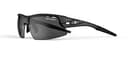
On the road, polarization removes the glare bouncing off wet tarmac, car roofs and windshields, which is a real safety benefit in bright wet conditions and the reason the Crit Fototec is on this list. Off-road it is more debatable: some mountain bikers dislike polarization because it can flatten the appearance of wet rock and standing water, and distinguishing a puddle from a hole is exactly the judgment you need on a descent.
Our steer: polarized if you mostly ride roads, unpolarized if you mostly ride technical trails. Our polarized vs non-polarized guide covers the general trade-off.
4. Check it works with your helmet
Two fit details that decide whether a pair is comfortable over three hours. First, temple shape: cycling-specific frames have thin, straight or slightly upswept temples that sitabove the helmet strap without pressing it into your ear. A thick lifestyle temple fights the strap the whole ride. Second, whether the frame stows in the helmet vents when you climb — a small thing until it is 30 degrees and you want them off your face.
5. Fog and grip
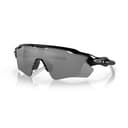
Fogging is a slow-speed problem: it happens when you stop at lights or grind up a climb and your body heat has nowhere to go. Vented lenses and a slight standoff from the face fix most of it. Grip is the other half — hydrophilic rubber (Tifosi) and Unobtainium (Oakley) both get tackier as they get wet, which is why sport frames stay put when you sweat and metal-hinged lifestyle frames slide down. If that is a chronic problem for you, our guide to sunglasses sliding down covers the fixes.
What about riding at dawn, dusk or in the rain?
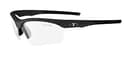
This is where a light-reactive lens earns its money and where a dark fixed tint becomes actively dangerous. A gray sport lens on an overcast evening cuts light you need to see road surface changes. Two better options: a Fototec lens whose base state is nearly clear (the Vero Light Night on this list is exactly that), or a genuinely clear lens worn purely as eye protection against wind and grit.
What you should not do is ride at night in a tinted lens. The AAO is unambiguous that tinted night-driving lenses reduce the light reaching your eye and make things worse rather than better, and the physics does not change because you are on two wheels instead of four.
Photochromic: the honest limitations
Two things people are not told when they buy their first photochromic lens.
They barely react behind glass. The reaction is triggered by ultraviolet light, and a car windshield blocks most UV — so a photochromic lens stays close to its clear state while you drive to the ride. That makes it a poor choice as a dedicated driving lens; our driving roundup covers what to use instead.
A polarized photochromic never goes fully clear. The polarizing layer has a fixed density, so the Crit Fototec is a bright-conditions lens rather than an all-hours one. If your rides start before sunrise, the plain Fototec is the better tool.
Where to spend and where not to
The premium tier buys tuned contrast tints, better optical precision at the edges of a steeply curved lens (which matters more on a wraparound than on a flat frame), and frame engineering that survives being thrown into a jersey pocket. If you ride several times a week, that is a real return.
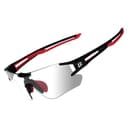
The value tier is unusually strong in cycling, though. Tifosi builds Grilamid TR-90 frames with hydrophilic grips and 100% UVA/UVB lenses for roughly a quarter of the premium price — our Tifosi review covers exactly what you give up. And at the bottom, a ROCKBROS photochromic with a prescription insert costs less than most riders spend on bar tape, which makes it a genuinely sensible way to find out whether a light-reactive lens suits you.
For other activities, our sport hub covers running, golf, fishing, hiking and the beach, and our running roundup is the closest sibling to this one if you also run.
If your real problem is the light changing, not the light being bright
Cycling is the use case photochromic lenses were built for — a dawn start under trees that finishes in full sun is exactly the situation a fixed tint handles badly. Two of the frames on this page are sold in a photochromic trim, and our photochromic roundup ranks that whole family separately, including what the lens does and does not do once you are back in the car.