Three questions to answer before you buy
1. What do they actually do outside?
This is the highest-value question and the easiest to answer without asking. Someone who fishes wants polarization above everything — it is the difference between reading a mirror and reading a river bed. Someone who golfs wants the opposite, because polarization erases the sheen off the grass that tells you how a putt will break, and a well-meant polarized gift is genuinely the wrong tool there. A runner wants grip and light weight. A commuter wants glare control on wet road.
Match the lens to the activity and the gift lands. Our sport hub covers each case, and what polarized sunglasses do explains the mechanism in plain terms.
2. Do they already own sunglasses you can measure?
If you can get thirty seconds alone with a pair they already wear, the whole fit problem collapses. Printed inside one temple arm is something like 54-18-140 — lens width, bridge width and temple length in millimeters. Buy something within a couple of millimeters of those numbers and it will fit.
If you cannot, favor frames that are forgiving: rubberized grip coatings (goodr builds its whole line around this), plastic frames that flex, and medium sizes rather than statement-oversized ones. Our sunglasses size guide explains how to read the numbers properly.
3. Is it a keepsake or a workhorse?
A heritage frame like the Wayfarer is a keepsake — it will still look right in ten years and it carries the weight of being an obviously considered gift. A goodr or a Knockaround is a workhorse: cheap enough to use hard, replace without pain, and own in multiples. Both are good gifts. They are not the same gift, and the wrong one for the recipient feels off no matter how much you spent.
The shapes that suit the most people
If you genuinely have no information, these are the odds-maximizing choices:
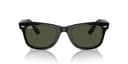
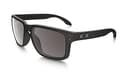
- A squared frame in a medium size — a Wayfarer shape or an Oakley Holbrook. Angular frames flatter round and oval faces, which together account for most people, and they read as classic rather than trend-led.
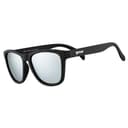
- A grippy sport frame — the goodr OG in particular. It is one size, but the rubberized coating means it stays put on a wide range of heads, and at this price a slightly imperfect fit is not a disaster.
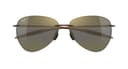
- A teardrop aviator — genuinely flattering on square and heart-shaped faces, and universally recognized.
The riskiest picks are true round frames and strongly oversized fashion shapes: both look wonderful on the right face and clearly wrong on the wrong one. If you know they have a strong jaw, a round frame is a great and thoughtful choice — our square-face roundup covers exactly that. If you are guessing, do not. Our face-shape guide is the full version.
Gifts by budget
Under $35 — the stocking filler that is genuinely good
This is the sweet spot for a low-risk gift, because the modern budget tier is genuinely polarized and genuinely UV400. A goodr OG or a Knockaround Premium is a real pair of sunglasses, not a token one, and if the fit is slightly off nobody has lost much. Our budget roundup covers the field, and goodr vs Knockaround settles the choice between the two.
$100–200 — the considered gift
A Ray-Ban or an Oakley reads as a proper present and will be worn for years. One caution worth knowing: the base Wayfarer, base Aviator and standard Holbrook are all not polarized. If the recipient spends time near water or drives a lot, spend the extra on the polarized trim rather than the fancier frame — it is the upgrade they will actually feel. Our Ray-Ban review and Oakley review cover which trims are which.
$200 and up — the splurge
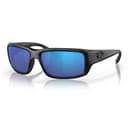
At this level you are buying a lens, so buy it for a purpose. A Costa 580G for someone who fishes is a gift with an obvious, specific point to it. A Maui Jim for a traveler who is outdoors constantly delivers a color-lifting lens they will notice every single time they put it on. Buying a premium frame for someone who mostly wears sunglasses in a car is less rewarding — our are expensive sunglasses worth it piece explains where the money genuinely goes.
Two things to include with the gift
First, a hard case, if the pair does not ship with one. Nothing extends the life of a lens more cheaply, because the fine swirl scratches that eventually ruin a lens come from bags and pockets, not from use.
Second, the receipt or gift receipt. Fit is the one variable you cannot control, and making an exchange easy is not an admission of failure — it is the thing that turns a risky gift into a safe one. Anyone who has owned sunglasses that do not fit understands.
Go deeper by budget or by recipient
This page is the overview. If you know roughly what you want to spend, the budget tiers have a longer list at each level: gifts under $50, gifts under $150 and luxury gifts. If you know the person better than the price, start with the recipient: gifts for him, gifts for her or gifts for the outdoor person, where the activity decides the lens. And if the question is whether to buy now or wait for a sale, our Black Friday deals hub lays out which brands historically discount in November and which rarely do.