Shade & Temple

Best Photochromic Sunglasses

Lenses that darken in sunlight and clear in shade — genuinely useful if you ride, run or hike through changing light, and close to useless if you bought them for the car. The difference is one spec, and it is why this page is ordered the way it is.

By Stephen V.Last updated How we pick

If you want one answer, it is the Tifosi Vero Fototec, and it is for the person this technology was actually built for: someone who starts a ride, run or hike in low light and finishes it in full sun, outdoors, with nothing between the lens and the sky. It states 100% UVA/UVB, the frame is Grilamid TR-90, and Tifosi’s own product page describes large lens vents for airflow. It is not polarized — if you need glare control as well as an adapting tint, the Crit Polarized Fototec is the same idea with a polarizing filter added, for about ten dollars more.

Now the part that decides whether you should buy any of these. A photochromic lens darkens because ultraviolet light triggers the dye in it — and the American Academy of Ophthalmology is explicit that car windows block the UV that causes the darkening. So a photochromic lens behind a windshield stays close to its clear state on the brightest day of the year. Two of the ten Google autocomplete suggestions for this category are “for driving” and “for motorcycle riding,” and the honest answer splits: on a bike, with your face in open air, the lens works exactly as advertised; in a car, it does not. If driving is your reason for being here, our driving roundup ranks fixed-tint polarized frames instead, and that is the right page for you.

The second thing worth knowing before you spend: photochromic and polarized are separate features, and most photochromic lenses are not polarized. Only two of the five picks below state both. The AAO also notes that these lenses adjust more slowly in cold weather, which matters if your use case is a winter dawn start. Our photochromic explainer covers how the dye works and photochromic vs polarized settles which one your problem actually needs. Every spec below is read from the product’s own listing or brand page on the dated visit shown on its card, prices are pulled live, and we have not field-tested any of these.

How this is funded: we earn a commission if you buy through our links, at no extra cost to you. It never changes which product we recommend, and we’ll tell you when we’d skip one. Full disclosure.

Quick picks

Ranked on lens spec, UV protection, tint fit and buyer value. Select a row to jump to the full write-up. We have not field-tested these — here is exactly what we do instead.

#ProductBest forPrice
1
Tifosi Vero Fototec

Tifosi Vero Fototec

A photochromic lens for people who keep starting rides or runs in shade and finishing them in glare. Fototec is Tifosi's light-reactive tint: it darkens in UV and clears when you drop back into tree cover, so one lens covers the whole outing. The Light Night version starts nearly clear, which makes it the dawn-and-dusk pick rather than the midday one.

Best overall
$89.95 · View on Amazon

Price as of October 20, 2026. #ad How we’re funded

2
Tifosi Crit Polarized Fototec

Tifosi Crit Polarized Fototec

The rare lens that is photochromic AND polarized at once — it adapts to changing light and still kills the glare bouncing off wet tarmac. That combination usually costs a great deal more. The trade-off is that a polarized photochromic never goes truly clear, so this is a bright-conditions lens, not a dawn one.

Best polarized photochromic
$99.95 · View on Amazon

Price as of October 20, 2026. #ad How we’re funded

3

Paleshy 0.1s Auto-Tinting Photochromic

A polarized photochromic lens at a price where that pairing normally does not exist — Tifosi's equivalent costs several times more. The listing claims a 0.1-second tint change and dual UV400. Treat the timing claim with skepticism, because it is the brand's own number with no published test behind it, but the feature set itself is real and unusually complete for the money.

Best budget pick
4
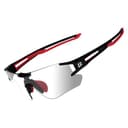
ROCKBROS Photochromic Sports Sunglasses

ROCKBROS Photochromic Sports Sunglasses

The cheapest honest way to try a photochromic lens. ROCKBROS lists a 22g UV400 light-reactive lens with an optional prescription insert behind it — which is the real story here, because a photochromic sport lens for people who wear glasses normally costs several times this. Budget coatings and a longer tint-transition than a premium lens are the price you pay.

Lightest, and the prescription option
$29.99 · View on Amazon

Price as of October 20, 2026. #ad How we’re funded

5
Global Vision Hercules 7 Photochromic

Global Vision Hercules 7 Photochromic

The one riding lens that handles a ride home after sunset. It is photochromic — clear indoors and at dusk, smoke in daylight — and ANSI Z87.1 rated for impact, which on a motorcycle is not a theoretical benefit given what a stone off a truck tire does at highway speed. The trade-off is that the listing publishes the impact standard and not a UV figure.

Best for riding into the dark
$39.99 · View on Amazon

Price as of October 20, 2026. #ad How we’re funded

The picks in full

#1Best overall

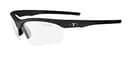
Tifosi Vero Fototec

A photochromic lens for people who keep starting rides or runs in shade and finishing them in glare. Fototec is Tifosi's light-reactive tint: it darkens in UV and clears when you drop back into tree cover, so one lens covers the whole outing. The Light Night version starts nearly clear, which makes it the dawn-and-dusk pick rather than the midday one.

Strengths

  • Fototec lens darkens and clears on its own as light changes
  • Light Night tint starts almost clear, so it works at dawn and dusk
  • Grilamid TR-90 frame with hydrophilic grips, 100% UVA/UVB

Trade-offs

  • Photochromic lenses barely react behind a car windshield, which blocks most UV
  • Not polarized, so it does not cut reflected glare off water
Lens featureFototec photochromic lens, Grilamid TR-90, 100% UVA/UVB
PolarizedNo
Lens tintLight Night Fototec (light-reactive)
Frame materialGrilamid TR-90
UV protection100% UVA/UVB
Best forCycling, Running, Hiking, Changing light

Spec note. Tifosi's Fototec lenses are photochromic — they darken in response to UV and lighten again indoors or in shade. Light Night is the lightest-starting tint in the range.

Specs read from the product listing, on August 10, 2026. “Not published” means the brand does not state that figure.

#2Best polarized photochromic

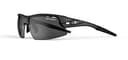
Tifosi Crit Polarized Fototec

The rare lens that is photochromic AND polarized at once — it adapts to changing light and still kills the glare bouncing off wet tarmac. That combination usually costs a great deal more. The trade-off is that a polarized photochromic never goes truly clear, so this is a bright-conditions lens, not a dawn one.

Strengths

  • Photochromic and polarized together — adaptive tint plus glare control
  • Cuts reflected glare off wet road, cars and water
  • Grilamid frame with hydrophilic grips, 100% UVA/UVB

Trade-offs

  • Never clears fully, so it is too dark for genuine low light
  • Costs more than a plain Fototec lens
Lens featurePolarized + Fototec photochromic, 100% UVA/UVB
PolarizedYes
Lens tintPolarized Fototec (light-reactive)
Frame materialGrilamid
UV protection100% UVA/UVB
Best forCycling, Driving, Hiking, Changing light

Spec note. Amazon lists this Crit as a polarized Fototec lens — Tifosi's photochromic tint layered with a polarizing filter, so it adapts to light and cuts reflected glare.

Specs read from the product listing, on August 10, 2026. “Not published” means the brand does not state that figure.

#3Best budget pick

Paleshy 0.1s Auto-Tinting Photochromic

A polarized photochromic lens at a price where that pairing normally does not exist — Tifosi's equivalent costs several times more. The listing claims a 0.1-second tint change and dual UV400. Treat the timing claim with skepticism, because it is the brand's own number with no published test behind it, but the feature set itself is real and unusually complete for the money.

Strengths

  • Polarized and photochromic together, which is rare below three figures
  • Dual UV400 stated on the listing
  • Aimed at driving, cycling and fishing rather than one narrow activity

Trade-offs

  • The 0.1-second transition claim is the manufacturer's, not an independently measured figure
  • Photochromics barely darken behind a windshield, which blunts the driving case
Lens featurePolarized photochromic, dual UV400
PolarizedYes
Lens tintPhotochromic
Frame materialNot published
UV protectionDual UV400
Best forDriving, Cycling, Fishing, Changing light

Spec note. The listing states a polarized photochromic lens with dual UV400 and a 0.1-second auto-tint. The transition speed is a manufacturer claim with no published test behind it, and car glass blocks most of the UV that triggers photochromic darkening.

Specs read from the product listing, on August 19, 2026. “Not published” means the brand does not state that figure.

#4Lightest, and the prescription option

ROCKBROS Photochromic Sports Sunglasses

The cheapest honest way to try a photochromic lens. ROCKBROS lists a 22g UV400 light-reactive lens with an optional prescription insert behind it — which is the real story here, because a photochromic sport lens for people who wear glasses normally costs several times this. Budget coatings and a longer tint-transition than a premium lens are the price you pay.

Strengths

  • Photochromic UV400 lens at a fraction of a premium light-reactive pair
  • 22g stated weight — barely there on a long ride
  • Includes a myopia insert frame for prescription wearers

Trade-offs

  • Budget lens coatings scratch faster than a Tifosi or Oakley
  • Not polarized, and the tint transition is slower than premium photochromics
Lens featurePhotochromic UV400 lens, 22g, prescription insert
PolarizedNo
Lens tintPhotochromic (light-reactive)
Frame materialTR90
UV protectionUV400
Best forCycling, Running, Fishing, Prescription insert

Spec note. ROCKBROS lists a 22g photochromic UV400 lens supplied with a myopia (prescription) insert frame.

Specs read from the product listing, on August 10, 2026. “Not published” means the brand does not state that figure.

#5Best for riding into the dark

Global Vision Hercules 7 Photochromic

The one riding lens that handles a ride home after sunset. It is photochromic — clear indoors and at dusk, smoke in daylight — and ANSI Z87.1 rated for impact, which on a motorcycle is not a theoretical benefit given what a stone off a truck tire does at highway speed. The trade-off is that the listing publishes the impact standard and not a UV figure.

Strengths

  • Photochromic clear-to-smoke lens covers a ride that runs into the evening
  • ANSI Z87.1 impact rating — the relevant standard for debris at speed
  • One pair replaces the usual clear-plus-tinted two-pair setup

Trade-offs

  • The listing states the Z87.1 impact rating but does NOT publish a UV figure — a safety rating is not a UV rating
  • Photochromic lenses react to ultraviolet, so they barely darken behind a car windshield
Lens featurePhotochromic clear-to-smoke, ANSI Z87.1 impact rated
PolarizedNot published
Lens tintPhotochromic — clear to smoke
Frame materialNot published
UV protectionNot published
Best forMotorcycle, Dusk riding, Changing light

Spec note. The listing states an auto-darkening clear-to-smoke photochromic lens certified to ANSI Z87.1. It does not state a UV rating, so we do not claim one.

Specs read from the product listing, on August 11, 2026. “Not published” means the brand does not state that figure.

How to choose photochromic sunglasses

Four questions, in the order that decides whether the money is well spent.

1. Will the lens actually see ultraviolet?

This is the whole decision and almost no product page mentions it. The dye reacts to UV, so the lens needs UV falling on it to darken. Open air: yes. Behind a windshield: largely no — the AAO’s page on photochromic lenses states plainly that car windows block the UV that triggers the darkening. Automotive glass is laminated and filters most UVB and a large share of UVA, which is good for your skin and bad for this lens.

That means the genuinely strong use cases are cycling, running, trail running, hiking, open-cockpit riding and anything under tree cover where the light changes every thirty seconds. The weak ones are commuting by car, truck driving and office-to-street wear. If you are a driver who wants one pair for dawn and midday, the better answer is a fixed polarized lens in a category you can live with all day — see our roundup for truck drivers, which deals with exactly that compromise over a long shift.

2. Polarized as well, or photochromic only?

These are two unrelated jobs. Photochromic changes how much light gets through; polarization removes the horizontally-reflected light bouncing off water, tarmac and glass. The AAO describes polarization as the feature that addresses reflected daytime glare, which is a different complaint from “too bright.”

Most riders and runners deliberately choose non-polarized lenses, because a polarizing filter also removes the sheen that tells you a patch of road is wet. If you fish, boat or drive, you want the polarization. Of the picks below, the Crit and the Paleshy state polarization; the Vero and the ROCKBROS are photochromic only; and the Global Vision publishes no polarization figure at all.

3. The range the lens actually covers

“Photochromic” is not a single spec. Some lenses run from near clear to a medium tint — the Global Vision Hercules 7 is sold as clear to smoke — and some span a much darker range. The mountain version of this is Julbo’s REACTIV family, which the brand describes as being offered in several category spans, including one that reaches the category 4 darkness you need on snow. That one lives on our glacier glasses page, not here, because buying a category 4 lens for a commute is a mistake in the other direction.

A lens that goes very clear is the right choice if you will be out after sunset. A lens that goes very dark is the right choice if the sun is the problem. No lens does both well, and the brochure phrase “photochromic” hides which one you are buying. Check what the listing says the two end states are, and if it does not say, assume the middle.

4. Temperature, and the slow fade

The AAO notes that photochromic lenses adjust more slowly in the cold. In practice the darkening is usually the fast half and the clearing the slow one — you duck into a tunnel or a wood and the lens takes its time. On a fast descent that is a safety consideration, not a convenience one. It is also the reason riders who ride in genuinely mixed light often prefer an interchangeable-lens frame instead: a thirty-second lens swap is predictable in a way a dye is not. Our anti-fog roundup covers one of those frames in detail.

Who should buy a photochromic lens, and who should not

Buy one if: you cycle, run, hike or ride in open air; your rides start before the sun is up or end after it is down; you ride in and out of tree cover; or you genuinely do not want to carry a second pair.

Do not buy one if:your main use is driving a car; you want the darkest possible lens for bright, static conditions — a fixed dark tint will always go darker than an adaptive one at the same price; or you need a predictable lens for a sport where the light does not change. On a golf course or a boat in open sun, the adaptive behaviour is solving a problem you do not have, and you are paying for it. Our golf and fishing roundups rank fixed-tint frames for that reason.

What we checked and did not feature

The second Paleshy photochromic trim.The brand sells a Driving & Cycling Photochromic Polarized frame alongside the auto-tinting pair we picked, at a similar price, with the same UV400 and polarization claims. It is a genuine product and it is in our registry — it is not featured here because it is close enough to the pick above it that listing both would pad the page rather than widen your choice. You can see it on our Paleshy brand review.

Interchangeable-lens frames sold as a photochromic alternative. A three-lens kit covers a wider light range than any single photochromic lens and usually costs less. It is a better answer for some riders. It is not a photochromic lens, so it is not ranked on a photochromic page — our motorcycle roundup ranks one of them properly.

The Julbo REACTIV mountain lenses.Photochromic, polarized, and the most capable lens of this kind in our registry — but their range tops out in filter category 4, which is too dark for driving and is sold for snow at altitude. They are ranked on best glacier glasses instead.

For the question that leads most people here — whether an overcast day warrants sunglasses at all — see do you need sunglasses on cloudy days.
Frequently asked questions

Do photochromic sunglasses work in a car?

Barely. The dye is triggered by ultraviolet light, and the American Academy of Ophthalmology states that car windows block the UV that causes photochromic lenses to darken. Laminated automotive glass filters most UVB and much of the UVA, so the lens stays close to its clear state even in bright sun. On a motorcycle or a bicycle, with nothing between the lens and the sky, it works normally. If driving is your reason for buying, a fixed polarized lens is the right purchase.

Are photochromic sunglasses also polarized?

Usually not — they are separate features and most photochromic lenses carry no polarizing filter. A few trims combine both, and they cost more. Check the specific SKU rather than the model name: brands frequently sell a photochromic version and a polarized version of the same frame, and the listing title rarely makes the difference obvious. Of the five picks on this page, two state polarization, two state photochromic only, and one publishes no polarization figure at all.

How dark do photochromic lenses actually get?

It depends entirely on the lens, which is why "photochromic" on its own tells you very little. Some are sold as clear-to-smoke, which is a modest range built for riding into dusk. Others span a much darker range — Julbo describes its REACTIV family as being offered in several filter-category spans, with one reaching the category 4 darkness used on glaciers. A fixed dark lens will always go darker than an adaptive lens at the same price.

Why are my photochromic lenses slow to clear?

The clearing half of the cycle is normally the slower one, and the AAO notes that photochromic lenses adjust more slowly in cold weather. If you ride into a tunnel or under tree cover, expect a lag of some seconds rather than an instant change. This is the main practical argument for an interchangeable-lens frame instead: a lens swap is predictable, a dye is not.

Are photochromic sunglasses worth the extra money?

For outdoor use in changing light, often yes — one pair replaces a clear lens and a tinted one, and you are never caught with the wrong lens on your face. For bright, static conditions, no: you are paying extra for adaptive behaviour that is not solving anything, and a fixed tint at the same price goes darker. For driving, no, for the ultraviolet reason above.

Can you get photochromic lenses in a prescription?

Yes. The AAO's page on prescription sunglasses notes they can be made in nearly any prescription, and photochromic is a standard option at most opticians. There is also a cheaper route some sport frames offer: an inner prescription insert behind a photochromic outer lens, which is how the ROCKBROS pick on this page is sold. Our prescription sunglasses guide covers the routes and roughly what each costs.

Do photochromic lenses block UV when they are clear?

On a lens that states a UV rating, yes — the UV filter and the photochromic dye are different parts of the lens, and the filter does not switch off when the tint fades. That is worth knowing, because it means a clear-state photochromic lens is still protecting you. But it only applies where the listing actually states the rating: one of the five picks below publishes no UV figure, and its card says so rather than implying one.

Sources

Keep reading