Shade & Temple

Best Sunglasses for Beach Volleyball

A ball falling out of the brightest part of the sky, a court that reflects the sun back up at you, and a dive every other rally. Grip decides this one before optics do — and the honest limit of what any pair of sunglasses can protect you from is worth knowing before you buy.

By Stephen V.Last updated How we pick

Most sports ask a lens to handle light. Beach volleyball asks the frame to survive being thrown at the ground. You dive, you roll, you come up with sand on your face and sweat running into the frame, and then the next serve goes up and you are looking almost vertically into the brightest part of the sky with no cap brim to help you. That combination is why the ranking below starts with grip and gets to optics second, which is the reverse of how we rank a baseball or tennis pair.

The two brands that market hardest to this sport both say the same thing about what matters, which is unusual enough to be worth quoting. goodr runs a dedicated volleyball collection and describes the mechanism it sells on: every pair has “a special grip coating to prevent slipping and a lightweight, snug fit to stop them from bouncing no matter how wild you get on the court”. Tifosi’s beach volleyball guide names the same property in its own words — “hydrophilic pads that lock in as you sweat”. Neither leads with the lens. Nor do we.

One thing to settle before you spend anything, because it is the part the category is quietest about: sunglasses are not protective equipment. Prevent Blindness states it flatly — “Prescription glasses, sunglasses, contact lenses, and even occupational safety glasses do not provide adequate protection for sports eyewear” — and a spiked ball arriving at your face is a genuine impact event. The section below on that is the one we would most like you to read. Everything on this page states a UV rating, every pick was confirmed in stock the day it was published, and prices are pulled live and dated.

How this is funded: we earn a commission if you buy through our links, at no extra cost to you. It never changes which product we recommend, and we’ll tell you when we’d skip one. Full disclosure.

Quick picks

Ranked on lens spec, UV protection, tint fit and buyer value. Select a row to jump to the full write-up. We have not field-tested these — here is exactly what we do instead.

#ProductBest forPrice
1
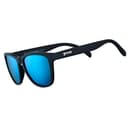
goodr OG

goodr OG

The best $25–35 in sunglasses. The OG is genuinely polarized, UV400, and its rubberized grip coating means it doesn't bounce or slide on a run — the reason it became runners' cult favorite. A squared retro shape that flatters round faces, in dozens of colorways. The value pick, full stop.

Best overall
$30.00 · View on Amazon

Price as of September 22, 2026. #ad How we’re funded

2
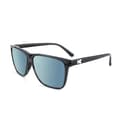
Knockaround Fast Lanes Sport

Knockaround Fast Lanes Sport

Knockaround's sportier frame — a slightly wrapped, grippier take on the Premiums that suits running and active wear better than the flat classic. Polarized and UV400, still cheap. The value sport pick when goodr's shape isn't for you.

Best polarized for sand
$38.00 · View on Amazon

Price as of September 22, 2026. #ad How we’re funded

3
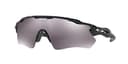
Oakley Radar EV Path Prizm

Oakley Radar EV Path Prizm

The performance shield for runners and cyclists who want maximum coverage and a taller lens. The Prizm tint sharpens contrast, the frame is featherweight O Matter, and the open-edge lens keeps your peripheral view clear. Non-polarized, which most runners prefer for reading the road surface.

Best for tracking the ball
$244.00 · View on Amazon

Price as of September 22, 2026. #ad How we’re funded

4
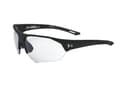
Under Armour Playmaker Wrap

Under Armour Playmaker Wrap

A 72mm wrap built for field sports, which is a genuinely large lens — the width is what keeps sun out of the corner of your eye when you are tracking a ball into the sky rather than looking straight ahead. Rubberized nose and temple pads hold it through a sprint, and it costs a fraction of the premium sport wraps without giving up coverage.

Best for wider faces
$74.22 · View on Amazon

Price as of September 22, 2026. #ad How we’re funded

5
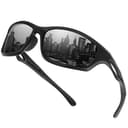
Duduma Polarized Sports

Duduma Polarized Sports

One of Amazon's long-running budget sport bestsellers. The Duduma is polarized, UV400, and built on a TR90 wrap frame — a lot of sport sunglass for under $20. It's not premium, but as a knock-around fishing or cycling backup, the polarization does the job.

Best cheap spare
$19.79 · View on Amazon

$26.9927% off

Price as of September 22, 2026. #ad How we’re funded

The picks in full

#1Best overall

goodr OG

The best $25–35 in sunglasses. The OG is genuinely polarized, UV400, and its rubberized grip coating means it doesn't bounce or slide on a run — the reason it became runners' cult favorite. A squared retro shape that flatters round faces, in dozens of colorways. The value pick, full stop.

Strengths

  • Genuinely polarized and UV400 at a sub-$35 price
  • No-slip, no-bounce grip coating stays put on a run
  • Squared retro shape flatters round faces; dozens of colors

Trade-offs

  • One size — a narrow face may find the OG a touch wide
  • Plastic frame and standard lens won't match a glass premium lens for clarity
Lens featurePolarized, UV400, no-slip grip
PolarizedYes
Lens tintVaries by colorway
Frame materialPolycarbonate (plastic)
UV protectionUV400
Best forRunning, Everyday, Round faces

Spec note. goodr lists the OG as polarized with UV400 protection and a no-slip coating; colorways change but the lens spec is consistent.

Specs read from the product listing, on July 18, 2026. “Not published” means the brand does not state that figure.

#2Best polarized for sand

Knockaround Fast Lanes Sport

Knockaround's sportier frame — a slightly wrapped, grippier take on the Premiums that suits running and active wear better than the flat classic. Polarized and UV400, still cheap. The value sport pick when goodr's shape isn't for you.

Strengths

  • Polarized and UV400 with a light sport wrap
  • Grippier fit than the flat Premiums for activity
  • Still inexpensive

Trade-offs

  • Not as no-slip as a dedicated running frame
  • Budget hinges and coatings
Lens featurePolarized, UV400, light sport wrap
PolarizedYes
Lens tintVaries by colorway
Frame materialPolycarbonate (plastic)
UV protectionUV400
Best forRunning, Everyday sport, Budget

Spec note. Knockaround lists the Fast Lanes Sport as polarized with UV400 protection.

Specs read from the product listing, on July 18, 2026. “Not published” means the brand does not state that figure.

#3Best for tracking the ball

Oakley Radar EV Path Prizm

The performance shield for runners and cyclists who want maximum coverage and a taller lens. The Prizm tint sharpens contrast, the frame is featherweight O Matter, and the open-edge lens keeps your peripheral view clear. Non-polarized, which most runners prefer for reading the road surface.

Strengths

  • Tall, open-edge lens maximizes upper-field vision when your head is down
  • Very light O Matter frame with grippy earsocks
  • Prizm Road tint lifts contrast on pavement and trail

Trade-offs

  • Big, unmistakably athletic look off the road
  • Premium price; polarization not offered on the standard Prizm Road
Lens featurePrizm tint, tall shield lens, 100% UV
PolarizedNo
Lens tintPrizm
Frame materialO Matter (nylon)
UV protection100% UV (Plutonite, to 400nm)
Best forRunning, Cycling, Trail

Spec note. The Radar EV raised the lens height over the original Radar for more upper-field coverage; the Prizm Road tint is non-polarized.

Specs read from the product listing, on July 18, 2026. “Not published” means the brand does not state that figure.

#4Best for wider faces

Under Armour Playmaker Wrap

A 72mm wrap built for field sports, which is a genuinely large lens — the width is what keeps sun out of the corner of your eye when you are tracking a ball into the sky rather than looking straight ahead. Rubberized nose and temple pads hold it through a sprint, and it costs a fraction of the premium sport wraps without giving up coverage.

Strengths

  • 72mm lens width — real coverage for looking up and across, not just forward
  • Rubberized grip on the nose and temples holds through sweat and sprinting
  • Sits well under a cap brim, which a taller shield frame often does not

Trade-offs

  • The listing does not state polarization — check the variant before you order if you also want glare control
  • 72mm is a genuinely large frame: on a narrow face it sits wide and lets light in at the temples
Lens feature72mm wraparound coverage, rubberized grip
PolarizedNot published
Lens tintNot published
Frame materialNot published
UV protection100% UVA/UVB
Best forBaseball, Field sports, Wide faces

Spec note. Published frame geometry for the UA Playmaker (UA0001) is a 72mm lens width on a 10mm bridge with 130mm temples — unusually wide for a sport wrap, which is where the peripheral coverage comes from. This listing does not restate the measurements, a lens tint or a polarization state.

Specs read from the product listing, on September 5, 2026. “Not published” means the brand does not state that figure.

#5Best cheap spare

Duduma Polarized Sports

One of Amazon's long-running budget sport bestsellers. The Duduma is polarized, UV400, and built on a TR90 wrap frame — a lot of sport sunglass for under $20. It's not premium, but as a knock-around fishing or cycling backup, the polarization does the job.

Strengths

  • Polarized and UV400 on a TR90 wrap frame, under $20
  • Wrap coverage for cycling, fishing and running
  • Cheap enough to keep a pair in every bag

Trade-offs

  • Budget lens clarity and coatings
  • Generic sport-wrap look
Lens featurePolarized, UV400, TR90 wrap
PolarizedYes
Lens tintNot published
Frame materialTR90
UV protectionUV400
Best forCycling, Fishing, Budget

Spec note. Duduma lists the frame as polarized with UV400 protection on an unbreakable TR90 frame.

Specs read from the product listing, on July 18, 2026. “Not published” means the brand does not state that figure.

How to choose sunglasses for beach volleyball

1. Grip is the first specification, not the third

In most sports a frame moving slightly is an annoyance. Here it is the whole purchase. You are making explosive vertical movements, landing hard, going to the ground deliberately, and sweating into whatever is touching your nose and temples. A frame that shifts on a dig is a frame you stop wearing by the second set.

What actually produces grip is a hydrophilic material at the two contact points — the nose pads and the temple tips. Hydrophilic is the counter-intuitive part: the material grips harder as it gets wet, which is the opposite of a smooth plastic temple that starts sliding the moment you sweat. Tifosi describes exactly this on its own sport frames, and goodr sells the same idea as a grip coating across its whole range. It is also why a heavy fashion frame is the wrong tool no matter how good the lens is: less mass means less to shake loose.

The second half of retention is fit rather than coating. A frame that is too wide for your face sits away from your temples and has room to move; one that is too narrow grips your head under tension and lifts off the bridge. Our size guide covers reading the millimeters printed inside the temple of a pair you already own, and why sunglasses slide down covers the causes that no amount of grip coating fixes.

2. Polarization: the one court surface where it genuinely earns its place

We have argued against polarization on other sport pages. On a matte tennis court there is little polarized glare to remove, and on a road surface a polarizing filter can erase the sheen that tells a cyclist a patch is wet. Sand is different, and this is the sport where our usual caution flips.

Dry sand under midday sun is a broad, bright, largely horizontal reflector, and most beach courts have water next to them doing the same thing harder. Light bouncing off a flat surface comes back polarized in one plane, and a polarizing filter is aligned to block that plane specifically — the American Academy of Ophthalmology points to polarized lenses for exactly this kind of reflected glare. Both brands selling into this sport say the same: goodr describes “polarized lenses that filter out horizontal light waves that bounce off the sand”, and Tifosi that “Polarized lenses cut harsh reflections off sand and water”.

Three of the five picks here are polarized. The one that deliberately is not is the premium pick, and the reason is in the next section rather than an oversight. Our polarized sunglasses guide covers the physics, and the ten-second home test will tell you whether a pair you already own has it.

3. Tint: you are tracking a ball against sky, not against a court

The decisive moments in this sport happen with your head back. A served or spiked ball spends its useful tracking window against open sky, which is the brightest and least contrasty background in any outdoor sport, and unlike baseball you have no cap brim shading your eyes while you look up.

Tifosi publishes a tint map for the sport that matches what we would tell you independently: “Brown/amber boosts ball tracking, smoke/gray reduces noon sun, rose/yellow boosts contrast on cloudy days”. In practice that resolves to a simple decision:

  • Neutral gray for genuinely bright midday play. It dims everything evenly, so the ball, the lines and your partner’s hands stay the colors they actually are. The safe default.
  • Brown, copper or amber when you want the ball to separate from the sky. These suppress part of the blue end of the spectrum, which raises apparent contrast at the cost of shifting color slightly — a good trade when the background is a flat blue-white sky.
  • Rose or yellow for overcast and early-evening play, where the problem is flat light rather than brightness.
  • Not a category 4 lens. The darkest tints on the market are built for glaciers. Too little light gets through to track a fast ball. Our lens category guide explains the 0–4 scale.

Our lens color guide has the full table if you want to reason it out for your own conditions.

4. Coverage, because the sun is underneath you as well

Sand reflects a meaningful share of ultraviolet straight back up, which is why people burn under their chin at the beach and why eyes get sore on a court even when the sun is not directly overhead. A flat, narrow lens does nothing about light arriving from below and from the side; the AAO recommends wraparound and oversized styles specifically for that coverage, and UV exposure is cumulative over a playing career rather than something you feel on the day.

This is also the practical argument for a wrapped sport shape over a lifestyle frame: a wrap closes the gap at your cheekbone and temple where the reflected light comes in. Tifosi makes the same recommendation for the sport — “Sport-wrap or shield frames for side coverage and peripheral glare protection”. If you like the shape generally, our wraparound roundup covers it as a category, including how much curve is too much.

5. Sand: what it does to the lens, and what to do when it gets in your eye

Two separate problems, and most players only think about one of them.

On the lens. Dry sand is abrasive at exactly the scale a lens coating cares about. Wiping a sandy lens on a dry shirt is the single fastest way to ruin it — you are dragging grit across the surface under pressure. Rinse in fresh water first, every time, then dry with a clean microfiber. Our cleaning guide covers the method, and it is the reason two of the picks here are deliberately cheap: on a sand court, a lens has a finite life regardless of what you paid.

In your eye. Worth knowing before it happens, because the instinct is wrong. The AAO’s first-aid guidance is to rinse the eye “with saline solution or clean water”, to blink — “Blinking can help get rid of small bits of dust or sand in your eye” — and to “pull your upper eyelid over your lower eyelid” so the lower lashes can brush the particle away. What not to do: do not rub the eye, do not touch it with fingers or a cotton swab, do not put contact lenses back in, and do not use eye drops without asking a doctor. If it has scratched the cornea, the AAO says “it’s important to see an ophthalmologist right away”, though most abrasions “are minor and will heal on their own in a few days”. This is general guidance, not medical advice.

6. The honest limit: these are not protective equipment

A volleyball leaves a good hitter’s hand fast, and at the net there is very little time. Blocked balls, a partner’s elbow and a mistimed set all end up at face height. None of the picks on this page is rated for that, and neither is any other pair of sunglasses.

Prevent Blindness is unambiguous: “Prescription glasses, sunglasses, contact lenses, and even occupational safety glasses do not provide adequate protection for sports eyewear.” The equipment that does is a sport eye guard tested to the relevant standard — the organization explains that ASTM International “develops safety standards for protective sports eyewear” and that products meeting the appropriate standard “have been tested to help reduce the risk of eye injuries during specific sports”. On the scale of the problem, it reports that in 2025 “more than 44,000 people were treated for eye injuries related to sports activities”.

So treat this as two separate purchases rather than one. Sunglasses handle sun, glare and sand. If impact protection is what you are actually shopping for — for a junior player, for indoor league play, or because you have had an eye injury before — buy a rated eye guard, and buy it in addition to rather than instead of a lens with a UV rating. We make the same point on our pickleball and safety sunglasses pages, and it has not changed.

7. Retention: buy a strap, and we will not sell you one

The cheapest upgrade available to you is a retainer strap, and there is no pick for it on this page because we do not carry one in our product registry — we would rather say that than invent a recommendation to fill the slot.

It is still the right advice. A simple neoprene or cord retainer costs less than a tube of sunscreen, takes the frame from “probably stays on” to “stays on”, and means a pair that does come off during a dive ends up round your neck rather than buried in sand where the next player steps on it. Any established outdoor brand’s version does the job; this is not a product where spending more buys anything. The one caveat is comfort — a thick strap under a hat or against a sweaty neck annoys some players enough that they stop wearing it, so a thin cord is usually the better first try.

8. Indoor volleyball: wear nothing tinted

Worth stating because the search that brought some readers here does not distinguish the two codes. Indoor volleyball is played under artificial light at a level where any tint removes information you need, and there is no ultraviolet to filter. A tinted lens indoors is a straightforward disadvantage.

If you need vision correction on an indoor court, that is the eye-guard conversation above rather than a sunglasses one. And if your reason for wanting a tint indoors is that the lighting genuinely hurts, that is worth reading our light sensitivity guide on — ophthalmologists warn that habitually wearing dark lenses indoors makes ordinary light feel worse over time.

9. Grass and hard-court volleyball are a different brief

Grass courts and outdoor hard courts keep the sky-tracking problem and the UV, and drop most of the polarization argument and all of the abrasion one. Grass is a poor reflector compared with sand, so a polarized lens is optional rather than a clear win, and a lens that is not going to meet sand every session can justify better optics. If that is your game, the picks lower down this page still apply but you can reasonably spend more on the lens and less on replaceability.

10. If you wear a prescription

Three routes and none is ideal for a diving sport. Prescription sport sunglasses give the best optics and the highest cost, and a wrapped frame makes glazing harder — our prescription guide covers what to ask an optician. Contact lenses plus any pair on this page is what most players who need correction end up doing, with the caveat that sand and contacts are a bad combination and the AAO advice above says to take the lens out rather than put it back in. A fit-over is the cheap option and the wrong shape here — too bulky and too loose for a sport with this much movement.

What we left out, and why

One frame we could not confirm was in stock. A wider-fitting sport wrap already in our registry was the obvious candidate for the wide-face slot, and it returned an empty availability field on the live stock check the day this page was written. We do not put a buy button behind a listing we cannot confirm, so the slot went to a pair we could.

Unbranded marketplace sport frames. A search for volleyball-suitable frames turns up dozens of near-identical wraps at ten to twenty dollars. Most publish nothing but a title. Where one states polarization and a UV rating plainly it can be a perfectly good spare — that is what the cheapest pick here is — but we are not going to list five of them and pretend to have distinguished between them.

Sport goggles and eye guards. Genuinely better than any sunglass for impact, and a different product with a different standard behind it. Covered in section 6 rather than ranked here, because ranking them alongside sunglasses would imply they compete. They do not; they complement.

Where to spend and where not to

Spend on grip and on fit, and accept that a sand court is a consumable environment for eyewear. The realistic setup for most players is one pair you actually like, bought for how it stays on your face rather than for the badge, plus a cheap spare in the bag for the day the good pair gets stepped on. Add a retainer and you have solved most of what goes wrong.

Do not spend up for ultraviolet protection, because it does not scale with price: the AAO states plainly that price is not a proxy for UV protection and that darker lenses are not more protective. A twenty-dollar pair marked UV400 filters the same ultraviolet as a premium one. What the premium pick here genuinely buys is optical quality across a tall, curved lens and a frame that holds its shape — worth it if you play often and on grass, harder to justify if every session ends with your glasses in the sand. Our are expensive sunglasses worth it guide takes that question apart properly, and the beach roundup covers the same court from the sunbather’s side rather than the player’s.
Frequently asked questions

What sunglasses do beach volleyball players wear?

Light sport frames chosen for grip rather than for optics, which is why goodr and Tifosi are the two brands that market hardest to the sport. goodr runs a dedicated volleyball collection and sells on the mechanism: every pair has 'a special grip coating to prevent slipping and a lightweight, snug fit to stop them from bouncing no matter how wild you get on the court'. Tifosi names the same property as 'hydrophilic pads that lock in as you sweat', and recommends sport-wrap or shield shapes for side coverage. Plenty of competitive players wear nothing at all, which is a legitimate choice — but it is a choice about comfort, not about UV.

Should beach volleyball sunglasses be polarized?

On sand, yes — this is the sport where the usual caution about polarization flips. Dry sand under bright sun is a broad horizontal reflector and most beach courts have water beside them doing the same thing, and light bouncing off a flat surface comes back polarized in one plane, which is exactly what a polarizing filter blocks. The AAO points to polarized lenses for reflected glare, goodr describes lenses that 'filter out horizontal light waves that bounce off the sand', and Tifosi says polarized lenses 'cut harsh reflections off sand and water'. On grass or an outdoor hard court the argument is much weaker, because neither reflects the way sand does.

What lens color is best for volleyball?

Neutral gray for bright midday play, brown or amber when you want the ball to separate from the sky, and rose or yellow for overcast or evening sessions. Tifosi publishes essentially that map for the sport — 'Brown/amber boosts ball tracking, smoke/gray reduces noon sun, rose/yellow boosts contrast on cloudy days'. The reasoning holds generally: warm tints suppress part of the blue end of the spectrum, which raises apparent contrast against a flat blue-white sky at the cost of a slight color shift. What to avoid is a category 4 lens, which is built for glaciers and is too dark to track a fast ball.

Do sunglasses protect your eyes from a volleyball to the face?

No, and this is the most important thing on this page. Prevent Blindness states that 'Prescription glasses, sunglasses, contact lenses, and even occupational safety glasses do not provide adequate protection for sports eyewear'. Impact protection means a sport eye guard tested to the relevant ASTM International standard, which the organization explains is developed specifically so products 'have been tested to help reduce the risk of eye injuries during specific sports'. It reports more than 44,000 people treated for sports-related eye injuries in 2025. Treat sun protection and impact protection as two separate purchases.

What do I do if I get sand in my eye during a game?

Follow the AAO's first aid: rinse the eye 'with saline solution or clean water', blink — 'Blinking can help get rid of small bits of dust or sand in your eye' — and 'pull your upper eyelid over your lower eyelid' so the lower lashes can sweep the particle out. Do not rub the eye, do not poke at it with fingers or a cotton swab, do not put a contact lens back in, and do not use eye drops without asking a doctor first. If it has scratched your cornea, the AAO says to 'see an ophthalmologist right away', although most abrasions 'are minor and will heal on their own in a few days'. That is general guidance rather than medical advice.

How do I stop my sunglasses falling off when I dive?

Grip first, then a strap. Grip comes from hydrophilic nose pads and temple tips, which hold harder as you sweat rather than getting slippery, and from a light frame that has less mass to shake loose — that is the property both volleyball-marketing brands lead with. Fit matters as much: a frame too wide for your face has room to move, and one too narrow lifts off the bridge. After that, a simple retainer strap costs a few dollars and turns 'probably stays on' into 'stays on', and keeps a dislodged pair round your neck instead of buried in sand where someone treads on it.

Should I wear sunglasses for indoor volleyball?

No. Indoor volleyball is played under artificial light at a level where any tint subtracts information you need to track the ball, and there is no ultraviolet indoors to filter, so a tinted lens is a straight disadvantage. If you need vision correction on an indoor court, that is a question about prescription sport eyewear or a rated eye guard rather than about sunglasses. And if artificial light genuinely hurts your eyes, wearing dark lenses indoors tends to make that worse over time rather than better — our light sensitivity guide covers why.

Sources

  • goodr — Volleyball Sunglasses collection (brand page)A brand running a dedicated volleyball collection, and stating the mechanism it sells on: every pair has "a special grip coating to prevent slipping and a lightweight, snug fit to stop them from bouncing no matter how wild you get on the court". On the lens it claims "polarized lenses that filter out horizontal light waves that bounce off the sand" and that its "UV400 protection is the best in the game". Models the brand points volleyball players at: Astro G ("full wraparound"), BFG, Mach G and VRG for coverage, Circle G and OG for a classic shape (accessed September 22, 2026)
  • Tifosi Optics — Beach Volleyball Sunglasses: For Every Beach Day and Rally (brand page)The second brand marketing directly to this sport, and its requirement list matches goodr's on grip and diverges on tint. Retention: "hydrophilic pads that lock in as you sweat". Tint, in the brand's own words: "Brown/amber boosts ball tracking, smoke/gray reduces noon sun, rose/yellow boosts contrast on cloudy days". Glare: "Polarized lenses cut harsh reflections off sand and water". Frame: "Sport-wrap or shield frames for side coverage and peripheral glare protection" plus "Ventilation or semi rimless designs to prevent lens fogging". Named models: Sanctum, Vogel SL, Rivet and Sector Lite (accessed September 22, 2026)
  • Prevent Blindness — Recommended Sports Eye Protectors (re-read 2026-09-22)Prevent Blindness states plainly that eyewear like ours is not protective equipment: "Prescription glasses, sunglasses, contact lenses, and even occupational safety glasses do not provide adequate protection for sports eyewear." It explains that "American Society for Testing and Materials (ASTM) International develops safety standards for protective sports eyewear" and that products meeting the appropriate ASTM standard "have been tested to help reduce the risk of eye injuries during specific sports". Scale, as published on this read: "In 2025, more than 44,000 people were treated for eye injuries related to sports activities" (accessed September 22, 2026)
  • American Academy of Ophthalmology — First Aid Guide: How to Heal a Scratched EyeAAO (Dan Gudgel; reviewed by Brenda Pagan-Duran, MD; 10 December 2025) on getting sand or grit out of an eye. Do: "rinse your eye with saline solution or clean water"; "blink. Blinking can help get rid of small bits of dust or sand in your eye"; "pull your upper eyelid over your lower eyelid" so the lower lashes can brush the particle away. Do not rub the eye, do not touch it with fingers or cotton swabs, do not wear contact lenses, and do not use eye drops without asking a doctor. With a corneal abrasion "it's important to see an ophthalmologist right away", and "Most corneal abrasions and eye scratches are minor and will heal on their own in a few days" (accessed September 22, 2026)
  • American Academy of Ophthalmology — What Are Polarized Lenses For?AAO on how polarized lenses cut reflected glare from water, pavement and glass (accessed July 18, 2026)
  • American Academy of Ophthalmology — Recommended Types of SunglassesAAO on wraparound and oversized frames for maximum coverage (accessed July 18, 2026)
  • American Academy of Ophthalmology — How to Pick the Best Sunglasses to Protect Your EyesAAO: look for 100% UV / UV400; darker lenses are not more protective; price does not equal protection (accessed July 18, 2026)
  • American Academy of Ophthalmology — The Sun, UV Light and Your EyesAAO on how UV exposure raises the risk of cataract, growths and eye cancer (accessed July 18, 2026)
  • CDC — Taking Care of Your EyesCDC recommends wraparound sunglasses that block UVA and UVB (accessed July 18, 2026)
  • Prevent Blindness — Choosing UV ProtectionBuy only sunglasses with a clear statement of UV blocking; block 99–100% UVA/UVB (accessed July 18, 2026)
  • American Academy of Ophthalmology — How to Clean Your GlassesAAO: use a soft cloth made for lenses and a mild detergent; tissues and clothing scratch lenses (accessed August 11, 2026)

Keep reading