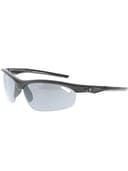
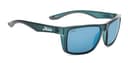
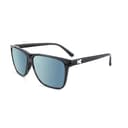
Shade & Temple

Best Sunglasses for Rowing

Both hands are on the oars, you are sweating harder than in any other sport on this site, and you are facing the wrong way. So this list is ranked on grip first, fogging second, and glare third — and the one frame built for facing backwards gets its own slot.

By Stephen V.Last updated How we pick

For almost every rower the right answer is the goodr OG, and the reason has nothing to do with optics. It is the only thing on this page cheap enough to lose in the water and grippy enough that it does not need pushing back up your nose — which matters more than any lens spec, because during a piece your hands are on the oar handles and taking one off to touch your face is not an option. Polarized, UV400, and about the price of a set of oar grips.

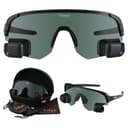
If you scull alone and steer yourself, read the TriEye entry before you buy anything else. It is the only frame here that addresses the thing that actually makes rowing different from every other sport we cover: you sit facing the stern, so you cannot see where the boat is going. A mirror does not fix that, but it changes how often you have to turn around to check.

This page is deliberately not our sailing roundupwith the nouns swapped. Under sail the dominant variable is apparent wind, so that page ranks sealing and retention. Rowing is the opposite trade: the boat is slow, the apparent wind is mild, and the problem is coming from inside the frame rather than outside it — sweat on the nose pads and warm air off your own face on a cool lens. A frame that seals well is the wrong frame for a 2k. Every pick below states a UV rating, every spec is read from the product’s own listing on a dated visit, and we have not rowed in any of them.

How this is funded: we earn a commission if you buy through our links, at no extra cost to you. It never changes which product we recommend, and we’ll tell you when we’d skip one. Full disclosure.

Quick picks

Ranked on lens spec, UV protection, tint fit and buyer value. Select a row to jump to the full write-up. We have not field-tested these — here is exactly what we do instead.

#ProductBest forPrice
1
goodr OG

goodr OG

The best $25–35 in sunglasses. The OG is genuinely polarized, UV400, and its rubberized grip coating means it doesn't bounce or slide on a run — the reason it became runners' cult favorite. A squared retro shape that flatters round faces, in dozens of colorways. The value pick, full stop.

Best overall
$30.00 · View on Amazon

Price as of October 20, 2026. #ad How we’re funded

2
TriEye Rowing (Dual Rear-View Mirror)

TriEye Rowing (Dual Rear-View Mirror)

The only frame here that answers the thing that actually makes rowing different from every other sport on this site: you face the stern, so you cannot see where you are going. TriEye builds a small mirror into the right temple, and the rowing edition runs two of them. It does not make you a better rower and it is not a substitute for looking over your shoulder — what it does is turn the look over your shoulder from a constant necessity into an occasional confirmation, which on a crowded river is worth the money. Polarized smoke lens, UV400 stated, and a price that is only defensible if you row alone and steer yourself.

Best for single scullers
$169.00 · View on Amazon

Price as of October 20, 2026. #ad How we’re funded

3
Tifosi Veloce (Interchangeable 3-Lens)

Tifosi Veloce (Interchangeable 3-Lens)

The frame to buy if fogging is the actual problem you are trying to solve. Tifosi states it plainly on its own product page — the Veloce runs large lens vents and 'vented lenses prevent fogging' — and it is one of the very few sunglasses, as opposed to safety glasses, where the brand makes that claim in its own words rather than leaving it to a marketplace bullet. The three-lens kit is the other half: a smoke lens for glare, AC Red for flat light, and a genuinely clear lens for the dawn starts and humid evenings when a dark tint is the wrong tool and fog is at its worst.

Best for fogging
$79.95 · View on Amazon

Price as of October 20, 2026. #ad How we’re funded

4
Hobie Cove Float

Hobie Cove Float

The floating frame that behaves like a proper sunglass rather than a novelty. Hobie is the one established eyewear brand running a full float line, and the Cove is its most sensible expression: a polarized gray nylon lens, a frame the brand states will float, and a water-repellent lens treatment that matters more on a boat than any tint decision. It is also the largest fit in that line, at a 58mm lens, which is the one to pick if wraparound sport frames usually sit narrow on you.

Best if you might end up swimming
$99.99 · View on Amazon

Price as of October 20, 2026. #ad How we’re funded

5
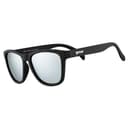
Knockaround Fast Lanes Sport

Knockaround Fast Lanes Sport

Knockaround's sportier frame — a slightly wrapped, grippier take on the Premiums that suits running and active wear better than the flat classic. Polarized and UV400, still cheap. The value sport pick when goodr's shape isn't for you.

Best budget pick
$38.00 · View on Amazon

Price as of October 20, 2026. #ad How we’re funded

The picks in full

#1Best overall

goodr OG

The best $25–35 in sunglasses. The OG is genuinely polarized, UV400, and its rubberized grip coating means it doesn't bounce or slide on a run — the reason it became runners' cult favorite. A squared retro shape that flatters round faces, in dozens of colorways. The value pick, full stop.

Strengths

  • Genuinely polarized and UV400 at a sub-$35 price
  • No-slip, no-bounce grip coating stays put on a run
  • Squared retro shape flatters round faces; dozens of colors

Trade-offs

  • One size — a narrow face may find the OG a touch wide
  • Plastic frame and standard lens won't match a glass premium lens for clarity
Lens featurePolarized, UV400, no-slip grip
PolarizedYes
Lens tintVaries by colorway
Frame materialPolycarbonate (plastic)
UV protectionUV400
Best forRunning, Everyday, Round faces

Spec note. goodr lists the OG as polarized with UV400 protection and a no-slip coating; colorways change but the lens spec is consistent.

Specs read from the product listing, on October 6, 2026. “Not published” means the brand does not state that figure.

#2Best for single scullers

TriEye Rowing (Dual Rear-View Mirror)

The only frame here that answers the thing that actually makes rowing different from every other sport on this site: you face the stern, so you cannot see where you are going. TriEye builds a small mirror into the right temple, and the rowing edition runs two of them. It does not make you a better rower and it is not a substitute for looking over your shoulder — what it does is turn the look over your shoulder from a constant necessity into an occasional confirmation, which on a crowded river is worth the money. Polarized smoke lens, UV400 stated, and a price that is only defensible if you row alone and steer yourself.

Strengths

  • Dual rear-view mirrors — the only frame in this registry that addresses facing backwards
  • Listing states a polarized smoke lens and UV400 protection
  • Built and sold for rowing specifically, not a cycling frame relabelled

Trade-offs

  • A mirror is an aid, not a substitute — you still have to turn and look, and anyone who treats it as a replacement is a hazard
  • The most expensive pair on the page by a wide margin, and the mirror housing sits inside your field of view until you stop noticing it
  • The listing does not state lens material, frame material or weight, so none is claimed here
Lens featureDual rear-view mirrors, polarized, UV400
PolarizedYes
Lens tintSmoke (polarized)
Frame materialNot published
UV protectionUV400
Best forRowing, Sculling, Cycling, Water with traffic

Spec note. The listing is titled 'TriEye Rowing Sunglasses with Dual Rear View Mirror, Polarized Smoke' and the product page headline states 'TriEye Sports Glasses with Rear-View Mirror UV400'. Polarization and UV400 are therefore both stated; lens material, frame material and weight are not, and are null here rather than guessed.

Specs read from the product listing, on October 6, 2026. “Not published” means the brand does not state that figure.

#3Best for fogging

Tifosi Veloce (Interchangeable 3-Lens)

The frame to buy if fogging is the actual problem you are trying to solve. Tifosi states it plainly on its own product page — the Veloce runs large lens vents and 'vented lenses prevent fogging' — and it is one of the very few sunglasses, as opposed to safety glasses, where the brand makes that claim in its own words rather than leaving it to a marketplace bullet. The three-lens kit is the other half: a smoke lens for glare, AC Red for flat light, and a genuinely clear lens for the dawn starts and humid evenings when a dark tint is the wrong tool and fog is at its worst.

Strengths

  • Tifosi's own page states vented lenses prevent fogging, with large vents for airflow
  • UV400 lenses stated to block UVA and UVB, at 28 grams
  • Three interchangeable lenses including a clear one, so low light is covered too
  • Hydrophilic rubber ear and nose pads that grip harder as you sweat

Trade-offs

  • None of the three lenses in this kit is polarized — reflected glare off water or wet road is untouched
  • Vents are holes: they pass wind and grit as readily as they pass water vapor, which is the wrong trade if your problem is dry eye rather than fog
  • Costs more than a vented budget wrap that makes the same claim on the listing alone
Lens featureVented lenses, UV400, 28g, three interchangeable lenses
PolarizedNo
Lens tintSmoke / AC Red / Clear (interchangeable)
Frame materialNot published
UV protectionUV400 (UVA/UVB)
Best forCycling, Running, Humid conditions, Changing light

Spec note. Tifosi's own Veloce page states 'large vents for maximum airflow and debris protection', 'vented lenses prevent fogging and maintain crystal-clear vision', 'UV400 lenses block harmful UVA and UVB rays', 'just 28 grams', 'interchangeable lenses for quick swaps as conditions change' and 'hydrophilic rubber ear and nose pads ensure a secure, no-slip grip that increases as you sweat'. The page does not state the frame material, so that field is null.

Specs read from the product listing, on September 29, 2026. “Not published” means the brand does not state that figure.

#4Best if you might end up swimming

Hobie Cove Float

The floating frame that behaves like a proper sunglass rather than a novelty. Hobie is the one established eyewear brand running a full float line, and the Cove is its most sensible expression: a polarized gray nylon lens, a frame the brand states will float, and a water-repellent lens treatment that matters more on a boat than any tint decision. It is also the largest fit in that line, at a 58mm lens, which is the one to pick if wraparound sport frames usually sit narrow on you.

Strengths

  • Polarized, and Hobie states 100% UVA, UVB and UVC blocking across its lenses
  • Gray lens keeps color accurate, which is the right call for reading water and navigation marks
  • HydroClean 360 treatment sheds water, grime and oils — the practical difference on spray

Trade-offs

  • Costs roughly twice what the marketplace floating frames do
  • A 58mm lens on a frame Hobie describes as a large fit — no published weight, and small faces should look elsewhere
  • No published buoyancy test — 'floating frame' is a manufacturer claim, not a measured spec
Lens featureFloating frame, polarized, HydroClean 360
PolarizedYes
Lens tintGray
Frame materialPlastic (floating frame)
UV protection100% UVA, UVB and UVC
Best forBoating, Kayaking, Fishing, Paddleboarding

Spec note. The listing states a floating frame built from high-buoyancy materials, a HydroClean 360 dual-sided water- and oil-repellent coating, and a polarized gray nylon lens, with a 58mm lens width, a 17mm bridge, 136mm temples, Megol rubber nose pads and an RX-ready build. It records 'Ultraviolet Light Protection: UV Protection' without a figure; Hobie's own eyewear pages state that all its lenses block 100% of UVA, UVB and UVC and that they meet or exceed ANSI Z80.3 for refractive power, light transmission and impact resistance — a standard almost nothing else in this category cites.

Specs read from the product listing, on September 25, 2026. “Not published” means the brand does not state that figure.

#5Best budget pick

Knockaround Fast Lanes Sport

Knockaround's sportier frame — a slightly wrapped, grippier take on the Premiums that suits running and active wear better than the flat classic. Polarized and UV400, still cheap. The value sport pick when goodr's shape isn't for you.

Strengths

  • Polarized and UV400 with a light sport wrap
  • Grippier fit than the flat Premiums for activity
  • Still inexpensive

Trade-offs

  • Not as no-slip as a dedicated running frame
  • Budget hinges and coatings
Lens featurePolarized, UV400, light sport wrap
PolarizedYes
Lens tintVaries by colorway
Frame materialPolycarbonate (plastic)
UV protectionUV400
Best forRunning, Everyday sport, Budget

Spec note. Knockaround lists the Fast Lanes Sport as polarized with UV400 protection.

Specs read from the product listing, on July 18, 2026. “Not published” means the brand does not state that figure.

How to choose sunglasses for rowing

Rowing inverts the usual priority order, so it is worth saying out loud what the criteria are before the picks make sense. Lens quality is fourth on this list, not first.

1. Grip, because you cannot touch your face

This is the whole page in one criterion. From the first stroke of a piece to the last, both hands are on the handles and your head is fixed; letting go to push a frame back up your nose costs you the stroke and, in a crew boat, unsettles everyone behind you. A pair that creeps down your nose on the drive is not a minor annoyance in rowing — it is the end of the pair’s usefulness, because you will stop wearing it.

Grip is a material property, not a shape. Rubber or hydrophilic nose pads and temple tips are what hold a frame on a wet face; polished acetate and metal do not. goodr sells on exactly this mechanism — the brand describes a grip coating designed to stop slipping and a snug fit to stop bouncing — and Tifosi states that its hydrophilic rubber pads grip harder as you sweat, which is the correct direction for the trade. Our page on why sunglasses slide down covers the fit side of the same problem, and it is the first thing to read if you already own a pair you like and want to make it stay put.

2. Fog, which is the failure mode nobody warns you about

Rowing produces heat at a rate very few sports match, and almost none of it is carried away by airflow because the boat is moving at single-digit speeds. The AAO describes the mechanism plainly in the context of masks: fogging happens when warm, moist air lands on the cooler surface of a lens. On a cold morning on flat water, your own face is the warm, moist air source, and a close-fitting wrap is the cooler surface sitting right in front of it.

That is why a sealed frame — the right answer for sailing, cycling and dry eye — is the wrong answer here. You want vents, a frame that sits a few millimeters off the brow, and ideally a clear or light lens for the pre-dawn outing when a dark tint is useless and fog is at its worst. Our anti-fog roundup is the full treatment of that trade-off, including the three habits that make fogging worse and why anti-fog coatings wear out.

3. Glare that arrives from below

A rower’s eye sits roughly a hand’s width above the water. Nobody else we write for is that low. The practical effect is that reflected glare does not come at you from a distant sheet of water the way it does on a powerboat; it comes up off the surface immediately around the boat, at a shallow angle, straight under the bottom edge of the frame. The AAO identifies polarization as the feature that addresses reflected daytime glare, and on the water that is correct — glare off a horizontal surface is horizontally polarized light, and a polarizing filter removes it rather than dimming everything equally.

Two honest caveats. First, a polarized lens makes a puddle on the dock look like dry concrete, which is a real trip hazard carrying a boat; the fix is to look, not to skip polarization. Second, polarization does nothing about light arriving from below the frame, which is a coverage question. A lens with some wrap and a frame that sits close to the cheekbone does more there than any tint. The geometry argument is set out in full in our wraparound roundup, and polarized vs non-polarized covers the general trade.

4. What you do about facing backwards

Rowing is the only sport on this site where you travel at speed without looking where you are going. In a coxed boat it is somebody else’s job. In a single, a double or an unsteered quad it is yours, and the standard solution is to turn your head every few strokes — which is slow, breaks your rhythm, and is exactly what people stop doing when they get tired.

A mirror mounted on the frame is a real product category rather than a novelty: TriEyebuilds one into the temple and sells a rowing edition with two. Be clear about what it buys you. It does not give you a usable picture of the whole river and it is not a substitute for looking — treating it as one makes you a hazard to other crews. What it does is let you confirm that the stretch behind you is still clear without turning, which means you check more often rather than less. If you row on a crowded, narrow or tidal stretch and steer yourself, that is worth real money. If you row on an empty lake in a coxed eight, it is not.

5. The pair has to survive the water, and sometimes swim

Singles capsize, boats swamp, and a pair that goes in off the dock is gone. Two defenses, and the cheap one is better than most people expect. A retainer cord costs a few dollars and is the single highest-value accessory for any frame on this page — it also solves the problem of where the glasses go when you take them off mid-outing, which is otherwise “on your head, until the next bump.” A floating frame turns a lost pair into a recoverable one; Hobie builds buoyant frames and is the one brand in that category citing a standard, stating that its lenses block 100% of UVA, UVB and UVC and meet or exceed ANSI Z80.3. Our floating sunglasses roundup is the dedicated page for that feature, and it says the same thing we will say here: for most people a retainer on the pair you already own beats buying a floating pair.

One more thing kills frames faster than water: salt and grit wiped across a dry lens with a pogie or a shirt hem. That is the mechanism behind most of the scratches rowers blame on build quality. The AAO’s position on scratched lenses is reassuring on the health question — a scratch will not harm your eye, though it can be distracting enough to cause strain — but it still ends the pair. Rinse with fresh water first; our cleaning guide has the full method.

Rowing, by what you row

Sweep in a crew boat, with a cox. The goodr OG. Somebody else is steering, so you need exactly two things: a frame that stays on your face and a lens that handles glare. Spend the difference on a retainer and a second pair for the bag.

Single or double, steering yourself. The TriEye if your water has traffic, bridges or a bend you cannot see around; the goodr plus a disciplined look over your shoulder if it does not. Do not buy the mirror and then stop turning around.

Winter and pre-dawn outings. The Tifosi Veloce, specifically for the clear lens in the box. Half the reason people row without eye protection in winter is that their sunglasses are useless in the dark and fog up anyway. A vented frame with a clear lens solves both, and you swap in the smoke lens when the sun is up.

Learning to scull, or rowing where a swim is likely. The Hobie Cove Float. If you are at the stage of your sculling career where the boat occasionally wins, buy the pair that floats and comes back to you rather than the pair that sinks in four feet of silt.

Coaching from a launch, or an erg-and-occasional-water routine. The Knockaround Fast Lanes Sport. Light wrap, polarized, UV400, and cheap enough to keep three of them in the boathouse. Coaches sit still in wind and spray for two hours, which is closer to our boating page than to this one.

One thing sunglasses are not

They are not protective equipment. Prevent Blindness states plainly that prescription glasses, sunglasses, contact lenses and even occupational safety glasses do not provide adequate protection for sports eyewear, and that the relevant standards for protective sports eyewear are ASTM’s. Rowing is not a ball sport and eye-impact risk is low, but blade handles, rigger bolts and boats being carried shoulder-high are all at eye height on a boathouse apron. If eye protection rather than sun protection is what you are shopping for, that is a different product; our ANSI Z87.1 safety roundup explains how the marking system works and what it actually certifies.
Frequently asked questions

Do rowers need polarized sunglasses?

They help more in rowing than in most sports, because your eyes sit about a hand's width above the water and reflected glare arrives at a shallow angle from the surface right around the boat. Glare off a horizontal surface is horizontally polarized light, and a polarizing filter is the only feature that removes it rather than dimming everything equally. The one place it works against you is on land: a polarized lens can make a wet patch on the dock look dry.

Why do my sunglasses fog up when I row?

Because rowing generates a lot of heat and the boat moves too slowly to carry it away. The AAO describes the mechanism in the context of masks: fogging happens when warm, moist air lands on the cooler surface of a lens. Your own face is that air source. The fix is a vented frame that sits slightly off the brow — not a sealed wrap, which is the right frame for sailing or cycling and the wrong one here.

What stops sunglasses sliding down my nose mid-piece?

Material, not shape. Rubber or hydrophilic nose pads and temple tips hold on a wet face; polished acetate and thin metal do not. goodr sells on a grip coating specifically, and Tifosi states its hydrophilic pads grip harder as you sweat. A retainer cord is the cheap belt-and-braces answer and also solves where the glasses go when you push them up.

Are rowing sunglasses with mirrors actually useful?

If you steer yourself on water with traffic, bridges or blind bends, yes — a temple-mounted mirror lets you confirm the stretch behind you is clear without turning, which in practice means you check more often. It is not a substitute for looking over your shoulder and anyone who treats it as one is a hazard. In a coxed boat on open water it is money better spent elsewhere.

Should rowing sunglasses float?

If a swim is plausible — a single, a learner, or a boat you are still getting used to — a floating frame converts a lost pair into a recovered one. Hobie is the one brand in that category citing a standard, stating 100% UVA, UVB and UVC blocking and that its lenses meet or exceed ANSI Z80.3. For everyone else a few-dollar retainer does more, and the two are not mutually exclusive.

What lens tint works best on the water at dawn?

A clear or very light lens, which most people never consider because they are shopping for sunglasses. Early outings in the dark are the single most common reason rowers wear nothing at all, and a dark tint in low light reduces what you can see without reducing any glare. The Tifosi Veloce is on this page mainly because it ships with a clear lens as well as a smoke one; our lens colors guide covers what each tint does in between.

Sources

  • American Academy of Ophthalmology — Best Sunglasses for Glare — AAO on polarization as the feature that addresses reflected daytime glare (accessed July 18, 2026)
  • American Academy of Ophthalmology — What Are Polarized Lenses For? — AAO on how polarized lenses cut reflected glare from water, pavement and glass (accessed July 18, 2026)
  • American Academy of Ophthalmology — How to Wear a Face Mask Without Fogging Your Glasses — AAO (Vered Hazanchuk; reviewed by Andrea A Tooley, MD; 22 January 2021) names the mechanism in one sentence: fogging "happens when warm breath escapes from the top of your mask and lands on the cooler surface of your lens." Its practical fixes are a better seal at the nose (pinch the top of the mask to the nose shape, or tape the gap), pre-treating the lens — "An anti-fogging solution or even gently washing your lenses with soap and water before wearing them may help" — and changing the airflow path: "Pushing your glasses forward on your nose will allow more air to circulate and keep your breath from fogging up your vision", or resting the frame on top of the mask (accessed September 29, 2026)
  • American Academy of Ophthalmology — Do scratched eyeglasses have to be replaced? (Ask an Ophthalmologist) — Gary S Hirshfield, MD (2 April 2018): looking through a scratched lens "won't harm the eye's optical system", though scratches "could be distracting enough to cause eye strain and headaches" — "there's no long-term harm in continuing to use them" (accessed September 18, 2026)
  • American Academy of Ophthalmology — The Sun, UV Light and Your Eyes — AAO on how UV exposure raises the risk of cataract, growths and eye cancer (accessed July 18, 2026)
  • CDC — Facts About Ultraviolet Radiation — CDC on UVA/UVB and blocking 99–100% of both (accessed July 18, 2026)
  • goodr — Volleyball Sunglasses collection (brand page) — A brand running a dedicated volleyball collection, and stating the mechanism it sells on: every pair has "a special grip coating to prevent slipping and a lightweight, snug fit to stop them from bouncing no matter how wild you get on the court". On the lens it claims "polarized lenses that filter out horizontal light waves that bounce off the sand" and that its "UV400 protection is the best in the game". Models the brand points volleyball players at: Astro G ("full wraparound"), BFG, Mach G and VRG for coverage, Circle G and OG for a classic shape (accessed September 22, 2026)
  • Tifosi Optics — Veloce Multi-Sport Sunglasses (brand page) — One of the few sunglasses — as opposed to safety glasses — where the brand makes a fogging claim in its own words: "large vents for maximum airflow and debris protection" and "vented lenses prevent fogging and maintain crystal-clear vision". Also stated on the same page: "UV400 lenses block harmful UVA and UVB rays", "just 28 grams", "interchangeable lenses for quick swaps as conditions change", and "Hydrophilic rubber ear and nose pads ensure a secure, no-slip grip that increases as you sweat". The page does not state the frame material (accessed September 29, 2026)
  • Hobie — Eyewear — The only brand in the floating category to cite a standard: Hobie states its lenses block "100% UVA, UVB and UVC rays" and that they "meet or exceed ANSI Z80.3 standards for refractive power, light transmission and impact resistance" (accessed September 8, 2026)
  • Prevent Blindness — Recommended Sports Eye Protectors (re-read 2026-09-22) — Prevent Blindness states plainly that eyewear like ours is not protective equipment: "Prescription glasses, sunglasses, contact lenses, and even occupational safety glasses do not provide adequate protection for sports eyewear." It explains that "American Society for Testing and Materials (ASTM) International develops safety standards for protective sports eyewear" and that products meeting the appropriate ASTM standard "have been tested to help reduce the risk of eye injuries during specific sports". Scale, as published on this read: "In 2025, more than 44,000 people were treated for eye injuries related to sports activities" (accessed September 22, 2026)

Keep reading