Shade & Temple

Best Sunglasses for Walking

Most people walk in the first or last hour of daylight, which is when the sun is lowest and hardest to block. That makes coverage above and beside the lens matter more than anything a sport frame is sold on.

By Stephen V.Last updated How we pick

The pick for most walkers is the goodr OG: polarized, UV400, light enough to forget, and grippy enough that it does not creep down your nose on a warm hour out. It is thirty dollars, which is the right amount to spend on a pair that lives by the front door. If you walk mainly at either end of the day and the low sun is what bothers you, the NEVEN Legend shield covers more of the angle that light actually arrives from, and if you want the best lens on the page rather than the best value, it is the Maui Jim Red Sands.

Walking gets treated as a watered-down version of running, and the kit advice that follows from that is wrong. A runner’s problem is bounce and sweat, which is why our running roundup ranks no-slip frames first. A hiker’s problem is altitude and light that changes every ten minutes under tree cover, which is why our hiking roundup ranks photochromic lenses. Neither is the walker’s problem.

The walker’s problem is the clock. Most people walk before work or after it, which puts the sun low in the sky and more or less in your face — the one condition where a lens does least and the frame does most, because light at that angle comes in over the top of the frame and around the side of it rather than through the lens. That is the ranking criterion here: coverage at the angle the light is actually coming from, then comfort over an hour, then lens quality. Every pick states a UV rating, prices are pulled live and dated, and we have not field-tested any of them.

How this is funded: we earn a commission if you buy through our links, at no extra cost to you. It never changes which product we recommend, and we’ll tell you when we’d skip one. Full disclosure.

Quick picks

Ranked on lens spec, UV protection, tint fit and buyer value. Select a row to jump to the full write-up. We have not field-tested these — here is exactly what we do instead.

#ProductBest forPrice
1
goodr OG

goodr OG

The best $25–35 in sunglasses. The OG is genuinely polarized, UV400, and its rubberized grip coating means it doesn't bounce or slide on a run — the reason it became runners' cult favorite. A squared retro shape that flatters round faces, in dozens of colorways. The value pick, full stop.

Best overall
$30.00 · View on Amazon

Price as of October 20, 2026. #ad How we’re funded

2
NEVEN Legend TR90 Polarized Shield (L/XL)

NEVEN Legend TR90 Polarized Shield (L/XL)

A single-lens shield on a TR90 frame, polarized, in a large fit — a combination almost nobody sells. Shields are usually either novelty frames with no lens spec or three-figure sport eyewear, and large-fit shields barely exist at all. If you want the wrapped coverage of a sport frame without the cycling-team styling, this is the shape to look at.

Best coverage for low sun
$62.30 · View on Amazon

Price as of October 20, 2026. #ad How we’re funded

3
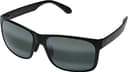
Maui Jim Red Sands Polarized

Maui Jim Red Sands Polarized

Maui Jim's calling card is color. Its PolarizedPlus2 lenses don't just cut glare — they lift color saturation and detail so the world looks crisper, not just dimmer. The Red Sands is a wearable everyday and driving frame that shows off that lens. The clarity is real; so is the price.

Best lens
$259.00 · View on Amazon

Price as of October 20, 2026. #ad How we’re funded

4
SUNGAIT SGT458 Ultra Lightweight Rectangular

SUNGAIT SGT458 Ultra Lightweight Rectangular

SUNGAIT's best-known frame and the one that explains the brand: a 62mm metal rectangle that is polarized, states UV400, and costs about sixteen dollars. The 62mm width is the detail buyers miss — this is a large frame, which makes it one of the few genuinely cheap options for a wide face.

Best budget pick
$16.99 · View on Amazon

Price as of October 20, 2026. #ad How we’re funded

5
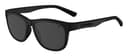
Tifosi Swank

Tifosi Swank

A lightweight lifestyle-sport crossover that's light enough to forget on a run and casual enough to wear after. Grilamid frame, shatterproof polycarbonate lens, 100% UVA/UVB — for around the price of a takeout meal. The runner's value pick when you don't want a full shield.

Best for a brisk pace
$25.00 · View on Amazon

Price as of October 20, 2026. #ad How we’re funded

The picks in full

#1Best overall

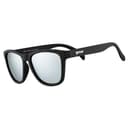
goodr OG

The best $25–35 in sunglasses. The OG is genuinely polarized, UV400, and its rubberized grip coating means it doesn't bounce or slide on a run — the reason it became runners' cult favorite. A squared retro shape that flatters round faces, in dozens of colorways. The value pick, full stop.

Strengths

  • Genuinely polarized and UV400 at a sub-$35 price
  • No-slip, no-bounce grip coating stays put on a run
  • Squared retro shape flatters round faces; dozens of colors

Trade-offs

  • One size — a narrow face may find the OG a touch wide
  • Plastic frame and standard lens won't match a glass premium lens for clarity
Lens featurePolarized, UV400, no-slip grip
PolarizedYes
Lens tintVaries by colorway
Frame materialPolycarbonate (plastic)
UV protectionUV400
Best forRunning, Everyday, Round faces

Spec note. goodr lists the OG as polarized with UV400 protection and a no-slip coating; colorways change but the lens spec is consistent.

Specs read from the product listing, on October 6, 2026. “Not published” means the brand does not state that figure.

#2Best coverage for low sun

NEVEN Legend TR90 Polarized Shield (L/XL)

A single-lens shield on a TR90 frame, polarized, in a large fit — a combination almost nobody sells. Shields are usually either novelty frames with no lens spec or three-figure sport eyewear, and large-fit shields barely exist at all. If you want the wrapped coverage of a sport frame without the cycling-team styling, this is the shape to look at.

Strengths

  • Single-lens shield gives continuous coverage with no bridge in your sightline
  • TR90 frame flexes rather than snapping
  • Polarized, which most fashion shields are not

Trade-offs

  • A shield is a committed look that will not suit every setting
  • No UV figure or lens material published for this trim
Lens featurePolarized single-lens shield, TR90 frame, L/XL
PolarizedYes
Lens tintNot published
Frame materialTR90
UV protectionNot published
Best forWide faces, Walking, Driving, Casual sport

Spec note. The listing states a TR90 frame with a polarized shield lens in an L/XL fit. A UV rating is NOT stated for this SKU — ask before you buy if UV filtering is your reason for buying.

Specs read from the product listing, on August 19, 2026. “Not published” means the brand does not state that figure.

#3Best lens

Maui Jim Red Sands Polarized

Maui Jim's calling card is color. Its PolarizedPlus2 lenses don't just cut glare — they lift color saturation and detail so the world looks crisper, not just dimmer. The Red Sands is a wearable everyday and driving frame that shows off that lens. The clarity is real; so is the price.

Strengths

  • PolarizedPlus2 lens boosts color and contrast, not just darkness
  • Blocks 100% UV; treated to resist glare from every angle
  • Wearable everyday frame, not a sport-only wrap

Trade-offs

  • Premium price
  • Warm, high-contrast tint isn't for people who want neutral color
Lens featurePolarizedPlus2, color-boosting tint, 100% UV
PolarizedYes
Lens tintHCL Bronze (varies)
Frame materialNylon
UV protection100% UV protection
Best forDriving, Everyday, Beach

Spec note. Maui Jim's PolarizedPlus2 combines polarization with tint layers the brand says enhance color and block UV and some high-energy blue light.

Specs read from the product listing, on July 18, 2026. “Not published” means the brand does not state that figure.

#4Best budget pick

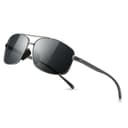
SUNGAIT SGT458 Ultra Lightweight Rectangular

SUNGAIT's best-known frame and the one that explains the brand: a 62mm metal rectangle that is polarized, states UV400, and costs about sixteen dollars. The 62mm width is the detail buyers miss — this is a large frame, which makes it one of the few genuinely cheap options for a wide face.

Strengths

  • 62mm lens width — genuinely large, and almost nothing else this cheap is
  • Polarized with UV400 both stated on the listing
  • Very light metal frame that you stop noticing after an hour

Trade-offs

  • Thin metal temples bend if you sit on them — this is not an abuse-proof frame
  • 62mm is too wide for a narrow face; check your current frame's numbers first
Lens feature62mm polarized rectangle, UV400, ultra-light metal
PolarizedYes
Lens tintGray
Frame materialMetal
UV protectionUV400
Best forWide faces, Everyday, Driving, Budget

Spec note. The listing states an ultra-lightweight rectangular metal frame (SGT458) with polarized lenses and UV400 protection, in a 62mm size with a gunmetal frame and gray lens.

Specs read from the product listing, on August 11, 2026. “Not published” means the brand does not state that figure.

#5Best for a brisk pace

Tifosi Swank

A lightweight lifestyle-sport crossover that's light enough to forget on a run and casual enough to wear after. Grilamid frame, shatterproof polycarbonate lens, 100% UVA/UVB — for around the price of a takeout meal. The runner's value pick when you don't want a full shield.

Strengths

  • Very light Grilamid frame — easy to forget you're wearing it
  • Shatterproof polycarbonate lens, 100% UVA/UVB
  • Looks normal enough for post-run coffee

Trade-offs

  • Fixed, non-polarized lens in this base trim
  • Less coverage than a wraparound shield for fast descents
Lens featureLightweight Grilamid, 100% UVA/UVB
PolarizedNo
Lens tintNot published
Frame materialGrilamid
UV protection100% UVA/UVB
Best forRunning, Everyday, Casual sport

Spec note. Tifosi lists a lightweight Grilamid frame with a shatterproof polycarbonate lens and 100% UVA/UVB.

Specs read from the product listing, on July 18, 2026. “Not published” means the brand does not state that figure.

How to choose sunglasses for walking

1. Buy for low sun, because that is when you walk

A lens blocks what passes through it. It does nothing about light arriving at thirty degrees off your temple, and a low sun arrives at exactly that angle for the entire first and last hour of the day. The fixes are geometric: a lens that carries round toward your temple, a frame that sits close to your brow, and a brimmed hat — which does more about overhead and frontal glare than any lens on this page. The AAO’s recommended-types guidance points the same way, naming wraparound and oversized frames as the route to maximum coverage. Our wraparound roundup takes the argument further.

2. Polarized, for the pavement

Walking in a town means wet pavement, car bonnets, shop windows and windscreens, all of which throw horizontally polarized reflections at you. A polarizing filter removes that specific light rather than dimming everything equally, and the AAO names it as the feature that addresses reflected daytime glare. The practical gain for a walker is not comfort, it is seeing the ground: kerbs, uneven slabs and ice read far better through a polarized lens than through a plain dark one. Four of the five picks here are polarized and the fifth says so on its card. Our page on polarized vs non-polarized covers when it matters and when it does not.

3. An hour is long enough for a bad fit to hurt

Thirty minutes forgives a frame that pinches. An hour does not, and neither does a daily habit. Three things to check: the temples should touch your head in front of your ears and not before, the frame should not leave a mark on the bridge of your nose, and the lens should not touch your cheek when you smile. If your current pair slides, that is bridge geometry and not weight — our guide to the six causes has the home fixes, and how to adjust covers which materials bend and which snap.

4. Contrast is worth more than darkness

The instinct on a bright day is the darkest lens available, and for walking it is the wrong instinct: a very dark neutral grey lens flattens the small differences in tone that tell you a paving slab is lifted or a kerb is where you think it is. A copper, amber or rose-based tint lifts those differences instead of removing them. That matters more with age — ophthalmologists link ageing to sharper glare sensitivity and lost contrast sensitivity, and lost contrast is a falls risk rather than an inconvenience, which is the argument our seniors roundup is built on. Our table of what each lens colour does is the short version.

5. Keep them by the door, and buy accordingly

The best pair for walking is the pair you have on when you leave, which argues for a price you are relaxed about and against a pair you are protective of. A second cheap pair in a coat pocket is worth more than a single expensive one in a case. That is why the SUNGAIT rectangular is on this list at seventeen dollars, and it is also the reasoning behind our budget roundup.

Walking, by the walk

A daily thirty minutes round the block. The goodr OG. Polarized, UV400, thirty dollars, no fiddling. If it gets sat on, buy another one.

Early mornings and evenings, sun in your face. The NEVEN Legend shield. A single polarized shield lens in an L/XL TR90 frame — it covers the temple angle that a standard frame leaves open, and it is built for a wider face, which our big-heads roundup covers in more detail.

Two hours at a time, most days. The Red Sands. The case for a premium lens is hours rather than conditions: a warm contrast tint over a long walk is genuinely less tiring, and it is the pair most likely to still be in service in five years. Our answer on whether that is worth it is honest about what the money does and does not buy.

Walking fast, or walk-running. The Tifosi Swank. A sport frame that does not look like one, at a price where it can live in a jacket pocket. If you are actually running, our running roundup is the right page.

Walking the dog in winter. Any of the above, plus the reminder that UV does not drop with temperature and reflects hard off snow and wet ground. Our snow page covers the reflected-UV case, and dry eyes covers the cold-wind one.
Frequently asked questions

Do I need special sunglasses for walking?

No. You need a pair that blocks 100% of UV, is comfortable for the length of your walk, and covers the angle the sun is actually at — which for most people is low, because most people walk early or late. A good everyday pair does this. What you do not need is a wrapped sport frame built for bounce you are not generating.

Should walking sunglasses be polarized?

It helps more than people expect. Walking means wet pavement, car bodies and shop windows throwing reflected glare, and polarization removes that light specifically rather than dimming everything. The practical benefit is seeing the ground — kerbs, uneven paving and ice — rather than comfort alone.

What is the best lens tint for walking?

Copper, amber or rose if you want to see detail in the ground, grey if you mainly want the brightness knocked down on a very bright day. Avoid the darkest lens you can find: it flattens exactly the small differences in tone that tell you a paving slab is lifted.

Are the running picks not the same thing?

Not quite. A running frame is ranked on staying put while you bounce, which costs you looks and sometimes comfort over a long, slow hour. Walking rarely generates enough bounce for that to be the deciding factor, so coverage and all-day comfort move to the top of the list instead.

Do I still need sunglasses on a cloudy day or in winter?

UV passes through cloud and reflects off wet ground, snow and ice, so exposure does not track temperature or brightness in the way it feels like it should. A lighter lens category is more comfortable on a dull day than a dark one, and it carries exactly the same UV filter.

Sources

Keep reading