How to choose beach sunglasses
1. Coverage, because the UV comes from below
This is the part most beach sunglasses advice misses entirely. On sand and near water you are being hit from three directions: directly from the sun, scattered from the sky, and reflected up off the ground and the sea. The CDC and the American Academy of Ophthalmology both recommend wraparound frames because they block the side and lower angles that ordinary frames leave open, and the AAO specifically calls out oversized frames as offering more coverage of the surrounding skin.
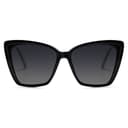
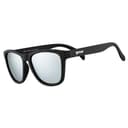
In practice that means a larger lens, a frame that curves slightly toward your temples, and a fit close enough to your face that light does not stream in under the bottom rim. An oversized fashion frame that genuinely fits, like the SOJOS pair on this list, is doing real protective work — the skin around the eyes is among the thinnest on the body.
2. Polarization is close to essential here
A polarizing filter removes the horizontally oriented light reflecting off flat surfaces. At a beach, that is the entire sea. Without it you are looking at a sheet of white and squinting for six hours; with it the water regains texture and depth and your eyes stop fighting.
The AAO describes polarized lenses as the feature that addresses reflected daytime glare specifically, and the beach is the clearest case for it in ordinary life. Our polarized sunglasses guide explains the mechanism, and our polarization test takes a minute if you want to check the pair already in your bag.
3. Accept that you might lose them
Beaches are where sunglasses go to die: pushed onto a head, forgotten on a towel, buried in sand, dropped off a boat. This is not a reason to buy badly — it is a reason to be deliberate. Two rational strategies:
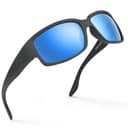
- Buy cheap and polarized. A Knockaround or a KastKing gives you real glare control and real UV400 for a price where loss is annoying rather than sickening. Our budget roundup covers the field.
- Buy premium and use a retainer. If you want the clarity of a Maui Jim or a Costa on the water, a floating retainer strap costs a few dollars and eliminates the single most common way premium sunglasses are lost.
What is not rational is a $200 non-polarized fashion frame at a beach: it is the most expensive way to be least protected.
4. Salt and sand are the real durability test
Salt water dries into a crust that abrades a lens if you wipe it dry, and sand is effectively fine sandpaper. The two habits that matter more than the price of the lens:
- Rinse before you wipe. Fresh water first, always. Wiping salt or sand off a dry lens with a cloth grinds it into the coating and is the main way beach sunglasses acquire fine scratches.
- Keep them out of a hot car dashboard. Heat relaxes frame material and can loosen the fit, which is a large part of why sunglasses that fitted in June slide down your nose by August.
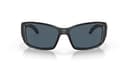
Costa builds its hinges and encapsulated lens mirrors specifically for salt exposure, which is a genuine argument for a premium fishing frame if you spend real time on a boat — our Costa review covers the range.
5. Tint: gray for comfort, copper for contrast
For sustained bright sun, a neutral gray lens is the most comfortable choice and keeps colors true. If you are looking into the water — snorkeling from shore, watching for rips, fishing the surf — a copper or amber contrast tint separates the surface from what is underneath it far better. Our lens colors guide has the full table.
Do you need a floating pair?
If you are on a boat, paddleboard or kayak, yes — or at least a retainer that floats. Sunglasses that go over the side sink immediately, and the cost of a retainer is a rounding error against any pair worth wearing. On sand, the more useful accessory is a hard case, because the way beach sunglasses actually die is being sat on in a bag.
If you would rather the frame did the work than a cord round your neck — which is the sensible call on a paddleboard or a kayak, where a leash is one more thing to snag — our best floating sunglasses roundup covers the pairs that stay on the surface, and is honest about when a retainer is still the better ten dollars.
What to spend
The honest range is wide because the use case is. If the beach is a two-week-a-year event and you already own a good everyday pair, buy a $25 polarized frame for it and be done. If you are on the water regularly — boating, fishing, paddling — a premium polarized lens genuinely changes what you can see and is worth it; our fishing roundup covers that case in depth and our Costa vs Maui Jim comparison settles the usual premium decision.
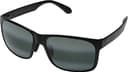
The middle ground — a mid-priced frame with a good polarized lens like the Maui Jim Red Sands or the Knockaround Premiums, depending which end of “mid” you mean — is where most people land, and reasonably so. Our breakdown of what expensive sunglasses buy covers the trade properly.
Two neighbouring cases with different answers
If you are on the sand for a fortnight rather than an afternoon, the deciding factor shifts from glare to attrition — sand, salt and the chance of leaving them on a lounger. Our travel roundup ranks on exactly that. And if you are on the beach because it is your job, the ranking changes again: best sunglasses for lifeguards puts seeing into the water first, because for a guard that is the task rather than a bonus.