Shade & Temple

Best Floating Sunglasses

Sunglasses that go over the side sink in about a second. Five floating pairs that are worth owning — and an honest account of when a ten-dollar retainer on the pair you already love is the better buy.

By Stephen V.Last updated How we pick

A pair of sunglasses that goes over the gunwale is gone. Not damaged, not scratched — gone, in about a second, with no realistic chance of recovery. That single failure mode is the entire reason this product category exists, and it is why floating frames are one of the few sunglasses features that is genuinely about the frame rather than the lens.

It is also a category with a specific dishonesty problem. “Floating” is easy to print on a listing and impossible for you to verify before you buy, so it gets used as the headline while the two specifications that actually protect your eyes — polarization and a stated UV rating — go quiet. Half the floating pairs on the market state buoyancy and polarization and say nothing at all about ultraviolet. Every pick below states all three, and where a brand publishes the mechanism rather than just the claim, we say so.

One thing up front, because it is the honest answer for a lot of readers: if you already own sunglasses you like, a floating retainer solves this problem for about ten dollars and does not ask you to buy a second pair. We say that on our boating and beach roundups and we are not walking it back here. The section below on retainers versus floating frames lays out exactly when each one wins. Prices are pulled live and dated.

How this is funded: we earn a commission if you buy through our links, at no extra cost to you. It never changes which product we recommend, and we’ll tell you when we’d skip one. Full disclosure.

Quick picks

Ranked on lens spec, UV protection, tint fit and buyer value. Select a row to jump to the full write-up. We have not field-tested these — here is exactly what we do instead.

#ProductBest forPrice
1
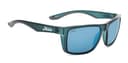
Hobie Cove Float

Hobie Cove Float

The floating frame that behaves like a proper sunglass rather than a novelty. Hobie is the one established eyewear brand running a full float line, and the Cove is its most sensible expression: a polarized gray nylon lens, a frame the brand states will float, and a water-repellent lens treatment that matters more on a boat than any tint decision. It is also the cheapest way into that line.

Best overall
$88.99 · View on Amazon

Price as of September 8, 2026. #ad How we’re funded

2
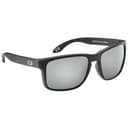
Flying Fisherman Lagoon 8101

Flying Fisherman Lagoon 8101

The value answer, and the only pick here from a brand that names the material doing the floating. Flying Fisherman builds its float line on TPX, a polymer less dense than water, and says so plainly — which is more than most of this category manages. Polarized with 100% UV stated, at roughly half the price of the Hobie.

Best value
$40.46 · View on Amazon

Price as of September 8, 2026. #ad How we’re funded

3
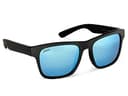
Hobie Coastal Float

Hobie Coastal Float

The one floating frame on this page that publishes a lens width, and at 54mm it is a genuinely small one. That matters because almost every floating pair sold is a large unisex wrap, which leaves anyone with a narrow face choosing between a frame that fits and a frame that floats. This is the exception, with a cobalt mirror lens that cuts a further slice of light on open water.

Best for smaller faces
$99.99 · View on Amazon

Price as of September 8, 2026. #ad How we’re funded

4
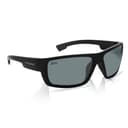
Hobie Mojo Float

Hobie Mojo Float

The answer to a question this category almost never addresses: what a glasses wearer does on a boat. The Mojo Float is listed as Rx ready, meaning an optician can put your prescription in the frame — so you are not choosing between seeing the water and not losing your sunglasses. Polarized, gray lens, and the same float claim as the rest of the line.

Best for prescription wearers
$99.99 · View on Amazon

Price as of September 8, 2026. #ad How we’re funded

5
FLOTTIE ANCHOR

FLOTTIE ANCHOR

The budget slot, and the one marketplace floating frame that states both specs that matter rather than only the one that sells. Most cheap floating pairs advertise buoyancy and polarization and go quiet on ultraviolet; this listing states UV400 alongside them. That is the whole reason it is here instead of something two dollars cheaper.

Best cheap spare
$35.00 · View on Amazon

Price as of September 8, 2026. #ad How we’re funded

The picks in full

#1Best overall

Hobie Cove Float

The floating frame that behaves like a proper sunglass rather than a novelty. Hobie is the one established eyewear brand running a full float line, and the Cove is its most sensible expression: a polarized gray nylon lens, a frame the brand states will float, and a water-repellent lens treatment that matters more on a boat than any tint decision. It is also the cheapest way into that line.

Strengths

  • Polarized, and Hobie states 100% UVA, UVB and UVC blocking across its lenses
  • Gray lens keeps color accurate, which is the right call for reading water and navigation marks
  • HydroClean 360 treatment sheds water, grime and oils — the practical difference on spray

Trade-offs

  • Costs roughly twice what the marketplace floating frames do
  • The listing does not publish a frame material, a lens width or a weight
  • No published buoyancy test — 'floating frame' is a manufacturer claim, not a measured spec
Lens featureFloating frame, polarized, HydroClean 360
PolarizedYes
Lens tintGray
Frame materialNot published
UV protection100% UVA, UVB and UVC
Best forBoating, Kayaking, Fishing, Paddleboarding

Spec note. The listing states a floating frame, Hydroclean 360 polarization and a gray nylon lens. Hobie's own eyewear pages state that all its lenses block 100% of UVA, UVB and UVC and that they meet or exceed ANSI Z80.3 for refractive power, light transmission and impact resistance — a standard almost nothing else in this category cites.

Specs read from the product listing, on September 8, 2026. “Not published” means the brand does not state that figure.

#2Best value

Flying Fisherman Lagoon 8101

The value answer, and the only pick here from a brand that names the material doing the floating. Flying Fisherman builds its float line on TPX, a polymer less dense than water, and says so plainly — which is more than most of this category manages. Polarized with 100% UV stated, at roughly half the price of the Hobie.

Strengths

  • The brand names the mechanism: TPX frames, a polymer lighter than water
  • Polarized with 100% UV protection stated on the listing
  • Part of a seven-model float collection, so replacements and colorways exist

Trade-offs

  • The listing publishes no lens material, tint, lens width or weight
  • A fishing-brand frame with a fishing-brand look — this is gear, not an everyday pair
  • No published buoyancy test; the float claim is the manufacturer's
Lens featureTPX floating frame, polarized, 100% UV
PolarizedYes
Lens tintNot published
Frame materialTPX
UV protection100% UV protection
Best forBoating, Fishing, Kayaking, Beach

Spec note. Flying Fisherman's own floating collection page states that "Floating TPX® frames stay on the surface if dropped in the water" and that its polarized lenses reduce glare. The Lagoon 8101 is listed in that collection. The Amazon listing adds 100% UV protection but publishes no lens material or measurements.

Specs read from the product listing, on September 8, 2026. “Not published” means the brand does not state that figure.

#3Best for smaller faces

Hobie Coastal Float

The one floating frame on this page that publishes a lens width, and at 54mm it is a genuinely small one. That matters because almost every floating pair sold is a large unisex wrap, which leaves anyone with a narrow face choosing between a frame that fits and a frame that floats. This is the exception, with a cobalt mirror lens that cuts a further slice of light on open water.

Strengths

  • 54mm lens width is stated on the listing — the only measurement published by any pick here
  • Mirror coating reflects some light before it enters the lens, useful in midday glare
  • Same Hobie polarization and brand-stated 100% UVA/UVB/UVC as the Cove

Trade-offs

  • The most expensive pick here, for the smallest lens
  • A mirror finish scratches more visibly than a plain tint and shows every fingerprint
  • Listing publishes no frame material, lens material or weight
Lens featureFloating frame, 54mm, polarized mirror
PolarizedYes
Lens tintCobalt Mirror
Frame materialNot published
UV protection100% UVA, UVB and UVC
Best forBoating, Kayaking, Narrow fit, Beach

Spec note. The listing states a floating frame, a polarized cobalt mirror lens and a 54mm lens width — the only floating pick here that publishes a measurement. Hobie states 100% UVA, UVB and UVC blocking and ANSI Z80.3 compliance across its lens range.

Specs read from the product listing, on September 8, 2026. “Not published” means the brand does not state that figure.

#4Best for prescription wearers

Hobie Mojo Float

The answer to a question this category almost never addresses: what a glasses wearer does on a boat. The Mojo Float is listed as Rx ready, meaning an optician can put your prescription in the frame — so you are not choosing between seeing the water and not losing your sunglasses. Polarized, gray lens, and the same float claim as the rest of the line.

Strengths

  • Listed as Rx ready — a prescription route almost no floating frame offers
  • Neutral gray lens, so color stays accurate for navigation and instruments
  • Hobie states 100% UVA, UVB and UVC across its lenses

Trade-offs

  • Prescription lenses are an extra cost on top, arranged separately with an optician
  • A prescription lens is heavier than the plano one, and buoyancy is claimed for the frame as sold
  • No published frame material, lens width or weight
Lens featureFloating frame, Rx ready, polarized
PolarizedYes
Lens tintGray
Frame materialNot published
UV protection100% UVA, UVB and UVC
Best forBoating, Fishing, Prescription, Kayaking

Spec note. The listing states a floatable frame, polarization, UV protection and "Rx Ready". Hobie's own eyewear pages state 100% UVA, UVB and UVC blocking and ANSI Z80.3 compliance across the lens range. Note that the float claim is made for the frame as sold; a glazed prescription lens changes the weight.

Specs read from the product listing, on September 8, 2026. “Not published” means the brand does not state that figure.

#5Best cheap spare

FLOTTIE ANCHOR

The budget slot, and the one marketplace floating frame that states both specs that matter rather than only the one that sells. Most cheap floating pairs advertise buoyancy and polarization and go quiet on ultraviolet; this listing states UV400 alongside them. That is the whole reason it is here instead of something two dollars cheaper.

Strengths

  • States UV400 as well as polarized and floating — the combination most of this tier omits
  • Cheap enough that losing it overboard is an inconvenience rather than a loss
  • Light frame, which is the point of a floating design

Trade-offs

  • An unfamiliar marketplace brand with no published spec sheet behind the listing
  • A recently created listing, so there is little history behind the seller
  • No lens material, tint, measurements or weight published, and no buoyancy test
Lens featureFloating frame, polarized, UV400
PolarizedYes
Lens tintNot published
Frame materialNot published
UV protectionUV400
Best forBoating, Kayaking, Beach, Spare pair

Spec note. The listing states floating, polarized and UV400 — all three of the claims that decide this category — but publishes no lens or frame material, no measurements and no weight. Nothing verifiable exists behind the listing beyond what it states.

Specs read from the product listing, on September 8, 2026. “Not published” means the brand does not state that figure.

How to choose floating sunglasses

1. Floating is a frame property, not a lens specification

This is the mistake that costs people money. Buoyancy tells you nothing about what the lens does. A pair can float beautifully and transmit ultraviolet straight into your eyes, and a pair can be optically excellent and sink like a stone. They are unrelated properties of two different parts of the product, and a listing that leads with the float claim is often leading with it because it is the best thing it has to say.

So read the listing in this order: UV first, polarization second, buoyancy third. If a floating pair does not state 100% UV protection or UV400, it does not go on your face regardless of how well it floats — our UV protection guide covers the phrasings that count and the ones that mean nothing. That ordering is why one obvious candidate is missing from this page: the cheapest floating frames on the market advertise “floating polarized” and publish no UV figure at all.

2. What actually makes a frame float — and what nobody publishes

A frame floats when the whole assembly is less dense than water. In practice that means a low-density polymer and, usually, some sealed air volume in the temples or the frame front. Flying Fisherman is the one brand here that names the material outright: its floating collection uses TPX, and the brand states that “Floating TPX® frames stay on the surface if dropped in the water.” Hobie describes a “floating frame” across its Float line without naming the polymer.

Here is the part no brand in this category will tell you: none of them publishes a buoyancy test. There is no standard for it, no figure, no margin. Every float claim on this page is a manufacturer claim about the product as sold, and it comes with two real caveats. Buoyancy is marginal by nature — a pair that floats sits barely proud of the surface, not bobbing like a cork, so in chop it can still be very hard to spot. And anything that adds mass eats the margin: a swapped-in aftermarket lens, a glazed prescription lens, or a heavy retainer clipped to the temples. We have not floated any of these in water ourselves and we are not going to pretend otherwise.

3. Floating frames or a floating retainer? The honest decision

This is the section that should decide your purchase, so it comes before the tint advice rather than after it.

  • Buy a retainer if you already own good sunglasses. A floating strap costs a fraction of any pair here and it protects the lens you already chose for its optics. If you own a premium polarized pair, buying a cheaper floating frame to wear instead of it is a downgrade you paid for. This is the majority case.
  • Buy floating frames if a strap is a liability. Kayaking, paddleboarding and anything where you might go in the water yourself is the real argument — a cord round the back of your neck is one more thing to snag, and a retainer does nothing if the glasses come off your head while you are swimming.
  • Buy floating frames if you want a dedicated water pair anyway. If the boat needs its own sunglasses that live in the console and never come home, buoyancy is a free upgrade on a purchase you were making regardless.
  • Buy both if the pair is expensive. Buoyancy and a retainer are not alternatives. On anything above about fifty dollars, wear the strap too.

4. Polarization is not optional here

Every use case for a floating pair happens on water, and water is the strongest case for polarization there is. Light reflecting off a flat surface comes back predominantly polarized in one plane, and a polarizing filter is aligned to block exactly that plane — the American Academy of Ophthalmology points to polarized lenses specifically for glare from reflective surfaces such as water. The effect is not a marginal improvement in comfort; the surface stops being a sheet of white light.

Every pick on this page states polarization on its listing. If you want to check a pair you already own before you buy anything, our home test for polarization takes about ten seconds against a phone screen. And remember the two specs are independent: polarization does nothing for ultraviolet, which is the point of our answer on whether polarized lenses block UV.

5. One brand cites a standard. The rest cite nothing.

Worth knowing, because it is unusual at this price. Hobie states that its lenses block 100% of UVA, UVB and UVC and that they “meet or exceed ANSI Z80.3 standards for refractive power, light transmission and impact resistance.” Z80.3 is the American National Standard for non-prescription sunglasses — the same standard the FDA references for transmittance, and the one the AAO recommends for children’s eyewear. Almost nothing else in the floating category names a standard at all.

That is not a reason to dismiss the cheaper picks, which state their UV rating plainly. It is a reason to understand what the extra fifty dollars is buying: not more ultraviolet protection, but a documented claim about optical quality and impact behavior instead of an undocumented one.

6. Coverage, because reflected light arrives from below

On land ultraviolet comes from above and a flat lens intercepts most of it. On water it arrives twice — once from the sky and again off the surface, straight into the gap between your cheekbone and the bottom of the lens. The AAO recommends wraparound styles for exactly this reason, and it is why people come off a boat with sore eyes despite wearing sunglasses all day.

Most floating frames are moderately wrapped for this reason, which brings a fit consequence: they are almost all large unisex shapes. That is a genuine gap in the category if you have a narrow face, and it is why one pick here earns its slot on a single published number. Our base curve and wrap guide explains the geometry and the peripheral-distortion cost of overdoing it, and the size guide covers reading the millimeters.

7. Tint: gray by default, mirror to cut more light

Gray is the right default on the water. It dims without shifting color, so navigation marks, flags, other craft and instrument displays stay the color they actually are. Amber and copper lift contrast by suppressing blue, which helps if you are reading the surface for shallows or structure — that is the fishing brief rather than this one. Our lens color guide covers the full set.

A mirror coating is genuinely useful in this context: it reflects a slice of light before it enters the lens, so you get less transmitted light without a darker base tint. What it does not do is add UV protection — our mirrored sunglasses guide covers the common misunderstanding. The trade is cosmetic durability: a mirror finish shows scratches and fingerprints far more readily than a plain tint, and on a boat it will get both.

8. Salt is the thing that actually kills them

Losing a pair overboard is the dramatic failure. Salt is the boring one that gets far more of them. Dried salt is abrasive as well as corrosive, so wiping a salt-crusted lens with a dry cloth grinds crystals through the coating — the single fastest way to ruin a lens. Rinse in fresh water first, every time, then dry with a clean microfiber. Our cleaning guide covers the method properly.

Floating frames have a quiet advantage here. They are plastic by necessity, and plastic does not corrode the way metal frames and metal hinge screws do in a marine environment. Our frame materials guide covers how each type ages.

What we did not include, and why

Two exclusions are worth stating, because a roundup is only as honest as the things it leaves out.

Marketplace floating frames that hide the UV rating. The cheapest tier of this category is full of pairs at fifteen to thirty dollars whose listings state “floating” and “polarized” and publish no ultraviolet figure whatsoever. Several were cheaper than the budget pick here. A stated UV rating is this site’s minimum bar for a recommendation and none of them cleared it, so the budget slot went to the one that does state UV400 rather than to the lowest price on the page.

A well-known dive brand’s floating model. One established watersports brand sells both a floating and a non-floating version of the same frame under the same model name, and the listing we could have used does not restate which one it is. On a page about buoyancy that ambiguity is disqualifying, so we left it out rather than guess.

Where to spend and where not to

Spend on the lens specs, not on the float claim. Polarization and a stated UV rating are what you are actually buying; buoyancy is insurance against one specific accident. If your budget is tight, the honest allocation is a cheap floating spare for the boat plus a retainer for the good pair you already own — that combination costs less than any single pick above the budget slot and covers more situations.

Spend up if you want a documented lens. The gap between the thirty-five-dollar pick and the eighty-nine-dollar one is not ultraviolet protection, because both state it. It is whether anyone has committed to an optical standard, whether the brand publishes what the frame is made of, and whether the pair is one you would still choose if it did not float. That last question is the useful one: a floating frame you dislike wearing gets left in the console, which protects it perfectly and helps you not at all. For the wider water context, our boating roundup and polarized sunglasses guide cover the ground this page sits inside.

Frequently asked questions

Do floating sunglasses really float?

The ones from established brands do, but the claim is worth understanding rather than trusting blindly. A frame floats because the assembly is less dense than water — Flying Fisherman names the polymer, TPX, and states that its floating frames stay on the surface if dropped in the water. What no brand in this category publishes is a buoyancy test or a margin, because no standard for one exists. In practice buoyancy is marginal: a floating pair sits barely proud of the surface rather than bobbing like a cork, so in chop it can still be hard to spot. Anything that adds mass — an aftermarket lens, a prescription lens, a heavy retainer — eats into that margin.

Are floating sunglasses polarized?

Not automatically, and this is the thing to check. Floating is a property of the frame; polarization is a property of the lens, and they are entirely independent. Every pick on this page states polarization on its listing, but plenty of floating frames on the market do not. Since every use case for a floating pair happens on water — where the AAO points to polarized lenses specifically for glare off reflective surfaces — an unpolarized floating pair is missing the feature you most need. Check the word 'polarized' on the specific listing, not the category.

Should I buy floating sunglasses or a floating retainer strap?

A retainer, for most people. If you already own sunglasses you like, a floating strap costs a fraction of a new pair and protects the optics you already chose — buying a cheaper floating frame to wear instead is a downgrade you paid for. Floating frames genuinely win in three cases: kayaking and paddleboarding, where a cord round your neck is a snag hazard and does nothing once you are in the water yourself; when you want a dedicated pair that lives on the boat anyway; and as a cheap spare. On anything expensive, wear both — buoyancy and a retainer are not alternatives.

What brands make floating sunglasses?

Fewer established ones than you would expect. Hobie runs the most complete line, with several Float models and lenses the brand states meet or exceed ANSI Z80.3. Flying Fisherman has a seven-model floating collection built on TPX frames and is the brand that names the mechanism most plainly. Below that the category is mostly marketplace brands at fifteen to thirty-five dollars, which is fine for a spare provided the listing states a UV rating — many do not. The premium brands people associate with the water, including Costa and Maui Jim, do not build their main lines to float, which is why a retainer is the standard advice with those.

Do floating sunglasses block UV?

Only if the listing says so, and a surprising number do not. Buoyancy and ultraviolet filtering have nothing to do with each other, and in the cheap tier of this category 'floating polarized' is often the whole specification — no UV figure anywhere. That is the single most common problem with the category and the reason several cheaper options were left off this page. Look for 100% UV protection, UV400, or 'UV absorption up to 400nm'; if a listing states none of the three, treat the pair as unprotected no matter how well it floats.

Can you get floating sunglasses in a prescription?

Rarely, but yes — Hobie lists a float model as Rx ready, meaning an optician can glaze it to your prescription. It is the exception rather than the rule, because most floating frames are sold as sealed plano units. Two caveats: the prescription lenses are an extra cost arranged separately, and a glazed lens is heavier than the plano one it replaces, while the float claim is made for the frame as sold. If you wear glasses on the water and want certainty rather than a claim, a fit-over pair plus a floating retainer is the more reliable route.

Are expensive floating sunglasses worth it over a cheap pair?

Not for ultraviolet protection — a cheap pair that genuinely states UV400 protects your eyes as well as a pair costing three times more. What the extra money buys here is a documented claim rather than an undocumented one: a named frame material, a cited optical standard such as ANSI Z80.3, a published lens width, and a brand that will still be selling the model next year. If the pair lives in a boat console and gets lost every second season, buy cheap. If you will wear it all day, every weekend, the documented one is the better purchase.

Sources

Keep reading