How to choose sunglasses that actually suit you
1. Confirm the UV claim, then stop worrying about it
Look for the words UV400 or 100% UVA/UVB on the listing. That is the whole test, and it is one a $25 pair passes as easily as a $250 one. The FDA regulates sunglasses as medical devices and points at the ANSI and ISO standards that govern UV and light transmittance; the practical upshot for a buyer is that a stated UV400 rating is the meaningful signal, and lens darkness is not.
Once a pair clears that bar, UV should play no further part in your decision — which is genuinely liberating, because it means the rest of your money is buying comfort, clarity, glare control and how the frame looks, not safety. Our UV protection guide covers the labeling in detail.
2. Decide whether you need polarization
This is the feature most worth paying for and the one most often missing from expensive frames. A polarizing filter removes the horizontally oriented light that bounces off flat surfaces — wet road, car hoods, water, glass storefronts — so a scene stops being a sheet of white glare and becomes something you can read.
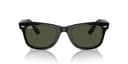
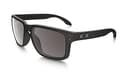
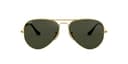
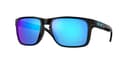
Two warnings. First, several classic frames, including the base Wayfarer, the base Aviator and the standard Oakley Holbrook, are not polarized; polarization is a separate, pricier SKU on all three. Second, there are two places you do not want it: on a golf course, where it erases the sheen you use to read a green, and at night, where no tinted lens belongs at all. Our polarized vs non-polarized guide has the full comparison, and our polarization test takes about a minute if you want to check a pair you already own.
3. Match the shape to your face, not to a trend
The rule is contrast rather than echo. A round or softer face gains definition from an angular frame — which is why the Wayfarer is the single most reliable recommendation in eyewear and anchors our round-face roundup. A square jaw and strong brow soften under a curved or round lens, as our square-face roundup covers. An oval face can wear almost anything and should choose on scale instead. Our face-shape guide is the pillar for all of this.
4. Get the width right — this is where most men go wrong
If your sunglasses leave dents at your temples, slide forward within an hour, or sit so high they touch your eyebrows, the frame is the wrong size rather than the wrong style. The numbers printed inside the temple arm — something like 59-17-135 — are lens width, bridge width and temple length in millimeters, and they are the fastest way to buy a frame that fits without trying it on. Our size guide explains how to read them, and if you already know standard frames are too narrow, start with our wide-face roundup.
How much should you actually spend?
There are three defensible budgets and one indefensible one.
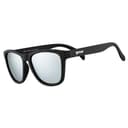
- Around $30. Buy a genuinely polarized, genuinely UV400 pair like the goodr OG and stop there. This is the correct answer for most people, especially anyone who loses or breaks sunglasses regularly. Our budget roundup covers the field.
- $150–200. You are buying a frame you will still want in a decade — hand-assembled acetate, serviceable hinges, a silhouette that does not date. That is a real thing to buy. You are not buying better UV protection.
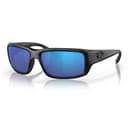
- $250 and up. Only worth it when the lens is doing specialist work: a Costa 580G on the water, a tuned Prizm tint on a course. If you cannot name the job, do not spend this.
- The indefensible one: $60–100 on a dark fashion lens with no stated UV rating and no polarization. You get neither the price of the budget tier nor the function of the premium one.
Our honest breakdown of what expensive sunglasses actually buy takes this apart properly if you want the long version.
The two-pair strategy
If you can stretch to it, the most useful setup is not one expensive pair but two deliberate ones: a heritage frame you like the look of for town and travel, and a polarized sport or water pair for driving, the beach and anything outdoors. It costs less than a single flagship purchase and covers vastly more of your life, because no single lens is right for both a restaurant terrace and a boat deck.
If you only ever buy one, buy the polarized one. Glare is the thing you notice every single day; a slightly less iconic frame is the thing you notice never.
For activity-specific picks, our sport hub covers golf, fishing, running, cycling, hiking and the beach in detail — and if you wear prescription glasses, our fit-over roundup is the place to start instead.