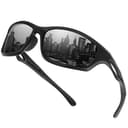
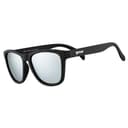
How to choose sunglasses for hiking
1. UV protection, treated seriously
The World Health Organization notes that ultraviolet exposure rises with altitude, and that reflective surfaces substantially increase the dose reaching your eyes — fresh snow can reflect a large proportion of incoming UV back upward. The CDC and the American Academy of Ophthalmology both recommend wraparound frames for exactly this reason: light arriving from the side and from below is the part a normal frame misses.
So on a trail, “100% UVA/UVB” is the floor, and coverage geometry is the part that actually distinguishes a hiking lens from a town one. If you spend time on snow, this is not an abstraction — photokeratitis, the corneal sunburn commonly called snow blindness, is a real and genuinely painful outcome of a long unprotected day at altitude. Our UV protection guide covers the standards.
2. Solve the changing-light problem
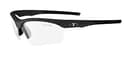
A photochromic lens darkens in ultraviolet and clears in shade, which is precisely what a forest-to-ridge-to-gully profile needs. The Tifosi Vero Fototec on this list starts nearly clear, which makes it the right tool for dawn starts and long days that finish in twilight. Our photochromic guide covers how quickly they react and where they do not.
The alternative is a mid-tint lens that is a reasonable compromise everywhere — usually a copper or bronze contrast tint rather than a very dark gray. Our lens colors guide has the full table. What you should avoid is a very dark lens chosen for the summit, which will leave you hiking down through forest half-blind.
3. Polarization: yes, with one caveat
Polarization is genuinely useful on a trail. It cuts the glare off wet rock, standing water, river crossings and snow, which makes footing easier to read and reduces the squinting fatigue that builds through an afternoon.
The caveat is technical scrambling and anything involving ice. Some mountaineers avoid polarized lenses because they can flatten the appearance of ice patches, which is exactly the surface you want to spot. For ordinary trail hiking, polarize. For anything where you are reading ice, consider going without. Our polarized sunglasses guide explains the mechanism.
4. Weight, grip and the eight-hour test
A glass lens like Costa’s 580G is optically superb and genuinely heavy on the nose after several hours — which is why the lighter 580P version is the one we point hikers at. Look for hydrophilic rubber nose pads and temple tips (Tifosi) or a rubberized grip coating (goodr, Maui Jim’s matte rubber frames), all of which hold better as you sweat rather than worse. A frame that slides down every twenty minutes is a frame you eventually stop wearing, which is a UV problem disguised as a comfort one. Our guide to sunglasses sliding down has the fixes if you already own a pair that does this.
5. What happens when they break
Trail eyewear gets sat on, dropped on rock, and stuffed into a pack lid. Grilamid TR-90 and nylon-family frames flex and recover; brittle injection-molded plastics snap. Polycarbonate lenses are far more impact-resistant than glass, which is the other argument against a glass lens for hiking. And a cheap second pair in the pack lid is a genuinely good idea — being out for a day at altitude with no eye protection is worse than being out with a $20 pair.
Sunglasses vs glacier glasses: when you need more
Ordinary sunglasses, even good wraparound ones, are not the same thing as mountaineering glacier glasses. Glacier glasses use very dark lenses (typically the darkest transmission category) plus side shields or a wrap tight enough to block light from every angle, and they exist because sustained snow travel at altitude is an extreme case rather than a severe one.
The rule of thumb: for trails, ridges and ordinary summer hillwalking, a well-covering sport frame like the ones on this list is right. For sustained travel on snow or ice at altitude, buy purpose-made glacier glasses with side protection instead. Do not try to bridge the gap with a slightly darker lifestyle frame. Our glacier glasses roundup ranks the category 4 frames worth buying — and leads with the thing most listings leave out, which is that a filter category is not a UV rating.
What to spend
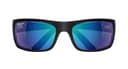
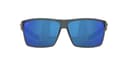
The premium tier buys optical precision on a curved lens, tuned tints, and frames that survive years of abuse — and if you hike weekly, a Maui Jim Peahi or a Costa Rincon is a defensible tool purchase, with the polarization and coverage doing real work. Our Maui Jim review and Costa review cover both in depth.
The value tier is where most hikers should shop. Tifosi gives you Grilamid frames, hydrophilic grips and 100% UVA/UVB at roughly a quarter of the premium price, and the Fototec lens is a genuine feature rather than a compromise. Below that, a polarized budget wrap covers the essentials and costs less than a day’s parking at a trailhead. Our budget roundup covers what is genuinely UV400 at that price.
For adjacent activities, our sport hub covers running, cycling, fishing, golf and the beach — and our cycling roundup shares most of this list’s reasoning if you also ride.