Shade & Temple

Best Sunglasses for Motorcycle Riding

At 60 mph the problem is wind and grit before it is brightness. Six picks judged on the foam seal, the impact rating, and what the listing actually publishes about UV.

By Stephen V.Last updated How we pick

Riding eyewear is solving a different problem from sunglasses. On a bike the air is moving at highway speed and it is carrying grit, insects and road spray, and the first thing that happens without a seal is that your eyes water — which is a vision problem long before glare is. That is why every serious riding frame on this list has a foam gasket or a wrapped, close-fitting front, and why an otherwise excellent pair of lifestyle sunglasses is close to useless at 60 mph.

The second thing riding eyewear has to solve is the ride home. A tinted lens that was correct at four in the afternoon is dangerous at eight in the evening, and swapping glasses at the roadside in the dark is exactly the sort of thing nobody does. There are two real answers — a photochromic lens that clears itself, or a frame that ships with interchangeable lenses — and one pick here for each.

One honesty note that runs through this whole category: motorcycle eyewear is marketed on impact certification, and a lot of these listings publish an ANSI Z87.1 rating but no UV figure. Those are separate specs. Z87.1 says the lens survives a projectile; it says nothing about ultraviolet. Where a listing publishes one and not the other, we say so on the pick rather than letting you assume. Prices are pulled live and dated.

How this is funded: we earn a commission if you buy through our links, at no extra cost to you. It never changes which product we recommend, and we’ll tell you when we’d skip one. Full disclosure.

Quick picks

Ranked on lens spec, UV protection, tint fit and buyer value. Select a row to jump to the full write-up. We have not field-tested these — here is exactly what we do instead.

#ProductBest forPrice
1
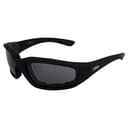
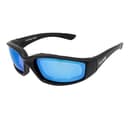
SOL PRO Foam Padded Polarized Riding

SOL PRO Foam Padded Polarized Riding

The rare riding frame that is both foam-sealed and genuinely polarized with a stated UV400 rating — which matters more on a bike than most riders realize, because the glare you are fighting is bouncing straight off wet asphalt and the roofs of the cars in front of you. Around twenty dollars for both features is unusual.

Best overall
$20.25 · View on Amazon

Price as of September 4, 2026. #ad How we’re funded

2
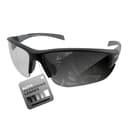
Global Vision Hercules 7 Photochromic

Global Vision Hercules 7 Photochromic

The one riding lens that handles a ride home after sunset. It is photochromic — clear indoors and at dusk, smoke in daylight — and ANSI Z87.1 rated for impact, which on a motorcycle is not a theoretical benefit given what a stone off a truck tire does at highway speed. The trade-off is that the listing publishes the impact standard and not a UV figure.

Best for day-into-night rides
$39.99 · View on Amazon

Price as of September 4, 2026. #ad How we’re funded

3
Global Vision Kickback Wraparound

Global Vision Kickback Wraparound

The cheapest way to solve the actual problem on a bike, which is airflow rather than brightness. A closed-cell foam gasket seals the gap between the frame and your brow so 60 mph air stops drying your eyes out, and the listing states UV400 on shatterproof polycarbonate — the two specs that matter, at under fifteen dollars.

Best budget
$13.99 · View on Amazon

Price as of September 4, 2026. #ad How we’re funded

4
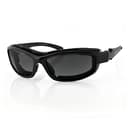
Bobster Road Hog II

Bobster Road Hog II

A convertible: a foam-lined riding frame that ships with three lenses — smoked, amber and clear — so the same glasses cover a bright afternoon, an overcast morning and a night ride. Swapping a lens at the roadside is slower than a photochromic that does it for you, but the amber lens genuinely lifts contrast in flat light in a way no auto-darkening lens matches.

Best interchangeable-lens set
$59.29 · View on Amazon

$62.986% off

Price as of September 4, 2026. #ad How we’re funded

5
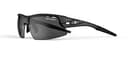
Tifosi Crit Polarized Fototec

Tifosi Crit Polarized Fototec

The rare lens that is photochromic AND polarized at once — it adapts to changing light and still kills the glare bouncing off wet tarmac. That combination usually costs a great deal more. The trade-off is that a polarized photochromic never goes truly clear, so this is a bright-conditions lens, not a dawn one.

Best photochromic and polarized
$99.95 · View on Amazon

Price as of September 4, 2026. #ad How we’re funded

6
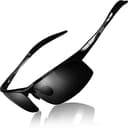
Duco Polarized Sports (Driving)

Duco Polarized Sports (Driving)

The value driving pick. Duco's polarized lens cuts the dashboard-and-road glare that tires your eyes on a long daytime drive, on a light metal frame, for around $25. It won't match a Maui Jim for color, but it addresses the actual problem — glare — at a tenth of the price.

Best for glare off wet road
$24.99 · View on Amazon

Price as of September 4, 2026. #ad How we’re funded

The picks in full

#1Best overall

SOL PRO Foam Padded Polarized Riding

The rare riding frame that is both foam-sealed and genuinely polarized with a stated UV400 rating — which matters more on a bike than most riders realize, because the glare you are fighting is bouncing straight off wet asphalt and the roofs of the cars in front of you. Around twenty dollars for both features is unusual.

Strengths

  • Polarized with a stated UV400 rating — both, at a budget price
  • Foam padded wrap seals out the airflow that makes eyes water at speed
  • Light enough that it does not fight a helmet strap

Trade-offs

  • Polarization can make an LCD instrument cluster hard to read at some angles
  • Budget hinges and coatings; a season or two of hard use, not a decade
Lens featurePolarized, UV400, foam-padded wrap
PolarizedYes
Lens tintNot published
Frame materialNot published
UV protectionUV400
Best forMotorcycle, Cycling, Fishing, Windy conditions

Spec note. The listing states polarized lenses with UV400 protection in a lightweight foam-padded wrap design.

Specs read from the product listing, on August 11, 2026. “Not published” means the brand does not state that figure.

#2Best for day-into-night rides

Global Vision Hercules 7 Photochromic

The one riding lens that handles a ride home after sunset. It is photochromic — clear indoors and at dusk, smoke in daylight — and ANSI Z87.1 rated for impact, which on a motorcycle is not a theoretical benefit given what a stone off a truck tire does at highway speed. The trade-off is that the listing publishes the impact standard and not a UV figure.

Strengths

  • Photochromic clear-to-smoke lens covers a ride that runs into the evening
  • ANSI Z87.1 impact rating — the relevant standard for debris at speed
  • One pair replaces the usual clear-plus-tinted two-pair setup

Trade-offs

  • The listing states the Z87.1 impact rating but does NOT publish a UV figure — a safety rating is not a UV rating
  • Photochromic lenses react to ultraviolet, so they barely darken behind a car windshield
Lens featurePhotochromic clear-to-smoke, ANSI Z87.1 impact rated
PolarizedNot published
Lens tintPhotochromic — clear to smoke
Frame materialNot published
UV protectionNot published
Best forMotorcycle, Dusk riding, Changing light

Spec note. The listing states an auto-darkening clear-to-smoke photochromic lens certified to ANSI Z87.1. It does not state a UV rating, so we do not claim one.

Specs read from the product listing, on August 11, 2026. “Not published” means the brand does not state that figure.

#3Best budget

Global Vision Kickback Wraparound

The cheapest way to solve the actual problem on a bike, which is airflow rather than brightness. A closed-cell foam gasket seals the gap between the frame and your brow so 60 mph air stops drying your eyes out, and the listing states UV400 on shatterproof polycarbonate — the two specs that matter, at under fifteen dollars.

Strengths

  • Foam gasket blocks the wind that makes your eyes water at speed
  • UV400 stated on shatterproof polycarbonate lenses
  • Cheap enough to keep a second pair in the bike

Trade-offs

  • The foam absorbs sweat and eventually needs replacing — treat it as a consumable
  • Not polarized, so glare off wet asphalt and car roofs stays
Lens featureFoam-gasket wind seal, UV400 polycarbonate
PolarizedNot published
Lens tintSmoke
Frame materialNot published
UV protectionUV400
Best forMotorcycle, Open-cockpit driving, Windy conditions

Spec note. The listing states shatterproof polycarbonate lenses with UV400 and a scratch-resistant coating, in a padded wraparound frame. Polarization is not stated.

Specs read from the product listing, on August 11, 2026. “Not published” means the brand does not state that figure.

#4Best interchangeable-lens set

Bobster Road Hog II

A convertible: a foam-lined riding frame that ships with three lenses — smoked, amber and clear — so the same glasses cover a bright afternoon, an overcast morning and a night ride. Swapping a lens at the roadside is slower than a photochromic that does it for you, but the amber lens genuinely lifts contrast in flat light in a way no auto-darkening lens matches.

Strengths

  • Three lenses in the box — smoked, amber and clear — cover every light condition
  • Removable foam gasket, so it works with or without the wind seal
  • Amber lens lifts contrast in flat, overcast light better than a neutral tint

Trade-offs

  • The listing does not state polarization — verify before relying on it
  • Lens swapping means carrying the case, and nobody does it mid-ride
Lens featureThree interchangeable lenses, removable foam gasket
PolarizedNot published
Lens tintSmoked, amber and clear (three lenses)
Frame materialNot published
UV protection100% UV protection
Best forMotorcycle, Night riding, Changing light

Spec note. The listing states a gloss black frame supplied with dual-grade reflective smoked, amber and clear lenses, on shatter-resistant polycarbonate with 100% UV protection and two sets of foam. Polarization is not stated.

Specs read from the product listing, on August 21, 2026. “Not published” means the brand does not state that figure.

#5Best photochromic and polarized

Tifosi Crit Polarized Fototec

The rare lens that is photochromic AND polarized at once — it adapts to changing light and still kills the glare bouncing off wet tarmac. That combination usually costs a great deal more. The trade-off is that a polarized photochromic never goes truly clear, so this is a bright-conditions lens, not a dawn one.

Strengths

  • Photochromic and polarized together — adaptive tint plus glare control
  • Cuts reflected glare off wet road, cars and water
  • Grilamid frame with hydrophilic grips, 100% UVA/UVB

Trade-offs

  • Never clears fully, so it is too dark for genuine low light
  • Costs more than a plain Fototec lens
Lens featurePolarized + Fototec photochromic, 100% UVA/UVB
PolarizedYes
Lens tintPolarized Fototec (light-reactive)
Frame materialGrilamid
UV protection100% UVA/UVB
Best forCycling, Driving, Hiking, Changing light

Spec note. Amazon lists this Crit as a polarized Fototec lens — Tifosi's photochromic tint layered with a polarizing filter, so it adapts to light and cuts reflected glare.

Specs read from the product listing, on August 10, 2026. “Not published” means the brand does not state that figure.

#6Best for glare off wet road

Duco Polarized Sports (Driving)

The value driving pick. Duco's polarized lens cuts the dashboard-and-road glare that tires your eyes on a long daytime drive, on a light metal frame, for around $25. It won't match a Maui Jim for color, but it addresses the actual problem — glare — at a tenth of the price.

Strengths

  • Polarized lens cuts road and dashboard glare on daytime drives
  • Light metal frame, UV400, around $25
  • A sensible everyday driving pair you won't stress about

Trade-offs

  • Polarization can make some LCD dashboard/nav screens dim or patchy
  • Never for night driving — a tinted lens reduces light you need
Lens featurePolarized, UV400, light metal frame
PolarizedYes
Lens tintNot published
Frame materialMetal
UV protectionUV400
Best forDriving, Everyday, Budget

Spec note. Duco lists the frame as polarized with UV400; as with any polarized lens, some LCD screens can look dim through it.

Specs read from the product listing, on July 18, 2026. “Not published” means the brand does not state that figure.

How to choose motorcycle sunglasses

1. The wind seal comes first

A closed-cell foam gasket between the frame and your brow is the single feature that separates riding glasses from ordinary sunglasses. It stops the airflow that dries your cornea and makes your eyes stream, and it catches the grit that a flat lifestyle frame lets straight past.

Two practical notes. Foam is a consumable — it absorbs sweat and eventually compresses, so plan on replacing the pair or the gasket. And on some frames the foam is removable, which is genuinely useful: sealed for the highway, unsealed for a slow ride through town where you want airflow rather than a warm pocket of air behind the lens.

2. Decide how you will handle the light changing

You have three options and they behave completely differently.

  • Photochromic. A lens that darkens in ultraviolet and clears in shade. For a rider this is the cleanest answer, because it covers a ride that starts in daylight and finishes after dark without you doing anything. Our photochromic guide explains the chemistry and the real limits.
  • Interchangeable lenses. Two or three lenses in the case — typically smoked, amber and clear. Optically this is the best solution and practically the least used, because the case lives in a pannier and you are not stopping to swap.
  • One fixed tint plus a clear pair. The honest traditional answer. Cheap enough to do properly, and the reason a lot of riders keep a $14 clear pair in the bike permanently.

3. Polarization: useful on the road, awkward on the dash

Polarized lenses cut the horizontally reflected light that turns wet asphalt into a sheet of white and puts a hard bloom on the roof and rear window of the car in front. On a bike, in bright wet conditions, that is a genuine safety benefit and the reason two picks here are polarized.

The trade-off is instrumentation. Polarizing filters interact with the LCD panels used in many modern dashes and GPS units, and depending on the angle you can lose the display entirely. Check your own bike before committing. Our polarized vs non-polarized comparison covers the trade in full, and if you want to test a pair you already own, the one-minute polarization test settles it.

4. Impact rating: what ANSI Z87.1 actually means

Several picks here state ANSI Z87.1. That is the American National Standard for occupational eye protection, referenced directly by OSHA’s eye and face protection rule for general industry. It defines impact performance — a lens has to survive defined high-mass and high-velocity tests without shattering or being driven back into the eye.

On a motorcycle that is not a theoretical benefit. A stone kicked up by a truck tire at highway speed carries real energy, and a shattering lens is a worse outcome than no lens. But the standard is about impact, not ultraviolet, and a Z87.1 mark on its own tells you nothing about UV. Our Z87.1 safety sunglasses roundup goes into the marking system in detail.

5. Helmet compatibility

If you ride in a full-face or a modular helmet, temple thickness decides everything. Thin, straight temples slide between your head and the helmet lining; thick sport temples press into your temples and become unbearable after twenty minutes. Frames sold specifically for riding are usually designed around this, but check the temple profile before you buy, and put the glasses on before the helmet rather than trying to thread them in afterwards.

Never ride at night in a tinted lens

This one is not a preference. The American Academy of Ophthalmology is unambiguous that tinted “night driving” lenses reduce the light reaching your eye and make night vision worse rather than better, and the physics does not change because you are on two wheels. Yellow-tinted “night vision” riding glasses are the same claim in a different color, and the same answer applies.

What you want after dark is a genuinely clear lens, worn purely as wind and debris protection. The Hercules 7 on this list handles it by going clear on its own; the Road Hog II does it with a clear lens in the case; and a $14 clear pair does it for the price of a tank of fuel. Our driving roundup covers the same argument for four wheels.

Where to spend and where not to

This is a category where spending more buys less than usual. The two features that matter most — a foam seal and a lens that handles changing light — are both available under forty dollars, and the sub-$20 riding frames from the specialist brands are honest products with stated UV400 on polycarbonate.

What the money does buy at the top of this list is a combination: photochromic and polarized in one lens, on a frame engineered as sport eyewear rather than riding-specific gear. That is what the Tifosi pick is, and our Tifosi review covers the brand in full. For the adjacent categories, our sport hub covers cycling, running and the rest, and the cycling roundup is the closest sibling — same wind problem, lower speed, no helmet-lining constraint.
Frequently asked questions

Do motorcycle sunglasses need foam padding?

For highway riding, yes — it is the single most useful feature. A closed-cell foam gasket seals the gap between the frame and your brow so moving air cannot dry your cornea, which is what makes your eyes stream and blur at speed. It also stops grit and insects that a flat lifestyle frame lets straight through. Treat the foam as a consumable: it absorbs sweat and eventually needs replacing.

Are ANSI Z87.1 riding glasses actually safer?

For impact, yes. Z87.1 is the American National Standard for occupational eye protection referenced by OSHA's eye and face protection rule, and it defines high-mass and high-velocity impact tests a lens must survive without shattering. On a bike, where a stone off a truck tire carries real energy, that matters. What Z87.1 does not tell you is anything about ultraviolet — impact and UV are separate specs, and plenty of Z87.1 listings publish one and not the other.

Should motorcycle sunglasses be polarized?

On the road, usually yes: polarization strips the glare bouncing off wet asphalt, car roofs and windshields, which genuinely helps you read the surface in bright wet conditions. The catch is instrumentation — polarizing filters interact with LCD dashes and GPS screens and can black them out at certain angles. Check your own bike's display through a polarized lens before committing.

What sunglasses can I wear riding at night?

None. Wear a genuinely clear lens for wind and debris protection instead. The American Academy of Ophthalmology is explicit that tinted night-driving lenses reduce the light reaching your eye and make night vision worse, and yellow 'night vision' riding glasses are the same claim in a different color. A photochromic lens that clears itself, or a clear lens in the case, is the right answer.

Do photochromic riding glasses work behind a windshield?

Only partially, and this catches people out. Photochromic lenses are triggered by ultraviolet light, and a motorcycle windshield — like a car windshield — blocks a large share of UV. Behind a tall touring screen the lens will stay closer to its clear state than the light level suggests it should. On a naked bike or behind a low flyscreen, it works as advertised.

Will sunglasses fit under a full-face helmet?

It depends entirely on temple thickness. Thin, straight temples slide between your head and the helmet lining without pressure; thick sport temples press into the sides of your head and become painful within half an hour. Frames sold for riding are usually designed around this. Put the glasses on first and the helmet over them, rather than trying to thread them in afterwards.

Sources

Keep reading