Shade & Temple

Best Sunglasses for Travel

A fortnight away is the highest-attrition two weeks a pair of sunglasses will ever have: security trays, rental cars, pool chairs, beach bags. So the right spec is not the best lens you can afford — it is the best lens you can afford to lose.

By Stephen V.Last updated How we pick

One answer, and it is a cheap one: the Knockaround Premiums. It is genuinely polarized and genuinely UV400 — the two specs that matter and the two most airport-shop pairs quietly skip — it costs roughly a fifth of a heritage frame, and that price is the feature. A pair you are relaxed about is a pair you will actually wear on the water, in the rental car and on the walk back from dinner, instead of leaving in the room because you are nervous about it.

The strategy matters more than the pick, so here it is up front: travel with two pairs, and make the expensive one optional. Something will happen — a pair sat on, a pair left in a taxi, a pair cooked on a dashboard. Two cheap polarized pairs cost less than one mid-range pair and mean that losing one ends the incident rather than the trip. If you want one heritage frame in the bag because you also want to look like yourself in the photographs, the Ray-Ban Wayfarer is the version of that we would actually take, and we say plainly below why it is the wrong purchase for most trips.

What this page does not do is rank on lens performance, because for general travel that question is already settled: a stated UV400 or 100% UVA/UVB rating, polarization if there will be water or driving, and enough coverage that light is not arriving from the sides. The AAO’s own buying advice is to look for 100% UV protection and to treat frame coverage as part of it, and it notes that a darker lens is not a more protective one. Beyond that, travel-specific criteria take over: weight, crush resistance, replaceability and whether one pair can cover a beach, a city and a drive. Every spec below comes from the product’s own listing on the dated visit shown on its card, prices are pulled live, and we have not field-tested any of these.

How this is funded: we earn a commission if you buy through our links, at no extra cost to you. It never changes which product we recommend, and we’ll tell you when we’d skip one. Full disclosure.

Quick picks

Ranked on lens spec, UV protection, tint fit and buyer value. Select a row to jump to the full write-up. We have not field-tested these — here is exactly what we do instead.

#ProductBest forPrice
1
Knockaround Premiums (Polarized)

Knockaround Premiums (Polarized)

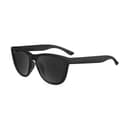
The customizable cheap classic. Knockaround's Premiums come polarized with UV400 protection in a squared shape, and you can mix frame and lens colors endlessly. Genuinely inexpensive, genuinely UV-protective — the pair to buy when you want something specific-looking without spending real money.

Best overall for travel
$37.99 · View on Amazon

Price as of October 20, 2026. #ad How we’re funded

2
goodr OG

goodr OG

The best $25–35 in sunglasses. The OG is genuinely polarized, UV400, and its rubberized grip coating means it doesn't bounce or slide on a run — the reason it became runners' cult favorite. A squared retro shape that flatters round faces, in dozens of colorways. The value pick, full stop.

Best for active trips
$30.00 · View on Amazon

Price as of October 20, 2026. #ad How we’re funded

3
Paleshy 6-Pack Polarized

Paleshy 6-Pack Polarized

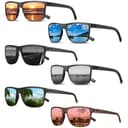
Six polarized UV400 pairs for the price of one mid-tier frame. The honest case for a multipack is not that any single pair is good — it is that a pair in the car, a pair in the kit bag and a pair by the door means you are wearing UV protection on the days you would otherwise have gone without. Judge it as insurance, not as eyewear.

Best for a group or a long trip
$19.99 · View on Amazon

Price as of October 20, 2026. #ad How we’re funded

4
Tifosi Swank

Tifosi Swank

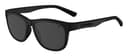
A lightweight lifestyle-sport crossover that's light enough to forget on a run and casual enough to wear after. Grilamid frame, shatterproof polycarbonate lens, 100% UVA/UVB — for around the price of a takeout meal. The runner's value pick when you don't want a full shield.

Lightest to pack
$25.00 · View on Amazon

Price as of October 20, 2026. #ad How we’re funded

5
Ray-Ban RB2140 Original Wayfarer

Ray-Ban RB2140 Original Wayfarer

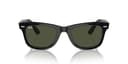
The default answer to 'one pair that goes with everything.' The Wayfarer's angular acetate frame flatters most faces (and rounder ones especially), and the G-15 lenses block 100% UV. The base version isn't polarized, but a polarized SKU exists if glare is your priority.

Best if you want one good pair
$191.00 · View on Amazon

Price as of October 20, 2026. #ad How we’re funded

The picks in full

#1Best overall for travel

Knockaround Premiums (Polarized)

The customizable cheap classic. Knockaround's Premiums come polarized with UV400 protection in a squared shape, and you can mix frame and lens colors endlessly. Genuinely inexpensive, genuinely UV-protective — the pair to buy when you want something specific-looking without spending real money.

Strengths

  • Polarized and UV400 at a low price
  • Endless frame/lens color combinations
  • Squared shape works for round faces and everyday wear

Trade-offs

  • Base plastic build is exactly what you'd expect for the money
  • One size fits most, not all
Lens featurePolarized, UV400, customizable
PolarizedYes
Lens tintVaries by colorway
Frame materialPolycarbonate (plastic)
UV protectionUV400
Best forEveryday, Round faces, Budget

Spec note. Knockaround lists the polarized Premiums with UV400 protection; non-polarized trims of the same frame also exist, so check the SKU.

Specs read from the product listing, on July 18, 2026. “Not published” means the brand does not state that figure.

#2Best for active trips

goodr OG

The best $25–35 in sunglasses. The OG is genuinely polarized, UV400, and its rubberized grip coating means it doesn't bounce or slide on a run — the reason it became runners' cult favorite. A squared retro shape that flatters round faces, in dozens of colorways. The value pick, full stop.

Strengths

  • Genuinely polarized and UV400 at a sub-$35 price
  • No-slip, no-bounce grip coating stays put on a run
  • Squared retro shape flatters round faces; dozens of colors

Trade-offs

  • One size — a narrow face may find the OG a touch wide
  • Plastic frame and standard lens won't match a glass premium lens for clarity
Lens featurePolarized, UV400, no-slip grip
PolarizedYes
Lens tintVaries by colorway
Frame materialPolycarbonate (plastic)
UV protectionUV400
Best forRunning, Everyday, Round faces

Spec note. goodr lists the OG as polarized with UV400 protection and a no-slip coating; colorways change but the lens spec is consistent.

Specs read from the product listing, on October 6, 2026. “Not published” means the brand does not state that figure.

#3Best for a group or a long trip

Paleshy 6-Pack Polarized

Six polarized UV400 pairs for the price of one mid-tier frame. The honest case for a multipack is not that any single pair is good — it is that a pair in the car, a pair in the kit bag and a pair by the door means you are wearing UV protection on the days you would otherwise have gone without. Judge it as insurance, not as eyewear.

Strengths

  • Polarized and UV400 stated across the pack
  • Per-pair cost low enough that losing one does not matter
  • Classic lightweight shape that suits most faces

Trade-offs

  • Budget hinges and coatings — these will not last like one good frame
  • No lens material, frame material or weight published
Lens featurePolarized UV400, six pairs
PolarizedYes
Lens tintNot published
Frame materialNot published
UV protectionUV400
Best forEveryday, Spares, Driving, Outdoor work

Spec note. The listing states polarized UV400 lenses across a six-pack. No lens material, frame material or weight is published, which is typical at this price.

Specs read from the product listing, on August 19, 2026. “Not published” means the brand does not state that figure.

#4Lightest to pack

Tifosi Swank

A lightweight lifestyle-sport crossover that's light enough to forget on a run and casual enough to wear after. Grilamid frame, shatterproof polycarbonate lens, 100% UVA/UVB — for around the price of a takeout meal. The runner's value pick when you don't want a full shield.

Strengths

  • Very light Grilamid frame — easy to forget you're wearing it
  • Shatterproof polycarbonate lens, 100% UVA/UVB
  • Looks normal enough for post-run coffee

Trade-offs

  • Fixed, non-polarized lens in this base trim
  • Less coverage than a wraparound shield for fast descents
Lens featureLightweight Grilamid, 100% UVA/UVB
PolarizedNo
Lens tintNot published
Frame materialGrilamid
UV protection100% UVA/UVB
Best forRunning, Everyday, Casual sport

Spec note. Tifosi lists a lightweight Grilamid frame with a shatterproof polycarbonate lens and 100% UVA/UVB.

Specs read from the product listing, on July 18, 2026. “Not published” means the brand does not state that figure.

#5Best if you want one good pair

Ray-Ban RB2140 Original Wayfarer

The default answer to 'one pair that goes with everything.' The Wayfarer's angular acetate frame flatters most faces (and rounder ones especially), and the G-15 lenses block 100% UV. The base version isn't polarized, but a polarized SKU exists if glare is your priority.

Strengths

  • Iconic angular shape that adds definition to softer, rounder faces
  • Ray-Ban lenses block 100% UV
  • Hand-assembled acetate frame that holds up for years

Trade-offs

  • The standard G-15 lens is not polarized — check the SKU if you want glare control
  • Premium price for a non-polarized base lens
Lens feature100% UV, iconic acetate Wayfarer shape
PolarizedNo
Lens tintG-15 green
Frame materialAcetate
UV protection100% UV protection
Best forEveryday, Round & oval faces, City

Spec note. The RB2140 in its standard trim uses a non-polarized G-15 lens that blocks 100% UV; Ray-Ban also sells the same frame with a polarized lens at a higher price.

Specs read from the product listing, on July 18, 2026. “Not published” means the brand does not state that figure.

How to choose sunglasses for a trip

Five criteria, ordered by what actually ruins a pair of sunglasses on holiday rather than by what a product page leads with.

1. Replacement cost, which is the real spec

Work out what you would feel on the morning you cannot find them. Under about forty dollars, the answer is irritation; over about two hundred, it is a genuinely bad day in the middle of a holiday. That number should drive the purchase more than lens marketing does, because the failure mode you are actually insuring against is loss, not glare.

It is also why the two-pair approach wins. Two polarized UV400 pairs at twenty to forty dollars each cover the whole trip with a spare in the bag and still cost less than one mid-range frame. If you want the arithmetic in more detail, our what a $200 pair is actually buying breaks the price down by what it adds and what is pure brand.

2. The UV rating has to be stated

The non-negotiable. The AAO’s buying guidance is to look for lenses marked as blocking 100% of UV or UV400, and the CDC puts the same number on it: block 99–100% of both UVA and UVB. Resort shops and airport kiosks are the single worst place in the world to buy sunglasses, because a dark lens with no UV filter is worse than no sunglasses at all — it opens your pupil and then passes ultraviolet through the larger aperture. Buy before you fly. Every pick on this page states its rating; our guide to testing a pair for UV covers what to do about the pair you already own.

3. Will it survive the bag?

Travel damage is mostly crushing and heat, not scratching. A polycarbonate or TR-90/Grilamid frame flexes and comes back; acetate and metal do not, and a metal hinge that gets bent in a daypack stays bent. Polycarbonate lenses are also the impact-resistant option, which is the right trade for a trip even though glass is optically clearer — our glass vs polycarbonate guide covers why glass belongs on a boat and not in a carry-on.

A hard case solves most of this and weighs almost nothing. If you take one thing from this page other than a pick, take that: the case is a bigger upgrade to a cheap pair than another thirty dollars of lens is.

4. One pair, four jobs

A travel pair gets asked to do more than any other: a plane window, a city afternoon, a rental car, water. That argues for a mid-grey or brown polarized lens in filter category 3 — the do-everything tint — rather than anything specialised. A very dark category 4 mountain lens is wrong here, and not just stylistically: category 4 is generally marked as unsuitable for driving, so it fails the rental-car leg outright. If your trip really is a glacier, that is the one travel case with a different answer and it has its own page at best glacier glasses.

Polarization is worth having for the water and the drive. The one place it works against you is an aircraft cockpit instrument panel or a phone screen in portrait orientation, which is a minor annoyance rather than a reason to skip it — see polarized lenses and screens if that irritates you enough to plan around.

5. Retention, in the places where losing them means losing them

On a boat, a paddleboard or a cliff path, “lost” is permanent. A grippy temple or a cord fixes it for almost no money; a floating frame fixes it properly, and our floating sunglasses roundup ranks the pairs that come back up. If your trip is mostly on water, buy from that page instead of this one.

The two-pair system, concretely

For most trips: one polarized UV400 pair you wear, and one identical or near-identical spare in the luggage. If the trip has a water component and a city component, split them — a wrapped sport pair for the water and something flatter for the evenings. For a group or a trip long enough that losses are a certainty, a multipack is not a joke purchase: six UV400 polarized pairs for the price of one mid-range frame is a rational answer to a known attrition rate, and it is the reasoning behind the third pick below.

What we would not do is travel with a single two-hundred-dollar pair and no backup. That is the configuration where one careless moment costs you both the money and the sun protection for the rest of the trip.

What we checked and did not feature

Sunglasses cases and travel accessories. Two of the ten autocomplete suggestions for this topic are about cases rather than sunglasses, and a hard case is genuinely the best few dollars you can spend on a travel pair. We do not rank cases, because our registry is eyewear and we are not going to invent a product family to fill a slot. Buy any rigid case that closes properly.

Premium polarized frames in the $150–300 band.Several of the best lenses we cover — Maui Jim, Costa, the polarized Ray-Ban trims — are excellent and are the wrong answer to this question. They are ranked on the flagship roundup and in the brand reviews, where the question is which lens is best rather than which pair survives a fortnight of being mislaid.

Fit-overs and clip-ons for glasses wearers. A real travel problem and a different page. If you wear prescription glasses, the cheapest way to have sunglasses on a trip is a clip-on that lives in the same case, and our clip-on roundup and fit-over roundup both rank pairs under thirty dollars.
Frequently asked questions

Should I take my expensive sunglasses on holiday?

Only if you would be genuinely relaxed about losing them, and most people are not. The failure mode on a trip is loss and crushing rather than lens wear, and an expensive pair does nothing to reduce either. The pattern that works is two cheap polarized UV400 pairs — one worn, one spare — which together cost less than one mid-range frame and mean a loss is an inconvenience rather than the end of your sun protection.

Can you buy good sunglasses at the airport?

You can buy expensive ones. Airport and resort shops are the worst place to buy, for two reasons: the markup is high and the cheap end of the rack frequently states no UV rating at all. A dark lens with no UV filter is worse for your eyes than no sunglasses, because it dilates your pupil and then passes ultraviolet through the wider aperture. Buy before you fly and check that the listing states UV400 or 100% UVA/UVB.

Are polarized sunglasses good for flying?

As a passenger, yes — the glare off a wing and off cloud tops is exactly what polarization is for. If you are flying the aircraft, it is more complicated: polarized lenses can interact with laminated windscreens and with some LCD instrument displays. Our sunglasses for pilots page covers what the FAA's own aeromedical guidance says about that, and it is the right page if you are the one at the controls.

What lens tint is best for a trip?

A neutral grey or a brown/copper in filter category 3 — the do-everything range. Grey keeps colours true, brown lifts contrast slightly and is the common choice for water and driving. Avoid category 4 for a general trip: it is very dark, it is usually marked as unsuitable for driving, and it fails the rental-car part of the holiday. Our lens colours guide covers what each tint does.

How many pairs of sunglasses should I pack?

Two, for most trips. One worn and one spare, either identical or split by use — a wrapped pair for water and sport, a flatter pair for cities and evenings. For a long trip, a group holiday, or anywhere losses are near-certain, a UV400 polarized multipack is a rational purchase rather than a gimmick, which is why one is ranked on this page.

Do sunglasses count towards carry-on liquids or restrictions?

No. Sunglasses are not restricted and do not need to come out of your bag in the way electronics do, though you will often be asked to remove them from your face at security and at passport control. The practical travel risk is not the rules, it is the tray: a pair put down loose on a security belt is one of the most common places people lose them.

Is a sunglasses case worth packing?

Yes, and it is the cheapest upgrade on this page. Travel damage is overwhelmingly crushing — a bag, a seat, a daypack — rather than scratching from use, and a rigid case prevents nearly all of it for a few dollars and almost no weight. It also stops the lens being scratched by sand and keys in a beach bag, which is the other common way a trip pair dies.

Sources

Keep reading