Shade & Temple

Paleshy Sunglasses Review

Paleshy sells polarized photochromic lenses at a price where that combination should not exist, alongside marketing claims that cannot be true. Both facts are worth taking seriously — here is how to separate them.

By Stephen V.Last updated How we pick

Paleshy is one of a growing category of direct-to-Amazon eyewear brands, and it is more interesting than most because the core product is genuinely unusual. A lens that is both polarized and photochromic normally costs three figures — Tifosi’s Crit Fototec is the cheapest well-known example, and Julbo’s REACTIV polarized variants sit well above that. Paleshy sells the combination for less than the price of a takeaway.

That is worth attention. It is also wrapped in claims that do not survive contact with the physics. The listings advertise a 0.1-second tint transition, which is an order of magnitude faster than photochromic chemistry generally behaves and comes with no published test behind it. And several models are marketed for “night vision,” which no tinted lens can deliver — every tint removes light, and after dark there is not enough to spare.

So this review does two things: takes the product seriously where it deserves it, and is explicit about the marketing where it does not. Below, the three models, what each listing actually publishes, and who should buy which. Prices are pulled live and dated.

How this is funded: we earn a commission if you buy through our links, at no extra cost to you. It never changes which product we recommend, and we’ll tell you when we’d skip one. Full disclosure.

The case for

  • Polarized and photochromic together at a price where that pairing barely exists
  • Dual UV400 stated on the flagship auto-tinting model
  • A multipack option that puts a real UV400 lens in the car, the bag and by the door
  • Frames aimed at general outdoor use rather than one narrow sport

The trade-offs

  • The 0.1-second transition figure is a manufacturer claim with no published test
  • "Night vision" marketing on a tinted lens is not a claim any tint can support
  • No lens material, frame material or weight published on any model
  • Photochromic performance is limited behind a windshield and in hot weather — inherent to the technology, not to this brand

Best for: riders, walkers and anyone who wants a polarized photochromic lens to try without spending three figures, and who reads listing claims skeptically.

Skip it if: you mainly drive (photochromics barely darken behind glass), you need eyewear after dark, or you want a published lens material and standard.

Quick picks

Ranked on lens spec, UV protection, tint fit and buyer value. Select a row to jump to the full write-up. We have not field-tested these — here is exactly what we do instead.

#ProductBest forPrice
1
Paleshy 0.1s Auto-Tinting Photochromic

Paleshy 0.1s Auto-Tinting Photochromic

A polarized photochromic lens at a price where that pairing normally does not exist — Tifosi's equivalent costs several times more. The listing claims a 0.1-second tint change and dual UV400. Treat the timing claim with skepticism, because it is the brand's own number with no published test behind it, but the feature set itself is real and unusually complete for the money.

Best overall
$27.99 · View on Amazon

Price as of September 4, 2026. #ad How we’re funded

2
Paleshy Driving & Cycling Photochromic Polarized

Paleshy Driving & Cycling Photochromic Polarized

The same lens technology as the auto-tinting pair in a frame aimed squarely at the road. The listing markets it for night vision, and that is the claim to be careful about: a lens of any color removes light you need after dark. Bought as a daytime road and trail pair it is good value; bought as night-driving eyewear it is the wrong product.

Best wrapped frame for riding
$31.99 · View on Amazon

Price as of September 4, 2026. #ad How we’re funded

3
Paleshy 6-Pack Polarized

Paleshy 6-Pack Polarized

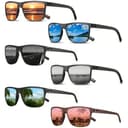
Six polarized UV400 pairs for the price of one mid-tier frame. The honest case for a multipack is not that any single pair is good — it is that a pair in the car, a pair in the kit bag and a pair by the door means you are wearing UV protection on the days you would otherwise have gone without. Judge it as insurance, not as eyewear.

Best value multipack
$19.99 · View on Amazon

Price as of September 4, 2026. #ad How we’re funded

The models, in full

#1Best overall

Paleshy 0.1s Auto-Tinting Photochromic

A polarized photochromic lens at a price where that pairing normally does not exist — Tifosi's equivalent costs several times more. The listing claims a 0.1-second tint change and dual UV400. Treat the timing claim with skepticism, because it is the brand's own number with no published test behind it, but the feature set itself is real and unusually complete for the money.

Strengths

  • Polarized and photochromic together, which is rare below three figures
  • Dual UV400 stated on the listing
  • Aimed at driving, cycling and fishing rather than one narrow activity

Trade-offs

  • The 0.1-second transition claim is the manufacturer's, not an independently measured figure
  • Photochromics barely darken behind a windshield, which blunts the driving case
Lens featurePolarized photochromic, dual UV400
PolarizedYes
Lens tintPhotochromic
Frame materialNot published
UV protectionDual UV400
Best forDriving, Cycling, Fishing, Changing light

Spec note. The listing states a polarized photochromic lens with dual UV400 and a 0.1-second auto-tint. The transition speed is a manufacturer claim with no published test behind it, and car glass blocks most of the UV that triggers photochromic darkening.

Specs read from the product listing, on August 19, 2026. “Not published” means the brand does not state that figure.

#2Best wrapped frame for riding

Paleshy Driving & Cycling Photochromic Polarized

The same lens technology as the auto-tinting pair in a frame aimed squarely at the road. The listing markets it for night vision, and that is the claim to be careful about: a lens of any color removes light you need after dark. Bought as a daytime road and trail pair it is good value; bought as night-driving eyewear it is the wrong product.

Strengths

  • Photochromic and polarized in a wrapped, road-oriented frame
  • UV400 anti-glare stated on the listing
  • Covers riding and driving without buying two pairs

Trade-offs

  • Marketed with a night-vision claim no tinted lens can honestly support
  • No lens or frame material published
Lens featurePhotochromic polarized, UV400
PolarizedYes
Lens tintPhotochromic
Frame materialNot published
UV protectionUV400
Best forDriving, Cycling, Fishing, Changing light

Spec note. The listing states a photochromic polarized UV400 lens and markets a night-vision benefit. Any tint reduces the light reaching your eye, so a tinted lens is the wrong tool after dark whatever a listing says.

Specs read from the product listing, on August 19, 2026. “Not published” means the brand does not state that figure.

#3Best value multipack

Paleshy 6-Pack Polarized

Six polarized UV400 pairs for the price of one mid-tier frame. The honest case for a multipack is not that any single pair is good — it is that a pair in the car, a pair in the kit bag and a pair by the door means you are wearing UV protection on the days you would otherwise have gone without. Judge it as insurance, not as eyewear.

Strengths

  • Polarized and UV400 stated across the pack
  • Per-pair cost low enough that losing one does not matter
  • Classic lightweight shape that suits most faces

Trade-offs

  • Budget hinges and coatings — these will not last like one good frame
  • No lens material, frame material or weight published
Lens featurePolarized UV400, six pairs
PolarizedYes
Lens tintNot published
Frame materialNot published
UV protectionUV400
Best forEveryday, Spares, Driving, Outdoor work

Spec note. The listing states polarized UV400 lenses across a six-pack. No lens material, frame material or weight is published, which is typical at this price.

Specs read from the product listing, on August 19, 2026. “Not published” means the brand does not state that figure.

The lens: what is real

Two features, both genuinely present according to the listings, and both worth having.

Polarization is stated across the range. It removes light reflected off flat horizontal surfaces — water, wet roads, car hoods — and the AAO describes polarized lenses as reducing glare from reflective surfaces. It is the single most useful lens feature for most people, and it is not standard even on frames costing ten times as much.

Photochromic means the lens darkens when ultraviolet hits it and clears in its absence. That solves the commonest real complaint about sunglasses — that any fixed tint is wrong for half of your time outdoors. Our photochromic guide covers the mechanism, and our photochromic vs polarized comparison covers why having both is unusual.

One structural note that applies to every polarized photochromic, not just this brand: a lens with a permanent polarizing filter never returns to fully clear, because the filter is always there regardless of how light the photochromic layer goes. If you wanted a lens that becomes usable indoors, this is not it.

The claims that do not hold up

“0.1-second auto-tinting”

Photochromic lenses darken reasonably quickly and clear considerably more slowly — typically seconds to darken, and often several minutes to clear fully. A tenth of a second is far outside the range the technology usually operates in, and no test methodology is published alongside the figure.

We are not calling it impossible; we are recording that it is unverified. Our product cards say exactly that rather than repeating the number as a specification. If the lens is genuinely fast, that is a pleasant surprise. If you buy it expecting instant behavior and get ordinary photochromic behavior, you were told a number that nobody stood behind.

“Night vision”

This one is not a matter of degree. A tint works by absorbing light; there is no tint that adds light. After dark you are already operating near the bottom of your visual range, so a lens of any color makes detection harder, not easier.

The AAO advises against tinted lenses for night driving for exactly this reason, and the FAA cautions that under low illumination sunglasses may compromise vision. A yellow tint can make a scene look crisper by removing scattered blue light, which is why the claim persists, but looking crisper and seeing more are different things. Our night driving glasses guide covers the whole argument.

We flag this on the product card rather than repeating it. A listing willing to make that claim tells you how carefully the rest of it was written.

The photochromic limits nobody's marketing mentions

These apply to every photochromic lens and are worth knowing before you buy one at any price:

  • Cars.The AAO states that car windows block the ultraviolet that causes photochromic lenses to darken. A lens marketed for driving will stay close to clear in bright sunlight behind a windshield. For driving, a fixed-tint polarized lens is the better tool — see our driving roundup.
  • Heat.The FAA’s lens guidance notes that warm temperatures above roughly 70°F seriously limit how dark a photochromic lens can get. Hot days and bright days are the same days, which is an awkward property.
  • Clearing speed. Slower than darkening. Walking indoors on a bright day means a period of seeing very little.

None of this is a criticism of Paleshy specifically. It is the technology, and a $28 lens is subject to it exactly as a $200 one is.

Which model to buy

The auto-tinting pair — the one to get

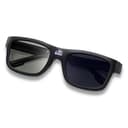
The flagship, and the only model in the range with a clean dual UV400 statement. Polarized, photochromic, and aimed at general outdoor use rather than one activity. If you want to find out whether a light-reactive lens suits how you spend your time, this is the cheapest honest way to do it.

The driving and cycling pair — good frame, ignore the pitch

The same lens technology in a wrapped, road-oriented frame with more coverage. As a daytime riding pair it is good value and the extra wrap genuinely helps with wind and grit — our mountain biking roundup explains why photochromic suits riding in and out of tree cover better than anything else.

Buy it for that. Do not buy it as night-driving eyewear, and note that its photochromic behavior is largely wasted behind a car windshield.

The six-pack — better than it sounds

Not photochromic, just polarized UV400, six pairs, for less than one mid-tier frame. The case for it is not that any individual pair is good — it is that a pair in the car, a pair in the kit bag and a pair by the door means you are wearing UV protection on the days you would otherwise have gone without.

Judge it as insurance rather than eyewear. Given the AAO’s position that UV damage accumulates and that price is not a proxy for protection, having a stated UV400 lens everywhere you need one is a genuinely sensible thing to buy. Our budget roundup covers the wider category.

How Paleshy compares

Against Tifosi, the closest legitimate comparison. The Crit Fototec is also a polarized photochromic, and Tifosi publishes far more — a Grilamid TR-90 frame, stated 100% UVA/UVB protection, and a lens family with a decade of use behind it. It costs several times more. If you know you want this technology and intend to keep the pair for years, buy the Tifosi. Our Tifosi review covers the range.

Against ROCKBROS, which sits at a similar price with a photochromic lens, the difference is polarization. Against goodr and Knockaround, which state UV400 and polarize by default but are fixed-tint, the question is simply whether you want the photochromic behavior. Our brands roundup sets out the field.

Our verdict

Buy the auto-tinting pair if you want to try a polarized photochromic lens without committing three figures, and if most of your outdoor time is on foot or on a bike rather than in a car. It is a genuinely unusual product at the price, and the UV400 statement on that model is clean.

Discount the marketing entirely. The transition-speed figure is unverified and the night-vision claim is not something any tinted lens can deliver. Neither makes the lens worse than it is — but a brand that writes claims like that has told you not to take its spec sheet at face value, which is why we record what is published rather than what is asserted.
Frequently asked questions

Are Paleshy sunglasses actually photochromic and polarized?

Both features are stated on the listings, and the combination is genuinely unusual at this price — a polarized photochromic normally costs three figures. What no polarized photochromic can do, at any price, is return to fully clear, because the polarizing filter is present regardless of how light the photochromic layer becomes. If you wanted a lens that becomes usable indoors, this is not it.

Is the 0.1-second transition claim true?

It is unverified, and we record it that way rather than repeating it as a specification. Photochromic lenses typically take seconds to darken and often several minutes to clear fully, so a tenth of a second sits well outside the range the technology usually operates in, and no test methodology is published alongside the figure. If the lens is genuinely that fast it is a pleasant surprise; do not buy on the basis of the number.

Do Paleshy night-vision sunglasses work at night?

No, and no tinted lens can. A tint works by absorbing light and there is no tint that adds light, so after dark — when you are already near the bottom of your visual range — any colored lens makes detection harder. The AAO advises against tinted lenses for night driving and the FAA cautions that sunglasses may compromise vision under low illumination. A yellow tint can make a scene look crisper by removing scattered blue light, which is why the claim persists.

Do Paleshy sunglasses block UV?

The flagship auto-tinting model states dual UV400, which is the full claim and what you want. The other models state UV400 or UV protection with varying specificity, and our product cards record each exactly as published rather than assuming. None of the listings publishes a lens material. If you want certainty, an optician can read the lens in a UV photometer in under a minute, usually free.

Should I buy Paleshy for driving?

Not for the photochromic feature, no. The AAO states that car windows block the ultraviolet that causes photochromic lenses to darken, so a photochromic lens stays close to clear in bright sunlight behind a windshield — which is the opposite of what you wanted. For driving, a fixed-tint polarized lens is the right tool. The polarization on these lenses does work in a car; the light-reactive part largely does not.

Paleshy or Tifosi for a photochromic lens?

Tifosi if you know you want the technology and intend to keep the pair for years: the Crit Fototec is also a polarized photochromic, and Tifosi publishes considerably more — a Grilamid TR-90 frame and stated 100% UVA/UVB protection. It costs several times as much. Paleshy if you want to find out whether a light-reactive lens suits how you spend your time before committing that money.

Sources

Keep reading