Shade & Temple

Best Sunglasses for Sailing

Sailing is the one water sport where the wind matters more than the lens. At fifteen knots of apparent wind your eyes stream and a frame lifts off your face — so this list is ranked on sealing and retention first, and glare control second.

By Stephen V.Last updated How we pick

For most sailors the answer is the Costa Rincon 580P: a wide, wrapped polarized frame that covers the sides of your eyes, cuts the glare coming off the water and is light enough to wear for a six-hour passage. But if you sail in real wind — dinghies, anything with a trapeze, anything where you spend the day sitting on the rail — buy the SOL PRO foam-padded polarized instead, for twenty dollars, because the thing ruining your vision upwind is not glare. It is air moving past your eyes at twenty knots.

That is the whole argument of this page, and it is why it does not read like our boating roundup. On a powerboat you are behind a windscreen at displacement speed or sitting still; the dominant problem is reflected glare, so that page is ranked on lens quality and its top pick is a glass-lens Costa. Under sail you are in the apparent wind for hours, the boat heels, you are constantly looking up at the sail and the telltales against a bright sky and then back down at the water, and the pair has to still be on your face when you tack. Wind sealing, retention and a lens that works looking up as well as down are what decide it.

Two things this page deliberately does not do. It does not rank floating frames first — floating is a real feature and a real reason to buy, and it has its own page at best floating sunglasses, which is where to start if your main fear is dropping a pair over the side. And it does not claim we have sailed in any of these. Every pick states a UV rating, every spec below is read from the product’s own listing on a dated visit, and prices are pulled live.

How this is funded: we earn a commission if you buy through our links, at no extra cost to you. It never changes which product we recommend, and we’ll tell you when we’d skip one. Full disclosure.

Quick picks

Ranked on lens spec, UV protection, tint fit and buyer value. Select a row to jump to the full write-up. We have not field-tested these — here is exactly what we do instead.

#ProductBest forPrice
1
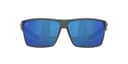
Costa Del Mar Rincon 580P

Costa Del Mar Rincon 580P

The Costa to buy when the Fantail's glass feels like too much lens to carry. The Rincon runs a big 63mm rectangular front with a 580P polycarbonate lens — the same contrast-boosting Costa tint, roughly half the weight of 580G, and noticeably more impact-resistant. Better for long days and for anyone who has snapped a pair before.

Best overall
$233.00 · View on Amazon

Price as of October 20, 2026. #ad How we’re funded

2
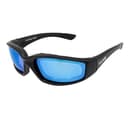
SOL PRO Foam Padded Polarized Riding

SOL PRO Foam Padded Polarized Riding

The rare riding frame that is both foam-sealed and genuinely polarized with a stated UV400 rating — which matters more on a bike than most riders realize, because the glare you are fighting is bouncing straight off wet asphalt and the roofs of the cars in front of you. Around twenty dollars for both features is unusual.

Best for heavy air
$20.25 · View on Amazon

Price as of October 20, 2026. #ad How we’re funded

3
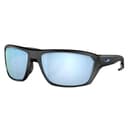
Oakley Split Shot Prizm Deep Water Polarized

Oakley Split Shot Prizm Deep Water Polarized

Oakley's answer to the water. The Split Shot pairs a Prizm Deep Water tint with polarization to cut surface glare and lift the contrast of what's under it, and it ships with a leash and removable side shields. If you want an Oakley specifically for fishing, this is it.

Best for the helm
$286.00 · View on Amazon

Price as of October 20, 2026. #ad How we’re funded

4
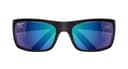
Maui Jim Peahi

Maui Jim Peahi

The wrapped, rubber-gripped Maui Jim — the one built for wind, water and movement rather than the school run. A rectangular medium fit with a matte rubber frame that holds when you sweat, wearing the same PolarizedPlus2 lens as the brand's dressier frames. This is Maui Jim's answer to Costa, minus the glass weight.

Best for all-day passages
$289.00 · View on Amazon

Price as of October 20, 2026. #ad How we’re funded

5

SUNGAIT Square Polarized Sports Wraparound

SUNGAIT's attempt at a sport frame, and a reasonable one: a lightweight polarized wraparound square marketed for fishing, golf and running. It is the pair to buy when you want a second, disposable sport frame rather than a primary one — the lens spec is honest and the frame is not trying to be a premium wrap.

Best budget pick

The picks in full

#1Best overall

Costa Del Mar Rincon 580P

The Costa to buy when the Fantail's glass feels like too much lens to carry. The Rincon runs a big 63mm rectangular front with a 580P polycarbonate lens — the same contrast-boosting Costa tint, roughly half the weight of 580G, and noticeably more impact-resistant. Better for long days and for anyone who has snapped a pair before.

Strengths

  • 580P polarized polycarbonate — the Costa tint at a lighter weight
  • Large 63mm rectangular lens covers a wide face well
  • Blocks 100% UV; far more impact-resistant than glass

Trade-offs

  • 580P scratches more easily than Costa's 580G glass
  • Still a premium price for a polycarbonate lens
Lens feature580P polarized polycarbonate, 63mm wrap, 100% UV
PolarizedYes
Lens tintGray-blue mirror (580P)
Frame materialBio-based nylon
UV protection100% UV protection
Best forFishing, Boating, Wide faces, Everyday outdoors

Spec note. Costa's 580 lenses filter high-energy yellow light to boost contrast; 580P is the lighter, more impact-resistant polycarbonate version of the same tint (580G is glass).

Specs read from the product listing, on August 10, 2026. “Not published” means the brand does not state that figure.

#2Best for heavy air

SOL PRO Foam Padded Polarized Riding

The rare riding frame that is both foam-sealed and genuinely polarized with a stated UV400 rating — which matters more on a bike than most riders realize, because the glare you are fighting is bouncing straight off wet asphalt and the roofs of the cars in front of you. Around twenty dollars for both features is unusual.

Strengths

  • Polarized with a stated UV400 rating — both, at a budget price
  • Foam padded wrap seals out the airflow that makes eyes water at speed
  • Light enough that it does not fight a helmet strap

Trade-offs

  • Polarization can make an LCD instrument cluster hard to read at some angles
  • Budget hinges and coatings; a season or two of hard use, not a decade
Lens featurePolarized, UV400, foam-padded wrap
PolarizedYes
Lens tintNot published
Frame materialNot published
UV protectionUV400
Best forMotorcycle, Cycling, Fishing, Windy conditions

Spec note. The listing states polarized lenses with UV400 protection in a lightweight foam-padded wrap design.

Specs read from the product listing, on August 11, 2026. “Not published” means the brand does not state that figure.

#3Best for the helm

Oakley Split Shot Prizm Deep Water Polarized

Oakley's answer to the water. The Split Shot pairs a Prizm Deep Water tint with polarization to cut surface glare and lift the contrast of what's under it, and it ships with a leash and removable side shields. If you want an Oakley specifically for fishing, this is it.

Strengths

  • Prizm Deep Water + polarization cuts glare and reveals structure below the surface
  • Includes a leash and removable side blinders for bright, open water
  • Plutonite lens blocks 100% UV

Trade-offs

  • The most expensive fishing pick here by a wide margin
  • Large, wrap-heavy frame is sport-specific, not an everyday look
Lens featurePrizm Deep Water, polarized, 100% UV
PolarizedYes
Lens tintPrizm Deep Water
Frame materialO Matter (nylon)
UV protection100% UV (Plutonite, to 400nm)
Best forFishing, Boating, Open water

Spec note. Prizm Deep Water is Oakley's polarized tint tuned for on-the-water use, combining glare reduction with blue-green contrast enhancement.

Specs read from the product listing, on July 18, 2026. “Not published” means the brand does not state that figure.

#4Best for all-day passages

Maui Jim Peahi

The wrapped, rubber-gripped Maui Jim — the one built for wind, water and movement rather than the school run. A rectangular medium fit with a matte rubber frame that holds when you sweat, wearing the same PolarizedPlus2 lens as the brand's dressier frames. This is Maui Jim's answer to Costa, minus the glass weight.

Strengths

  • PolarizedPlus2 lens with 100% UV in a wrapped, gripping frame
  • Matte rubber finish stays put in spray and sweat
  • Lighter on the face than a glass-lens fishing frame

Trade-offs

  • Premium price, and the wrap looks sporty with anything smart
  • Polycarbonate lens will not match glass for edge-to-edge clarity
Lens featurePolarizedPlus2 wrap, 100% UV, rubber grip
PolarizedYes
Lens tintBlue Hawaii (mirrored)
Frame materialNylon (matte rubber finish)
UV protection100% UV protection
Best forFishing, Boating, Beach, Hiking

Spec note. Amazon lists the Peahi as a polarized rectangle in a medium fit with a matte rubber frame; the Blue Hawaii lens is a mirrored PolarizedPlus2 tint.

Specs read from the product listing, on August 10, 2026. “Not published” means the brand does not state that figure.

#5Best budget pick

SUNGAIT Square Polarized Sports Wraparound

SUNGAIT's attempt at a sport frame, and a reasonable one: a lightweight polarized wraparound square marketed for fishing, golf and running. It is the pair to buy when you want a second, disposable sport frame rather than a primary one — the lens spec is honest and the frame is not trying to be a premium wrap.

Strengths

  • Polarized in a wraparound shape at around twenty dollars
  • Light enough not to bounce during activity
  • Square-ish sport front is less aggressively styled than most budget wraps

Trade-offs

  • No published UV rating on this specific SKU, unlike SUNGAIT's metal frames
  • Budget hinge on a sport frame is the first thing to fail
Lens featurePolarized lightweight sport wraparound
PolarizedYes
Lens tintGray
Frame materialNot published
UV protectionNot published
Best forFishing, Golf, Running, Budget

Spec note. The listing states a lightweight polarized square wraparound marketed for fishing, golf and running. No UV rating is published for this SKU.

Specs read from the product listing, on August 11, 2026. “Not published” means the brand does not state that figure.

How to choose sunglasses for sailing

1. Apparent wind is the specification nobody lists

Boat speed and true wind add up, which is why a sailor in a ten-knot breeze can be sitting in fifteen or twenty knots of air across the deck. Wind across the eye surface accelerates tear evaporation, and the result is the streaming, stinging, blurry-at-the-edges hour that every sailor recognises. The AAO’s own dry-eye guidance names exactly one piece of eyewear for this problem — wraparound sunglasses, to keep the wind off your tear film — which is the same finding our dry-eye roundup is built on.

In a frame, “sealing” means three things in increasing order of effectiveness: a lens that carries round to your temple, a frame that sits close to your brow, and an actual foam gasket. The SOL PRO is the only pick here with the third, which is why it wins the windy-day slot despite being the cheapest frame on the page. The cost of a gasket is fogging when you stop moving — our anti-fog roundup explains why a sealed frame and a fog-free frame are opposite requirements, and you cannot have both in one pair. The clearest illustration of that trade is the boat right next to yours: our rowing roundup ranks vented frames first and rejects gaskets outright, because a rower generates far more heat than apparent wind and fogging beats wind as the failure mode.

2. Retention, because the water is right there

A pair that goes over the side is gone. Three defences, and you should use at least two. A snug frame with grippy temple ends stays on through a gybe. A retainer cord costs a few dollars and is the single highest-value thing you can add to any pair on this list. And a floating frame turns a lost pair into a recoverable one — Hobie and Flying Fisherman both build frames designed to float, which is the subject of our floating roundup rather than this one. If you sail somewhere you can actually turn round and retrieve them, floating is worth more than any lens upgrade.

3. Polarized, with one honest caveat about looking up

Polarization is close to mandatory on the water: the glare coming off a surface is horizontally polarized light, and a polarizing filter is the only feature that removes it rather than simply dimming everything. The AAO identifies it as the feature that addresses reflected daytime glare. On a boat that means you can read the water — gusts, wind shifts, the dark patch of a header, a shallow bank — instead of a sheet of white.

The caveat is the sail. Looking up at a telltale or a leech against a bright sky is the opposite problem: you need to see a thin thread, not reduce glare, and a dark polarized lens can make a mylar sail’s laminate show stress patterns and rainbow fringing. It is harmless but distracting. Most racers live with it; if it bothers you, a lighter copper or amber tint keeps more detail than a dark grey one. Our page on lens colours sets out what each tint does to contrast, and polarized vs non-polarized covers the trade in general.

4. Coverage from below, not just in front

Water reflects UV upward, so on a boat you are lit from underneath as well as overhead — and a flat lens leaves the gap between your cheekbone and the bottom edge of the frame wide open. That is the same geometry argument our wraparound roundup makes, and it is why every pick here except the budget pair is a genuinely wrapped frame. The companion habit is a brimmed hat, which does more for the light coming over the top of a frame than any lens.

5. Salt is what actually destroys the pair

Not impact, not scratches from use — dried salt crystals, wiped across a lens with a dry shirt. That is the mechanism behind most of the scratches sailors blame on quality. Rinse with fresh water before you touch the lens with anything, and dry with a microfibre cloth; our cleaning guide covers the full method and the three habits that quietly ruin a coating. If a pair is already scratched, re-lensing is sometimes cheaper than replacing — and on the premium picks here it usually is.

Sailing, by what you sail

Dinghies, skiffs and anything wet. The SOL PRO with a retainer. You are going to get these soaked, dropped and sat on, and at this price that is a survivable event. The gasket earns its place the first time you beat upwind in a breeze.

Keelboat racing. The Rincon or the Oakley Split Shot. Both give you real wrap and a water-tuned polarized lens, and both are light enough that you forget them after an hour, which is the only durable test of a frame you wear for a whole regatta.

Cruising and long passages. The Maui Jim Peahi. The reason to spend premium money on a lens is hours, not conditions — eight hours behind a good lens is genuinely less tiring than eight hours behind a mediocre one. Keep a cheap spare in the chart table.

Crewing on someone else’s boat occasionally. The SUNGAIT sport square. Polarized, UV400, twenty dollars, and if it ends up in the bilge nothing has gone wrong with your day.
Frequently asked questions

Do I need polarized sunglasses for sailing?

For reading the water, yes — glare off a surface is horizontally polarized light and a polarizing filter is the only thing that removes it rather than dimming everything equally. The one place it works against you is looking up at a laminate sail, where polarization can make stress patterns and rainbow fringing visible. It is distracting rather than harmful.

Why does my vision get blurry and my eyes stream when I'm sailing?

Apparent wind across the eye surface evaporates your tear film faster than you can replace it. It is the same mechanism that affects cyclists and motorcyclists, and the fix is mechanical rather than optical: a frame that wraps and sits close to your brow, or a frame with a foam gasket. The AAO's dry-eye guidance names wraparound sunglasses specifically.

Should sailing sunglasses float?

If you sail somewhere you can turn around and retrieve them, floating converts a lost pair into a recovered one and is worth more than any lens upgrade. If you are racing and cannot stop, a retainer cord does more. The two are not mutually exclusive and a retainer is a few dollars.

What lens tint is best for sailing?

Grey for bright, high-sun days when you mainly want the light knocked down; copper or amber when you need contrast — reading gusts on the water, picking out a mark, or looking at telltales against a pale sky. Both should be polarized. The tint is a smaller decision than the wrap and the retention.

Is the boating roundup not the same thing?

No, and deliberately so. A powerboat puts you behind a windscreen with glare as the dominant problem, so that page ranks on lens quality and its top pick is a glass-lens Costa. Under sail you sit in the apparent wind for hours, so this page ranks sealing and retention first — and its top pick for windy days is a twenty-dollar foam-gasket frame that would not make the boating list at all.

Sources

Keep reading