Everyday & Style Sunglasses
The pair you actually reach for — chosen by who is wearing it and what you want to spend. Roundups for men and women, the best under $50, a gift guide, and an honest answer to whether expensive sunglasses are worth it.
Most sunglasses advice is organized around activities — golf, fishing, cycling — which is useful right up until you realize the pair you wear most is none of those. It is the one that lives in your car, goes to the shops, sits on your head at lunch and comes on holiday. That pair is chosen differently: less about lens tuning for a specific task, more about a frame that suits your face, a lens that handles ordinary glare, and a price you are comfortable with given how likely you are to sit on it.
This hub is that decision. It splits the way people actually shop — by who is wearing it and by what you want to spend — rather than by category. There are roundups for men and women (a fit distinction more than a lens one, and we say so on both pages), a best-under-$50 roundup for the largest and most underserved group of buyers, a gift guide for the hardest version of the problem, and a straight answer to the question everyone eventually asks: are expensive sunglasses worth it?
The rest of the hub covers the other way people shop, which is by shape or by budget band rather than by who is wearing it. Best sunglasses under $100 covers the range where money starts buying engineering — TR-90 frames, photochromic lenses, sizes other than average — rather than just a working lens. And five shape-led roundups take the frames people search by name: aviators, from the heritage reference down to a $17 polarized pair; cat-eyes, the one shape sold so heavily on styling that most of them never publish a lens spec at all; wayfarers, the most copied frame ever made, whose original ships with a standard lens most buyers wrongly assume is polarized; round frames, which attract the strongest opinions and publish the weakest lens specs; and rectangular frames, the silhouette that suits more faces than any other and gets the least attention for it.
Two pages sit slightly outside that. Sunglasses for pilots is the one place our usual advice inverts, because the FAA recommends against polarized lenses in the cockpit. And designer sunglasses answers the question behind the price tag: Prada, Chanel, Versace and Burberry frames are not made by Prada, Chanel, Versace or Burberry.
One rule runs through all of it. Every pair we recommend states either UV400 or 100% UVA/UVB protection, and anything that does not is excluded regardless of how it looks or what it costs. That is not fussiness — a dark lens with no ultraviolet filter is worse for your eyes than wearing nothing, because the tint opens your pupil and lets more UV through. Our UV protection guide explains the mechanism, and how we choose covers the rest of our standards.
Two roundups joined the hub in October 2026. Oversized sunglasses is the one styling trend that is also a protection upgrade, because more lens means less of the light that arrives around the edges of a frame — which is why the AAO names oversized and wraparound styles in the same breath. And sunglasses for teens fills the gap between the kids’ roundup and the adult ones, where the buyer picks on looks, wears an adult size, and is going to lose them.
Everything in Everyday
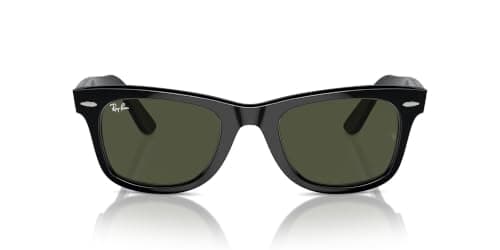
Best Sunglasses for Men
Six frames that cover the whole range — a heritage classic, a sport crossover, a water lens and a budget pair that is genuinely polarized.
Our top pick
Ray-Ban RB2140 Original Wayfarer
$191.00 · View on AmazonPrice as of October 20, 2026. #ad How we’re funded
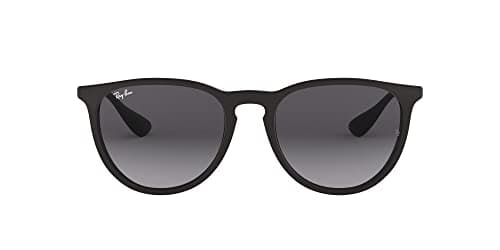
Best Sunglasses for Women
Round, cat-eye and small-fit frames judged on lens spec first — from a $14 polarized pair to a premium lens that lifts color rather than just dimming it.
Our top pick
Ray-Ban RB4171 Erika
$176.00 · View on AmazonPrice as of October 20, 2026. #ad How we’re funded
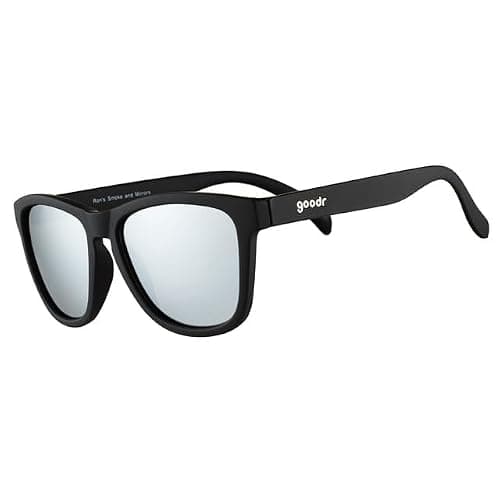
Best Budget Sunglasses Under $50
Cheap sunglasses that are genuinely polarized and genuinely UV400 — because a dark lens without UV protection is worse for your eyes than no lens at all.
Are Expensive Sunglasses Worth It?
UV protection costs almost nothing, so what does $250 actually buy? A straight answer on lens clarity, coatings, build and the parts that are pure brand.
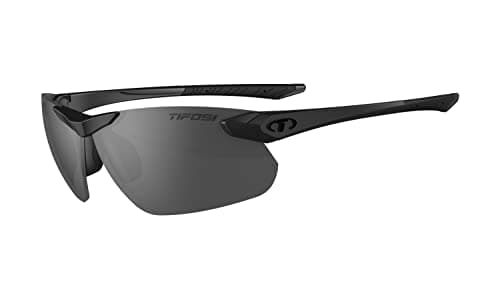
Best Sunglasses Under $100
The band where money starts buying engineering rather than a working lens — TR-90 frames, photochromic lenses, mountain tints and sizes other than average.
Our top pick
Tifosi Seek FC 2.0
$39.95 · View on AmazonPrice as of October 20, 2026. #ad How we’re funded
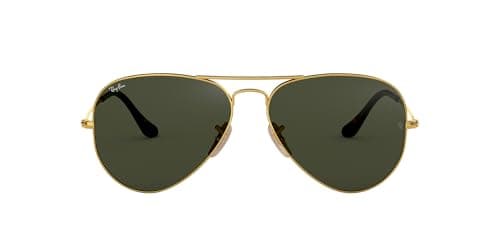
Best Aviator Sunglasses
A shape that has barely changed since the 1930s, holding lenses that have changed enormously — from the $339 polarized reference to a $17 pair doing the same job.
Our top pick
Ray-Ban RB3025 Classic Aviator
$191.00 · View on AmazonPrice as of October 20, 2026. #ad How we’re funded
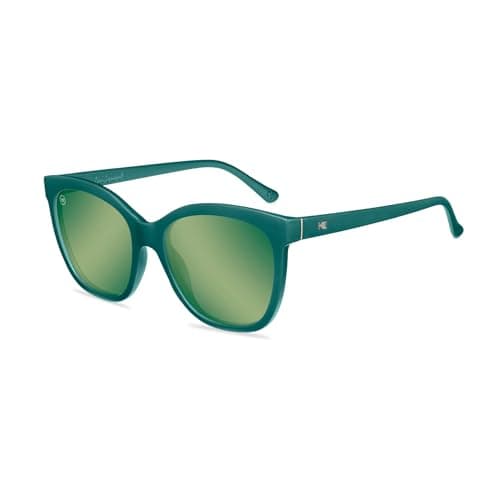
Best Cat-Eye Sunglasses
The one shape sold almost entirely on styling, which is why so few are polarized — five picks judged on the lens first, from $14 to $289.
Our top pick
Knockaround Cat Eye Polarized
$34.99 · View on AmazonPrice as of October 20, 2026. #ad How we’re funded
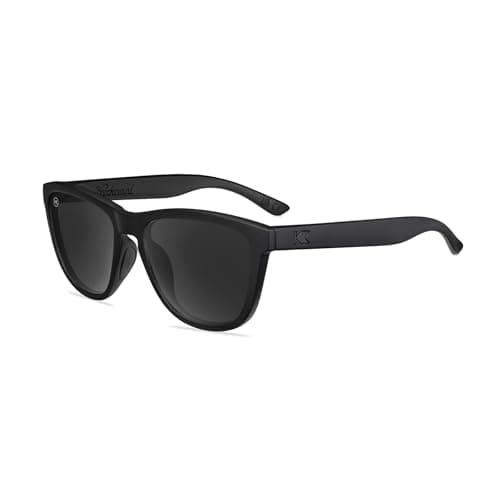
Best Wayfarer Sunglasses
The most copied frame shape ever made — and the detail buyers miss, which is that the original's standard lens is not polarized. Five picks, including the ones that are.
Our top pick
Knockaround Premiums (Polarized)
$37.99 · View on AmazonPrice as of October 20, 2026. #ad How we’re funded
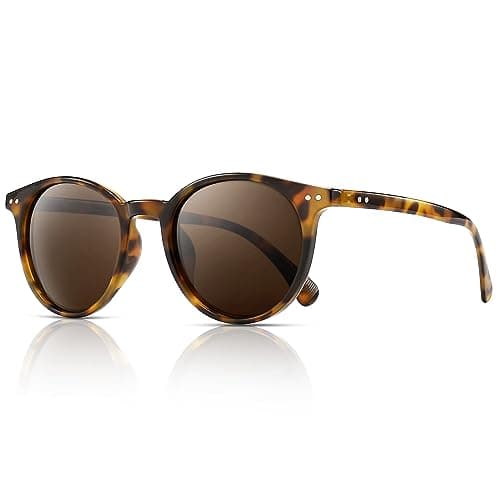
Best Round Sunglasses
The shape with the strongest opinions and the weakest lens specs — sold almost entirely on styling, which is why so few are polarized. Judged on the lens first.
Our top pick
SUNGAIT Classic Vintage Round Polarized
$19.99 · View on AmazonPrice as of October 20, 2026. #ad How we’re funded
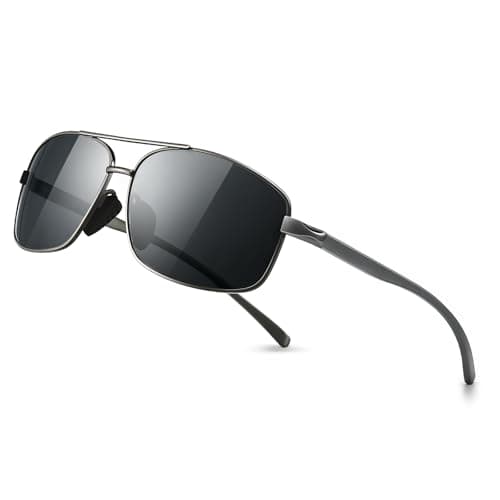
Best Rectangular Sunglasses
The most useful shape nobody gets excited about — it suits more faces than any other silhouette and is the easiest to find genuinely polarized.
Our top pick
SUNGAIT SGT458 Ultra Lightweight Rectangular
$16.99 · View on AmazonPrice as of October 20, 2026. #ad How we’re funded
Best Sunglasses for Pilots
The one activity where our usual advice inverts: the FAA recommends against polarized lenses in the cockpit, and against photochromics too.
Our top pick
Ray-Ban RB3025 Classic Aviator
$191.00 · View on AmazonPrice as of October 20, 2026. #ad How we’re funded
Designer Sunglasses: What You Are Paying For
Prada, Chanel, Versace and Burberry sunglasses are not made by Prada, Chanel, Versace or Burberry. Who does make them, and where the money goes.
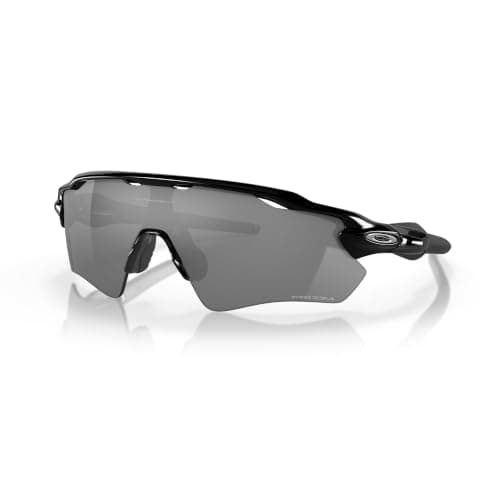
Best Wraparound Sunglasses
The shape ophthalmologists actually recommend, because a flat lens leaves the sides of your eyes open. Six wrapped pairs, and the peripheral-distortion cost of overdoing the curve.
Our top pick
Oakley Radar EV Path Prizm
$244.00 · View on AmazonPrice as of October 20, 2026. #ad How we’re funded
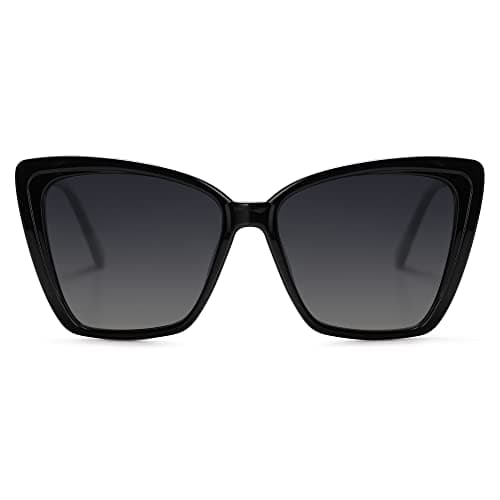
Best Oversized Sunglasses
The one styling trend that is also a protection upgrade, because the AAO names oversized and wraparound frames together. Five big-lens picks, and the two trade-offs nobody mentions.
Our top pick
SOJOS SJ2206 Oversized Polarized Cat Eye
Best Sunglasses for Teens
A teenager chooses the frame and then leaves it on a bus, which makes replacement cost the honest first criterion. Six picks that state a UV rating, plus the impact-protection caveat.
Our top pick
Knockaround Premiums (Polarized)
$37.99 · View on AmazonPrice as of October 20, 2026. #ad How we’re funded
Best Sunglasses for Travel
A fortnight away is the highest-attrition two weeks a pair of sunglasses will ever have, so the right spec is not the best lens you can afford — it is the best lens you can afford to lose.
Our top pick
Knockaround Premiums (Polarized)
$37.99 · View on AmazonPrice as of October 20, 2026. #ad How we’re funded
Best Shield Sunglasses
One lens instead of two, spanning both eyes with no bridge in your sightline. The coverage is real and so is the bill for it — peripheral distortion, no lens swaps, and a shape that commits you.
Our top pick
Oakley Radar EV Path Prizm
$244.00 · View on AmazonPrice as of October 20, 2026. #ad How we’re funded
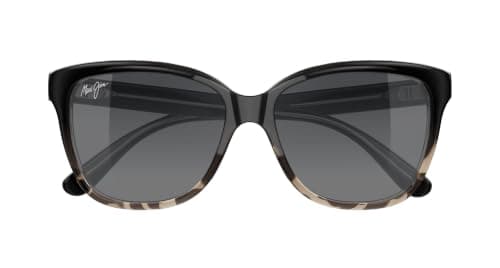
Best Sunglasses for Women Over 50
Two things change in your fifties and they ask for opposite features — glare tolerance and reading distance. Almost no single pair fixes both, so here is what to buy for each.
Our top pick
Maui Jim Starfish
$289.00 · View on AmazonPrice as of October 20, 2026. #ad How we’re funded
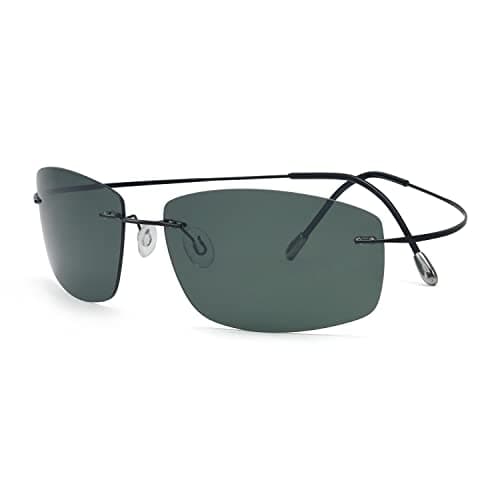
Best Rimless Sunglasses
Rimless is not a style, it is a build - drilled, one-piece or semi-rimless - and the build is the whole trade-off. Nothing crosses your view, and nothing protects the lens edge.
Our top pick
Eyekepper Titanium Rimless
Choosing an everyday pair, in three decisions
1. Polarized, or not?
For an everyday pair the answer is almost always yes. A polarizing filter removes the horizontally oriented light bouncing off flat surfaces — wet road, car hoods, water, glass — and that is the glare you meet on an ordinary Tuesday, not just on a boat. The two exceptions are golf, where polarization erases the sheen you use to read a green, and night driving, where no tinted lens belongs at all.
The catch worth repeating: polarization is not a function of price. Several $180 heritage frames ship non-polarized while $25 pairs are polarized. Buy the spec, not the tier. Our polarized vs non-polarized comparison covers the trade, and our one-minute polarization test checks a pair you already own.
2. What shape suits your face?
The rule is contrast rather than echo: angular frames add definition to round and soft features, curved frames soften a strong jaw and brow. Our face-shape guide is the pillar, with dedicated roundups for round faces and square faces.
3. What size do you actually need?
This is the decision most people skip and most regret. The numbers printed inside the temple arm — something like 54-18-140 — are lens width, bridge width and temple length in millimeters, and matching them to a pair you already own is the single most reliable way to buy a frame that fits. Our size guide walks through it, our wide-face roundup covers larger heads, and if your current pair keeps sliding forward, our troubleshooting guide has the six causes and the fixes.
How much to spend on a pair you wear every day
- Under $35. The right answer for most people, and especially anyone who loses sunglasses. Genuinely polarized, genuinely UV400, replaced without pain.
- $100–200. A heritage frame you will still want in a decade. Check the trim is polarized if glare matters — it usually is not by default.
- $250 and up. Only when the lens is doing specialist work you can name. Otherwise the premium is buying build and style, which is fine, as long as you know it.
For the activity-specific version of all this, our sport hub covers golf, fishing, running, cycling, hiking and the beach, and our brand reviews go deeper on each maker. If you want the whole field ranked in one place, start with our flagship roundup. And if the pair is for someone else, the gifts & deals hub collects the gift guides by recipient and budget, plus an honest read on which brands discount for Black Friday.
Two everyday cases the frame-shape pages do not cover
The shape pages above assume you are choosing a look. Two common situations are decided by something else entirely. If the pair is for a trip, best sunglasses for travel ranks on the thing that actually ends a holiday pair — the chance of losing it — and reaches a different conclusion from every other page on this hub about how much to spend. And if you want one lens with no bridge in your sightline, best shield sunglasses covers the one current frame shape this hub was missing, which is not the same thing as a wraparound however often the two words get swapped.