Shade & Temple

Best Sunglasses for Dry Eyes

The American Academy of Ophthalmology's own dry-eye advice names exactly one piece of eyewear: wraparound sunglasses, to stop wind blowing directly into your eyes. So this is a frame decision rather than a lens one — and most frames sold as wraparounds do not seal at all.

By Stephen V.Last updated How we pick

Almost every sunglasses recommendation on this site turns on the lens. This one does not. The American Academy of Ophthalmology lists “Being in smoke, wind or a very dry climate” among the things that cause or worsen dry eye, and its own list of remedies includes one specific instruction about eyewear: “wear a pair of wraparound sunglasses to reduce the chance of wind blowing directly into your eyes”. Its dry-eye disease page repeats it — “Protect your eyes from drying wind by wearing wrap-around glasses outside”.

That is a claim about the frame, not the tint. Your tear film is a thin layer of liquid on an exposed surface, and moving air evaporates it faster than your eyes can replace it. Polarization does nothing about that. UV400 does nothing about that. What helps is geometry: a frame that curves close to your face and closes the gaps at the brow and the temples, so the air moving past you is not moving across your eye.

The awkward part is that “wraparound” on a product listing usually means a curved lens and nothing more. A curved lens that still leaves a two-finger gap above your cheekbone is styling, not a seal. The five picks below are ordered by how much airflow they actually stop — from a removable foam gasket at the top to an open sport wrap at the bottom — and each one states a UV rating, which remains this site’s minimum bar. One thing to be clear about before you spend anything: sunglasses manage a trigger, they do not treat dry eye, and this page is general guidance rather than medical advice. Prices are pulled live and dated.

How this is funded: we earn a commission if you buy through our links, at no extra cost to you. It never changes which product we recommend, and we’ll tell you when we’d skip one. Full disclosure.

Quick picks

Ranked on lens spec, UV protection, tint fit and buyer value. Select a row to jump to the full write-up. We have not field-tested these — here is exactly what we do instead.

#ProductBest forPrice
1
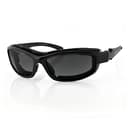
Bobster Road Hog II

Bobster Road Hog II

A convertible: a foam-lined riding frame that ships with three lenses — smoked, amber and clear — so the same glasses cover a bright afternoon, an overcast morning and a night ride. Swapping a lens at the roadside is slower than a photochromic that does it for you, but the amber lens genuinely lifts contrast in flat light in a way no auto-darkening lens matches.

Best seal overall
$59.29 · View on Amazon

$62.986% off

Price as of September 18, 2026. #ad How we’re funded

2
SOL PRO Foam Padded Polarized Riding

SOL PRO Foam Padded Polarized Riding

The rare riding frame that is both foam-sealed and genuinely polarized with a stated UV400 rating — which matters more on a bike than most riders realize, because the glare you are fighting is bouncing straight off wet asphalt and the roofs of the cars in front of you. Around twenty dollars for both features is unusual.

Best value sealed pair
$20.25 · View on Amazon

Price as of September 18, 2026. #ad How we’re funded

3
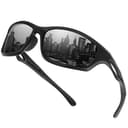
Duduma Polarized Sports

Duduma Polarized Sports

One of Amazon's long-running budget sport bestsellers. The Duduma is polarized, UV400, and built on a TR90 wrap frame — a lot of sport sunglass for under $20. It's not premium, but as a knock-around fishing or cycling backup, the polarization does the job.

Best everyday wrap
$26.99 · View on Amazon

Price as of September 18, 2026. #ad How we’re funded

4
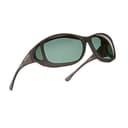
Cocoons Style Line MX (by Live Eyewear)

Cocoons Style Line MX (by Live Eyewear)

The fit-over that's actually engineered rather than an afterthought. Cocoons are purpose-built OTG frames with polarized lenses, proper side and top coverage, and a range of sizes so they fit your specific glasses — which is the whole game with fit-overs. You pay more, and it shows in the fit.

Best over prescription glasses
$74.95 · View on Amazon

Price as of September 18, 2026. #ad How we’re funded

5
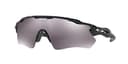
Oakley Radar EV Path Prizm

Oakley Radar EV Path Prizm

The performance shield for runners and cyclists who want maximum coverage and a taller lens. The Prizm tint sharpens contrast, the frame is featherweight O Matter, and the open-edge lens keeps your peripheral view clear. Non-polarized, which most runners prefer for reading the road surface.

Best at speed
$244.00 · View on Amazon

Price as of September 18, 2026. #ad How we’re funded

The picks in full

#1Best seal overall

Bobster Road Hog II

A convertible: a foam-lined riding frame that ships with three lenses — smoked, amber and clear — so the same glasses cover a bright afternoon, an overcast morning and a night ride. Swapping a lens at the roadside is slower than a photochromic that does it for you, but the amber lens genuinely lifts contrast in flat light in a way no auto-darkening lens matches.

Strengths

  • Three lenses in the box — smoked, amber and clear — cover every light condition
  • Removable foam gasket, so it works with or without the wind seal
  • Amber lens lifts contrast in flat, overcast light better than a neutral tint

Trade-offs

  • The listing does not state polarization — verify before relying on it
  • Lens swapping means carrying the case, and nobody does it mid-ride
Lens featureThree interchangeable lenses, removable foam gasket
PolarizedNot published
Lens tintSmoked, amber and clear (three lenses)
Frame materialNot published
UV protection100% UV protection
Best forMotorcycle, Night riding, Changing light

Spec note. The listing states a gloss black frame supplied with dual-grade reflective smoked, amber and clear lenses, on shatter-resistant polycarbonate with 100% UV protection and two sets of foam. Polarization is not stated.

Specs read from the product listing, on August 21, 2026. “Not published” means the brand does not state that figure.

#2Best value sealed pair

SOL PRO Foam Padded Polarized Riding

The rare riding frame that is both foam-sealed and genuinely polarized with a stated UV400 rating — which matters more on a bike than most riders realize, because the glare you are fighting is bouncing straight off wet asphalt and the roofs of the cars in front of you. Around twenty dollars for both features is unusual.

Strengths

  • Polarized with a stated UV400 rating — both, at a budget price
  • Foam padded wrap seals out the airflow that makes eyes water at speed
  • Light enough that it does not fight a helmet strap

Trade-offs

  • Polarization can make an LCD instrument cluster hard to read at some angles
  • Budget hinges and coatings; a season or two of hard use, not a decade
Lens featurePolarized, UV400, foam-padded wrap
PolarizedYes
Lens tintNot published
Frame materialNot published
UV protectionUV400
Best forMotorcycle, Cycling, Fishing, Windy conditions

Spec note. The listing states polarized lenses with UV400 protection in a lightweight foam-padded wrap design.

Specs read from the product listing, on August 11, 2026. “Not published” means the brand does not state that figure.

#3Best everyday wrap

Duduma Polarized Sports

One of Amazon's long-running budget sport bestsellers. The Duduma is polarized, UV400, and built on a TR90 wrap frame — a lot of sport sunglass for under $20. It's not premium, but as a knock-around fishing or cycling backup, the polarization does the job.

Strengths

  • Polarized and UV400 on a TR90 wrap frame, under $20
  • Wrap coverage for cycling, fishing and running
  • Cheap enough to keep a pair in every bag

Trade-offs

  • Budget lens clarity and coatings
  • Generic sport-wrap look
Lens featurePolarized, UV400, TR90 wrap
PolarizedYes
Lens tintNot published
Frame materialTR90
UV protectionUV400
Best forCycling, Fishing, Budget

Spec note. Duduma lists the frame as polarized with UV400 protection on an unbreakable TR90 frame.

Specs read from the product listing, on July 18, 2026. “Not published” means the brand does not state that figure.

#4Best over prescription glasses

Cocoons Style Line MX (by Live Eyewear)

The fit-over that's actually engineered rather than an afterthought. Cocoons are purpose-built OTG frames with polarized lenses, proper side and top coverage, and a range of sizes so they fit your specific glasses — which is the whole game with fit-overs. You pay more, and it shows in the fit.

Strengths

  • Purpose-built OTG design with genuine size options for a proper fit
  • Polarized lenses with real top and side coverage
  • Better hinges and build than the sub-$25 fit-overs

Trade-offs

  • Several times the price of a generic fit-over
  • Still a fit-over look — bulkier than a standalone sunglass
Lens featurePurpose-built OTG, polarized, sized to fit
PolarizedYes
Lens tintGray (varies by colorway)
Frame materialPolycarbonate (plastic)
UV protection100% UV protection
Best forOver prescription glasses, Driving, Outdoors, Wide faces

Spec note. Cocoons are sold in multiple sizes keyed to your eyeglass dimensions — this listing is the MX (medium-extra-large) fit — with polarized lenses and full-coverage side and top shields.

Specs read from the product listing, on August 10, 2026. “Not published” means the brand does not state that figure.

#5Best at speed

Oakley Radar EV Path Prizm

The performance shield for runners and cyclists who want maximum coverage and a taller lens. The Prizm tint sharpens contrast, the frame is featherweight O Matter, and the open-edge lens keeps your peripheral view clear. Non-polarized, which most runners prefer for reading the road surface.

Strengths

  • Tall, open-edge lens maximizes upper-field vision when your head is down
  • Very light O Matter frame with grippy earsocks
  • Prizm Road tint lifts contrast on pavement and trail

Trade-offs

  • Big, unmistakably athletic look off the road
  • Premium price; polarization not offered on the standard Prizm Road
Lens featurePrizm tint, tall shield lens, 100% UV
PolarizedNo
Lens tintPrizm
Frame materialO Matter (nylon)
UV protection100% UV (Plutonite, to 400nm)
Best forRunning, Cycling, Trail

Spec note. The Radar EV raised the lens height over the original Radar for more upper-field coverage; the Prizm Road tint is non-polarized.

Specs read from the product listing, on July 18, 2026. “Not published” means the brand does not state that figure.

How to choose sunglasses for dry eyes

1. Understand what you are actually buying: less airflow

Dry eye, as the AAO defines it, is what happens when “your eyes do not produce enough tears”, make the wrong type, or when “your tears dry out too quickly”. Eyewear can only help with the third of those, and it helps in one way: by slowing the air that carries the moisture away.

That is why the picks on this page are ranked on seal rather than on lens quality. It also explains why people with dry eye so often report that sunglasses help outdoors and do nothing indoors — indoors the problem is usually reduced blinking at a screen, not evaporation, and no frame fixes that. The AAO’s own remedy list puts the two side by side: wraparound sunglasses for wind, and screen breaks with deliberate blinking for the rest.

2. The four levels of seal, and what each one costs you

There is a straightforward ladder here, and most buyers overshoot or undershoot it because listings do not describe it.

  • A removable foam gasket. A closed-cell foam strip around the inside of the frame that meets your brow and cheek. This is the real thing — it is what motorcycle eyewear uses, and it is the only level that meaningfully stops wind at speed. Cost: it traps heat, it can fog when you stop moving, and the foam is a consumable that absorbs sweat and eventually needs replacing.
  • A deep wrap with a tall lens. No foam, but the lens curves back past the outer corner of your eye and sits close at the brow. This handles ordinary breeze, walking and cycling in town. Cost: a strongly curved lens has optical consequences at the edges, which we cover on our base curve and wrap guide.
  • A fit-over with side and top shields. Purpose-built over-glasses frames are unexpectedly good at this, because the shields that exist to block edge glare also block edge airflow. Cost: bulk, and you need the right size.
  • A flat, open frame. A classic rectangle or aviator. Lovely, and it does approximately nothing for evaporation. Cost: none, but it is not the pair to buy for this problem.

3. Moisture-chamber eyewear, and where it fits

There is a step beyond anything on this page. Moisture-chamber glasses use a sealed or near-sealed gasket specifically to hold humidity against the eye — the same principle as the foam gasket at the top of the ladder above, taken to the point where retaining moisture rather than blocking wind is the stated purpose.

They are a medical product rather than a sunglasses category, they are usually supplied through an eye care professional, and we do not stock or recommend one here because it is not a purchase to make from a roundup. If your dry eye is severe enough that ordinary wraparounds are not helping, that conversation belongs with your ophthalmologist — along with artificial tears, warm compresses and the rest of the treatment side, none of which a pair of sunglasses replaces.

4. What the lens spec does and does not do here

Since the frame is doing the work, it is worth being precise about the lens so you do not pay for the wrong thing.

  • UV rating: still non-negotiable. Ultraviolet does not cause dry eye, but it damages the eye over a lifetime, and a dark lens without UV filtering is worse than no sunglasses at all because it opens your pupil. Every pick here states a rating. See our UV protection guide.
  • Polarization: nice, irrelevant to dryness. It removes reflected glare, which is worth having in its own right — three of the five picks are polarized — but it has no effect on your tear film. Do not choose a worse-fitting frame because it is polarized.
  • Tint darkness: lighter is often better. If you are light-sensitive as well as dry, that is a different problem with a different answer; see our light sensitivity roundup. For dryness alone, a mid-tint lens you will keep wearing beats a very dark one you take off.
  • Anti-fog: the trade-off nobody warns you about. The better the seal, the more likely the lens fogs when you stop moving. Vented frames and anti-fog coatings exist for exactly this, and a foam-gasket frame with removable foam lets you choose per outing.

5. Contact lens wearers: read this before you buy a frame

The AAO lists “Using contact lenses for a long time” among the contributors to dry eye, which puts a lot of readers in a specific bind: the correction that lets you skip prescription sunglasses is also part of the problem. A well-sealed wraparound genuinely helps on a windy day with lenses in, and it is a cheap thing to try. But if your eyes are dry every day rather than on windy days, the honest next step is a conversation about lens material, wearing time or switching to glasses for part of the week — not a better pair of sunglasses.

6. The rest of the AAO’s list, because eyewear is one line of it

We would be overselling this page if we stopped at frames. The Academy’s own remedies for dry eye run: a humidifier at home, avoiding fans and hair dryers because they “can make your eyes dry”, staying away from cigarette smoke, taking screen breaks and blinking deliberately, over-the-counter artificial tears (preservative free if you need them often), warm compresses on the eyelids, and careful eyelid hygiene. Wraparound sunglasses are one item on that list, and they are the only one this site can sell you. Persistent or worsening symptoms, pain, redness or changes in vision are a reason to see an ophthalmologist rather than to buy eyewear.

It is also worth knowing where else moving air finds your eyes, because outdoors is not the only place. The AAO names “Low humidity, wind (sleeping with a fan or sleep apnea mask), allergens and smoke” as environmental causes of tear problems, and is specific about one of them: sleep apnea masks are “common offenders, even if they fit well. Even a small amount of air leaking from a mask can dry the eyes.” If you wake up with the worst symptoms of the day, no pair of sunglasses is going to fix that — the fan, the mask fit or the bedroom humidity is where to look.

7. Fit details that decide whether the seal is real

Two frames with the same description can perform completely differently, and the difference is on your face rather than in the listing.

  • Brow gap. Put the frame on and look up in a mirror. If you can see daylight above the lens, wind gets in there. A taller lens or a deeper wrap closes it.
  • Cheek contact. A frame that rests lightly against your cheekbone seals well but fogs and collects sweat; one that floats above it breathes but leaks. Neither is wrong — know which you are buying.
  • Temple gap. The side of the frame is where most air actually arrives. This is where a genuine wrap beats a flat frame with curved lenses.
  • Face width. A frame too narrow for your face pulls away from the temples and defeats the whole point. If standard frames pinch, start with our wide-fit roundup instead.

What we left off, and why

Fashion “wraparound” frames with no seal. A curved lens on a frame that sits an inch off your face is a style, and it does not slow airflow. The word on the listing is not the specification.

Goggles and moisture-chamber eyewear. Both work better than anything here, and neither is a sunglasses purchase. If you need that level of protection, it is a conversation with an eye care professional.

Anything without a stated UV rating. Several cheap foam-gasket riding frames seal well and publish nothing about ultraviolet. A stated rating is the bar on every page of this site, and sealing well is not a reason to waive it.

Where to spend and where not to

Spend on the seal and on a frame wide enough for your face, because those two things decide whether the purchase does anything at all. If you are outdoors in wind regularly — cycling, riding, walking a dog on an exposed route, working outside — the foam-gasket tier is worth the money and the fogging trade.

Do not spend up for lens brand here. The premium lens technologies this site normally argues for — polarization tiers, color-enhancing tints, optical-grade materials — are all real and none of them addresses evaporation. A twenty-dollar sealed wrap that states UV400 will do more for dry eyes in wind than a three-hundred-dollar flat frame, which is not a sentence we write often. Our are expensive sunglasses worth it guide covers where the premium money does earn its keep.
Frequently asked questions

Do sunglasses help with dry eyes?

For one specific cause of dry eye, yes, and the AAO says so directly: its dry-eye remedies include wearing 'a pair of wraparound sunglasses to reduce the chance of wind blowing directly into your eyes'. Your tear film is a thin layer of liquid on an exposed surface and moving air evaporates it faster than your eyes replace it, so a frame that keeps wind off genuinely reduces symptoms outdoors. What sunglasses cannot do is treat the underlying condition or help with the indoor version of the problem, which is usually reduced blinking at a screen.

What kind of sunglasses are best for dry eyes?

Wraparound frames, ranked by how well they actually seal. The best are riding-style frames with a removable closed-cell foam gasket that meets your brow and cheek, which is the only level that stops wind at speed. Below that, a deep wrap with a tall lens handles ordinary breeze, and a purpose-built fit-over with side and top shields does surprisingly well because those shields block airflow as well as glare. A flat rectangle or classic aviator, however good the lens, does essentially nothing for this.

Are polarized sunglasses better for dry eyes?

No — polarization and dry eye are unrelated. A polarizing filter removes light reflected off surfaces like water and wet roads, which is worth having for comfort and glare, but it has no effect on how quickly your tear film evaporates. Choose the frame that seals best for your face, then take polarization if that frame happens to offer it. Picking a worse-fitting frame because it is polarized is the wrong trade on this page specifically.

What are moisture chamber glasses, and do I need them?

They are eyewear with a sealed or near-sealed gasket designed to hold humidity against the eye — the same principle as a foam-gasket riding frame, taken to the point where retaining moisture rather than blocking wind is the stated purpose. They are a medical product usually supplied through an eye care professional rather than a sunglasses category, which is why none is recommended here. They are the right next step only if ordinary wraparounds are not helping, and that is a conversation for your ophthalmologist alongside artificial tears and the rest of the treatment side.

What else dries my eyes out besides wind outdoors?

More than most people expect, and some of it happens while you sleep. The AAO names low humidity, wind, allergens and smoke as environmental factors that cause tear problems, and it singles out two indoor sources of moving air: a fan you sleep under, and a sleep apnea mask — 'common offenders, even if they fit well. Even a small amount of air leaking from a mask can dry the eyes.' Its remedy list adds hair dryers, and suggests a humidifier at home. Sunglasses only address the outdoor half of that, which is worth knowing before you expect a frame to fix everything.

Do wraparound sunglasses fog up?

The better the seal, the more likely it is — and that is the honest trade-off of this category. A frame that stops airflow across your eye also stops airflow that would clear humidity from the lens, so foam-gasket frames fog most when you stop moving, and in cold weather. Three things help: vents in the frame or lens, an anti-fog treatment, and buying a frame whose foam gasket is removable so you can run it sealed on a windy ride and open on a warm still day.

Can contact lens wearers use wraparound sunglasses for dry eyes?

Yes, and it is a cheap thing to try — but read it as a partial answer. The AAO lists long-term contact lens use among the contributors to dry eye, so if your eyes are dry every day rather than on windy days, the frame is treating a symptom of something else. A well-sealed wrap genuinely helps on an exposed walk or a ride with lenses in. Daily dryness is worth raising with your eye care professional, where lens material, wearing time or switching to glasses for part of the week are the levers that actually move it.

Sources

Keep reading