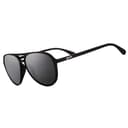
How to choose sunglasses for long days in a cab
1. The side window is the exposure, and almost nobody knows it
The windshield and the side windows of a vehicle are not made of the same material, and they do not behave the same way. When researchers measured what actually reaches the driver, the gap was large: 96% average UV-A blockage through the windshield against 71% through the driver’s side window, with the weakest side windows far below that and only 14% of the cars tested clearing 90% at the side. The study’s own conclusion was addressed to manufacturers: “Automakers may wish to consider increasing the degree of UV-A protection in the side windows of automobiles.”
The same announcement notes that this pattern is consistent with reported higher rates of cataract in left eyes and left-sided facial skin cancer — in other words, the side you sit next to. We are not going to overstate that: it is an association drawn by the researchers, not a finding about you specifically. But the practical consequence is not controversial. Your eyes are getting ultraviolet from a direction most sunglasses barely cover, for the length of a shift, for years. The American Academy of Ophthalmology’s long-standing advice is that UV exposure raises the risk of cataract and growths on the eye, and that wraparound frames are recommended precisely because they stop light arriving from the sides.
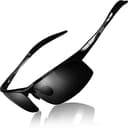
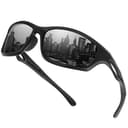
That one fact reorders the whole shopping list. A flat, narrow frame — a classic rectangle or a small aviator — leaves the outer corner of your eye exposed to the window you are sitting beside. A wrapped frame does not. If you buy nothing else from this page, buy coverage.
2. Polarization: yes for the road, with one real caveat
The glare that ruins a driver’s afternoon — the sheet of white light off wet asphalt, the sun bouncing off the hood of the truck ahead, the flash off a windshield in the next lane — is reflected light, polarized in one plane by the surface it bounced from. A polarizing filter is aligned to block exactly that plane, which is why the AAO points to polarized lenses for glare from reflective surfaces. For long-haul driving in daylight, it is the single most useful lens feature you can buy, and four of the five picks here have it.
The caveat is the one nobody mentions until it annoys them. A polarizing filter can dim or blank an LCD screen at certain viewing angles, and a modern cab is full of screens: the ELD tablet, the nav unit, a backup camera display, the instrument cluster in some trucks. Tilt your head and a display can go dark. It is not dangerous and most drivers adapt in a day, but if you rely on a screen mounted at an awkward angle, check it with the glasses on before you commit. Our polarized vs non-polarized guide covers the trade in full, and the general driving roundup covers the passenger-car version of the same decision.
3. Buy two pairs, and make one of them cheap
This is the advice professional drivers give each other and it is correct. A pair of sunglasses in a working truck lives on a dashboard at 140°F, gets sat on, goes down the side of the bunk, and gets left at a truck stop roughly once a year. A single expensive pair is a bad fit for that environment, not because expensive lenses are worse but because the replacement cycle is brutal.
The sensible structure is one good pair you actually like wearing and one spare that lives permanently in the cab, so a lost pair is an inconvenience rather than a purchase decision at a service plaza. The spare matters more than it sounds: the alternative to a cheap backup is a gas-station pair with no stated UV rating, and a dark lens without ultraviolet filtering is genuinely worse for your eyes than no sunglasses at all, because the darkness opens your pupil while the lens lets ultraviolet through. Our UV protection guide explains which label phrasings mean something.
4. Tint: gray for the shift, copper for flat light
A neutral gray lens dims everything equally, so brake lights, signal colors, load markings and the paint on a highway sign stay the color they actually are. For a driver that neutrality is worth more than contrast tricks, and gray is the default we would recommend for a primary pair.
Copper, amber and brown tints work the other way: they suppress part of the blue end of the spectrum, which lifts apparent contrast and makes the edges of the road and the texture of the surface stand out, at the cost of shifting color slightly. In flat, overcast, hazy light — the grey afternoon where everything goes the same shade — that is genuinely useful. In bright midday sun it is a matter of preference. Our lens color guide has the full table, and the lens category guide explains the 0–4 darkness scale, which matters here: a category 4 lens is too dark to be legal for driving in many places and should never be in a cab.
5. Light that changes all day is an argument for photochromic
A long run crosses the whole light range: a dark yard at 5am, full sun by ten, a low blinding sun at either end of the day, tunnels, tree cover and overcast in between. A photochromic lens darkens and lightens in response to ultraviolet, which is exactly that problem solved in one pair.
There is one thing to know before you buy one for a truck: photochromic lenses are triggered by UV, and a windshield blocks most UV. Behind laminated glass many photochromic lenses activate weakly or not at all, which is the opposite of what you paid for. Some lenses are formulated to work behind glass and most are not, and the listing rarely says. Treat a photochromic pair as excellent for the parts of the job outside the cab — strapping, fueling, inspections, the yard — and test it against your own windshield before relying on it at the wheel. Our photochromic guide covers the mechanism and the behind-glass limitation properly.
6. Nothing tinted after dark. Nothing yellow, ever.
The night-driving glasses sold at every truck stop — yellow or amber lenses promising to cut headlight glare — run against the physics. A tint of any color removes light, and after dark you need every photon you can get. The AAO’s position is that they do not help and can make night vision worse. We have written the whole argument out at night driving glasses, and it is the one page on this site that recommends buying nothing. Clean your windshield inside and out, keep your prescription current, and dim your dash.
7. Fit details that only matter at hour eight
Everything is comfortable for twenty minutes. A ten-hour day finds the flaws.
- Temple pressure. A frame that grips slightly at the temples becomes a headache by mid-afternoon. If you wear a cap, the band adds pressure at exactly the same point. Thin, flexible temples beat thick ones here.
- Weight on the bridge. A heavy frame leaves marks and starts to ache. Light metal or TR90 both solve it; a chunky acetate does not.
- Sliding. Heat, sweat and a slightly loose fit move a frame down your nose all day, and the fix is grip rather than tightness. Our guide to why sunglasses slide down covers what actually works.
- Headsets and hearing protection. If you wear a headset, thin temples are not optional — a thick arm under an ear cup is painful within an hour.
- Glasses wearers. A fit-over or a clip-on is usually cheaper and more practical than a second prescription. See sunglasses that fit over glasses and clip-on sunglasses.
What we left out, and why
Unrated pairs at the counter. The sunglasses sold at fuel desks are usually cheap, usually dark and usually silent about ultraviolet. A stated UV rating is this site’s minimum bar, and a pair that does not state one does not go on this page regardless of price.
Anything marketed for night driving. Covered above. No yellow lens is on this page and none will be.
Category 4 lenses. The very darkest lenses — glacier and mountaineering tints — transmit too little light to be safe behind the wheel and are widely marked as not for driving. They are the right answer on a snowfield and the wrong one in a cab.
Where to spend and where not to
Spend on coverage and on a lens you can stand to wear for a full shift. Those two things — frame geometry and comfort — are what a driver actually feels, and they are worth more than brand. A wrapped budget frame that you keep on your face for ten hours is protecting you better than a premium flat frame that sits on the dash by lunchtime.
Do not spend on ultraviolet protection, because you cannot: a twenty-dollar pair marked UV400 filters the same ultraviolet as a three-hundred-dollar one, and the AAO says plainly that price is not a proxy for protection. What premium money buys is optical clarity across the lens, a coating that survives more cleaning, a frame that holds its shape and a warranty — all real, none of them ultraviolet. If you want the long version of that argument, it is at are expensive sunglasses worth it.