Shade & Temple

Best Sunglasses for Pickleball

A yellow ball on a light court, played close to the net with fast hands — six picks judged on contrast tint, grip through sweat, and whether they stay on when you lunge.

By Stephen V.Last updated How we pick

Pickleball has an unusual lens problem, and it is not brightness. The ball is neon yellow or green, the court surface is usually a light blue or green acrylic, and outdoor courts are frequently painted in exactly the color family the ball is. So the task is separation: you need a tint that pushes yellow-green forward and pushes the court back, in a game where the ball crosses a 44-foot court in well under a second.

The second problem is movement. Pickleball is played close to the net with a lot of quick lateral steps and lunges, and a frame that creeps down your nose on the third game is a frame you stop wearing. Grip material and frame weight matter more here than lens size or wraparound coverage — you are not fighting wind, you are fighting sweat.

Everything below states 100% UV or UV400 unless we flag otherwise, and every pick carries an honest downside. One important thing this page does not claim: none of these is impact-rated protective eyewear. More on that below, because it is the single most important safety point in racket sports. Prices are pulled live and dated.

How this is funded: we earn a commission if you buy through our links, at no extra cost to you. It never changes which product we recommend, and we’ll tell you when we’d skip one. Full disclosure.

Quick picks

Ranked on lens spec, UV protection, tint fit and buyer value. Select a row to jump to the full write-up. We have not field-tested these — here is exactly what we do instead.

#ProductBest forPrice
1
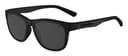
Tifosi Swank

Tifosi Swank

A lightweight lifestyle-sport crossover that's light enough to forget on a run and casual enough to wear after. Grilamid frame, shatterproof polycarbonate lens, 100% UVA/UVB — for around the price of a takeout meal. The runner's value pick when you don't want a full shield.

Best overall
$25.00 · View on Amazon

Price as of September 4, 2026. #ad How we’re funded

2
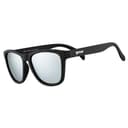
goodr OG

goodr OG

The best $25–35 in sunglasses. The OG is genuinely polarized, UV400, and its rubberized grip coating means it doesn't bounce or slide on a run — the reason it became runners' cult favorite. A squared retro shape that flatters round faces, in dozens of colorways. The value pick, full stop.

Best no-slip grip
$30.00 · View on Amazon

Price as of September 4, 2026. #ad How we’re funded

3
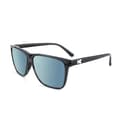
Knockaround Fast Lanes Sport

Knockaround Fast Lanes Sport

Knockaround's sportier frame — a slightly wrapped, grippier take on the Premiums that suits running and active wear better than the flat classic. Polarized and UV400, still cheap. The value sport pick when goodr's shape isn't for you.

Best value sport frame
$38.00 · View on Amazon

Price as of September 4, 2026. #ad How we’re funded

4
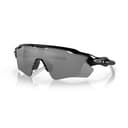
Oakley Radar EV Path Prizm

Oakley Radar EV Path Prizm

The performance shield for runners and cyclists who want maximum coverage and a taller lens. The Prizm tint sharpens contrast, the frame is featherweight O Matter, and the open-edge lens keeps your peripheral view clear. Non-polarized, which most runners prefer for reading the road surface.

Best premium contrast lens
$244.00 · View on Amazon

Price as of September 4, 2026. #ad How we’re funded

5
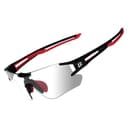
ROCKBROS Photochromic Sports Sunglasses

ROCKBROS Photochromic Sports Sunglasses

The cheapest honest way to try a photochromic lens. ROCKBROS lists a 22g UV400 light-reactive lens with an optional prescription insert behind it — which is the real story here, because a photochromic sport lens for people who wear glasses normally costs several times this. Budget coatings and a longer tint-transition than a premium lens are the price you pay.

Best for morning-to-afternoon play
$29.99 · View on Amazon

Price as of September 4, 2026. #ad How we’re funded

6
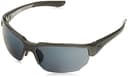
Under Armour Blitzing Wrap

Under Armour Blitzing Wrap

A wrap-style sport frame built for wider faces and higher-tempo activity, with a grippy rubberized nose and temples. A sensible mid-price step up from the budget sport brands when you want more coverage and a more secure hold than a lifestyle frame gives.

Best for wide faces
$70.05 · View on Amazon

Price as of September 4, 2026. #ad How we’re funded

The picks in full

#1Best overall

Tifosi Swank

A lightweight lifestyle-sport crossover that's light enough to forget on a run and casual enough to wear after. Grilamid frame, shatterproof polycarbonate lens, 100% UVA/UVB — for around the price of a takeout meal. The runner's value pick when you don't want a full shield.

Strengths

  • Very light Grilamid frame — easy to forget you're wearing it
  • Shatterproof polycarbonate lens, 100% UVA/UVB
  • Looks normal enough for post-run coffee

Trade-offs

  • Fixed, non-polarized lens in this base trim
  • Less coverage than a wraparound shield for fast descents
Lens featureLightweight Grilamid, 100% UVA/UVB
PolarizedNo
Lens tintNot published
Frame materialGrilamid
UV protection100% UVA/UVB
Best forRunning, Everyday, Casual sport

Spec note. Tifosi lists a lightweight Grilamid frame with a shatterproof polycarbonate lens and 100% UVA/UVB.

Specs read from the product listing, on July 18, 2026. “Not published” means the brand does not state that figure.

#2Best no-slip grip

goodr OG

The best $25–35 in sunglasses. The OG is genuinely polarized, UV400, and its rubberized grip coating means it doesn't bounce or slide on a run — the reason it became runners' cult favorite. A squared retro shape that flatters round faces, in dozens of colorways. The value pick, full stop.

Strengths

  • Genuinely polarized and UV400 at a sub-$35 price
  • No-slip, no-bounce grip coating stays put on a run
  • Squared retro shape flatters round faces; dozens of colors

Trade-offs

  • One size — a narrow face may find the OG a touch wide
  • Plastic frame and standard lens won't match a glass premium lens for clarity
Lens featurePolarized, UV400, no-slip grip
PolarizedYes
Lens tintVaries by colorway
Frame materialPolycarbonate (plastic)
UV protectionUV400
Best forRunning, Everyday, Round faces

Spec note. goodr lists the OG as polarized with UV400 protection and a no-slip coating; colorways change but the lens spec is consistent.

Specs read from the product listing, on July 18, 2026. “Not published” means the brand does not state that figure.

#3Best value sport frame

Knockaround Fast Lanes Sport

Knockaround's sportier frame — a slightly wrapped, grippier take on the Premiums that suits running and active wear better than the flat classic. Polarized and UV400, still cheap. The value sport pick when goodr's shape isn't for you.

Strengths

  • Polarized and UV400 with a light sport wrap
  • Grippier fit than the flat Premiums for activity
  • Still inexpensive

Trade-offs

  • Not as no-slip as a dedicated running frame
  • Budget hinges and coatings
Lens featurePolarized, UV400, light sport wrap
PolarizedYes
Lens tintVaries by colorway
Frame materialPolycarbonate (plastic)
UV protectionUV400
Best forRunning, Everyday sport, Budget

Spec note. Knockaround lists the Fast Lanes Sport as polarized with UV400 protection.

Specs read from the product listing, on July 18, 2026. “Not published” means the brand does not state that figure.

#4Best premium contrast lens

Oakley Radar EV Path Prizm

The performance shield for runners and cyclists who want maximum coverage and a taller lens. The Prizm tint sharpens contrast, the frame is featherweight O Matter, and the open-edge lens keeps your peripheral view clear. Non-polarized, which most runners prefer for reading the road surface.

Strengths

  • Tall, open-edge lens maximizes upper-field vision when your head is down
  • Very light O Matter frame with grippy earsocks
  • Prizm Road tint lifts contrast on pavement and trail

Trade-offs

  • Big, unmistakably athletic look off the road
  • Premium price; polarization not offered on the standard Prizm Road
Lens featurePrizm tint, tall shield lens, 100% UV
PolarizedNo
Lens tintPrizm
Frame materialO Matter (nylon)
UV protection100% UV (Plutonite, to 400nm)
Best forRunning, Cycling, Trail

Spec note. The Radar EV raised the lens height over the original Radar for more upper-field coverage; the Prizm Road tint is non-polarized.

Specs read from the product listing, on July 18, 2026. “Not published” means the brand does not state that figure.

#5Best for morning-to-afternoon play

ROCKBROS Photochromic Sports Sunglasses

The cheapest honest way to try a photochromic lens. ROCKBROS lists a 22g UV400 light-reactive lens with an optional prescription insert behind it — which is the real story here, because a photochromic sport lens for people who wear glasses normally costs several times this. Budget coatings and a longer tint-transition than a premium lens are the price you pay.

Strengths

  • Photochromic UV400 lens at a fraction of a premium light-reactive pair
  • 22g stated weight — barely there on a long ride
  • Includes a myopia insert frame for prescription wearers

Trade-offs

  • Budget lens coatings scratch faster than a Tifosi or Oakley
  • Not polarized, and the tint transition is slower than premium photochromics
Lens featurePhotochromic UV400 lens, 22g, prescription insert
PolarizedNo
Lens tintPhotochromic (light-reactive)
Frame materialTR90
UV protectionUV400
Best forCycling, Running, Fishing, Prescription insert

Spec note. ROCKBROS lists a 22g photochromic UV400 lens supplied with a myopia (prescription) insert frame.

Specs read from the product listing, on August 10, 2026. “Not published” means the brand does not state that figure.

#6Best for wide faces

Under Armour Blitzing Wrap

A wrap-style sport frame built for wider faces and higher-tempo activity, with a grippy rubberized nose and temples. A sensible mid-price step up from the budget sport brands when you want more coverage and a more secure hold than a lifestyle frame gives.

Strengths

  • Wrap coverage and rubberized grip hold up during activity
  • Suits wider faces that swim in narrow lifestyle frames
  • Mid-price — more frame than the sub-$25 brands

Trade-offs

  • Check the specific lens SKU for polarization — not all trims are polarized
  • Sport-wrap styling doesn't cross over to dressy wear
Lens featureWrap coverage, rubberized grip
PolarizedNot published
Lens tintNot published
Frame materialNot published
UV protection100% UVA/UVB
Best forRunning, Golf, Wide faces

Spec note. Polarization varies by Blitzing lens SKU; confirm the specific colorway's lens before buying if glare control matters.

Specs read from the product listing, on July 18, 2026. “Not published” means the brand does not state that figure.

How to choose pickleball sunglasses

1. Tint: warm contrast, not neutral gray

A gray lens dims everything evenly and keeps color accurate. That is exactly what you do not want when the ball and the court are close cousins on the color wheel. A rose, amber or copper base tint lifts the yellow-green of the ball away from the blue-green of the surface, and that separation is worth more than any amount of extra darkness.

The general rule: warmer tints boost contrast, neutral tints preserve color. Our lens colors guide has the full tint-by-condition table if you want to reason it out for your own court and time of day.

2. Grip over coverage

Unlike cycling or motorcycling, there is no airflow problem here, so you do not need a sealed wrap. What you need is a frame that does not move. Hydrophilic rubber — Oakley’s Unobtainium, Tifosi’s equivalent, goodr’s no-slip coating — gets tackier as it gets wet, which is the opposite of what a smooth acetate temple does. That is the whole reason sport frames stay put and lifestyle frames end up on the end of your nose.

If your current pair slides no matter what you buy, the problem is usually bridge fit rather than grip; our guide to sunglasses sliding down covers the six causes and the fixes.

3. Weight, and why a light frame gets forgotten

Anything above roughly 30 grams starts announcing itself over an hour of play. The frames on this list that people actually keep wearing are the light ones — a polycarbonate or Grilamid TR-90 sport frame, not a metal lifestyle frame. Weight is also why a heavier premium frame is not automatically the better sport choice.

4. Morning and evening play

A lot of pickleball happens in the two windows when the sun is lowest, which is when a fixed dark tint is least useful. Low sun coming straight down the court is a glare problem, but the same lens is too dark once you move to a shaded court or the light drops.

A photochromic lens solves it properly, and the budget photochromic on this list makes that affordable. Two limits worth knowing: photochromics react to ultraviolet, so they barely darken behind glass, and a polarized photochromic never goes fully clear. Our photochromic guide covers both.

5. Polarization is optional here

Polarization strips reflected glare off flat surfaces, which on an outdoor court means wet patches and the shine on a freshly resurfaced acrylic top coat. Pleasant, not essential — and some players find polarization slightly flattens depth perception on a fast-moving ball. Take it if the frame you want has it. Our polarized vs non-polarized comparison covers the general trade.

Sunglasses are not eye protection — and pickleball needs eye protection

This is the part of the page that matters most. Pickleball is played inside seven feet of an opponent at the kitchen line, with a hard ball and a stiff paddle, and it produces a meaningful number of eye injuries. Prevent Blindness states plainly that ordinary sunglasses — and even occupational safety glasses — do not provide adequate protection against ball impact, and that what protects your eyes is a sport eye guard meeting the relevant ASTM standard for the sport.

So treat these two as separate purchases with separate jobs. Sunglasses solve sun and contrast on an outdoor court. Impact-rated eye guards solve a paddle or ball to the face, indoors or out. If you play a lot of doubles at the net, buy the eye guards first. Our safety sunglasses roundup explains what impact certification does and does not cover.

Indoor pickleball

Do not wear a tinted lens indoors. A dark lens in a gym cuts light you need to track a fast ball, and there is no UV to protect against. If you want eye protection for indoor play, that is a clear impact-rated eye guard, not sunglasses. This is the same logic that makes tinted night-driving lenses a bad idea — the American Academy of Ophthalmology has been clear for years that reducing light in low light does not help you see.

Where to spend and where not to

Genuinely: not much. The value tier owns this category. A Tifosi or Knockaround sport frame gives you a contrast tint, a grippy nose and temples, 100% UV, and a weight you stop noticing — for around a quarter of the premium price. Our Tifosi review covers exactly what you give up.

The premium pick on this list earns its place on one thing: a tuned contrast tint that is genuinely better at separating a yellow ball from a green court than a generic rose lens. If you play several times a week and that separation is what you are after, our Oakley review explains what Prizm actually is. For other activities, the sport hub has roundups for running, golf, cycling and the rest, and the running roundup is the closest sibling to this one on grip and weight.
Frequently asked questions

What lens color is best for pickleball?

A warm contrast tint — rose, amber or copper. The ball is yellow-green and outdoor courts are usually blue-green, so the job is separating two colors that sit close together. A warm tint pushes them apart. Neutral gray dims everything evenly and keeps color accurate, which is comfortable in bright sun but does the least to help you pick the ball up early.

Do I need sunglasses or eye protection for pickleball?

Both, and they are different products. Sunglasses handle sun and contrast on an outdoor court. Impact-rated sport eye guards handle a ball or paddle to the face, which is a real risk at the kitchen line. Prevent Blindness is explicit that ordinary sunglasses and even occupational safety glasses do not provide adequate protection against ball impact — only eye guards meeting the sport's ASTM standard do.

Should pickleball sunglasses be polarized?

It is optional. Polarization strips reflected glare off wet patches and the shine on a freshly resurfaced acrylic court, which is pleasant on a bright day. It does nothing for the core problem, which is contrast between the ball and the surface, and some players find it slightly flattens depth perception on a fast ball. Take it if the frame you want has it; do not pay extra for it here.

Should I wear sunglasses for indoor pickleball?

No — not tinted ones. A dark lens indoors cuts light you need to track a fast ball, and there is no ultraviolet to protect against under a gym roof. If you want protection indoors, wear clear impact-rated eye guards. It is the same reasoning that makes tinted night-driving lenses a bad idea: reducing the light in an already-dim environment does not improve what you see.

How do I stop my sunglasses sliding down during a game?

Look for hydrophilic rubber on the nose and temples — the material used by the sport brands gets tackier as it gets wet rather than more slippery, which is why sport frames stay put through a sweaty third game and smooth acetate lifestyle frames do not. If a grippy frame still slides, the cause is usually a bridge that is too wide for your nose rather than the grip material.

Are cheap pickleball sunglasses good enough?

Yes, in this category more than most. The features that matter — a warm contrast tint, hydrophilic grip, low weight and 100% UV — are all available in the $20–35 sport frames, and the American Academy of Ophthalmology is clear that price is not a proxy for UV protection. The premium tier buys a more precisely tuned contrast tint, which matters if you play several times a week and not much otherwise.

Sources

Keep reading