Shade & Temple

Best Sunglasses for Seniors

Older eyes get less forgiving of glare, drier, and slower to pick out contrast — and the American Academy of Ophthalmology links lost contrast sensitivity to a higher risk of falls. That argues for a specific kind of lens, and it is not the darkest one on the rack.

By Stephen V.Last updated How we pick

Three things the American Academy of Ophthalmology publishes about ageing eyes shape this entire page. Adults with certain eye conditions “may notice an increased sensitivity to glare”. Older adults “tend to produce fewer tears”, which is the dry-eye problem in one line. And lost contrast sensitivity “complicates daily activities” while raising “the risk of falls or car accidents”.

Put those together and the shopping instinct most people follow — buy the darkest lens on the rack, because glare is the complaint — is the wrong one. A darker lens does cut brightness, but it also cuts the contrast that is already harder to see, and it does nothing extra about ultraviolet: the AAO is explicit that darker lenses are not more protective and that price is not a proxy for protection. What actually helps is a polarized lens, which removes reflected glare without making the world dimmer than it needs to be, in a frame that covers the sides of your eyes and comes off easily when you go back indoors.

The picks below cover the three routes that matter at this stage: a purpose-built pair to wear over prescription glasses, a light frame for all-day wear, and a premium lens for anyone whose main complaint is glare on the road. Two cost under twenty dollars. One thing this page cannot do is stand in for an eye exam — the AAO recommends a complete exam every year or two after 65, and both the NEI and the AAO point out that new glare or contrast trouble can be the first sign of a cataract rather than a sunglasses problem. Prices are pulled live and dated.

How this is funded: we earn a commission if you buy through our links, at no extra cost to you. It never changes which product we recommend, and we’ll tell you when we’d skip one. Full disclosure.

Quick picks

Ranked on lens spec, UV protection, tint fit and buyer value. Select a row to jump to the full write-up. We have not field-tested these — here is exactly what we do instead.

#ProductBest forPrice
1
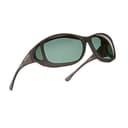
Cocoons Style Line MX (by Live Eyewear)

Cocoons Style Line MX (by Live Eyewear)

The fit-over that's actually engineered rather than an afterthought. Cocoons are purpose-built OTG frames with polarized lenses, proper side and top coverage, and a range of sizes so they fit your specific glasses — which is the whole game with fit-overs. You pay more, and it shows in the fit.

Best over prescription glasses
$74.95 · View on Amazon

Price as of September 18, 2026. #ad How we’re funded

2
SUNGAIT SGT458 Ultra Lightweight Rectangular

SUNGAIT SGT458 Ultra Lightweight Rectangular

SUNGAIT's best-known frame and the one that explains the brand: a 62mm metal rectangle that is polarized, states UV400, and costs about sixteen dollars. The 62mm width is the detail buyers miss — this is a large frame, which makes it one of the few genuinely cheap options for a wide face.

Best lightweight
$19.99 · View on Amazon

Price as of September 18, 2026. #ad How we’re funded

3
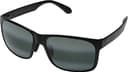
Maui Jim Red Sands Polarized

Maui Jim Red Sands Polarized

Maui Jim's calling card is color. Its PolarizedPlus2 lenses don't just cut glare — they lift color saturation and detail so the world looks crisper, not just dimmer. The Red Sands is a wearable everyday and driving frame that shows off that lens. The clarity is real; so is the price.

Best for glare and contrast
$259.00 · View on Amazon

Price as of September 18, 2026. #ad How we’re funded

4
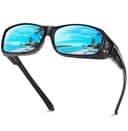
Duco Polarized Wraparound Fitover

Duco Polarized Wraparound Fitover

The best-value fit-over. Duco's wraparound fits over most prescription glasses, adds polarized, UV400 lenses with side coverage to block glare sneaking in from the edges, and costs about $25. For occasional over-the-glasses use — driving, a day outside — it's the sensible pick.

Best value fit-over
$26.98 · View on Amazon

Price as of September 18, 2026. #ad How we’re funded

5
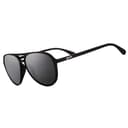
goodr VRG (Polarized Aviator)

goodr VRG (Polarized Aviator)

goodr's take on the aviator, with the same polarized, UV400, no-slip formula as the OG in a metal-look aviator shape. A cheap way to get the timeless aviator silhouette with genuine polarization — handy for driving and everyday wear when you want a change from the squared OG.

Best no-slip fit
$40.00 · View on Amazon

Price as of September 18, 2026. #ad How we’re funded

The picks in full

#1Best over prescription glasses

Cocoons Style Line MX (by Live Eyewear)

The fit-over that's actually engineered rather than an afterthought. Cocoons are purpose-built OTG frames with polarized lenses, proper side and top coverage, and a range of sizes so they fit your specific glasses — which is the whole game with fit-overs. You pay more, and it shows in the fit.

Strengths

  • Purpose-built OTG design with genuine size options for a proper fit
  • Polarized lenses with real top and side coverage
  • Better hinges and build than the sub-$25 fit-overs

Trade-offs

  • Several times the price of a generic fit-over
  • Still a fit-over look — bulkier than a standalone sunglass
Lens featurePurpose-built OTG, polarized, sized to fit
PolarizedYes
Lens tintGray (varies by colorway)
Frame materialPolycarbonate (plastic)
UV protection100% UV protection
Best forOver prescription glasses, Driving, Outdoors, Wide faces

Spec note. Cocoons are sold in multiple sizes keyed to your eyeglass dimensions — this listing is the MX (medium-extra-large) fit — with polarized lenses and full-coverage side and top shields.

Specs read from the product listing, on August 10, 2026. “Not published” means the brand does not state that figure.

#2Best lightweight

SUNGAIT SGT458 Ultra Lightweight Rectangular

SUNGAIT's best-known frame and the one that explains the brand: a 62mm metal rectangle that is polarized, states UV400, and costs about sixteen dollars. The 62mm width is the detail buyers miss — this is a large frame, which makes it one of the few genuinely cheap options for a wide face.

Strengths

  • 62mm lens width — genuinely large, and almost nothing else this cheap is
  • Polarized with UV400 both stated on the listing
  • Very light metal frame that you stop noticing after an hour

Trade-offs

  • Thin metal temples bend if you sit on them — this is not an abuse-proof frame
  • 62mm is too wide for a narrow face; check your current frame's numbers first
Lens feature62mm polarized rectangle, UV400, ultra-light metal
PolarizedYes
Lens tintGray
Frame materialMetal
UV protectionUV400
Best forWide faces, Everyday, Driving, Budget

Spec note. The listing states an ultra-lightweight rectangular metal frame (SGT458) with polarized lenses and UV400 protection, in a 62mm size with a gunmetal frame and gray lens.

Specs read from the product listing, on August 11, 2026. “Not published” means the brand does not state that figure.

#3Best for glare and contrast

Maui Jim Red Sands Polarized

Maui Jim's calling card is color. Its PolarizedPlus2 lenses don't just cut glare — they lift color saturation and detail so the world looks crisper, not just dimmer. The Red Sands is a wearable everyday and driving frame that shows off that lens. The clarity is real; so is the price.

Strengths

  • PolarizedPlus2 lens boosts color and contrast, not just darkness
  • Blocks 100% UV; treated to resist glare from every angle
  • Wearable everyday frame, not a sport-only wrap

Trade-offs

  • Premium price
  • Warm, high-contrast tint isn't for people who want neutral color
Lens featurePolarizedPlus2, color-boosting tint, 100% UV
PolarizedYes
Lens tintHCL Bronze (varies)
Frame materialNylon
UV protection100% UV protection
Best forDriving, Everyday, Beach

Spec note. Maui Jim's PolarizedPlus2 combines polarization with tint layers the brand says enhance color and block UV and some high-energy blue light.

Specs read from the product listing, on July 18, 2026. “Not published” means the brand does not state that figure.

#4Best value fit-over

Duco Polarized Wraparound Fitover

The best-value fit-over. Duco's wraparound fits over most prescription glasses, adds polarized, UV400 lenses with side coverage to block glare sneaking in from the edges, and costs about $25. For occasional over-the-glasses use — driving, a day outside — it's the sensible pick.

Strengths

  • Fits over most prescription frames without pressing the temples
  • Polarized, UV400, with side coverage against edge glare
  • Around $25 — an easy yes for occasional OTG use

Trade-offs

  • Bulkier than a dedicated sunglass, as all fit-overs are
  • Won't fit the very largest prescription frames
Lens featureFit-over (OTG), polarized, UV400, side coverage
PolarizedYes
Lens tintNot published
Frame materialPolycarbonate (plastic)
UV protectionUV400
Best forOver prescription glasses, Driving, Everyday

Spec note. Duco lists the fitover as polarized with UV400 and side-shield coverage; measure your glasses against the listed internal dimensions before buying.

Specs read from the product listing, on July 18, 2026. “Not published” means the brand does not state that figure.

#5Best no-slip fit

goodr VRG (Polarized Aviator)

goodr's take on the aviator, with the same polarized, UV400, no-slip formula as the OG in a metal-look aviator shape. A cheap way to get the timeless aviator silhouette with genuine polarization — handy for driving and everyday wear when you want a change from the squared OG.

Strengths

  • Polarized and UV400 in an aviator shape
  • Same no-slip grip as the rest of the goodr line
  • Far cheaper than a metal heritage aviator

Trade-offs

  • Plastic build won't feel like a metal-frame aviator
  • Aviator shape suits square and heart faces more than round
Lens featurePolarized, UV400, aviator shape
PolarizedYes
Lens tintVaries by colorway
Frame materialPolycarbonate (plastic)
UV protectionUV400
Best forDriving, Everyday, Square & heart faces

Spec note. goodr's aviator line carries the same polarized + UV400 spec as the OG.

Specs read from the product listing, on July 18, 2026. “Not published” means the brand does not state that figure.

How to choose sunglasses for older eyes

1. Polarized, not darker

Glare has two different sources and only one of them is fixed by a dark lens. Ambient brightness — a white sky, a snowfield, sun on concrete — is reduced by tint. Reflected glare — the sheet of light off a wet road, a car hood, a lake, a polished floor — is light that bounced off a surface and came back polarized in one plane, and a polarizing filter is aligned to block that plane specifically. The AAO points to polarized lenses for exactly this kind of glare.

The practical difference matters more with age than it did at thirty. Polarization removes the worst of the glare while leaving the scene bright, so the contrast you need in order to see a kerb edge, a step or a change in pavement is still there. A very dark lens does the opposite: it lowers everything, including the detail. Four of the five picks here are polarized and all five state a UV rating. Our polarized sunglasses guide covers the mechanism, and the home test takes about ten seconds if you want to check a pair you already own.

2. Coverage, because of where the light gets in

A flat, narrow lens leaves the outer corner of each eye open, and that is where a good deal of ultraviolet and low-angle sun arrives from. The AAO recommends wraparound and oversized frames for exactly that reason, and lists covering your eyes “with sunglasses and a wide-brimmed hat while outdoors” among its protective measures for ageing eyes. UV exposure raises the risk of cataract and growths on the eye over a lifetime, so coverage is a long-game decision rather than a comfort one.

Coverage is also the quiet argument for a fit-over. The purpose-built ones are built with side and top shields, so they close the gap that a clip-on leaves wide open. If you like the wrapped shape but do not need the over-glasses fit, our wraparound roundup covers the same geometry in standalone frames.

3. The prescription question, answered three ways

Most readers of this page already wear glasses, which turns a simple purchase into a choice between three routes. Each has a genuine case.

  • A purpose-built fit-over is the most protective and the least fiddly. It goes over your existing frames, includes side coverage, and there is nothing to lose or clip on. The good ones are sold in sizes keyed to your glasses, which is the whole game — a fit-over that is too small presses on your temples and a fit-over that is too large slides. Measure your current frames before buying.
  • A clip-on is the cheapest and lightest, and it is the right answer if you take sunglasses on and off constantly. What it does not do is cover the sides, so it solves brightness rather than exposure. See our clip-on roundup.
  • Prescription sunglasses give the best optics and the least bulk, and cost the most. If you spend real time outdoors they are worth it; if you go out for an hour a day they usually are not. Our prescription sunglasses guide covers what to ask for.

One route we would steer you away from: wearing a pair of non-prescription sunglasses instead of your glasses because it is simpler. Anything that reduces how well you see edges and steps works directly against the contrast problem this page is about.

4. Dry eyes are part of this, and the fix is the frame

The AAO notes plainly that older adults tend to produce fewer tears, and its dry-eye advice names one specific piece of eyewear: “wear a pair of wraparound sunglasses to reduce the chance of wind blowing directly into your eyes”. That is a frame property, not a lens one. A wrapped frame slows the airflow across the surface of the eye; a flat frame with wide gaps at the temples does not.

If gritty, burning or watering eyes in wind is a regular complaint rather than an occasional one, our dry eyes roundup goes further into which frames genuinely seal and which only look like they do.

5. Weight, grip and the fit details that change with age

Comfort stops being a luxury when a frame is on your face for six hours.

  • Weight on the bridge. A light metal or TR90 frame stops registering after a few minutes; a heavy acetate leaves marks and starts to ache. Thin skin on the bridge makes this more noticeable, not less.
  • Sliding. A frame that creeps down your nose gets pushed back up a hundred times a day. The fix is grip — rubberised nose pads or a coated temple — rather than a tighter frame, which just moves the discomfort to your temples. Our guide to why sunglasses slide down covers it properly.
  • Handling. Thin wire temples and tiny hinges are harder to manage with stiff or arthritic hands, and easier to bend out of shape. A slightly chunkier temple is genuinely easier to put on one-handed.
  • Adjustment. Most frames can be straightened or loosened at home or free at an optician, and an ill-fitting pair is usually a fixable one. See how to adjust sunglasses.
  • Hearing aids. A behind-the-ear aid and a thick sunglasses temple compete for the same space. Thin, flat temples are the practical answer, and this is worth checking before you buy rather than after.

6. Take them off indoors

This one matters more than it sounds. Wearing dark lenses inside, or keeping them on in dim light because the transition feels harsh, allows the eye to adapt to the darker level and makes ordinary indoor light feel worse over time — the same trap ophthalmologists warn about for light-sensitive patients, which we cover on our light sensitivity page. If indoor light genuinely hurts, that is a reason to see an ophthalmologist rather than a reason to buy a darker lens.

7. When it is not a sunglasses problem

Some of what sends people to this page is a medical change rather than a lens choice. New or rapidly worsening glare, halos around headlights, colors looking washed out or yellowed, or a sense that nothing is quite sharp in good light, are all things an ophthalmologist should look at — cataract in particular develops slowly enough that people adjust to it without noticing. The AAO recommends a complete eye exam every year or two after 65, and the National Eye Institute makes the same case for regular comprehensive dilated exams from 50 onward, because the conditions that matter are easier to treat when they are caught early. Sunglasses are not a substitute for that appointment, and this page is general guidance rather than medical advice.

What we did not put on this page

Very dark, category 4 lenses. The darkest tints on the market are made for glaciers and high altitude, transmit too little light for ordinary use, and are usually marked as unsuitable for driving. They are the wrong answer to glare sensitivity even though they feel like the right one in the shop.

Yellow “night driving” lenses. Marketed hard at exactly this reader and not supported by the evidence — every tint removes light, and after dark you need more of it, not less. Our night driving glasses verdict has the full argument.

Anything without a stated UV rating. A dark lens with no ultraviolet filtering is worse than no sunglasses at all, because the darkness opens your pupil while the lens lets UV through. A stated rating is this site’s minimum bar on every page.

Where to spend and where not to

Spend on fit and on polarization. A frame that sits level, does not slide and does not press is the difference between sunglasses you wear and sunglasses that live in a drawer, and polarization is the feature that addresses the actual complaint. If you wear prescription glasses, spend the money on a properly sized fit-over rather than the cheapest one — sizing is what separates the two.

Do not spend on ultraviolet protection, because you cannot buy more of it: a budget pair stating UV400 filters the same ultraviolet as a premium one, and the AAO says so directly. What premium money genuinely buys is optical clarity across the whole lens, coatings that survive more cleaning and a frame that keeps its shape — worth having, but not the thing protecting your eyes. The long version of that argument is at are expensive sunglasses worth it.
Frequently asked questions

What sunglasses are best for older adults?

Polarized lenses with a stated UV rating, in a frame with side coverage that is light enough to wear for hours and easy to put on and take off. The reasoning comes from what the AAO publishes about ageing eyes: increased sensitivity to glare, fewer tears, and a loss of contrast sensitivity that raises the risk of falls. Polarization removes reflected glare without dimming the whole scene, which protects the contrast you still need; coverage addresses ultraviolet arriving from the sides; and a light, grippy frame is the difference between a pair you wear and one that stays in a drawer.

Should seniors buy darker sunglasses for glare?

No — this is the most common wrong turn. A darker lens reduces everything, including the contrast that is already harder to pick out with age, and it adds no ultraviolet protection at all: the AAO states that darker lenses are not more protective. What removes glare specifically is polarization, because reflected glare is light polarized in one plane and a polarizing filter blocks that plane. Buy a polarized lens of ordinary darkness rather than an unpolarized very dark one.

What are the best sunglasses to wear over prescription glasses?

A purpose-built fit-over, sized to your existing frames. The good ones include top and side shields, which matters because that is where low-angle sun and ultraviolet get in, and they are sold in several sizes rather than one — measure the width and height of your current glasses and buy accordingly. A clip-on is cheaper and lighter and is the better choice if you take sunglasses on and off constantly, but it covers only the front of the lens. Prescription sunglasses give the best optics and the least bulk at the highest cost.

Are polarized sunglasses good for seniors?

For almost everything, yes. The AAO points to polarized lenses for glare from reflective surfaces — wet roads, car hoods, water, polished floors — which is the glare older adults most often describe. Two exceptions are worth knowing. A polarizing filter can dim or blank an LCD screen at some angles, so check your phone, car display or glucose meter with the glasses on. And pilots are advised against polarized lenses in the cockpit, per the FAA, though that is not a concern for most readers.

Can sunglasses help with dry eyes as you get older?

They can help with one specific cause of it. The AAO notes that older adults tend to produce fewer tears, and its dry-eye advice recommends wearing wraparound sunglasses to keep wind from blowing directly into your eyes — evaporation is a real driver of dry-eye discomfort. What sunglasses do not do is treat the underlying condition. Artificial tears, warm compresses, a humidifier and staying away from fans and hair dryers are all on the AAO's list too, and persistent symptoms deserve an ophthalmologist rather than another pair of sunglasses.

Do I still need sunglasses if I have had cataract surgery?

Yes, and if you are freshly post-operative there is specific guidance. The AAO tells patients to wear wraparound sunglasses after cataract surgery because the eye will be especially sensitive to light, and because they keep dust and other irritants out. Beyond the recovery window the normal case still applies: an intraocular lens does not change the fact that ultraviolet exposure over a lifetime is linked to eye damage, and the eye is often more light-sensitive than before because more light now reaches the retina. We cover the recovery period in detail on our post-cataract-surgery page.

How do I stop my sunglasses sliding down my nose?

Grip, not tightness. A frame that slides is usually slightly too wide or too smooth at the nose, and the instinct — bending the temples in harder — moves the discomfort to your temples without fixing the cause. Rubberised nose pads, a coated or slightly textured temple, or a proper adjustment at an optician are the real fixes, and most opticians will adjust a frame for free even if you did not buy it there. Weight matters too: a lighter frame has less to pull down. We have a full guide to why sunglasses slide and what works.

Sources

  • American Academy of Ophthalmology — Eye Health Information for Adults Over 65AAO (David Turbert; reviewed by Brenda Pagan-Duran, MD): "You should have a complete eye exam with your ophthalmologist every year or two after age 65." Eye disease can "increase your sensitivity to glare", and lost contrast sensitivity "complicates daily activities. It also raises the risk of falls or car accidents" (accessed September 18, 2026)
  • American Academy of Ophthalmology — 21 Ways Aging Changes Your EyesAAO (Vered Hazanchuk; reviewed by Usiwoma E Abugo, MD): "Aging adults with certain eye conditions may notice an increased sensitivity to glare", "Older adults tend to produce fewer tears. This is an uncomfortable eye condition called dry eye", and the protective advice to cover "your eyes with sunglasses and a wide-brimmed hat while outdoors" (accessed September 18, 2026)
  • American Academy of Ophthalmology — Remedies to Reduce Dry Eye SymptomsAAO (Kierstan Boyd; reviewed by Devin A Harrison, MD): "wear a pair of wraparound sunglasses to reduce the chance of wind blowing directly into your eyes", plus humidifier use, avoiding fans and hair dryers because they "can make your eyes dry", screen breaks, artificial tears, warm compresses and eyelid hygiene (accessed September 18, 2026)
  • American Academy of Ophthalmology — What Are Polarized Lenses For?AAO on how polarized lenses cut reflected glare from water, pavement and glass (accessed July 18, 2026)
  • American Academy of Ophthalmology — Recommended Types of SunglassesAAO on wraparound and oversized frames for maximum coverage (accessed July 18, 2026)
  • American Academy of Ophthalmology — How to Pick the Best Sunglasses to Protect Your EyesAAO: look for 100% UV / UV400; darker lenses are not more protective; price does not equal protection (accessed July 18, 2026)
  • American Academy of Ophthalmology — The Sun, UV Light and Your EyesAAO on how UV exposure raises the risk of cataract, growths and eye cancer (accessed July 18, 2026)
  • American Academy of Ophthalmology — When to Resume Exercise After an Eye Surgery or InjuryAAO (Daniel Porter; reviewed by J. Kevin McKinney, MD, G Atma Vemulakonda, MD and Ninel Z Gregori, MD): after cataract surgery, "wear wraparound sunglasses as your eye will be especially sensitive to light" — they also "prevent dust and other irritants from entering the eye". Swimming is off the list because "Water can cause infection or irritate the eye", a restriction that can run up to four weeks (accessed September 18, 2026)
  • National Eye Institute — Vision and Aging ResourcesNEI (page last updated 25 November 2025): "regular comprehensive dilated eye exams can help adults age 50 and older protect their vision by catching eye diseases and conditions early, when they're easier to treat". The page is an outreach hub on age-related eye disease — AMD, cataract and glaucoma — and makes no claim about sunglasses or UV, so it is cited here only for the exam recommendation (accessed September 18, 2026)
  • FAA Civil Aerospace Medical Institute — Sunglasses for Pilots: Beyond the ImageThe FAA's own pilot brochure (AM-400-05/1): recommends "a neutral gray tint with 15 - 30% light transmittance"; states that polarized lenses are not recommended in the aviation environment because they can cancel the anti-glare filters built into instruments, exaggerate striations in laminated windshields, and suppress the glint off another aircraft; advises against photochromics (darkening takes minutes, warm temperatures limit it, and the cockpit blocks the UV that triggers them); notes UV exposure rises about 5% per 1,000 feet of altitude and that frames must not interfere with headsets (accessed August 19, 2026)

Keep reading