Shade & Temple

Best Sunglasses for Tennis

Tennis is the racket sport most players give up on sunglasses for, usually because they bought the wrong pair. Five picks judged on the two things that actually decide it: whether they stay put on a serve, and whether you can still track a ball against the sky.

By Stephen V.Last updated How we pick

Tennis has an unusual problem among outdoor sports: the thing you most need to see is small, fast, and spends part of its flight directly against the brightest part of the sky. On a high ball you are looking almost straight up into the sun, which is exactly the moment a badly chosen lens costs you the point. That is why so many club players own sport sunglasses and never wear them on court.

Two specifications decide whether a pair survives past the first set, and neither is the one most listings lead with. The first is retention— a serve is a violent head movement with a hard stop, and any frame that can slide will slide. The second is tint choice, because a modern tennis ball is optic yellow, and a lens that suppresses yellow-green light makes the ball harder to pick up, not easier.

Polarization, which we recommend almost everywhere else on this site, is genuinely optional here and mildly unhelpful on some courts. The list below is ordered by who should buy what. Every pick states its UV position and its polarization; where a listing does not publish a figure we say so rather than guessing, and prices are pulled live and dated.

How this is funded: we earn a commission if you buy through our links, at no extra cost to you. It never changes which product we recommend, and we’ll tell you when we’d skip one. Full disclosure.

Quick picks

Ranked on lens spec, UV protection, tint fit and buyer value. Select a row to jump to the full write-up. We have not field-tested these — here is exactly what we do instead.

#ProductBest forPrice
1
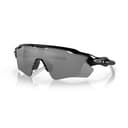
Oakley Radar EV Path Prizm

Oakley Radar EV Path Prizm

The performance shield for runners and cyclists who want maximum coverage and a taller lens. The Prizm tint sharpens contrast, the frame is featherweight O Matter, and the open-edge lens keeps your peripheral view clear. Non-polarized, which most runners prefer for reading the road surface.

Best overall
$244.00 · View on Amazon

Price as of September 4, 2026. #ad How we’re funded

2
Tifosi Swank

Tifosi Swank

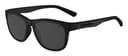
A lightweight lifestyle-sport crossover that's light enough to forget on a run and casual enough to wear after. Grilamid frame, shatterproof polycarbonate lens, 100% UVA/UVB — for around the price of a takeout meal. The runner's value pick when you don't want a full shield.

Best budget pick
$25.00 · View on Amazon

Price as of September 4, 2026. #ad How we’re funded

3
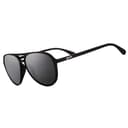
goodr VRG (Polarized Aviator)

goodr VRG (Polarized Aviator)

goodr's take on the aviator, with the same polarized, UV400, no-slip formula as the OG in a metal-look aviator shape. A cheap way to get the timeless aviator silhouette with genuine polarization — handy for driving and everyday wear when you want a change from the squared OG.

Best grip for the money
$40.00 · View on Amazon

Price as of September 4, 2026. #ad How we’re funded

4
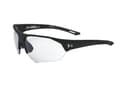
Under Armour Playmaker Wrap

Under Armour Playmaker Wrap

A 72mm wrap built for field sports, which is a genuinely large lens — the width is what keeps sun out of the corner of your eye when you are tracking a ball into the sky rather than looking straight ahead. Rubberized nose and temple pads hold it through a sprint, and it costs a fraction of the premium sport wraps without giving up coverage.

Best for juniors and smaller faces
$57.99 · View on Amazon

Price as of September 4, 2026. #ad How we’re funded

5
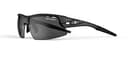
Tifosi Crit Polarized Fototec

Tifosi Crit Polarized Fototec

The rare lens that is photochromic AND polarized at once — it adapts to changing light and still kills the glare bouncing off wet tarmac. That combination usually costs a great deal more. The trade-off is that a polarized photochromic never goes truly clear, so this is a bright-conditions lens, not a dawn one.

Best for indoor-outdoor and evening play
$99.95 · View on Amazon

Price as of September 4, 2026. #ad How we’re funded

The picks in full

#1Best overall

Oakley Radar EV Path Prizm

The performance shield for runners and cyclists who want maximum coverage and a taller lens. The Prizm tint sharpens contrast, the frame is featherweight O Matter, and the open-edge lens keeps your peripheral view clear. Non-polarized, which most runners prefer for reading the road surface.

Strengths

  • Tall, open-edge lens maximizes upper-field vision when your head is down
  • Very light O Matter frame with grippy earsocks
  • Prizm Road tint lifts contrast on pavement and trail

Trade-offs

  • Big, unmistakably athletic look off the road
  • Premium price; polarization not offered on the standard Prizm Road
Lens featurePrizm tint, tall shield lens, 100% UV
PolarizedNo
Lens tintPrizm
Frame materialO Matter (nylon)
UV protection100% UV (Plutonite, to 400nm)
Best forRunning, Cycling, Trail

Spec note. The Radar EV raised the lens height over the original Radar for more upper-field coverage; the Prizm Road tint is non-polarized.

Specs read from the product listing, on July 18, 2026. “Not published” means the brand does not state that figure.

#2Best budget pick

Tifosi Swank

A lightweight lifestyle-sport crossover that's light enough to forget on a run and casual enough to wear after. Grilamid frame, shatterproof polycarbonate lens, 100% UVA/UVB — for around the price of a takeout meal. The runner's value pick when you don't want a full shield.

Strengths

  • Very light Grilamid frame — easy to forget you're wearing it
  • Shatterproof polycarbonate lens, 100% UVA/UVB
  • Looks normal enough for post-run coffee

Trade-offs

  • Fixed, non-polarized lens in this base trim
  • Less coverage than a wraparound shield for fast descents
Lens featureLightweight Grilamid, 100% UVA/UVB
PolarizedNo
Lens tintNot published
Frame materialGrilamid
UV protection100% UVA/UVB
Best forRunning, Everyday, Casual sport

Spec note. Tifosi lists a lightweight Grilamid frame with a shatterproof polycarbonate lens and 100% UVA/UVB.

Specs read from the product listing, on July 18, 2026. “Not published” means the brand does not state that figure.

#3Best grip for the money

goodr VRG (Polarized Aviator)

goodr's take on the aviator, with the same polarized, UV400, no-slip formula as the OG in a metal-look aviator shape. A cheap way to get the timeless aviator silhouette with genuine polarization — handy for driving and everyday wear when you want a change from the squared OG.

Strengths

  • Polarized and UV400 in an aviator shape
  • Same no-slip grip as the rest of the goodr line
  • Far cheaper than a metal heritage aviator

Trade-offs

  • Plastic build won't feel like a metal-frame aviator
  • Aviator shape suits square and heart faces more than round
Lens featurePolarized, UV400, aviator shape
PolarizedYes
Lens tintVaries by colorway
Frame materialPolycarbonate (plastic)
UV protectionUV400
Best forDriving, Everyday, Square & heart faces

Spec note. goodr's aviator line carries the same polarized + UV400 spec as the OG.

Specs read from the product listing, on July 18, 2026. “Not published” means the brand does not state that figure.

#4Best for juniors and smaller faces

Under Armour Playmaker Wrap

A 72mm wrap built for field sports, which is a genuinely large lens — the width is what keeps sun out of the corner of your eye when you are tracking a ball into the sky rather than looking straight ahead. Rubberized nose and temple pads hold it through a sprint, and it costs a fraction of the premium sport wraps without giving up coverage.

Strengths

  • 72mm lens width — real coverage for looking up and across, not just forward
  • Rubberized grip on the nose and temples holds through sweat and sprinting
  • Sits well under a cap brim, which a taller shield frame often does not

Trade-offs

  • The listing does not state polarization for this colorway — check the SKU if you also want glare control
  • White frame colorways show scuffs fast on a dirt infield
Lens feature72mm wraparound coverage, rubberized grip
PolarizedNot published
Lens tintNot published
Frame materialNot published
UV protection100% UVA/UVB
Best forBaseball, Field sports, Wide faces

Spec note. The listing states a 72mm lens width — unusually wide for a sport wrap, which is where the peripheral coverage comes from. Polarization is not stated for this colorway.

Specs read from the product listing, on August 11, 2026. “Not published” means the brand does not state that figure.

#5Best for indoor-outdoor and evening play

Tifosi Crit Polarized Fototec

The rare lens that is photochromic AND polarized at once — it adapts to changing light and still kills the glare bouncing off wet tarmac. That combination usually costs a great deal more. The trade-off is that a polarized photochromic never goes truly clear, so this is a bright-conditions lens, not a dawn one.

Strengths

  • Photochromic and polarized together — adaptive tint plus glare control
  • Cuts reflected glare off wet road, cars and water
  • Grilamid frame with hydrophilic grips, 100% UVA/UVB

Trade-offs

  • Never clears fully, so it is too dark for genuine low light
  • Costs more than a plain Fototec lens
Lens featurePolarized + Fototec photochromic, 100% UVA/UVB
PolarizedYes
Lens tintPolarized Fototec (light-reactive)
Frame materialGrilamid
UV protection100% UVA/UVB
Best forCycling, Driving, Hiking, Changing light

Spec note. Amazon lists this Crit as a polarized Fototec lens — Tifosi's photochromic tint layered with a polarizing filter, so it adapts to light and cuts reflected glare.

Specs read from the product listing, on August 10, 2026. “Not published” means the brand does not state that figure.

How to choose sunglasses for tennis

1. Retention beats every other feature

A tennis serve accelerates your head upward and then stops it abruptly. Add a split step, a lunge for a drop shot and forty minutes of sweat, and you have the most retention-hostile set of movements in racket sport. If a frame can move, it will, and a frame that moves gets taken off and left on the bench.

What works is a hydrophilic rubber on the nose pads and the inside of the temples — a material that gets tackier as it gets wet rather than more slippery. Every pick on this list has it in some form. What does not work is a smooth acetate frame, however good it looks: our guide to why sunglasses slide down covers the mechanics, and it is the single most common reason a player abandons eyewear.

2. Do not buy a tint that fights the ball

A tennis ball is optic yellow because that color sits near the peak of human visual sensitivity. Anything that removes yellow-green light from the scene works directly against you.

  • Gray: the safe default. It dims everything roughly evenly and distorts color least, so the ball stays the color your eye expects it to be. If you play in genuinely bright sun and want one lens, this is it.
  • Rose, vermillion and light red-brown: the specialist choice. These tints suppress blue and lift the contrast between a yellow ball and a blue sky or a green surround. Good players who play a lot outdoors often prefer them.
  • Brown and copper: fine on clay, where the background is already warm, and they add useful contrast against a red surface.
  • Blue and green mirror tints: the ones to be careful with. A blue lens shifts the scene towards the part of the spectrum the ball is not in, and on a hard court under a bright sky that can flatten the ball into the background.

Our lens colors guide sets out what each tint does across conditions, and the lens category guide explains how dark a lens you want for a given light level.

3. Polarization is optional here, and occasionally a nuisance

This is the one sport page on this site where we do not insist on it. Polarization kills light reflected off horizontal surfaces, which is transformative on water and wet tarmac. A tennis court is a matte, non-reflective surface, so there is very little polarized glare to remove — you get the general dimming and not much of the specific benefit.

There is also a small cost. A polarizing filter interacts with the way light scatters across a bright sky, and some players report that it makes a high ball harder rather than easier to judge. If you already own a polarized sport pair, wear it and see. If you are buying specifically for tennis, do not pay extra for the feature. Our polarized vs non-polarized comparison sets out the whole trade-off, and the two-minute test will tell you what your current pair is.

4. UV is not optional, and a court makes it worse

An outdoor court is a large, pale, reflective surface that you stand on for two hours in the middle of the day. Both the American Academy of Ophthalmology and the CDC are clear that ultraviolet exposure is cumulative and that reflected UV from bright ground surfaces adds materially to the dose. This is the specification you should refuse to compromise on: look for a stated 100% UV or UV400 figure, and treat a listing that will not state one as a listing that does not know.

Note that lens darkness and UV filtering are unrelated — a dark lens with no UV filter is worse than no sunglasses at all, because it opens your pupil while letting the ultraviolet through. Our UV protection guide covers what the label means, and how to test a pair you already own covers what you can and cannot check at home.

5. Sunglasses are not eye protection, and tennis is a ball-strike sport

Worth being direct about. Prevent Blindness is explicit that ordinary sunglasses are not impact protection and that sports eye protectors must meet the relevant ASTM standard for the sport. A tennis ball to the eye at close range is a real injury, and doubles players take them at the net.

None of the picks here is certified sports eye protection. Polycarbonate lenses, which most of them use, are far more impact-resistant than glass and will not shatter into the eye — but that is a different claim from a certified impact rating. If you want genuine protection, buy an ASTM-rated eye guard from a sports optician. If you want impact-rated lenses more generally, our safety sunglasses roundup covers what the ANSI markings mean.

6. Weight and coverage, in that order

Tennis is stop-start rather than continuous, so ventilation matters less than it does for running or cycling, and you can carry a slightly more substantial frame. What you cannot carry is anything front-heavy: weight at the lens pulls the frame down your nose on every change of direction.

On coverage, a moderate wrap is right. You want the lens to follow your cheekbone so reflected light from the court does not come in underneath, but you do not want a deep wraparound — a strongly curved lens introduces peripheral distortion, and tennis is played almost entirely in your peripheral field. Our base curve and wrap guide explains why the two pull against each other.

What about a visor or a cap instead?

A cap solves the sun-in-your-eyes problem on ground strokes and solves nothing at all on a serve or an overhead, which is precisely when you are looking up. It also does very little about reflected ultraviolet coming off the court surface. The best answer for a player who is outdoors a lot is both: a visor for direct sun from the front, and a UV400 lens for everything the visor cannot block.

Where to spend and where not to

Spend on grip and on a tint that suits your surface. Those two things decide whether you wear the pair. Do not spend on polarization for tennis specifically, and do not spend on engineered contrast tints unless you play outdoors weekly — below that, a plain gray UV400 lens on a grippy frame does the job for a fraction of the money.

If you play more than one racket sport, note that the requirements diverge: our pickleball roundup covers the closer, faster court where impact risk is higher, and our baseball roundup covers the sport where tracking a ball against the sky is the entire problem. The sport hub has the rest.
Frequently asked questions

Should tennis sunglasses be polarized?

They do not need to be. Polarization removes light reflected off horizontal surfaces, which matters enormously on water and wet roads and very little on a matte tennis court — there is not much polarized glare there to remove. Some players also find a polarizing filter makes judging a high ball against a bright sky slightly harder. If you already own a polarized sport pair, use it. If you are buying specifically for tennis, spend the money on grip and tint instead.

What lens color is best for tennis?

Gray if you want one lens for everything: it dims evenly and keeps the optic-yellow ball the color your eye expects. Rose or vermillion if you play outdoors often and want maximum contrast, because those tints suppress blue and make a yellow ball stand out against sky and green surrounds. Brown or copper works well on clay. Avoid strong blue tints on hard courts, as they shift the scene away from the part of the spectrum the ball occupies.

Why do my sunglasses slide down when I serve?

Because a serve is a fast upward head movement with an abrupt stop, and any frame that can slide will. The fix is material, not fit: hydrophilic rubber on the nose pads and the inner temples grips harder as it gets wet, where smooth plastic or acetate gets more slippery. Every pick on this page uses some version of that rubber. A frame that is too wide for your face will also slide no matter what it is coated with, so check the width first.

Are sunglasses enough eye protection for tennis?

No. Prevent Blindness is explicit that ordinary sunglasses are not impact protection and that a sports eye protector must meet the ASTM standard for the sport. Polycarbonate lenses are far more impact-resistant than glass and will not shatter into the eye, which is a real safety advantage, but that is not the same as a certified rating. If impact protection is your concern — particularly for doubles at the net — buy a rated eye guard rather than relying on sunglasses.

Do I need sunglasses for indoor tennis?

No, and you should not wear a tinted lens indoors. Indoor courts have no ultraviolet to filter and artificial lighting that a dark lens simply makes harder to see under. If you play both indoors and outdoors in the same session, a photochromic lens is the sensible answer — it clears in low light and darkens outdoors — which is why one photochromic pick appears on this list.

Can I wear my everyday sunglasses for tennis?

For a social hit, yes. For anything competitive, the limiting factor is retention rather than optics: a smooth acetate or metal frame with no grip coating will move on every serve. Everyday frames are also usually flat, which lets reflected light in from below on a bright court. If you play regularly it is worth owning one grippy, moderately wrapped pair rather than borrowing from your everyday rotation.

Sources

Keep reading