Shade & Temple

Costa Sunglasses Review

580G glass against 580P polycarbonate, and whether an angler's lens justifies three figures — Costa's range judged on the only thing that matters, which is what you can see through it.

By Stephen V.Last updated How we pick

Costa Del Mar is a single-purpose brand that happens to be very good at its purpose. It makes fishing sunglasses. Everything about the range — the polarization that comes as standard rather than as an upgrade, the contrast tints tuned for water, the hinges built to survive salt, the frames sized to sit under a cap brim — is arranged around one question: can you see what is under the surface?

The technology has a name and, unusually, a specific mechanism. Costa’s 580 lenses filter out a band of high-energy yellow light that the brand says muddies contrast, which is why a Costa lens does not simply look darker but looks sharper, with more separation between water, structure and fish. The 580 range then splits in two: 580G is glass, 580P is polycarbonate, and choosing between them is the single most consequential decision you will make about a Costa. Below: the brand verdict, three frames worth your attention, and an honest account of who should not spend this much.

How this is funded: we earn a commission if you buy through our links, at no extra cost to you. It never changes which product we recommend, and we’ll tell you when we’d skip one. Full disclosure.

The case for

  • Polarization is standard across the range, not a paid upgrade
  • 580 lenses filter high-energy yellow light to boost on-water contrast — a specific, describable mechanism, not a vague claim
  • Blocks 100% UV; frames, hinges and encapsulated mirrors built for salt and spray
  • A real choice between glass (580G) and polycarbonate (580P) on most popular frames

The trade-offs

  • Three-figure pricing across the board, and the glass trims sit near the top of it
  • 580G glass is noticeably heavier on the nose than polycarbonate over a long day
  • 580P scratches more easily than the glass it replaces
  • Wrapped fishing styling looks out of place with anything smart

Best for: Anglers, boaters and anyone who spends real hours looking at water in bright light — the one use case where a premium polarized lens pays for itself.

Skip it if: You want an everyday town pair, you golf (Costa's polarization actively hurts green-reading), or a $30 polarized frame from a fishing brand would cover your two trips a year.

Quick picks

Ranked on lens spec, UV protection, tint fit and buyer value. Select a row to jump to the full write-up. We have not field-tested these — here is exactly what we do instead.

#ProductBest forPrice
1

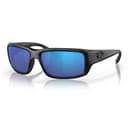
Costa Del Mar Fantail 580G

If you fish, this is the benchmark. Costa's 580G glass lens is polarized, scratch-resistant and cuts the yellow wavelength to sharpen contrast on the water — so you see structure and fish, not surface glare. Glass costs more and weighs more than polycarbonate, but the optical clarity is the reason anglers pay it.

Best overall
2
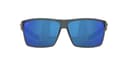
Costa Del Mar Rincon 580P

Costa Del Mar Rincon 580P

The Costa to buy when the Fantail's glass feels like too much lens to carry. The Rincon runs a big 63mm rectangular front with a 580P polycarbonate lens — the same contrast-boosting Costa tint, roughly half the weight of 580G, and noticeably more impact-resistant. Better for long days and for anyone who has snapped a pair before.

Best for all-day wear
$233.00 · View on Amazon

Price as of September 4, 2026. #ad How we’re funded

3
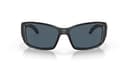
Costa Del Mar Blackfin 580P

Costa Del Mar Blackfin 580P

Costa's wraparound answer to bright, open water. The Blackfin's 62mm front curves further round the temple than the Fantail, which cuts the side light that sneaks in when the sun is low and you are looking across a flat surface. The 580P lens keeps it light enough to wear from launch to loading the boat.

Best coverage on open water
$212.00 · View on Amazon

Price as of September 4, 2026. #ad How we’re funded

The models, in full

#1Best overall

Costa Del Mar Fantail 580G

If you fish, this is the benchmark. Costa's 580G glass lens is polarized, scratch-resistant and cuts the yellow wavelength to sharpen contrast on the water — so you see structure and fish, not surface glare. Glass costs more and weighs more than polycarbonate, but the optical clarity is the reason anglers pay it.

Strengths

  • 580G glass lens is polarized and exceptionally scratch-resistant
  • Cuts glare and sharpens contrast on and under the water
  • Blocks 100% UV; encapsulated mirror survives salt and spray

Trade-offs

  • Glass lens is heavier than polycarbonate
  • Premium price — the most expensive way to see fish
Lens feature580G polarized glass, glare-cutting tint, 100% UV
PolarizedYes
Lens tintGray / copper (580G, varies)
Frame materialBio-based nylon
UV protection100% UV protection
Best forFishing, Boating, Bright water

Spec note. Costa's 580 lenses filter high-energy yellow light to boost contrast; the 580G variant is glass (vs. 580P polycarbonate) for maximum scratch resistance and clarity.

Specs read from the product listing, on July 18, 2026. “Not published” means the brand does not state that figure.

#2Best for all-day wear

Costa Del Mar Rincon 580P

The Costa to buy when the Fantail's glass feels like too much lens to carry. The Rincon runs a big 63mm rectangular front with a 580P polycarbonate lens — the same contrast-boosting Costa tint, roughly half the weight of 580G, and noticeably more impact-resistant. Better for long days and for anyone who has snapped a pair before.

Strengths

  • 580P polarized polycarbonate — the Costa tint at a lighter weight
  • Large 63mm rectangular lens covers a wide face well
  • Blocks 100% UV; far more impact-resistant than glass

Trade-offs

  • 580P scratches more easily than Costa's 580G glass
  • Still a premium price for a polycarbonate lens
Lens feature580P polarized polycarbonate, 63mm wrap, 100% UV
PolarizedYes
Lens tintGray-blue mirror (580P)
Frame materialBio-based nylon
UV protection100% UV protection
Best forFishing, Boating, Wide faces, Everyday outdoors

Spec note. Costa's 580 lenses filter high-energy yellow light to boost contrast; 580P is the lighter, more impact-resistant polycarbonate version of the same tint (580G is glass).

Specs read from the product listing, on August 10, 2026. “Not published” means the brand does not state that figure.

#3Best coverage on open water

Costa Del Mar Blackfin 580P

Costa's wraparound answer to bright, open water. The Blackfin's 62mm front curves further round the temple than the Fantail, which cuts the side light that sneaks in when the sun is low and you are looking across a flat surface. The 580P lens keeps it light enough to wear from launch to loading the boat.

Strengths

  • Wrapped 62mm front blocks low-angle light from the side
  • 580P polarized polycarbonate — light and impact-resistant
  • Blocks 100% UV; integral hinges built for salt exposure

Trade-offs

  • The wrap looks unmistakably like fishing eyewear off the water
  • 580P is softer than glass and picks up scratches faster
Lens feature580P polarized wrap, 62mm coverage, 100% UV
PolarizedYes
Lens tintNot published
Frame materialBio-based nylon
UV protection100% UV protection
Best forFishing, Boating, Beach, Wide faces

Spec note. Amazon lists this Blackfin as a 62mm polarized 580P frame; 580P is Costa's polycarbonate lens, lighter and more impact-resistant than the 580G glass version of the same contrast tint.

Specs read from the product listing, on August 10, 2026. “Not published” means the brand does not state that figure.

580G vs 580P: the decision that actually matters

Both lenses carry the same polarizing filter and the same contrast tint. The difference is what the lens is made of, and it changes four things.

Property580G (glass)580P (polycarbonate)
Optical clarityThe best in the range, edge to edgeExcellent, marginally softer at the extreme edge
Scratch resistanceVery high — glass is far harderModerate — the main compromise
WeightHeavier; you feel it after several hoursRoughly half the lens weight
Impact safetyCan break under a hard strikeFar more impact-resistant
Best forSight-fishing, flats, maximum clarityLong days, active use, anything near a hook

Our recommendation is unglamorous: most people should buy 580P. The clarity gap is real but small, and it is smaller than the difference a lighter frame makes to whether you keep the glasses on your face for eight hours. Choose 580G if you sight-fish, if you are looking for shapes under moving water for a living or close to it, or if you have a history of destroying lens coatings and want the harder surface. Choose 580P otherwise, and put the difference towards a second pair. Our glass vs polycarbonate guide works through the same trade for lenses in general.

What the 580 tint does, and where it does not help

Costa describes the 580 lens as filtering high-energy yellow light — a band that sits between green and red and, the brand argues, flattens the scene when it reaches your eye. Suppressing it lifts the contrast between the blues and greens you look through and the browns and reds of structure below. Combined with the polarizing filter that kills the surface reflection, the effect on the water is genuinely large: you go from reading a mirror to reading a bottom.

The important corollary is that this makes Costa a specialist rather than an all-rounder. On a golf course, polarization removes the faint sheen off the grass that tells you how a putt will break, so a Costa is precisely the wrong tool — our golf roundup explains why every dedicated golf lens is deliberately non-polarized. In a car, polarization helps enormously with road and hood glare but can make some LCD dashboards and phone screens go dark at certain angles; our driving roundup covers that caveat. And at night, no tinted lens belongs on your face at all — the American Academy of Ophthalmology is unambiguous that tinted night-driving lenses reduce the light you need and make things worse.

Which Costa frame, and how they fit

Costa’s frames are wider than most lifestyle eyewear because they are trying to block light that arrives from the side, off a flat surface, at an angle you did not expect. That makes them a good fit for larger and wider faces and a poor one for narrow ones.

  • Fantail 580G — the reference. A medium-large wrap in glass, and the pair to buy if clarity is the whole point. It is the top pick in our fishing roundup for exactly that reason.
  • Rincon 580P — a big 63mm rectangular front in the lighter lens. This is the Costa for people who wear sunglasses from launch to dark, and the sensible default for most buyers.
  • Blackfin 580P — wraps further around the temple than the Fantail, which is what you want when the sun is low and you are looking across open water. The most obviously “fishing” of the three to look at.

If none of these fit, that is a sizing problem rather than a brand problem — our sunglasses size guide explains how to read the millimeter figures printed inside the temple and match them to a pair you already own.

Costa against the alternatives

The direct rival is Maui Jim, and the two brands are optimizing for different things: Costa for seeing into water, Maui Jim for color richness everywhere. We put them side by side in Costa vs Maui Jim. Against Oakley, Costa wins on the water because polarization is standard rather than an upgrade — see our Oakley review for where that flips.

The uncomfortable comparison is against the budget end. A KastKing Skidaway is polarized, UV400, built by a tackle brand, and costs roughly a tenth of a Fantail. It will not match the glass clarity, and its coatings will not last as long, but the glare control — the single biggest functional benefit — is genuinely there. If you fish twice a year, or if you are the kind of person who loses sunglasses overboard, buy the cheap polarized pair and do not feel bad about it. Our budget roundup has the ones worth owning, and our is it worth it piece takes the whole question apart.

Frequently asked questions

Are Costa sunglasses worth the money?

If you spend real hours looking at water in bright light, yes — this is the clearest case in all of eyewear for a premium polarized lens, because the contrast tint plus polarization genuinely changes what you can see below the surface. If you want an everyday town pair, or you fish a couple of times a year, no: a $30 polarized frame from a tackle brand delivers most of the functional glare control for a tenth of the price.

What is the difference between Costa 580G and 580P?

The lens material. 580G is glass — the clearest and by far the most scratch-resistant option, but heavier and breakable under a hard strike. 580P is polycarbonate — roughly half the lens weight and much more impact-resistant, at the cost of scratching more easily and being fractionally softer at the extreme edge. Both carry the same polarizing filter and the same contrast tint. Most buyers are better served by 580P.

Are all Costa sunglasses polarized?

Costa's 580 lenses — both 580G and 580P — are polarized as standard, which is one of the brand's real differentiators against Ray-Ban and Oakley, where polarization is usually a paid upgrade. Polarization is the point of the product: a fishing lens exists to remove the reflection off the water's surface so you can see through it.

Are Costa sunglasses good for driving?

Good, with one caveat. Polarization removes glare off wet roads and car hoods, which is genuinely useful by day. The caveat is that polarized lenses can make some LCD instrument clusters and phone screens go dark at certain viewing angles, which is worth testing in your own car before you commit. Never wear any tinted lens for night driving — the AAO is clear that it reduces the light you need.

Are Costa sunglasses good for golf?

No, and this is a case where the brand's strength becomes a weakness. Polarization strips out the faint sheen reflecting off the grass, and that sheen is exactly the information you use to read speed and break on a green. Every dedicated golf lens is deliberately non-polarized for this reason. Save the Costas for the water and buy a contrast tint for the course.

Do Costa lenses scratch easily?

580P polycarbonate does — it is the main compromise of the lighter lens, and it will show wear faster if you drop the pair loose into a tackle bag. 580G glass is far harder and resists scratching very well, which is part of why Costa charges more for it. Either way, a hard case and a microfiber cloth rather than a shirt tail will add years to the lens.

Sources

Keep reading