What PolarizedPlus2 actually is
Strip the branding and there are three things stacked in the lens. The first is an ordinary polarizing filter, which blocks the horizontally oriented light that reflects off flat surfaces — water, wet road, glass, a car hood. That is the same mechanism every polarized lens uses, and it is well described by the American Academy of Ophthalmology: reflected glare arrives polarized in one plane, and a filter aligned against it removes most of it.
The second is UV blocking, which Maui Jim states at 100%, in line with what every eye- health authority asks for. The third is the part that makes the brand: tint layers that selectively manage particular wavelengths so that, rather than muting the whole scene, the lens suppresses the bands that wash color out and preserves the ones that carry saturation and detail. Maui Jim also says these layers block some high-energy blue light.
The result is a lens that behaves differently from a neutral gray in a way you can see in two seconds. It is not a placebo. It is also not universally better — it is a deliberate color shift, and preferring it is a matter of taste. If you are a photographer or anyone who needs to judge color accurately, a neutral gray is the correct lens and our lens colors guide explains why.
Maui Jim vs Costa: the comparison people actually make
These two brands sit at the same price and get cross-shopped constantly, and the difference is one of purpose rather than quality.
- Costa optimizes for looking into water. Its 580 lenses filter a band of high-energy yellow light specifically to lift contrast between the surface and what is beneath it, and the 580G glass option gives the sharpest edge-to-edge image in the category. It is a specialist’s tool.
- Maui Jim optimizes for looking at everything. The lens is tuned for color richness across landscapes, streets and drives rather than for underwater contrast, and the frames are cut to be worn to dinner rather than only on a boat.
If you fish seriously, buy Costa. If you want one premium pair for travel, driving and daily wear that also handles a beach, buy Maui Jim. We work through the full head-to-head in Costa vs Maui Jim, and our Costa review covers the 580G-vs-580P decision in detail. The other cross-shop is Oakley, which inverts this brand almost exactly — it polarizes very little and tunes its tints to a task instead. We settle that one in Maui Jim vs Oakley.
Fit: the part Maui Jim gets right and buyers ignore
Maui Jim publishes genuine small, medium and large fits rather than a single universal size, and using that information is the difference between a pair you wear and a pair that lives in a drawer.
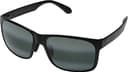
- Red Sands — the wearable everyday and driving frame, and the default recommendation. It is the pair that shows off the lens without announcing that you are wearing performance eyewear.
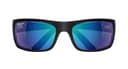
- Peahi — a rubber-gripped, wrapped rectangle in a medium fit. This is the one to buy for wind, spray and movement; it stays put when you sweat in a way the dressier frames do not.
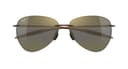
- Sugar Beach — a small-fit teardrop, and the answer if premium frames usually overhang your face. A narrow face in a large frame looks borrowed, and no lens technology fixes that.
If you are unsure which bracket you fall into, measure a pair you already own: our size guide explains how to read the numbers printed inside the temple arm, and our face-shape guide covers which silhouettes flatter which features.
Who should not buy a Maui Jim
Three groups, honestly. Golfers, first: polarization removes the sheen off the grass that carries slope and grain information, so a polarized premium lens is actively worse on a green than a $40 contrast tint. Our golf roundup explains the mechanism.
People who want neutral color, second. If “warmer and more saturated” sounds like a distortion rather than an upgrade, you will not enjoy this lens, and no amount of build quality compensates for looking through a tint you dislike.
People who lose sunglasses, third. This is not a moral judgment, it is arithmetic: if a pair lasts you eight months on average, the right purchase is a genuinely polarized budget frame you replace without flinching. Our budget roundup covers the ones that are really UV400 and really polarized, and our are expensive sunglasses worth it piece works through where the money genuinely goes.