Shade & Temple

Best Sunglasses Under $100

The most interesting price band in eyewear: above the disposable tier, below the point where you are paying for a name. Seven picks that use the whole hundred dollars well.

By Stephen V.Last updated How we pick

Under $100 is where eyewear gets genuinely interesting, because it is the band where the money starts buying engineering rather than just a working lens. Below roughly $30 you can get everything that protects your eyes — polarization, UV400, a lens that does its job — and that is worth saying loudly. What you cannot get is a frame material that survives being sat on, a photochromic lens, a genuine mountain tint, or a size that is not average.

Those are precisely the things that appear between $30 and $100. Grilamid TR-90 frames. Fototec and other photochromic lenses. Category 4 mountain optics. Sport wraps with real coverage. None of it makes you safer than a $16 pair with UV400 — the American Academy of Ophthalmology is direct that price is not a proxy for protection — but all of it solves a problem the cheap tier cannot.

The seven picks below deliberately spread across that range rather than clustering at the bottom, and they cover different jobs rather than seven versions of the same frame. Every one carries an honest downside. Prices are pulled live and dated; tap through for the current number.

How this is funded: we earn a commission if you buy through our links, at no extra cost to you. It never changes which product we recommend, and we’ll tell you when we’d skip one. Full disclosure.

Quick picks

Ranked on lens spec, UV protection, tint fit and buyer value. Select a row to jump to the full write-up. We have not field-tested these — here is exactly what we do instead.

#ProductBest forPrice
1
Tifosi Seek FC 2.0

Tifosi Seek FC 2.0

The value-sport benchmark. Tifosi builds Grilamid TR-90 frames and decentered, shatterproof polycarbonate lenses at a fraction of the premium brands, with hydrophilic rubber that grips harder as you sweat. The Seek FC's larger lens suits golf and everyday sport; not polarized in this trim.

Best overall
$39.95 · View on Amazon

Price as of September 4, 2026. #ad How we’re funded

2
Knockaround Premiums (Polarized)

Knockaround Premiums (Polarized)

The customizable cheap classic. Knockaround's Premiums come polarized with UV400 protection in a squared shape, and you can mix frame and lens colors endlessly. Genuinely inexpensive, genuinely UV-protective — the pair to buy when you want something specific-looking without spending real money.

Best everyday
$32.50 · View on Amazon

$38.0014% off

Price as of September 4, 2026. #ad How we’re funded

3
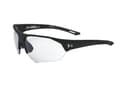
Under Armour Playmaker Wrap

Under Armour Playmaker Wrap

A 72mm wrap built for field sports, which is a genuinely large lens — the width is what keeps sun out of the corner of your eye when you are tracking a ball into the sky rather than looking straight ahead. Rubberized nose and temple pads hold it through a sprint, and it costs a fraction of the premium sport wraps without giving up coverage.

Best sport wrap
$57.99 · View on Amazon

Price as of September 4, 2026. #ad How we’re funded

4
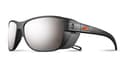
Julbo Camino (Spectron 4)

Julbo Camino (Spectron 4)

The affordable route into a genuine category 4 mountain lens. Spectron 4 is a fixed, very dark tint with a silver mirror — no photochromic cleverness, no polarization, just the light transmission you actually need above the treeline on snow. At roughly a quarter of the Shield's price it is the sensible choice if you go to altitude a few times a year rather than every weekend.

Best for altitude and snow
$69.95 · View on Amazon

Price as of September 4, 2026. #ad How we’re funded

5
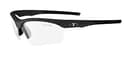
Tifosi Vero Fototec

Tifosi Vero Fototec

A photochromic lens for people who keep starting rides or runs in shade and finishing them in glare. Fototec is Tifosi's light-reactive tint: it darkens in UV and clears when you drop back into tree cover, so one lens covers the whole outing. The Light Night version starts nearly clear, which makes it the dawn-and-dusk pick rather than the midday one.

Best photochromic
$89.95 · View on Amazon

Price as of September 4, 2026. #ad How we’re funded

6
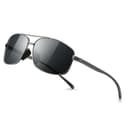
SUNGAIT SGT458 Ultra Lightweight Rectangular

SUNGAIT SGT458 Ultra Lightweight Rectangular

SUNGAIT's best-known frame and the one that explains the brand: a 62mm metal rectangle that is polarized, states UV400, and costs about sixteen dollars. The 62mm width is the detail buyers miss — this is a large frame, which makes it one of the few genuinely cheap options for a wide face.

Best for a wide face
$15.99 · View on Amazon

$19.9920% off

Price as of September 4, 2026. #ad How we’re funded

7
KastKing Skidaway Polarized

KastKing Skidaway Polarized

The value angler's pick. KastKing is a fishing-tackle brand, and the Skidaway is built for the water: polarized, UV400, with a grippy sport frame — at roughly a tenth of a Costa's price. You give up glass clarity, but for a backup or a first fishing pair, the glare control is genuinely there.

Best for the water
$23.99 · View on Amazon

$29.9920% off

Price as of September 4, 2026. #ad How we’re funded

The picks in full

#1Best overall

Tifosi Seek FC 2.0

The value-sport benchmark. Tifosi builds Grilamid TR-90 frames and decentered, shatterproof polycarbonate lenses at a fraction of the premium brands, with hydrophilic rubber that grips harder as you sweat. The Seek FC's larger lens suits golf and everyday sport; not polarized in this trim.

Strengths

  • Grilamid TR-90 frame and glare-guard hydrophilic nose/temple grips
  • Shatterproof decentered polycarbonate lenses block 100% UVA/UVB
  • A quarter the price of the premium sport brands

Trade-offs

  • This lens is not polarized
  • Fit runs medium — large heads may want the wider Tifosi frames
Lens featureTR-90 frame, 100% UVA/UVB, sweat-grip
PolarizedNo
Lens tintNot published
Frame materialGrilamid TR-90
UV protection100% UVA/UVB
Best forGolf, Everyday sport, Cycling

Spec note. Tifosi lists shatterproof, decentered polycarbonate lenses with 100% UVA/UVB protection and hydrophilic rubber grips.

Specs read from the product listing, on July 18, 2026. “Not published” means the brand does not state that figure.

#2Best everyday

Knockaround Premiums (Polarized)

The customizable cheap classic. Knockaround's Premiums come polarized with UV400 protection in a squared shape, and you can mix frame and lens colors endlessly. Genuinely inexpensive, genuinely UV-protective — the pair to buy when you want something specific-looking without spending real money.

Strengths

  • Polarized and UV400 at a low price
  • Endless frame/lens color combinations
  • Squared shape works for round faces and everyday wear

Trade-offs

  • Base plastic build is exactly what you'd expect for the money
  • One size fits most, not all
Lens featurePolarized, UV400, customizable
PolarizedYes
Lens tintVaries by colorway
Frame materialPolycarbonate (plastic)
UV protectionUV400
Best forEveryday, Round faces, Budget

Spec note. Knockaround lists the polarized Premiums with UV400 protection; non-polarized trims of the same frame also exist, so check the SKU.

Specs read from the product listing, on July 18, 2026. “Not published” means the brand does not state that figure.

#3Best sport wrap

Under Armour Playmaker Wrap

A 72mm wrap built for field sports, which is a genuinely large lens — the width is what keeps sun out of the corner of your eye when you are tracking a ball into the sky rather than looking straight ahead. Rubberized nose and temple pads hold it through a sprint, and it costs a fraction of the premium sport wraps without giving up coverage.

Strengths

  • 72mm lens width — real coverage for looking up and across, not just forward
  • Rubberized grip on the nose and temples holds through sweat and sprinting
  • Sits well under a cap brim, which a taller shield frame often does not

Trade-offs

  • The listing does not state polarization for this colorway — check the SKU if you also want glare control
  • White frame colorways show scuffs fast on a dirt infield
Lens feature72mm wraparound coverage, rubberized grip
PolarizedNot published
Lens tintNot published
Frame materialNot published
UV protection100% UVA/UVB
Best forBaseball, Field sports, Wide faces

Spec note. The listing states a 72mm lens width — unusually wide for a sport wrap, which is where the peripheral coverage comes from. Polarization is not stated for this colorway.

Specs read from the product listing, on August 11, 2026. “Not published” means the brand does not state that figure.

#4Best for altitude and snow

Julbo Camino (Spectron 4)

The affordable route into a genuine category 4 mountain lens. Spectron 4 is a fixed, very dark tint with a silver mirror — no photochromic cleverness, no polarization, just the light transmission you actually need above the treeline on snow. At roughly a quarter of the Shield's price it is the sensible choice if you go to altitude a few times a year rather than every weekend.

Strengths

  • A true category 4 mountain tint at a mid-range price
  • Silver mirror coating reflects more light before it reaches the lens
  • Wrapped frame shape blocks light arriving from the side and below

Trade-offs

  • Category 4 is too dark for driving and is not legal for it in many places
  • Fixed tint — no photochromic range, so it is uncomfortably dark in the trees
Lens featureSpectron 4 category 4 mountain tint, mirrored
PolarizedNot published
Lens tintBrown with silver mirror (Spectron 4)
Frame materialNot published
UV protectionNot published
Best forSkiing, Hiking at altitude, Snow, Glacier travel

Spec note. The listing states a Spectron 4 lens — Julbo's category 4 mountain tint — in brown with a silver mirror. Polarization is not stated for this trim.

Specs read from the product listing, on August 11, 2026. “Not published” means the brand does not state that figure.

#5Best photochromic

Tifosi Vero Fototec

A photochromic lens for people who keep starting rides or runs in shade and finishing them in glare. Fototec is Tifosi's light-reactive tint: it darkens in UV and clears when you drop back into tree cover, so one lens covers the whole outing. The Light Night version starts nearly clear, which makes it the dawn-and-dusk pick rather than the midday one.

Strengths

  • Fototec lens darkens and clears on its own as light changes
  • Light Night tint starts almost clear, so it works at dawn and dusk
  • Grilamid TR-90 frame with hydrophilic grips, 100% UVA/UVB

Trade-offs

  • Photochromic lenses barely react behind a car windshield, which blocks most UV
  • Not polarized, so it does not cut reflected glare off water
Lens featureFototec photochromic lens, Grilamid TR-90, 100% UVA/UVB
PolarizedNo
Lens tintLight Night Fototec (light-reactive)
Frame materialGrilamid TR-90
UV protection100% UVA/UVB
Best forCycling, Running, Hiking, Changing light

Spec note. Tifosi's Fototec lenses are photochromic — they darken in response to UV and lighten again indoors or in shade. Light Night is the lightest-starting tint in the range.

Specs read from the product listing, on August 10, 2026. “Not published” means the brand does not state that figure.

#6Best for a wide face

SUNGAIT SGT458 Ultra Lightweight Rectangular

SUNGAIT's best-known frame and the one that explains the brand: a 62mm metal rectangle that is polarized, states UV400, and costs about sixteen dollars. The 62mm width is the detail buyers miss — this is a large frame, which makes it one of the few genuinely cheap options for a wide face.

Strengths

  • 62mm lens width — genuinely large, and almost nothing else this cheap is
  • Polarized with UV400 both stated on the listing
  • Very light metal frame that you stop noticing after an hour

Trade-offs

  • Thin metal temples bend if you sit on them — this is not an abuse-proof frame
  • 62mm is too wide for a narrow face; check your current frame's numbers first
Lens feature62mm polarized rectangle, UV400, ultra-light metal
PolarizedYes
Lens tintGray
Frame materialMetal
UV protectionUV400
Best forWide faces, Everyday, Driving, Budget

Spec note. The listing states an ultra-lightweight rectangular metal frame (SGT458) with polarized lenses and UV400 protection, in a 62mm size with a gunmetal frame and gray lens.

Specs read from the product listing, on August 11, 2026. “Not published” means the brand does not state that figure.

#7Best for the water

KastKing Skidaway Polarized

The value angler's pick. KastKing is a fishing-tackle brand, and the Skidaway is built for the water: polarized, UV400, with a grippy sport frame — at roughly a tenth of a Costa's price. You give up glass clarity, but for a backup or a first fishing pair, the glare control is genuinely there.

Strengths

  • Polarized and UV400 built by a fishing brand, for around $25
  • Grippy sport frame that stays on in a boat
  • A no-tears backup you won't cry over if it goes overboard

Trade-offs

  • Polycarbonate lens won't match glass for edge clarity
  • Budget coatings scratch more easily than premium lenses
Lens featurePolarized, UV400, fishing frame
PolarizedYes
Lens tintNot published
Frame materialTR90
UV protectionUV400
Best forFishing, Boating, Budget

Spec note. KastKing lists the Skidaway as polarized with UV400 protection and a grip-friendly sport frame.

Specs read from the product listing, on July 18, 2026. “Not published” means the brand does not state that figure.

What $100 actually buys you

What it does not buy: protection

Start here, because it reframes everything else. A lens that states UV400 or 100% UVA/UVB blocks the ultraviolet linked to cataract and other long-term eye damage, and that specification is available at $14. The AAO puts it plainly: darker lenses are not more protective and price is not a proxy for protection.

So no pick on this page protects your eyes better than a well-chosen budget pair. What they do is solve other problems. If your only concern is UV, our under-$50 roundup is the more sensible page and you can keep the difference.

Frame material that survives

The biggest practical upgrade in this band. Grilamid TR-90 and similar nylon-family frames flex a long way and return to shape; the thin metal and basic polycarbonate of the sub-$25 tier does not. If you have broken two pairs in a year, this is where the money should go rather than into a lens upgrade.

Photochromic lenses

The single most useful technology available under $100, and one that used to cost three figures. A lens that darkens in ultraviolet and clears in shade removes the commonest complaint in outdoor eyewear — that a fixed tint is wrong for half of any activity that involves trees, tunnels, cloud or a long day.

Two limits: photochromics barely react behind a car windshield, because glass blocks most UV, and a polarized photochromic never goes fully clear. Our photochromic guide covers both properly.

Sizes other than average

Cheap eyewear is made to one width. Between $30 and $100 you start finding genuine size options — wider frames for larger heads, small-fit frames, and some alternative-fit bridges. If frames have never fitted you, this band is where that changes. Our wide-face roundup and small-face roundup cover both ends, and our size guide explains the numbers.

Specialist lens categories

A genuine category 4 mountain lens — the very dark tint you need on a glacier or above the treeline in snow — is available under $100 from the specialist brands, and it is not available at all below $30. If you ski, tour or hike at altitude, that is the most defensible spend on this page. Our lens categories guide explains what the numbers mean, and our skiing and snow roundup covers the field.

What is still missing below $100

Being fair in both directions. Three things you genuinely do not get in this band:

  • Environment-tuned lens tints. Oakley’s Prizm range and Maui Jim’s PolarizedPlus2 are doing something real — dyes engineered to control specific wavelengths for a specific task. Nothing under $100 attempts it. Our Tifosi vs Oakley comparison covers exactly what that gap is worth.
  • Glass lenses. The optical clarity and scratch resistance of a glass lens is a premium-only feature. Our glass vs polycarbonate guide covers whether you need it.
  • Serviceability. A premium frame can be re-lensed, re-hinged and adjusted by an optician for years. Under $100 the economics stop working — a replacement costs less than a repair.

How to allocate your hundred dollars

The most useful way to think about this band is to name the problem first and buy for it.

  • “I keep breaking them.” Buy frame material. A TR-90 sport frame around $30 is the answer, not a better lens.
  • “My lens is always wrong.” Buy photochromic. It costs around $45 and removes the decision entirely.
  • “Nothing fits me.” Buy size. A frame in the right millimeters at $20 beats the wrong size at $200 — and this is the band where the options appear.
  • “Glare is the problem.” Buy polarization, which you can have for $20. Do not spend more on it. Our polarized vs non-polarized comparison covers when it genuinely helps.
  • “I go to altitude.” Buy a category 4 mountain lens around $70. Nothing cheaper does that job.

Buy two rather than one

The most underrated strategy in this price band. Two $45 pairs solve more problems than one $90 pair, because sunglasses are task-specific in a way most buyers resist admitting. A polarized everyday pair plus a photochromic sport pair covers almost everything most people do; a driving pair plus a water pair covers the rest.

It also removes the anxiety that makes people not wear the good pair. A frame that stays in a case because it was expensive is protecting nobody’s eyes. Our honest answer on expensive sunglasses gets into this properly.

For the rest of the range, our everyday hub covers men’s, women’s, budget and gift picks, our sport hub covers the activity roundups, and our brands roundup covers who is genuinely best at what across every tier.
Frequently asked questions

Are sunglasses under $100 good enough?

For eye protection, comfortably — a lens stating UV400 blocks the ultraviolet linked to long-term eye damage, and that is available well under $30. The American Academy of Ophthalmology is explicit that price is not a proxy for protection. What the $30–100 band adds is frame durability, photochromic lenses, genuine size options and specialist tints, none of which make you safer but all of which solve real problems.

What is the difference between $30 and $100 sunglasses?

Mostly frame engineering and lens technology rather than protection. At $30 you get a working polarized UV400 lens in an average-sized frame. Between $30 and $100 you add Grilamid TR-90 frames that flex rather than snapping, photochromic lenses that adjust to changing light, category 4 mountain tints, and frames made in sizes other than average.

Should I buy one $100 pair or two $50 pairs?

Two $50 pairs, for most people. Sunglasses are more task-specific than buyers like to admit — a polarized everyday pair plus a photochromic sport pair covers almost everything, and no single frame does both well. Two pairs also removes the anxiety that keeps an expensive pair in its case, and a pair in a case protects nobody's eyes.

Are photochromic sunglasses available under $100?

Yes, and it is the single most useful technology in this band. Photochromic lenses used to be a three-figure feature and are now available around $45 from the value sport brands, including polarized photochromic options. The two limits to know: they barely darken behind a car windshield because glass blocks most UV, and a polarized photochromic never goes fully clear.

What do you get for over $100 that you don't get under it?

Three things. Environment-tuned lens tints — Oakley's Prizm and Maui Jim's PolarizedPlus2 are engineered dyes rather than plain tints, and nothing cheaper attempts it. Glass lenses, for optical clarity and scratch resistance. And serviceability: a premium frame can be re-lensed, re-hinged and adjusted for years, whereas under $100 a replacement costs less than a repair.

What is the best sunglasses brand under $100?

It depends entirely on the job. Tifosi is the strongest all-rounder in this band — Grilamid frames, Fototec photochromic lenses and full UV protection at a fraction of the premium price. Knockaround and goodr are better for everyday and no-slip wear. Julbo is the only one on this list offering a genuine category 4 mountain lens under $100. SUNGAIT is the answer for unusual sizes.

Sources

Keep reading