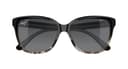
What actually changes, and what to buy for it
Glare, not darkness
The single most useful upgrade at this age is a polarizing filter, and it is not the same thing as a dark lens. A polarizer removes light that has bounced off a flat surface — tarmac, water, a car hood, a glossy table — which is exactly the light an aging eye is least able to sort out. Four of the six picks here are polarized and their listings say so. Two of them, both reader multipacks, do not state it, and we have not promoted them on their behalf. Our guide to polarized versus non-polarized lenses explains when the filter is wrong as well as when it is right, and how to tell if sunglasses are polarized gives you a ten-second test for a pair you already own.
Coverage, because of the skin as much as the eye
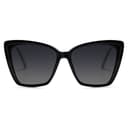
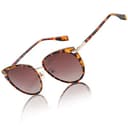
Ultraviolet reaches the eye from the side and from above as well as straight on, and it also lands on eyelids and on the orbital skin, which is thin and has had fifty summers of exposure. That is why the oversized SOJOS frame is second on this list despite costing less than lunch: a bigger front simply shades more. It is also the argument against the narrow Duco cat-eye, which is here because a narrow face disappears under an oversized frame, and a frame you leave in a drawer protects nothing. Pick the shape you will actually wear, then buy the largest version of it that fits. Our oversized roundup and face-shape guide cover that trade-off in full.
Reading distance, which nobody designs for
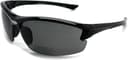
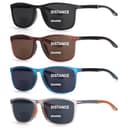
A bifocal sunglass puts a magnifying segment in the bottom of a tinted lens. It is a genuinely useful object, and the market for it is almost entirely fishing — which is why both reader picks here are titled for men on their own listings, the Renegade one saying “Men’s Fishing Sunglasses” in the product title. They are unisex plastic frames, and the number that matters is the power rather than the pronoun on the listing. If you have never bought readers, buy the four-pack first: work out whether +2.50 suits your arm length before you spend anything, then buy the pair you want in that power. Our bifocal sunglasses roundup is the whole category, and prescription sunglasses is the route to take if your distance vision needs correcting too.
If you already wear glasses every day
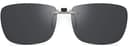
Then the cheapest good answer is not a pair of sunglasses at all — it is a polarized clip-on over the frames you already own, which is why the CAXMAN is on this list. It costs a fraction of a second set of prescription lenses and it travels in the same case. The two routes are compared directly in our clip-on versus fit-over guide, and sunglasses that fit over glasses ranks the larger frames that go over a bigger pair.
What we would not buy
A very dark lens with no stated ultraviolet rating, at any price. Darkness opens the pupil, and a weak filter then lets more ultraviolet into a wider opening, which is the one combination eye doctors actually warn about. Also not: a brand-name frame from a marketplace seller at a suspiciously good price, because the counterfeit trade in premium eyewear is real and the thing being faked is the part you cannot see. Our guides to spotting fake sunglasses and whether sunglasses expire cover both cases, and what UV400 actually means explains the one spec to insist on.