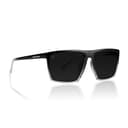
How to choose oversized sunglasses
Four things decide whether a big frame is a good buy or an expensive thing you stop wearing after a fortnight. The first is the one the category is sold on. The last two are the reasons people quietly give up on it.
1. Coverage is the point, so judge the shape, not the lens width
UV does not only arrive from straight ahead. It bounces off pavement, water, sand and snow, and it comes in over the top of a frame and around the outside edge of it. That is the gap the AAO is addressing when it recommends oversized and wraparound frames for people who want maximum protection, and it is why a tall lens often does more for you than a wide one. A frame that is broad but shallow leaves the same gap above your eyebrow that a small frame does.
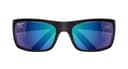
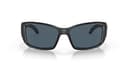
Practically: look at lens height and at how far the lens carries around toward your temple. The Costa Blackfin and the Maui Jim Peahi both do the second part — they are large frames with real wrap — which is why they appear on our wraparound roundup as well. A big flat lens is still a flat lens.
2. Polarization is a separate question from size
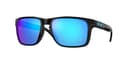
Nothing about a large lens makes it polarized, and nothing about it makes it UV-blocking either. Those are two more filters that either are or are not in the lens, and a dark oversized lens with no UV filter is worse for your eyes than no sunglasses at all, because the dark tint opens your pupil and then lets unfiltered UV through it. Four of the five picks below state polarization outright; the Oakley Holbrook XL does not come polarized as standard, which is noted on its card and is the same caveat our Oakley review makes.
3. Weight, and where the frame carries it
This is the complaint that ends most oversized purchases. A large acetate front is heavier than a small one, and all of that extra weight lands on two points: the bridge of your nose and the tops of your ears. If your sunglasses currently slide down, a bigger frame will slide faster — our guide to why that happens covers the fixes, and the honest answer is that bridge geometry matters more than size. Frames with adjustable nose pads (the Peahi, the Blackfin) can be made to sit where you want them. A moulded acetate bridge cannot.
4. The cheekbone test
A lens tall enough to cover your brow is often tall enough to touch your cheek, and once it does, two things happen: it smears with every smile, and it fogs, because you have just sealed warm air between the lens and your face. Our anti-fog roundup explains why that is a geometry problem rather than a coating problem. Before you order, measure the pair you own: lens height plus the gap to your cheekbone is the number that decides this, and it is why a frame with a slight forward tilt or a taller bridge works where a flat one does not.
Oversized, by who is buying
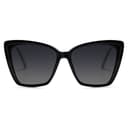
If you want the look for under twenty dollars. The SOJOS SJ2206. It is the only pick sold as an oversized frame, and it is polarized and UV400, which most frames in its price band are not. Our SOJOS brand verdict covers what the brand does and does not publish.
If your face is wide and most frames pinch. The Holbrook XL or the NEVEN Doc Robbins, both built on a genuinely larger front rather than a standard one photographed big. That is a different problem from wanting a big look, and it has its own page: sunglasses for big heads.
If you are outside all day, on or near water. The Blackfin or the Peahi. Both are large, both are properly polarized, and both were chosen for our boating picks for the lens rather than the size.
If your face is small. Reconsider. “Oversized on a small face” is a real autocomplete query and a real styling look, but a frame wider than your face will sit on your cheeks and slide, and it will not protect you better than a well-fitted medium frame. Start at sunglasses for small faces instead, and treat the oversized version as a styling choice you are making with your eyes open.