Shade & Temple

Oakley Flak 2.0 vs Radar EV

Same brand, same lens material, same price band, opposite geometry. One is a two-lens half-rim frame built to work under a cap brim; the other is a single tall shield built so nothing crosses your upward view.

By Stephen V.Last updated How we pick

Buy the Radar EV Path if you run or ride, and the Flak 2.0 XL if you play golf, baseball or any sport where you wear a cap. That is the whole decision, and it comes down to one piece of geometry: the Radar EV is a single tall shield lens with nothing crossing your upward field of view, and the Flak is a two-lens half-rim frame that sits lower and clears a cap brim. If neither price appeals, the Tifosi Veloce does most of what the Flak does for a fraction of it.

Everything else about these two frames is nearly identical, which is why the comparison is hard and why most of what is written about it is about looks. Both use Oakley’s O Matter nylon frame and Plutonite polycarbonate lens, which filters 100% of UVA, UVB and UVC up to 400nm from the material itself rather than from a coating. Both are offered in a wide range of Prizm contrast tints. Both, in the trims we carry, are not polarized— and that is deliberate on Oakley’s part rather than a cost saving.

So this page is about coverage, cap compatibility, lens swapping and which Prizm tint belongs on which frame. The specs in the table come from each product’s own listing, read on a dated visit and cited on the cards below. We have not tested either frame; the geometry argument is stated as a read of the published design rather than as a measurement. Prices are pulled live.

How this is funded: we earn a commission if you buy through our links, at no extra cost to you. It never changes which product we recommend, and we’ll tell you when we’d skip one. Full disclosure.

Quick picks

Ranked on lens spec, UV protection, tint fit and buyer value. Select a row to jump to the full write-up. We have not field-tested these — here is exactly what we do instead.

#ProductBest forPrice
1
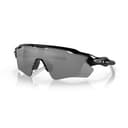
Oakley Radar EV Path Prizm

Oakley Radar EV Path Prizm

The performance shield for runners and cyclists who want maximum coverage and a taller lens. The Prizm tint sharpens contrast, the frame is featherweight O Matter, and the open-edge lens keeps your peripheral view clear. Non-polarized, which most runners prefer for reading the road surface.

Best for running and cycling
$244.00 · View on Amazon

Price as of October 20, 2026. #ad How we’re funded

2
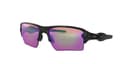
Oakley Flak 2.0 XL Prizm Golf

Oakley Flak 2.0 XL Prizm Golf

The reference golf sunglass. The Prizm Golf tint is tuned to boost the contrast between the fairway, the rough and the sky, so the ball and the contours of the green pop. A half-frame keeps your view open on a swing, and the Plutonite lens blocks 100% UV. Non-polarized, which is the right call for reading greens.

Best for golf and cap sports
$214.00 · View on Amazon

Price as of October 20, 2026. #ad How we’re funded

3
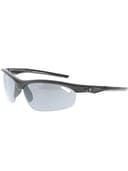
Tifosi Veloce (Interchangeable 3-Lens)

Tifosi Veloce (Interchangeable 3-Lens)

The frame to buy if fogging is the actual problem you are trying to solve. Tifosi states it plainly on its own product page — the Veloce runs large lens vents and 'vented lenses prevent fogging' — and it is one of the very few sunglasses, as opposed to safety glasses, where the brand makes that claim in its own words rather than leaving it to a marketplace bullet. The three-lens kit is the other half: a smoke lens for glare, AC Red for flat light, and a genuinely clear lens for the dawn starts and humid evenings when a dark tint is the wrong tool and fog is at its worst.

Best alternative for less
$79.95 · View on Amazon

Price as of October 20, 2026. #ad How we’re funded

The picks in full

#1Best for running and cycling

Oakley Radar EV Path Prizm

The performance shield for runners and cyclists who want maximum coverage and a taller lens. The Prizm tint sharpens contrast, the frame is featherweight O Matter, and the open-edge lens keeps your peripheral view clear. Non-polarized, which most runners prefer for reading the road surface.

Strengths

  • Tall, open-edge lens maximizes upper-field vision when your head is down
  • Very light O Matter frame with grippy earsocks
  • Prizm Road tint lifts contrast on pavement and trail

Trade-offs

  • Big, unmistakably athletic look off the road
  • Premium price; polarization not offered on the standard Prizm Road
Lens featurePrizm tint, tall shield lens, 100% UV
PolarizedNo
Lens tintPrizm
Frame materialO Matter (nylon)
UV protection100% UV (Plutonite, to 400nm)
Best forRunning, Cycling, Trail

Spec note. The Radar EV raised the lens height over the original Radar for more upper-field coverage; the Prizm Road tint is non-polarized.

Specs read from the product listing, on July 18, 2026. “Not published” means the brand does not state that figure.

#2Best for golf and cap sports

Oakley Flak 2.0 XL Prizm Golf

The reference golf sunglass. The Prizm Golf tint is tuned to boost the contrast between the fairway, the rough and the sky, so the ball and the contours of the green pop. A half-frame keeps your view open on a swing, and the Plutonite lens blocks 100% UV. Non-polarized, which is the right call for reading greens.

Strengths

  • Prizm Golf tint lifts turf-and-sky contrast to help you read the green
  • Half-frame and open top keep your sightline clear on a swing
  • Grippy Unobtainium earsocks stay put when you sweat

Trade-offs

  • Premium price
  • Non-polarized (correct for golf, but not a do-everything glare lens)
Lens featurePrizm Golf contrast tint, 100% UV
PolarizedNo
Lens tintPrizm Golf
Frame materialO Matter (nylon)
UV protection100% UV (Plutonite, to 400nm)
Best forGolf, Cycling, Running

Spec note. Prizm Golf is a non-polarized tint Oakley engineered to enhance the contrast of grass and dirt against the sky; polarization is deliberately omitted so subtle green contours stay visible.

Specs read from the product listing, on July 18, 2026. “Not published” means the brand does not state that figure.

#3Best alternative for less

Tifosi Veloce (Interchangeable 3-Lens)

The frame to buy if fogging is the actual problem you are trying to solve. Tifosi states it plainly on its own product page — the Veloce runs large lens vents and 'vented lenses prevent fogging' — and it is one of the very few sunglasses, as opposed to safety glasses, where the brand makes that claim in its own words rather than leaving it to a marketplace bullet. The three-lens kit is the other half: a smoke lens for glare, AC Red for flat light, and a genuinely clear lens for the dawn starts and humid evenings when a dark tint is the wrong tool and fog is at its worst.

Strengths

  • Tifosi's own page states vented lenses prevent fogging, with large vents for airflow
  • UV400 lenses stated to block UVA and UVB, at 28 grams
  • Three interchangeable lenses including a clear one, so low light is covered too
  • Hydrophilic rubber ear and nose pads that grip harder as you sweat

Trade-offs

  • None of the three lenses in this kit is polarized — reflected glare off water or wet road is untouched
  • Vents are holes: they pass wind and grit as readily as they pass water vapor, which is the wrong trade if your problem is dry eye rather than fog
  • Costs more than a vented budget wrap that makes the same claim on the listing alone
Lens featureVented lenses, UV400, 28g, three interchangeable lenses
PolarizedNo
Lens tintSmoke / AC Red / Clear (interchangeable)
Frame materialNot published
UV protectionUV400 (UVA/UVB)
Best forCycling, Running, Humid conditions, Changing light

Spec note. Tifosi's own Veloce page states 'large vents for maximum airflow and debris protection', 'vented lenses prevent fogging and maintain crystal-clear vision', 'UV400 lenses block harmful UVA and UVB rays', 'just 28 grams', 'interchangeable lenses for quick swaps as conditions change' and 'hydrophilic rubber ear and nose pads ensure a secure, no-slip grip that increases as you sweat'. The page does not state the frame material, so that field is null.

Specs read from the product listing, on September 29, 2026. “Not published” means the brand does not state that figure.

At a glance

Flak 2.0 XLRadar EV Path
Lens layoutTwo lenses, half-rimOne-piece shield
Upper field of viewBrow bar across the top of your viewRaised lens, open above — the point of “EV”
Under a capSits lower; clears a brim easilyTaller frame can touch a low brim
Lens materialPlutonite (polycarbonate)Plutonite (polycarbonate)
Frame materialO Matter (nylon)O Matter (nylon)
UV100% UV to 400nm, from the material100% UV to 400nm, from the material
Polarized in this trimNo — Prizm Golf is a non-polarized tintNo — Prizm Road is non-polarized
Lens swappingTwo small lenses; easier to handleOne large lens; more flex to manage
Built forGolf, baseball, cap sports, smaller faces in the standard sizeRunning, cycling, trail — eyes up and forward

The geometry, which is the actual difference

The Radar EV earns its name from one change: Oakley raised the lens height over the original Radar to give more upper-field coverage. That matters when your head is down and your eyes are up — running, and especially riding on the drops, where the thing you need to see is the road thirty metres ahead and the thing in the way is the top edge of your sunglasses. A one-piece shield with a tall lens removes that edge from your view. It is the same reasoning behind every frame on our cycling roundup and running roundup.

The Flak does the opposite thing well. A half-rim frame with two separate lenses sits lower on the face and keeps the frame out of the gap between your eyes and a cap brim — which is exactly the geometry a golfer or a baseball player needs, because they are looking down at a ball and out from under a peak. Oakley’s own description of the Flak notes the half-frame keeping your view open on a swing, and it is why the Flak is the pick on our golf roundup and sits alongside the wrap frames on baseball.

There is also a size consequence. The Flak comes in a standard and an XL, so a smaller face has a real option; the Radar EV is one large frame, and on a narrow face it can look and feel like a visor. If that is you, start at sunglasses for small faces instead.

Prizm is a tint, not a filter — and the tint is sport-specific

Prizm is Oakley’s family of contrast-tuned lens dyes, each engineered for a specific environment rather than being a single better lens. That is the part worth understanding before you compare these two frames, because the tint you choose matters more to your experience than the frame does. Prizm Golf is tuned to separate grass, dirt and sky so contours and a ball in flight stand out; Prizm Road is tuned for the greys and shadows of tarmac. Our Prizm explainer goes through the family in full.

Neither of those tints is polarized, and in both cases that is the correct engineering decision rather than a compromise. Polarization removes horizontally reflected light — which on a green is exactly the light that reveals a subtle slope, and on a road is part of how you read a wet patch. This is one of the few places on this site where we argue against polarization; our polarized vs non-polarized page covers when it helps and when it costs you information.

Fogging, sweat and the practical stuff

Neither frame publishes a fogging claim, and both are open enough at the brow that airflow is reasonable. If fogging is your specific problem, Tifosi is the brand that actually states a vent claim — it describes the Veloce as having large vents for maximum airflow and debris protection, and states 28 grams and interchangeable lenses on the same page. Our anti-fog roundup ranks frames on exactly this.

Both Oakley frames hold position reasonably well through sweat, and both can be fitted with replacement nose pieces and temple socks. If yours slide, the cause is usually fit rather than sweat — see why sunglasses slide down. Scratches are not covered by any manufacturer warranty, Oakley’s included, and at this price re-lensing is often the sensible repair — our page on that has the numbers.

The verdict

Buy the Radar EV if you run, ride or move fast with your eyes up. The raised shield lens is a real functional advantage for that posture, and no amount of styling preference should override it.

Buy the Flak 2.0 if you wear a cap while you play, if you want two smaller lenses you can swap without fighting a big one, or if you want the option of a standard size as well as an XL. For golf specifically, the Prizm Golf trim is the reason this frame is the category reference.

Buy the Tifosi Veloce if you want most of the Flak’s job done for a fraction of the money, with three interchangeable lenses and a published weight in the box. Our Tifosi vs Oakley page is the full version of that argument, and our Oakley review covers the range either of these frames sits inside.
Frequently asked questions

Is the Flak 2.0 or the Radar EV better for golf?

The Flak 2.0, clearly. It sits lower on the face and keeps the frame out of the gap between your eyes and a cap brim, which is the sightline a golfer uses, and the Prizm Golf tint is engineered to separate grass, dirt and sky so contours and a ball in flight stand out. The Prizm Golf lens is deliberately non-polarized, because polarization removes the reflected light that reveals a slope on a green.

Is the Radar EV better for running and cycling?

Yes. The EV in the name refers to the raised lens height over the original Radar, which gives more coverage in your upper field of view — the part you are actually using when your head is down and your eyes are up the road. A one-piece shield also puts no frame edge across that view.

Are the Flak 2.0 and Radar EV polarized?

Not in the Prizm Golf and Prizm Road trims we carry. Oakley sells polarized Prizm variants of both frames separately. For both sports the non-polarized choice is defensible: polarization strips out reflected light that carries useful information about a green's contour or a road's surface.

Can you wear the Radar EV under a baseball cap?

You can, but it is the taller of the two frames and it can touch a low brim, which is why cap sports are the Flak's territory. If you play in a cap and want a shield, size is the thing to check before buying rather than tint.

Which is better value?

They sit in the same price band, so value comes down to fit rather than money — buying the wrong geometry is the expensive mistake here. If the band itself is the problem, the Tifosi Veloce ships with three interchangeable lenses and a published 28-gram weight for a fraction of either, and the compromise is lens coatings and frame refinement rather than UV protection.

Sources

  • Oakley — PRIZM Lens Technology — Oakley's description of contrast-tuned Prizm lens dyes for specific environments (accessed July 18, 2026)
  • Oakley — Lens Technology — Oakley on lens materials, coatings and tint options (accessed July 18, 2026)
  • Tifosi Optics — Veloce Multi-Sport Sunglasses (brand page) — One of the few sunglasses — as opposed to safety glasses — where the brand makes a fogging claim in its own words: "large vents for maximum airflow and debris protection" and "vented lenses prevent fogging and maintain crystal-clear vision". Also stated on the same page: "UV400 lenses block harmful UVA and UVB rays", "just 28 grams", "interchangeable lenses for quick swaps as conditions change", and "Hydrophilic rubber ear and nose pads ensure a secure, no-slip grip that increases as you sweat". The page does not state the frame material (accessed September 29, 2026)
  • Oakley — Warranty and Product Support — Oakley: two-year warranty on standard eyewear against material/manufacturing defects; lens scratches count as normal wear and are not covered; proof of purchase from an authorized dealer required (accessed August 13, 2026)
  • American Academy of Ophthalmology — How to Pick the Best Sunglasses to Protect Your Eyes — AAO: look for 100% UV / UV400; darker lenses are not more protective; price does not equal protection (accessed July 18, 2026)

Keep reading