Shade & Temple

Best Sunglasses for Baseball

Tracking a fly ball means looking straight into the brightest part of the sky, which is the one thing ordinary sunglasses are worst at — six picks judged on coverage, tint and whether they stay put under a cap.

By Stephen V.Last updated How we pick

Baseball asks something of a lens that almost no other sport does: you have to look up, into the brightest part of the sky, and pick a small white object out of it in about a second. Every other outdoor sport has you looking forward or down. That single difference decides most of what follows — it is why coverage above and beside the eye matters more here than lens darkness, and why a frame that sits well under a cap brim beats one that is technically better but fights the hat.

The second problem is that a baseball field has two completely different lighting environments on it at once. The infield is dirt and grass in direct sun; the outfield is sky. A tint that makes the infield comfortable can flatten the contrast you need to pick a ball out of a pale sky, which is why contrast-boosting tints in the rose, amber and copper family dominate this category and neutral gray does not.

Every pick below states 100% UV protection or UV400 unless we say otherwise — and where a listing publishes an impact rating but not a UV figure, we say that out loud rather than assuming one implies the other. Prices are pulled live and dated; tap through for the current number.

How this is funded: we earn a commission if you buy through our links, at no extra cost to you. It never changes which product we recommend, and we’ll tell you when we’d skip one. Full disclosure.

Quick picks

Ranked on lens spec, UV protection, tint fit and buyer value. Select a row to jump to the full write-up. We have not field-tested these — here is exactly what we do instead.

#ProductBest forPrice
1
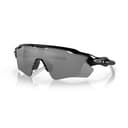
Oakley Radar EV Path Prizm

Oakley Radar EV Path Prizm

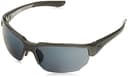
The performance shield for runners and cyclists who want maximum coverage and a taller lens. The Prizm tint sharpens contrast, the frame is featherweight O Matter, and the open-edge lens keeps your peripheral view clear. Non-polarized, which most runners prefer for reading the road surface.

Best overall
$244.00 · View on Amazon

Price as of September 4, 2026. #ad How we’re funded

2
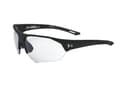
Under Armour Playmaker Wrap

Under Armour Playmaker Wrap

A 72mm wrap built for field sports, which is a genuinely large lens — the width is what keeps sun out of the corner of your eye when you are tracking a ball into the sky rather than looking straight ahead. Rubberized nose and temple pads hold it through a sprint, and it costs a fraction of the premium sport wraps without giving up coverage.

Best coverage for the money
$57.99 · View on Amazon

Price as of September 4, 2026. #ad How we’re funded

3
Under Armour Blitzing Wrap

Under Armour Blitzing Wrap

A wrap-style sport frame built for wider faces and higher-tempo activity, with a grippy rubberized nose and temples. A sensible mid-price step up from the budget sport brands when you want more coverage and a more secure hold than a lifestyle frame gives.

Best for wide faces
$70.05 · View on Amazon

Price as of September 4, 2026. #ad How we’re funded

4
Tifosi Seek FC 2.0

Tifosi Seek FC 2.0

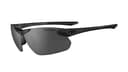
The value-sport benchmark. Tifosi builds Grilamid TR-90 frames and decentered, shatterproof polycarbonate lenses at a fraction of the premium brands, with hydrophilic rubber that grips harder as you sweat. The Seek FC's larger lens suits golf and everyday sport; not polarized in this trim.

Best value sport frame
$39.95 · View on Amazon

Price as of September 4, 2026. #ad How we’re funded

5
Torege Polarized Sports

Torege Polarized Sports

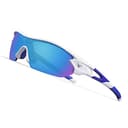
Another budget sport staple, often sold with interchangeable lenses. Polarized main lens, UV400, TR90 frame — the appeal is getting a low-light and a bright-light lens in one cheap kit. A sensible first sport pair for someone testing whether they'll use them.

Best budget polarized
$23.99 · View on Amazon

Price as of September 4, 2026. #ad How we’re funded

6
NULOOQ Kids Baseball Polarized

NULOOQ Kids Baseball Polarized

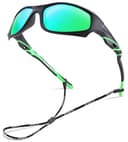
A youth sport wrap for ten dollars, sized for ages 4-12 and shaped to sit under a cap brim — which is the specific thing a scaled-down lifestyle frame gets wrong. Polarized, and priced so that a season of little league does not become an equipment budget line.

Best for youth players
$9.99 · View on Amazon

$11.9917% off

Price as of September 4, 2026. #ad How we’re funded

The picks in full

#1Best overall

Oakley Radar EV Path Prizm

The performance shield for runners and cyclists who want maximum coverage and a taller lens. The Prizm tint sharpens contrast, the frame is featherweight O Matter, and the open-edge lens keeps your peripheral view clear. Non-polarized, which most runners prefer for reading the road surface.

Strengths

  • Tall, open-edge lens maximizes upper-field vision when your head is down
  • Very light O Matter frame with grippy earsocks
  • Prizm Road tint lifts contrast on pavement and trail

Trade-offs

  • Big, unmistakably athletic look off the road
  • Premium price; polarization not offered on the standard Prizm Road
Lens featurePrizm tint, tall shield lens, 100% UV
PolarizedNo
Lens tintPrizm
Frame materialO Matter (nylon)
UV protection100% UV (Plutonite, to 400nm)
Best forRunning, Cycling, Trail

Spec note. The Radar EV raised the lens height over the original Radar for more upper-field coverage; the Prizm Road tint is non-polarized.

Specs read from the product listing, on July 18, 2026. “Not published” means the brand does not state that figure.

#2Best coverage for the money

Under Armour Playmaker Wrap

A 72mm wrap built for field sports, which is a genuinely large lens — the width is what keeps sun out of the corner of your eye when you are tracking a ball into the sky rather than looking straight ahead. Rubberized nose and temple pads hold it through a sprint, and it costs a fraction of the premium sport wraps without giving up coverage.

Strengths

  • 72mm lens width — real coverage for looking up and across, not just forward
  • Rubberized grip on the nose and temples holds through sweat and sprinting
  • Sits well under a cap brim, which a taller shield frame often does not

Trade-offs

  • The listing does not state polarization for this colorway — check the SKU if you also want glare control
  • White frame colorways show scuffs fast on a dirt infield
Lens feature72mm wraparound coverage, rubberized grip
PolarizedNot published
Lens tintNot published
Frame materialNot published
UV protection100% UVA/UVB
Best forBaseball, Field sports, Wide faces

Spec note. The listing states a 72mm lens width — unusually wide for a sport wrap, which is where the peripheral coverage comes from. Polarization is not stated for this colorway.

Specs read from the product listing, on August 11, 2026. “Not published” means the brand does not state that figure.

#3Best for wide faces

Under Armour Blitzing Wrap

A wrap-style sport frame built for wider faces and higher-tempo activity, with a grippy rubberized nose and temples. A sensible mid-price step up from the budget sport brands when you want more coverage and a more secure hold than a lifestyle frame gives.

Strengths

  • Wrap coverage and rubberized grip hold up during activity
  • Suits wider faces that swim in narrow lifestyle frames
  • Mid-price — more frame than the sub-$25 brands

Trade-offs

  • Check the specific lens SKU for polarization — not all trims are polarized
  • Sport-wrap styling doesn't cross over to dressy wear
Lens featureWrap coverage, rubberized grip
PolarizedNot published
Lens tintNot published
Frame materialNot published
UV protection100% UVA/UVB
Best forRunning, Golf, Wide faces

Spec note. Polarization varies by Blitzing lens SKU; confirm the specific colorway's lens before buying if glare control matters.

Specs read from the product listing, on July 18, 2026. “Not published” means the brand does not state that figure.

#4Best value sport frame

Tifosi Seek FC 2.0

The value-sport benchmark. Tifosi builds Grilamid TR-90 frames and decentered, shatterproof polycarbonate lenses at a fraction of the premium brands, with hydrophilic rubber that grips harder as you sweat. The Seek FC's larger lens suits golf and everyday sport; not polarized in this trim.

Strengths

  • Grilamid TR-90 frame and glare-guard hydrophilic nose/temple grips
  • Shatterproof decentered polycarbonate lenses block 100% UVA/UVB
  • A quarter the price of the premium sport brands

Trade-offs

  • This lens is not polarized
  • Fit runs medium — large heads may want the wider Tifosi frames
Lens featureTR-90 frame, 100% UVA/UVB, sweat-grip
PolarizedNo
Lens tintNot published
Frame materialGrilamid TR-90
UV protection100% UVA/UVB
Best forGolf, Everyday sport, Cycling

Spec note. Tifosi lists shatterproof, decentered polycarbonate lenses with 100% UVA/UVB protection and hydrophilic rubber grips.

Specs read from the product listing, on July 18, 2026. “Not published” means the brand does not state that figure.

#5Best budget polarized

Torege Polarized Sports

Another budget sport staple, often sold with interchangeable lenses. Polarized main lens, UV400, TR90 frame — the appeal is getting a low-light and a bright-light lens in one cheap kit. A sensible first sport pair for someone testing whether they'll use them.

Strengths

  • Polarized main lens plus interchangeable options in many kits
  • UV400 on a light TR90 frame
  • Very inexpensive entry into sport eyewear

Trade-offs

  • Interchangeable low-light lenses are often non-polarized
  • Budget build and clarity
Lens featurePolarized, UV400, interchangeable lenses
PolarizedYes
Lens tintNot published
Frame materialTR90
UV protectionUV400
Best forRunning, Cycling, Budget

Spec note. Torege lists a polarized main lens with UV400; check which lenses in a swap kit are polarized, as the clear/low-light lenses usually are not.

Specs read from the product listing, on July 18, 2026. “Not published” means the brand does not state that figure.

#6Best for youth players

NULOOQ Kids Baseball Polarized

A youth sport wrap for ten dollars, sized for ages 4-12 and shaped to sit under a cap brim — which is the specific thing a scaled-down lifestyle frame gets wrong. Polarized, and priced so that a season of little league does not become an equipment budget line.

Strengths

  • Wrap shape sits under a cap brim, unlike a shrunken lifestyle frame
  • Polarized at ten dollars
  • Sized for the 4-12 band rather than sold as one-size

Trade-offs

  • No published UV rating — an important omission on a sport pair worn for hours
  • Basic frame with no impact certification; it is a sun frame, not eye protection
Lens featurePolarized youth sport wrap
PolarizedYes
Lens tintNot published
Frame materialNot published
UV protectionNot published
Best forYouth baseball, Children's sport, Ages 4-12

Spec note. The listing states polarized youth baseball sunglasses for boys and girls aged 4-12. A UV rating is not published for this SKU.

Specs read from the product listing, on August 11, 2026. “Not published” means the brand does not state that figure.

How to choose baseball sunglasses

1. Coverage upward, not just forward

The reason baseball frames look the way they do — tall lens, upswept top edge, wrapped sides — is that a fielder spends the important moments looking up at roughly 45 degrees. A conventional lifestyle frame has its top rail sitting right where your line of sight goes when you tilt your head back, so you end up looking over the top of the lens at exactly the moment you needed it.

A tall shield or a wide wrap solves it. Lens width matters too: the Under Armour Playmaker on this list states a 72mm lens, which is genuinely large, and that width is what keeps low sun out of the corner of your eye when a ball comes in off the line rather than straight at you.

2. Contrast tint, not neutral gray

Gray is the correct tint for sustained bright sun when comfort is the goal — it dims everything evenly and keeps color accurate. That evenness is exactly wrong for baseball. What you want is a tint that pushes the white of the ball away from the pale blue or hazy white of the sky behind it, which means a rose, amber or copper base.

This is what Oakley’s Prizm range is: dyes tuned to control specific wavelengths so particular things stand apart. Oakley sells a baseball-specific tint in its lens range, and the Radar EV on this list is the frame most commonly seen with it. If you want the reasoning behind tint choice generally, our lens colors guide has the tint-by-condition table.

3. Cap fit is a real constraint

A frame that is superb on a bike can be unwearable under a ball cap. The tallest shield designs push against the underside of the brim, which lifts the hat or pushes the glasses down your nose. Look for a frame with a moderately tall lens and a relatively flat top rail, and check that the temples run straight back rather than curving up.

Practical test: put the glasses on, then put your cap on over them. If the brim rests on the frame rather than clearing it, you will be adjusting one or the other all game.

4. Grip beats weight

A light frame that slides is worse than a slightly heavier one that does not. The material to look for is hydrophilic rubber — Oakley calls its version Unobtainium, Tifosi uses its own equivalent — which gets tackier as it gets wet rather than more slippery. That is why sport frames stay put through a sweaty seventh inning and metal-hinged lifestyle frames do not. If your current pair creeps down your nose, our guide to sunglasses sliding down covers the fixes.

5. Polarization: optional, and occasionally unhelpful

Polarization filters the horizontally reflected light that turns wet grass and painted surfaces into glare, and on a bright day at a field with a lot of hard surfaces that is genuinely pleasant. But it does nothing for the core baseball problem, which is contrast against the sky, and some players dislike what it does to the appearance of the ball against a polarized-dimmed background.

Our steer: take it if it comes with the frame you want, do not pay a premium for it here, and if you are unsure what the feature actually does, read our polarized vs non-polarized comparison first.

Sunglasses are not eye protection

This is worth being blunt about, because the category invites confusion. None of these frames is impact-rated eye protection for a batted or thrown ball. Prevent Blindness is explicit that ordinary sunglasses — and even occupational safety glasses — do not provide adequate protection for sport, and that eye guards meeting the relevant ASTM standard for the sport are what protect against ball impact.

So: sunglasses for sun, sport goggles or a helmet-mounted guard for impact. If you want eyewear that is genuinely certified against impact for work rather than sport, our ANSI Z87.1 safety sunglasses roundup covers what certification actually means and what it does not.

Youth players: what changes

Two things. First, sizing — an adult sport wrap on a ten-year-old sits out past the temples and lifts off the nose, which means it moves on every play. Buy something sold by age band rather than shrinking an adult frame. Second, UV exposure matters more, not less: the American Academy of Ophthalmology notes that children are at high risk of eye damage in bright sunlight, and a season of afternoon games is a lot of cumulative exposure.

The youth pick on this list is polarized and priced so a lost pair is not an event. Our full kids’ sunglasses roundup goes deeper on sizing, straps and which listings actually publish a UV rating — a surprising number do not.

Where to spend and where not to

The premium tier buys you a genuinely tuned contrast tint, optical precision at the edges of a steeply curved lens, and grip material that holds when you sweat. If you play or coach several times a week and the ball-against-sky problem is real for you, that is a defensible spend, and our Oakley review explains exactly what the money buys.

The value tier is unusually strong, though. A Tifosi Grilamid frame with 100% UVA/UVB lenses costs roughly a quarter of the premium equivalent — see our Tifosi review for what gets cut — and at the bottom, a $20 polarized wrap is a completely reasonable purchase for rec-league play. For other activities, our sport hub covers golf, running, fishing, cycling and the rest, and our golf roundup is the closest sibling to this one on tint reasoning.
Frequently asked questions

What lens color is best for baseball?

A contrast tint in the rose, amber or copper family. The core baseball problem is separating a white ball from a pale sky, and a warm contrast tint pushes those two apart. Neutral gray dims everything evenly, which is comfortable in sustained bright sun but does the least to help you pick the ball up. Oakley sells a baseball-specific Prizm tint built around exactly this problem.

Should baseball sunglasses be polarized?

It is optional here, unlike fishing where it is essential. Polarization cuts glare reflected off wet grass, painted surfaces and metal bleachers, which is pleasant, but it does nothing for contrast against the sky — the thing that actually decides whether you track the ball. Take polarization if it comes with the frame you want; do not pay a premium for it in this category.

Do baseball sunglasses protect against being hit by a ball?

No. These are sun lenses, not impact protection. Prevent Blindness is explicit that ordinary sunglasses and even occupational safety glasses do not provide adequate protection against ball impact, and that sport eye guards meeting the relevant ASTM standard are what do. Buy sunglasses for the sun and a proper sport eye guard or helmet-mounted faceguard for impact.

Will sunglasses fit under a baseball cap?

Some will and some genuinely will not. Tall shield frames push against the underside of the brim, which either lifts the cap or shoves the glasses down your nose. Look for a moderately tall lens with a fairly flat top rail and straight-running temples. The test takes five seconds: put the glasses on, then the cap, and see whether the brim clears the frame or rests on it.

What sunglasses should a youth baseball player wear?

Something sized by age band rather than an adult frame scaled down, because an oversized wrap moves on every play and stops being worn. Look for a wrap shape that sits under a cap brim, a flexible frame that survives being sat on in a dugout, and — importantly — a listing that actually publishes a UV rating, because many children's sunglasses do not.

Are expensive baseball sunglasses worth it?

Only for the tint and the grip. UV protection costs almost nothing and a $20 pair that states UV400 protects your eyes as well as a $200 one — the American Academy of Ophthalmology is clear that price is not a proxy for protection. What the premium tier genuinely buys is a contrast tint engineered for this specific problem, better optics at the edge of a curved lens, and grip material that holds through sweat. If you play a couple of times a season, the value tier is enough.

Sources

Keep reading