The two numbers that decide whether a frame fits
Printed on the inside of one temple arm is a string like 59-17-135. It is three measurements in millimeters, and for a wide face two of them do all the work.
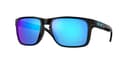
- Lens width (the first number). The horizontal width of one lens. Combined with the bridge and the frame edges, it drives total frame width. For most wide faces, look for 57mm or more; the Oakley Holbrook XL runs 59mm against a standard Holbrook’s 55mm, and that four-millimeter difference per lens is what makes the XL feel like a different product.
- Temple length (the third number). How far the arm runs from hinge to ear. This is the number people ignore and it causes half the discomfort: a short temple forces the frame to sit forward on your nose and press behind your ears. 145mm and above is a reasonable target for a large head; 135mm and below will be tight.
The middle number is bridge width, which matters less for overall fit and more for whether the frame slides down. Our sunglasses size guide walks through all three in detail, including how to measure a pair you already own.
How to measure your face in thirty seconds
- Measure temple to temple. With a soft tape or a ruler against a mirror, measure straight across your face at the widest point of your temples, just above the ears. Most adult faces fall between 130mm and 150mm; above roughly 145mm you are firmly in wide-fit territory.
- Compare to total frame width. Total frame width is roughly (lens width × 2) + bridge width, plus a few millimeters for the rims. You want that number close to your face width — ideally within about 3mm either way.
- Sanity-check against a pair that fits. If you own sunglasses that are comfortable, read their numbers and shop within a couple of millimeters. This is more reliable than any calculation.
The trap to avoid: a frame that is too narrow does not just feel tight, it also actively fails at its job. Splayed temples hold the lens further from your face, which lets light in from the sides and below — exactly the coverage that the CDC and the American Academy of Ophthalmology recommend wraparound frames to close.
Which brands actually publish wide fits
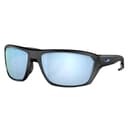
Oakley is the most systematic. It publishes genuine XL variants of popular frames (the Holbrook XL at 59mm being the clearest example), its sport wraps like the Split Shot are broad by design, and it also makes low-bridge-fit versions for a different fit problem entirely. Our Oakley review covers the range.
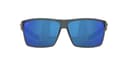
Costa builds wide by default, because fishing frames are trying to block light coming across open water from the side. The Rincon runs a 63mm front and the Blackfin 62mm, both of which are genuinely large. See our Costa review.
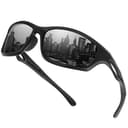
Under Armour and the sport-wrap category generally run wider than lifestyle eyewear, since a wrap has to reach round the temple to work at all.
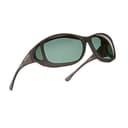
Fit-over (OTG) frames are a quietly excellent option even if you do not wear prescription glasses: they are engineered to go over another frame, so they are among the widest and deepest lenses on the market. Our fit-over roundup covers the category properly.
Where you will struggle: heritage acetate classics. Ray-Ban’s Wayfarer runs narrow across the front, and although larger Aviator sizes help, it is not a range built around systematic sizing — our Ray-Ban review is honest about that.
Fixes for a frame that is almost right
If a pair is close but not quite, three things genuinely work:
- Have the temples adjusted. Most opticians will warm and reshape acetate or nylon temples for free or a nominal fee, which can relieve pressure behind the ears and widen the splay slightly. This is the single most underused fix in eyewear.
- Choose flexible frame materials. Grilamid TR-90, O Matter and similar nylon-family plastics flex outward and return, so they accommodate a wider head without permanently splaying. Cheap brittle plastics do not — they either pinch or crack.
- Avoid metal frames with fixed hinges if width is marginal. They have the least give of anything on the market.
What does not work is buying the same frame in a darker color and hoping. And if your actual complaint is that glasses slide down your nose rather than pinch at the sides, that is a bridge problem rather than a width problem — our guide to sunglasses sliding down covers it.
Shape, once the size is right
Wide faces are frequently square or rectangular, in which case the shape rule is to contrast rather than echo: curved and rounded frames soften a strong jaw, and our square-face roundup covers the picks. If your face is wide and rounder, the opposite applies and an angular frame adds the definition — see our round-face roundup.
The general point is that shape advice is a second-order decision. A perfectly flattering shape in the wrong size looks worse than a neutral shape that fits, because a badly fitting frame is visibly badly fitting from across a room. Get the millimeters right first. Our face-shape guide covers the rest, and the fit guide hub collects it all.