What Oakley’s technology actually does
Plutonite: the UV story, and why it matters more than the tint
Every eye-health authority says the same thing about sunglasses, and it is worth repeating because it is the single most misunderstood fact in the category: a dark lens without UV protection is worse for your eyes than no sunglasses at all. Darkness makes your pupil open; if the lens is not filtering ultraviolet, that wider pupil lets more UV reach the retina. The American Academy of Ophthalmology is blunt about it — look for the 100% UV or UV400 statement, and do not treat lens darkness or price as a proxy for protection.
Oakley’s answer is structural rather than applied. Plutonite is the polycarbonate the lens is made from, and Oakley states it filters 100% of UVA, UVB and UVC and harmful blue light up to 400nm regardless of tint. Practically, that means a clear Oakley lens protects as well as a black one, and there is no UV coating to scratch off over three summers. It is a real advantage over cheap lenses whose UV performance depends on a surface treatment. It is also, to be fair, matched by plenty of $30 frames that state UV400 — the difference is that Oakley’s claim is about the material rather than the finish. Our UV protection guide explains what the label legally means and what it does not.
Prizm: contrast, not darkness
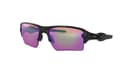
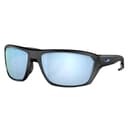
Prizm is where Oakley earns most of its premium, and it is genuinely different from “a brown lens.” Oakley describes Prizm as lens dyes engineered to control specific wavelengths — suppressing the parts of the spectrum that muddy a scene and letting through the parts that carry the detail you need. The result is environment specific, which is why Prizm is sold by use case rather than by color: Prizm Golf pulls green turf apart from brown rough so slope and grain read as texture; Prizm Deep Water is built to cut surface glare and lift the blue-green band you look through to spot structure; Prizm Road exaggerates the difference between clean tarmac and a pothole.
The honest caveat: contrast tints are a preference as much as a performance upgrade. Some people find Prizm’s color shift distracting, and if you want the world to look neutral — just dimmer — a plain gray lens is the correct choice and costs less. Our lens colors guide has the full tint-by- condition table if you want to work out which end of that trade you sit on.
O Matter and Unobtainium: the fit half
The frame technology gets less attention and is arguably more useful day to day. O Matter is Oakley’s nylon-family frame material — light, and flexible enough to take a knock without the brittle snap of cheap injection plastic. Unobtainium is the rubber Oakley uses on nose pads and temple tips, and its trick is that it grips harder as it gets wet, so a frame settles rather than slides once you start sweating. If you have ever pushed sunglasses back up your nose halfway through a run, that is the problem this material solves, and it is the reason Oakley sport frames stay put in a way that a metal-hinged lifestyle pair never will.
Where Oakley is worth it, and where it is not
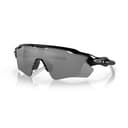
Oakley is worth the money when the lens is doing a job you can name. Reading a green, picking a line down a descent at speed, spotting a fish under surface chop — these are tasks where a tuned contrast tint plus a frame that will not move is a real, repeatable advantage, and the Flak 2.0, Radar EV and Split Shot exist precisely for them. If you play or ride often, the cost per use gets sensible quickly.
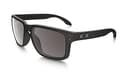
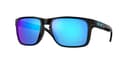
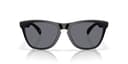
It is not worth it when you want “a nice pair of sunglasses.” A base Holbrook or Frogskins is a well-built frame with a genuinely excellent lens material and an unremarkable gray tint, and it is not polarized. For everyday glare — wet road, car hoods, a lake at lunchtime — a $30 polarized pair like the goodr OG will do more for your eyes than a non-polarized $180 Oakley. That is not a knock on Oakley; it is a statement about what polarization does and what a contrast dye does. They solve different problems, and only one of them is on the cheap pair. We take that argument apart frame by frame in Knockaround vs Oakley, and trim by trim in our Oakley Holbrook review, which compares the three fits of the brand’s most-bought frame.
The place we would push back hardest is the accessory ladder. Replacement Prizm lenses, branded cases and swap kits are priced as though they were half a second pair, and the marginal benefit over the lens you already own is usually small. Buy the trim you want the first time.
How Oakley compares to the brands people cross-shop
Against Ray-Ban — which shares a parent company — the split is philosophical: Oakley optimizes for what you can see and whether the frame stays put, Ray-Ban optimizes for how the frame reads on your face and how long the acetate lasts. We put that head-to-head in Oakley vs Ray-Ban.
Against Costa and Maui Jim, Oakley is the weaker choice for pure on-water work unless you buy a polarized Prizm trim, because both of those brands treat polarization as the baseline rather than an upgrade. Our Maui Jim vs Oakley comparison works through that trade-off frame by frame, Costa vs Maui Jim covers the other pair, and the fishing roundup shows where the Split Shot does and does not keep up.
Against Tifosi, the argument is purely money. Tifosi builds Grilamid frames with hydrophilic grips and 100% UVA/UVB lenses at roughly a quarter of Oakley’s price, and for occasional use the gap in what you actually notice is smaller than the gap in price. Read our Tifosi review before you spend on a sport Oakley you will wear six times a year. For the full field, our best sunglasses brands roundup ranks every brand we cover on the same four criteria.