Shade & Temple

Best Rectangular Sunglasses

The most useful shape nobody gets excited about — rectangular frames suit more faces than any other silhouette and are the easiest to find genuinely polarized. Five picks, from $20 to premium glass.

By Stephen V.Last updated How we pick

Rectangular is the shape that wins on merit and loses on glamour. It gets less attention than the aviator, the wayfarer or the cat-eye, and it is the one we end up recommending most often — because it suits more faces than any of them, and because the category is dominated by sport-adjacent brands who polarize by default rather than by fashion brands who do not.

The practical consequence: it is far easier to find a genuinely polarized, clearly UV400 rectangular frame at $20 than it is in any of the heritage shapes. Two of the picks below do exactly that. The premium options here are earning their money on lens material and optics rather than on being the only place to find a decent lens.

The one thing to get right is proportion, and specifically lens height — the spec nobody prints and the one that decides whether a rectangular frame flatters a face or flattens it. That is covered below the picks. Prices are pulled live and dated.

How this is funded: we earn a commission if you buy through our links, at no extra cost to you. It never changes which product we recommend, and we’ll tell you when we’d skip one. Full disclosure.

Quick picks

Ranked on lens spec, UV protection, tint fit and buyer value. Select a row to jump to the full write-up. We have not field-tested these — here is exactly what we do instead.

#ProductBest forPrice
1
SUNGAIT SGT458 Ultra Lightweight Rectangular

SUNGAIT SGT458 Ultra Lightweight Rectangular

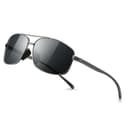
SUNGAIT's best-known frame and the one that explains the brand: a 62mm metal rectangle that is polarized, states UV400, and costs about sixteen dollars. The 62mm width is the detail buyers miss — this is a large frame, which makes it one of the few genuinely cheap options for a wide face.

Best overall
$15.99 · View on Amazon

$19.9920% off

Price as of September 4, 2026. #ad How we’re funded

2
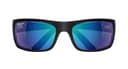
Maui Jim Peahi

Maui Jim Peahi

The wrapped, rubber-gripped Maui Jim — the one built for wind, water and movement rather than the school run. A rectangular medium fit with a matte rubber frame that holds when you sweat, wearing the same PolarizedPlus2 lens as the brand's dressier frames. This is Maui Jim's answer to Costa, minus the glass weight.

Best lens quality
$289.00 · View on Amazon

Price as of September 4, 2026. #ad How we’re funded

3
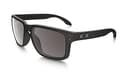
Oakley Holbrook OO9102

Oakley Holbrook OO9102

The frame that bridges sport and street. The squared-off Holbrook is built on Oakley's O Matter frame and Plutonite lens, which blocks 100% of UV on its own. This base SKU isn't polarized — Oakley sells Prizm and polarized versions if you want them.

Best classic squared frame
$139.20 · View on Amazon

Price as of September 4, 2026. #ad How we’re funded

4
NEVEN Doc Robbins (L/XL)

NEVEN Doc Robbins (L/XL)

The most useful thing NEVEN does is stated in the model name: L/XL fit. This is a rectangular frame built from the outset for a wide face, carrying a polarized UV400 lens — a combination most brands only reach via an afterthought size variant. If standard frames leave marks on your temples, that is a genuinely different proposition from buying a big-brand frame and hoping.

Best for wide and long faces
$62.30 · View on Amazon

Price as of September 4, 2026. #ad How we’re funded

5
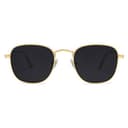
SOJOS SJ1143 Small Square

SOJOS SJ1143 Small Square

A genuinely small square frame — the listing sells it as small rather than as a standard size that happens to run narrow, which is the distinction that matters if every pair you try sits out past your temples. Polarized, gold metal, gray lens, and cheap enough to find out whether small frames suit you.

Best for smaller faces
$15.99 · View on Amazon

$17.9911% off

Price as of September 4, 2026. #ad How we’re funded

The picks in full

#1Best overall

SUNGAIT SGT458 Ultra Lightweight Rectangular

SUNGAIT's best-known frame and the one that explains the brand: a 62mm metal rectangle that is polarized, states UV400, and costs about sixteen dollars. The 62mm width is the detail buyers miss — this is a large frame, which makes it one of the few genuinely cheap options for a wide face.

Strengths

  • 62mm lens width — genuinely large, and almost nothing else this cheap is
  • Polarized with UV400 both stated on the listing
  • Very light metal frame that you stop noticing after an hour

Trade-offs

  • Thin metal temples bend if you sit on them — this is not an abuse-proof frame
  • 62mm is too wide for a narrow face; check your current frame's numbers first
Lens feature62mm polarized rectangle, UV400, ultra-light metal
PolarizedYes
Lens tintGray
Frame materialMetal
UV protectionUV400
Best forWide faces, Everyday, Driving, Budget

Spec note. The listing states an ultra-lightweight rectangular metal frame (SGT458) with polarized lenses and UV400 protection, in a 62mm size with a gunmetal frame and gray lens.

Specs read from the product listing, on August 11, 2026. “Not published” means the brand does not state that figure.

#2Best lens quality

Maui Jim Peahi

The wrapped, rubber-gripped Maui Jim — the one built for wind, water and movement rather than the school run. A rectangular medium fit with a matte rubber frame that holds when you sweat, wearing the same PolarizedPlus2 lens as the brand's dressier frames. This is Maui Jim's answer to Costa, minus the glass weight.

Strengths

  • PolarizedPlus2 lens with 100% UV in a wrapped, gripping frame
  • Matte rubber finish stays put in spray and sweat
  • Lighter on the face than a glass-lens fishing frame

Trade-offs

  • Premium price, and the wrap looks sporty with anything smart
  • Polycarbonate lens will not match glass for edge-to-edge clarity
Lens featurePolarizedPlus2 wrap, 100% UV, rubber grip
PolarizedYes
Lens tintBlue Hawaii (mirrored)
Frame materialNylon (matte rubber finish)
UV protection100% UV protection
Best forFishing, Boating, Beach, Hiking

Spec note. Amazon lists the Peahi as a polarized rectangle in a medium fit with a matte rubber frame; the Blue Hawaii lens is a mirrored PolarizedPlus2 tint.

Specs read from the product listing, on August 10, 2026. “Not published” means the brand does not state that figure.

#3Best classic squared frame

Oakley Holbrook OO9102

The frame that bridges sport and street. The squared-off Holbrook is built on Oakley's O Matter frame and Plutonite lens, which blocks 100% of UV on its own. This base SKU isn't polarized — Oakley sells Prizm and polarized versions if you want them.

Strengths

  • Plutonite lens blocks 100% of UV (UVA, UVB and UVC to 400nm)
  • Squared shape flatters round faces and stays out of your lashes
  • Huge range of Prizm and polarized lens upgrades

Trade-offs

  • This base SKU is a non-polarized warm-gray lens
  • Premium price before you add a Prizm or polarized lens
Lens feature100% UV Plutonite lens, squared O Matter frame
PolarizedNo
Lens tintWarm Gray
Frame materialO Matter (nylon)
UV protection100% UV (Plutonite, to 400nm)
Best forEveryday, Golf, Driving, Round & oval faces

Spec note. Oakley's Plutonite lens material filters 100% of UVA, UVB and UVC and harmful blue light up to 400nm regardless of tint.

Specs read from the product listing, on July 18, 2026. “Not published” means the brand does not state that figure.

#4Best for wide and long faces

NEVEN Doc Robbins (L/XL)

The most useful thing NEVEN does is stated in the model name: L/XL fit. This is a rectangular frame built from the outset for a wide face, carrying a polarized UV400 lens — a combination most brands only reach via an afterthought size variant. If standard frames leave marks on your temples, that is a genuinely different proposition from buying a big-brand frame and hoping.

Strengths

  • Sized L/XL from the outset rather than as an afterthought variant
  • Polarized and UV400 stated together on the listing
  • Rectangular shape adds horizontal width, which suits a longer face

Trade-offs

  • Priced above the budget tier without a published lens standard to justify it
  • No published frame weight, and a large frame is not a light one
Lens featurePolarized UV400, L/XL rectangular fit
PolarizedYes
Lens tintNot published
Frame materialNot published
UV protectionUV400
Best forWide faces, Long faces, Everyday, Driving

Spec note. The listing states a UV400 polarized lens in an L/XL fit. Neither the lens material nor the frame material is published for this SKU.

Specs read from the product listing, on August 19, 2026. “Not published” means the brand does not state that figure.

#5Best for smaller faces

SOJOS SJ1143 Small Square

A genuinely small square frame — the listing sells it as small rather than as a standard size that happens to run narrow, which is the distinction that matters if every pair you try sits out past your temples. Polarized, gold metal, gray lens, and cheap enough to find out whether small frames suit you.

Strengths

  • Sold and sized as a small frame rather than a standard one that runs narrow
  • Polarized at under twenty dollars
  • Thin metal front is visually light, which stops a small frame reading as fussy

Trade-offs

  • A small lens covers less of the skin around the eye — less sun protection by area
  • Thin metal temples bend more easily than acetate
Lens featureSmall-fit polarized square, thin metal front
PolarizedYes
Lens tintGray
Frame materialMetal
UV protectionNot published
Best forSmall faces, Everyday, Square & round faces

Spec note. The listing states a polarized small square frame (SJ1143) with a gold frame and gray lens. A UV rating is not published for this SKU.

Specs read from the product listing, on August 11, 2026. “Not published” means the brand does not state that figure.

How to choose a rectangular frame

1. Lens height decides everything, and nobody prints it

The three numbers inside a temple arm are lens width, bridge width and temple length. Height is absent, and height is what separates a rectangular frame that looks intentional from one that looks like a letterbox.

A shallow, wide rectangle is the failure mode. It reads as a horizontal band across your face, and on a long face it makes the proportion worse rather than better. A deeper rectangle — one that occupies a real share of the distance between brow and cheekbone — is the one that works.

Practical method: measure the lens height of a frame you already own and like, top to bottom at the deepest point in millimeters, and use that as your reference. Under about 40mm reads shallow on most faces; 45mm and up is doing real work. Our size guide covers measuring, and our long face guide covers why this matters most there.

2. This is where polarization is easiest to find

A structural advantage of the category rather than a coincidence. Rectangular frames are made in volume by brands whose customers are driving, fishing and working outdoors, and those buyers ask for polarization. Fashion-led shapes like the cat-eye are made for buyers who mostly do not.

So you can insist on it here without paying a premium. Polarization removes light reflected off flat horizontal surfaces, which the AAO describes as reducing glare from reflective surfaces — the single most useful lens feature for most people. Our polarization guide covers the mechanism, and the home test covers verifying a pair you own.

The exception worth naming: the classic Oakley squared frames are frequently not polarized, because Prizm and polarized are separate features on an Oakley. Our Prizm guide explains why, and it applies to one pick on this list.

3. The shape suits almost everyone, with two qualifications

Rectangular frames have even horizontal edges and no strong directional emphasis, which makes them the least fussy silhouette about face shape.

  • Round faces: the strongest case. Straight lines and corners supply the definition a softer face does not have. See our round face roundup.
  • Long and oblong faces: excellent, provided the lens is deep. Even widths across the face mean a squared frame fights nothing, and the height does the balancing. See our long face guide.
  • Oval faces: works, as most things do. Choose on size. See our oval face guide.
  • Square faces: the first qualification. Adding hard corners to an already angular face emphasizes the jaw rather than balancing it. Choose a softened version with rounded corners, or read our square face roundup first.
  • Diamond faces: the second. A wide rectangle sits directly across the widest part of your face. Go smaller than you think, or see our diamond face guide for better-suited shapes.

4. Flat frames give up coverage — know when that matters

Most rectangular frames are flat or lightly curved, which is what makes them look unfussy and also what limits their protection. A flat lens leaves gaps at the sides, so light — and the ultraviolet reflected off water, sand and snow — comes in around the edges.

The AAO recommends wraparound coverage where sun exposure is the main event. In practice that means a flat rectangular frame is right for town, the car and lunch outside, and the wrong tool for a beach or a boat. Our base curve and wrap guide explains the geometry, and our sport hub covers the wrapped alternatives.

The Oakley pick on this list is the exception — a squared frame with more curvature than the category norm, which is why it appears in both this roundup and our sport coverage.

5. Wide is a separate axis from deep

Worth separating, because people conflate them. Frame width should match the widest part of your face; frame depth should match the proportion you are trying to balance. A frame can be correctly wide and badly shallow, which is the commonest mismatch in this category.

If standard frames press on your temples, that is a width problem and one pick here is built for it — see our big heads roundup. If frames sit out past your temples, our small faces roundup is the right page, and the smallest pick on this list is there for that reason.

6. Material decides how it ages and whether it can be fixed

An acetate rectangular frame is heat-adjustable, so an optician can bend it to your head and re-bend it when it drifts. An injection-molded nylon or TR-90 frame cannot be adjusted but will not relax out of shape on a hot dashboard. A metal frame with nose pads gives you bridge adjustment that neither plastic option does.

Our frame materials guide covers the whole comparison, and our repair guide covers what happens when you scratch the lens — which no manufacturer warranty covers, whatever you paid.

Where to spend and where not to

Spend on lens material if you want the best optics available: a premium polarized glass lens is genuinely clearer and far more scratch-resistant than polycarbonate, and this category is where you can buy one without also buying a look. Our glass vs polycarbonate comparison covers the trade, and our Maui Jim review covers the brand behind that pick.

Do not spend on the shape. Rectangular is the one category where the $20 polarized UV400 option is genuinely competent, because the volume brands making it are optimizing for the same things you are. If you want the frame to be an object rather than a tool, that is a legitimate reason to spend — our answer on expensive sunglasses covers what the premium buys. The everyday hub has the rest of the shape roundups.
Frequently asked questions

What face shape do rectangular sunglasses suit?

More faces than any other shape, which is why we recommend them so often. Round faces are the strongest case, because straight lines and corners supply definition a softer face lacks. Long and oblong faces work well provided the lens is deep. Oval faces suit almost anything. The two to be careful with are square faces, where hard corners emphasize the jaw, and diamond faces, where a wide rectangle sits across the widest part of your face.

Why does lens height matter more than width?

Because width is the number everyone checks and height is the one that decides how the frame reads. A shallow, wide rectangle looks like a horizontal band across your face and makes a long face longer. A deeper rectangle occupies a real share of the distance between brow and cheekbone and balances the proportion. Height is not among the three numbers printed inside a temple arm, so measure a frame you already own and like as your reference.

Are rectangular sunglasses usually polarized?

More often than any other shape, and it is structural rather than coincidental. Rectangular frames are made in volume by brands whose customers drive, fish and work outdoors and therefore ask for polarization, whereas fashion-led shapes are made for buyers who mostly do not. The notable exception is Oakley's squared frames, which are frequently not polarized because Prizm and polarized are separate features.

Are flat rectangular frames bad for sun protection?

They give less coverage than a wrapped frame, which is a real limitation rather than a fatal one. A flat lens leaves gaps at the sides, so light and the ultraviolet reflected off water, sand and snow comes in around the edges. The AAO recommends wraparound coverage where sun exposure is the main event. In practice: a flat rectangular frame is right for town and the car, and the wrong tool for a beach or a boat.

How wide should a rectangular frame be?

Level with the widest part of your face, which is a separate question from how deep it should be — people conflate the two and end up with a frame that is correctly wide and badly shallow. If standard frames press on your temples you need a wider frame front, not a bigger lens. If they sit out past your temples, you need a narrower one. The lens-width number inside the temple arm is what to compare.

Is an expensive rectangular frame worth it?

Only for the lens material or the object itself. On the specification that protects your eyes, a $20 polarized UV400 rectangular frame and a premium one are equivalent, and the AAO is direct that price is not a proxy for protection. What a premium price genuinely buys here is optical glass — noticeably clearer and far more scratch-resistant than polycarbonate — plus finish, adjustability and serviceability.

Sources

Keep reading