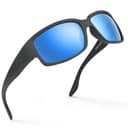
Shade & Temple

Best Sunglasses for Boating

Boating is the harshest light environment most people ever stand in — direct sun above, reflected sun below, and nowhere to look away. Five picks judged on polarization, coverage and whether they survive salt and a swim.

By Stephen V.Last updated How we pick

A boat is the worst light environment most people voluntarily spend a day in. You get the sun directly overhead, the same sun again reflected off a surface that behaves like a mirror, a horizon with no shade anywhere on it, and hours of exposure with no natural break. The CDC notes that reflective surfaces like water and sand meaningfully increase the ultraviolet you receive, which is why a day on the water burns you in places the sun should not reach.

The good news is that this is the single best case for polarization on the whole site. Glare off water is horizontally polarized almost by definition, so a polarizing filter removes it nearly completely. The difference is not subtle: the surface stops being a sheet of white light and becomes something you can look at for hours.

One important distinction before the picks. Boating is not the same brief as fishing. An angler needs to see through the surface to spot fish and structure, which drives a specific tint choice. A boater mostly needs to see the water, other craft and navigation marks comfortably for a long time, which means comfort, coverage and durability matter more than a specialist tint. Prices below are pulled live and dated.

How this is funded: we earn a commission if you buy through our links, at no extra cost to you. It never changes which product we recommend, and we’ll tell you when we’d skip one. Full disclosure.

Quick picks

Ranked on lens spec, UV protection, tint fit and buyer value. Select a row to jump to the full write-up. We have not field-tested these — here is exactly what we do instead.

#ProductBest forPrice
1

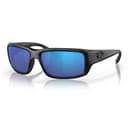
Costa Del Mar Fantail 580G

If you fish, this is the benchmark. Costa's 580G glass lens is polarized, scratch-resistant and cuts the yellow wavelength to sharpen contrast on the water — so you see structure and fish, not surface glare. Glass costs more and weighs more than polycarbonate, but the optical clarity is the reason anglers pay it.

Best overall
2
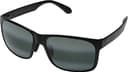
Maui Jim Red Sands Polarized

Maui Jim Red Sands Polarized

Maui Jim's calling card is color. Its PolarizedPlus2 lenses don't just cut glare — they lift color saturation and detail so the world looks crisper, not just dimmer. The Red Sands is a wearable everyday and driving frame that shows off that lens. The clarity is real; so is the price.

Best lens clarity
$259.00 · View on Amazon

Price as of September 4, 2026. #ad How we’re funded

3
KastKing Skidaway Polarized

KastKing Skidaway Polarized

The value angler's pick. KastKing is a fishing-tackle brand, and the Skidaway is built for the water: polarized, UV400, with a grippy sport frame — at roughly a tenth of a Costa's price. You give up glass clarity, but for a backup or a first fishing pair, the glare control is genuinely there.

Best budget pick
$23.99 · View on Amazon

$29.9920% off

Price as of September 4, 2026. #ad How we’re funded

4
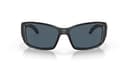
Costa Del Mar Blackfin 580P

Costa Del Mar Blackfin 580P

Costa's wraparound answer to bright, open water. The Blackfin's 62mm front curves further round the temple than the Fantail, which cuts the side light that sneaks in when the sun is low and you are looking across a flat surface. The 580P lens keeps it light enough to wear from launch to loading the boat.

Best lightweight polycarbonate
$212.00 · View on Amazon

Price as of September 4, 2026. #ad How we’re funded

5
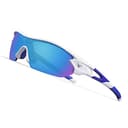
Torege Polarized Sports

Torege Polarized Sports

Another budget sport staple, often sold with interchangeable lenses. Polarized main lens, UV400, TR90 frame — the appeal is getting a low-light and a bright-light lens in one cheap kit. A sensible first sport pair for someone testing whether they'll use them.

Best spare pair for the boat
$23.99 · View on Amazon

Price as of September 4, 2026. #ad How we’re funded

The picks in full

#1Best overall

Costa Del Mar Fantail 580G

If you fish, this is the benchmark. Costa's 580G glass lens is polarized, scratch-resistant and cuts the yellow wavelength to sharpen contrast on the water — so you see structure and fish, not surface glare. Glass costs more and weighs more than polycarbonate, but the optical clarity is the reason anglers pay it.

Strengths

  • 580G glass lens is polarized and exceptionally scratch-resistant
  • Cuts glare and sharpens contrast on and under the water
  • Blocks 100% UV; encapsulated mirror survives salt and spray

Trade-offs

  • Glass lens is heavier than polycarbonate
  • Premium price — the most expensive way to see fish
Lens feature580G polarized glass, glare-cutting tint, 100% UV
PolarizedYes
Lens tintGray / copper (580G, varies)
Frame materialBio-based nylon
UV protection100% UV protection
Best forFishing, Boating, Bright water

Spec note. Costa's 580 lenses filter high-energy yellow light to boost contrast; the 580G variant is glass (vs. 580P polycarbonate) for maximum scratch resistance and clarity.

Specs read from the product listing, on July 18, 2026. “Not published” means the brand does not state that figure.

#2Best lens clarity

Maui Jim Red Sands Polarized

Maui Jim's calling card is color. Its PolarizedPlus2 lenses don't just cut glare — they lift color saturation and detail so the world looks crisper, not just dimmer. The Red Sands is a wearable everyday and driving frame that shows off that lens. The clarity is real; so is the price.

Strengths

  • PolarizedPlus2 lens boosts color and contrast, not just darkness
  • Blocks 100% UV; treated to resist glare from every angle
  • Wearable everyday frame, not a sport-only wrap

Trade-offs

  • Premium price
  • Warm, high-contrast tint isn't for people who want neutral color
Lens featurePolarizedPlus2, color-boosting tint, 100% UV
PolarizedYes
Lens tintHCL Bronze (varies)
Frame materialNylon
UV protection100% UV protection
Best forDriving, Everyday, Beach

Spec note. Maui Jim's PolarizedPlus2 combines polarization with tint layers the brand says enhance color and block UV and some high-energy blue light.

Specs read from the product listing, on July 18, 2026. “Not published” means the brand does not state that figure.

#3Best budget pick

KastKing Skidaway Polarized

The value angler's pick. KastKing is a fishing-tackle brand, and the Skidaway is built for the water: polarized, UV400, with a grippy sport frame — at roughly a tenth of a Costa's price. You give up glass clarity, but for a backup or a first fishing pair, the glare control is genuinely there.

Strengths

  • Polarized and UV400 built by a fishing brand, for around $25
  • Grippy sport frame that stays on in a boat
  • A no-tears backup you won't cry over if it goes overboard

Trade-offs

  • Polycarbonate lens won't match glass for edge clarity
  • Budget coatings scratch more easily than premium lenses
Lens featurePolarized, UV400, fishing frame
PolarizedYes
Lens tintNot published
Frame materialTR90
UV protectionUV400
Best forFishing, Boating, Budget

Spec note. KastKing lists the Skidaway as polarized with UV400 protection and a grip-friendly sport frame.

Specs read from the product listing, on July 18, 2026. “Not published” means the brand does not state that figure.

#4Best lightweight polycarbonate

Costa Del Mar Blackfin 580P

Costa's wraparound answer to bright, open water. The Blackfin's 62mm front curves further round the temple than the Fantail, which cuts the side light that sneaks in when the sun is low and you are looking across a flat surface. The 580P lens keeps it light enough to wear from launch to loading the boat.

Strengths

  • Wrapped 62mm front blocks low-angle light from the side
  • 580P polarized polycarbonate — light and impact-resistant
  • Blocks 100% UV; integral hinges built for salt exposure

Trade-offs

  • The wrap looks unmistakably like fishing eyewear off the water
  • 580P is softer than glass and picks up scratches faster
Lens feature580P polarized wrap, 62mm coverage, 100% UV
PolarizedYes
Lens tintNot published
Frame materialBio-based nylon
UV protection100% UV protection
Best forFishing, Boating, Beach, Wide faces

Spec note. Amazon lists this Blackfin as a 62mm polarized 580P frame; 580P is Costa's polycarbonate lens, lighter and more impact-resistant than the 580G glass version of the same contrast tint.

Specs read from the product listing, on August 10, 2026. “Not published” means the brand does not state that figure.

#5Best spare pair for the boat

Torege Polarized Sports

Another budget sport staple, often sold with interchangeable lenses. Polarized main lens, UV400, TR90 frame — the appeal is getting a low-light and a bright-light lens in one cheap kit. A sensible first sport pair for someone testing whether they'll use them.

Strengths

  • Polarized main lens plus interchangeable options in many kits
  • UV400 on a light TR90 frame
  • Very inexpensive entry into sport eyewear

Trade-offs

  • Interchangeable low-light lenses are often non-polarized
  • Budget build and clarity
Lens featurePolarized, UV400, interchangeable lenses
PolarizedYes
Lens tintNot published
Frame materialTR90
UV protectionUV400
Best forRunning, Cycling, Budget

Spec note. Torege lists a polarized main lens with UV400; check which lenses in a swap kit are polarized, as the clear/low-light lenses usually are not.

Specs read from the product listing, on July 18, 2026. “Not published” means the brand does not state that figure.

How to choose sunglasses for boating

1. Polarized, without qualification

Light reflecting off a flat water surface comes back predominantly polarized in one plane. A polarizing filter is oriented to block exactly that plane, which is why the effect on water is dramatic in a way it never quite is on land. The American Academy of Ophthalmology describes polarized lenses as reducing glare from reflective surfaces such as water — on a boat, that is most of your field of view.

The one thing to know is that polarization does nothing for ultraviolet. They are separate features and a lens can have either, both or neither. Check both specs separately on any listing; our answer on whether polarized lenses block UV covers exactly why the two get confused.

2. Glass or polycarbonate — a real decision here

On the water this choice has consequences rather than being a preference.

  • Glass gives the best optical clarity available and is far more scratch-resistant, which matters when salt spray dries on a lens and you wipe it with whatever is to hand. It is heavier, and if it goes over the side it sinks.
  • Polycarbonate is lighter, more impact-resistant, and comfortable for a twelve-hour day. It scratches more easily, which on a boat is the failure mode you will actually meet.

Our glass vs polycarbonate comparison covers the trade in full. The short version for boating: glass if you are careful and wear a retainer, polycarbonate if you are not.

3. Coverage matters as much as the lens

This is the part boaters underestimate. On land, ultraviolet arrives from above and a flat lens intercepts most of it. On the water it also arrives from below, bouncing off the surface into the gap between your cheekbone and the bottom of the lens. The AAO recommends wraparound styles precisely because they close that gap.

A frame with some wrap and a lens that follows your cheekbone will do more for your comfort over a long day than a marginally better tint will. Our base curve and wrap guide explains the geometry and the peripheral-clarity cost of overdoing it.

4. Tint: gray for long days, copper if you are also watching the water

Gray is the default and the right answer for most boaters. It dims without shifting color, so navigation marks, flags and other boats stay the color they are, and it is the least tiring tint over a long day.

Copper, amber and rose tints lift contrast by suppressing blue. That helps if you are reading the surface for depth changes, shallows or weed, and it is why they dominate fishing lenses. The cost is color shift, which matters if you are relying on colored navigation marks. If you do both, copper is the better compromise. The lens colors guide goes tint by tint.

On darkness: a category 3 lens is right for open water. Category 4 is too dark for operating a vessel safely in anything but extreme glare, and is not legal for driving on the road afterwards. Our lens categories guide explains the scale.

5. Assume they are going in the water

Not a joke — it is the commonest way boating sunglasses end. Two mitigations, both cheap. A floating retainer costs a few dollars and turns a lost pair into a wet pair. And keeping a second, inexpensive polarized pair in the cabin means a lost pair does not end your day squinting, which is the outcome that actually damages your eyes.

That is the reasoning behind the budget picks on this list. They are not here as compromises — they are here because two polarized pairs on a boat is a better system than one expensive pair.

6. Salt is corrosive, and hinges are where it shows

Dried salt is abrasive as well as corrosive. Wiping a salt-crusted lens with a dry cloth is grinding crystals across a coating, and it is the fastest way to ruin a lens. Rinse in fresh water first, every time, then dry with a clean microfiber. Our cleaning guide covers the method, and it matters more here than anywhere else on this site.

Metal frames and metal hinge screws corrode in a marine environment. Nylon and TR-90 frames do not, which is a quiet argument for a plastic frame on a boat regardless of what you would choose on land. Our frame materials guide covers how each ages.

What about mirrored lenses?

Genuinely useful here. A mirror coating reflects a portion of the light before it reaches the lens at all, which lowers the total transmitted light without needing a darker base tint. On open water in the middle of the day that is a real comfort gain. Our mirrored sunglasses guide explains what a mirror coating does and does not do — notably that it adds nothing to UV protection.

Where to spend and where not to

Spend on polarization and coverage. Those two things change your day. Spend on glass only if you are the kind of person who rinses and cases their sunglasses, because on anyone else a glass lens is an expensive scratched lens.

Do not spend on a specialist water-sighting tint unless you are also fishing — our fishing roundup is the page for that. And do not buy one very expensive pair for a boat without also buying a retainer and a cheap spare, which is the highest-value twenty dollars in this whole category. For beach days rather than boat days, our beach roundup covers the sand-and-shoreline version of the same problem.
Frequently asked questions

Do boating sunglasses need to be polarized?

Yes — this is the strongest case for polarization there is. Light reflecting off a flat water surface is predominantly polarized in one plane, and a polarizing filter is built to block that plane, so it removes glare off water almost completely rather than just dimming it. The AAO describes polarized lenses as reducing glare from reflective surfaces such as water. Just remember polarization is a separate specification from UV filtering, and you need both.

What lens color is best for boating?

Gray for most boaters. It dims without shifting color, so navigation marks, flags and other vessels stay the color they actually are, and it is the least fatiguing tint over a long day. Copper or amber lifts contrast by suppressing blue, which helps if you are reading the surface for shallows or weed, at the cost of some color accuracy. If you boat and fish from the same craft, copper is the sensible compromise.

Should I buy glass or polycarbonate lenses for a boat?

Glass gives the best optical clarity and is far more scratch-resistant, which matters when salt spray dries on a lens. Polycarbonate is lighter, more impact-resistant and more comfortable across a long day, but scratches more easily. The honest test is behavioral: if you rinse and case your sunglasses, glass rewards you. If they live on the dashboard, polycarbonate will look better in a year. And glass sinks — wear a floating retainer either way.

Why do I still get sore eyes on the water wearing sunglasses?

Almost always coverage rather than the lens. On land ultraviolet arrives from above and a flat lens intercepts it. On water it also arrives from below, reflected off the surface into the gap between your cheekbone and the bottom of the lens. The AAO recommends wraparound styles for exactly this reason. A frame that follows your cheekbone will do more for a long day's comfort than upgrading the tint will.

How do I stop salt ruining my sunglasses?

Rinse with fresh water before you wipe, every time. Dried salt is abrasive as well as corrosive, so dragging a dry cloth across a salt-crusted lens grinds crystals through the coating — it is the fastest way to ruin a good lens. Rinse, then dry with a clean microfiber. Metal frames and metal hinge screws also corrode in a marine environment, which is a quiet argument for a nylon or TR-90 frame on a boat.

Is a category 4 lens a good idea on the water?

No. Category 4 lenses transmit under 8% of visible light and are designed for glaciers and high altitude, not for operating a vessel. They are too dark for safely reading instruments, other craft or navigation marks, and they are not legal for driving on the road on the way home. Category 3 is the right band for open water, and a mirror coating is the better way to cut a bit more light without going darker.

Sources

Keep reading