Shade & Temple

Best Sunglasses for Bright Sunlight

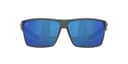
Four specs decide how a lens copes with punishing light, and the one everybody shops on — how dark it looks — is the least important of them. Ranked in the order that actually helps, which is why the top pick is not the darkest.

By Stephen V.Last updated How we pick

For most people in most punishing light, the answer is the Maui Jim Red Sands. Not because it is the darkest lens here — it is not — but because it does all four of the things that make bright light bearable at once. Maui Jim states that every pair in its range is polarized and carries 100% UV protection, and that its PolarizedPlus2 lenses bundle glare elimination, UV and blue-light protection, colour enhancement and an anti-reflective treatment. It is also the most expensive pair on this page, so the cheaper picks matter.

Here is the thing the category gets backwards. Shoppers reach for the darkest lens on the rack, and darkness is the least important of the four specs that matter. The FDA’s own sun-safety guidance says it directly: choose lenses marked UV400 or 100% UV, and darkness does not equal protection. The AAO says the same — a darker lens is not a more protective one. A very dark lens with a weak UV filter is actively worse than a pale one that filters properly, because the darkness opens your pupil and the missing filter then lets ultraviolet through the wider aperture.

So the order that actually helps is: a stated UV rating first, polarization second if there is water, snow or tarmac involved, coverage third, and darkness last. We have ranked on that, which is why pick five is a fit-over and pick three — the only genuine filter category 4 lens here — comes with a warning rather than a crown. Our lens category guidecovers the 0–4 scale and what VLT measures. Every spec below is read from the product’s own listing or brand page on the dated visit shown on its card, prices are pulled live, and we have not field-tested any of these.

How this is funded: we earn a commission if you buy through our links, at no extra cost to you. It never changes which product we recommend, and we’ll tell you when we’d skip one. Full disclosure.

Quick picks

Ranked on lens spec, UV protection, tint fit and buyer value. Select a row to jump to the full write-up. We have not field-tested these — here is exactly what we do instead.

#ProductBest forPrice
1
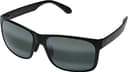
Maui Jim Red Sands Polarized

Maui Jim Red Sands Polarized

Maui Jim's calling card is color. Its PolarizedPlus2 lenses don't just cut glare — they lift color saturation and detail so the world looks crisper, not just dimmer. The Red Sands is a wearable everyday and driving frame that shows off that lens. The clarity is real; so is the price.

Best overall
$259.00 · View on Amazon

Price as of October 20, 2026. #ad How we’re funded

2
Costa Del Mar Rincon 580P

Costa Del Mar Rincon 580P

The Costa to buy when the Fantail's glass feels like too much lens to carry. The Rincon runs a big 63mm rectangular front with a 580P polycarbonate lens — the same contrast-boosting Costa tint, roughly half the weight of 580G, and noticeably more impact-resistant. Better for long days and for anyone who has snapped a pair before.

Best mirrored lens
$233.00 · View on Amazon

Price as of October 20, 2026. #ad How we’re funded

3
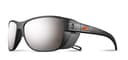
Julbo Camino (Spectron 4)

Julbo Camino (Spectron 4)

The affordable route into a genuine category 4 mountain lens. Spectron 4 is a fixed, very dark tint with a silver mirror — no photochromic cleverness, no polarization, just the light transmission you actually need above the treeline on snow. At roughly a quarter of the Shield's price it is the sensible choice if you go to altitude a few times a year rather than every weekend.

Best when category 3 is genuinely not enough
$69.95 · View on Amazon

Price as of October 20, 2026. #ad How we’re funded

4
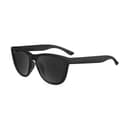
Knockaround Premiums (Polarized)

Knockaround Premiums (Polarized)

The customizable cheap classic. Knockaround's Premiums come polarized with UV400 protection in a squared shape, and you can mix frame and lens colors endlessly. Genuinely inexpensive, genuinely UV-protective — the pair to buy when you want something specific-looking without spending real money.

Best budget pick
$37.99 · View on Amazon

Price as of October 20, 2026. #ad How we’re funded

5
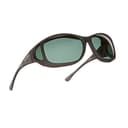
Cocoons Style Line MX (by Live Eyewear)

Cocoons Style Line MX (by Live Eyewear)

The fit-over that's actually engineered rather than an afterthought. Cocoons are purpose-built OTG frames with polarized lenses, proper side and top coverage, and a range of sizes so they fit your specific glasses — which is the whole game with fit-overs. You pay more, and it shows in the fit.

Best over prescription glasses
$74.95 · View on Amazon

Price as of October 20, 2026. #ad How we’re funded

The picks in full

#1Best overall

Maui Jim Red Sands Polarized

Maui Jim's calling card is color. Its PolarizedPlus2 lenses don't just cut glare — they lift color saturation and detail so the world looks crisper, not just dimmer. The Red Sands is a wearable everyday and driving frame that shows off that lens. The clarity is real; so is the price.

Strengths

  • PolarizedPlus2 lens boosts color and contrast, not just darkness
  • Blocks 100% UV; treated to resist glare from every angle
  • Wearable everyday frame, not a sport-only wrap

Trade-offs

  • Premium price
  • Warm, high-contrast tint isn't for people who want neutral color
Lens featurePolarizedPlus2, color-boosting tint, 100% UV
PolarizedYes
Lens tintHCL Bronze (varies)
Frame materialNylon
UV protection100% UV protection
Best forDriving, Everyday, Beach

Spec note. Maui Jim's PolarizedPlus2 combines polarization with tint layers the brand says enhance color and block UV and some high-energy blue light.

Specs read from the product listing, on July 18, 2026. “Not published” means the brand does not state that figure.

#2Best mirrored lens

Costa Del Mar Rincon 580P

The Costa to buy when the Fantail's glass feels like too much lens to carry. The Rincon runs a big 63mm rectangular front with a 580P polycarbonate lens — the same contrast-boosting Costa tint, roughly half the weight of 580G, and noticeably more impact-resistant. Better for long days and for anyone who has snapped a pair before.

Strengths

  • 580P polarized polycarbonate — the Costa tint at a lighter weight
  • Large 63mm rectangular lens covers a wide face well
  • Blocks 100% UV; far more impact-resistant than glass

Trade-offs

  • 580P scratches more easily than Costa's 580G glass
  • Still a premium price for a polycarbonate lens
Lens feature580P polarized polycarbonate, 63mm wrap, 100% UV
PolarizedYes
Lens tintGray-blue mirror (580P)
Frame materialBio-based nylon
UV protection100% UV protection
Best forFishing, Boating, Wide faces, Everyday outdoors

Spec note. Costa's 580 lenses filter high-energy yellow light to boost contrast; 580P is the lighter, more impact-resistant polycarbonate version of the same tint (580G is glass).

Specs read from the product listing, on August 10, 2026. “Not published” means the brand does not state that figure.

#3Best when category 3 is genuinely not enough

Julbo Camino (Spectron 4)

The affordable route into a genuine category 4 mountain lens. Spectron 4 is a fixed, very dark tint with a silver mirror — no photochromic cleverness, no polarization, just the light transmission you actually need above the treeline on snow. At roughly a quarter of the Shield's price it is the sensible choice if you go to altitude a few times a year rather than every weekend.

Strengths

  • A true category 4 mountain tint at a mid-range price
  • Silver mirror coating reflects more light before it reaches the lens
  • Wrapped frame shape blocks light arriving from the side and below

Trade-offs

  • Category 4 is too dark for driving and is not legal for it in many places
  • Fixed tint — no photochromic range, so it is uncomfortably dark in the trees
Lens featureSpectron 4 category 4 mountain tint, mirrored
PolarizedNot published
Lens tintBrown with silver mirror (Spectron 4)
Frame materialNot published
UV protectionNot published
Best forSkiing, Hiking at altitude, Snow, Glacier travel

Spec note. The listing states a Spectron 4 lens — Julbo's category 4 mountain tint — in brown with a silver mirror. Polarization is not stated for this trim.

Specs read from the product listing, on August 11, 2026. “Not published” means the brand does not state that figure.

#4Best budget pick

Knockaround Premiums (Polarized)

The customizable cheap classic. Knockaround's Premiums come polarized with UV400 protection in a squared shape, and you can mix frame and lens colors endlessly. Genuinely inexpensive, genuinely UV-protective — the pair to buy when you want something specific-looking without spending real money.

Strengths

  • Polarized and UV400 at a low price
  • Endless frame/lens color combinations
  • Squared shape works for round faces and everyday wear

Trade-offs

  • Base plastic build is exactly what you'd expect for the money
  • One size fits most, not all
Lens featurePolarized, UV400, customizable
PolarizedYes
Lens tintVaries by colorway
Frame materialPolycarbonate (plastic)
UV protectionUV400
Best forEveryday, Round faces, Budget

Spec note. Knockaround lists the polarized Premiums with UV400 protection; non-polarized trims of the same frame also exist, so check the SKU.

Specs read from the product listing, on July 18, 2026. “Not published” means the brand does not state that figure.

#5Best over prescription glasses

Cocoons Style Line MX (by Live Eyewear)

The fit-over that's actually engineered rather than an afterthought. Cocoons are purpose-built OTG frames with polarized lenses, proper side and top coverage, and a range of sizes so they fit your specific glasses — which is the whole game with fit-overs. You pay more, and it shows in the fit.

Strengths

  • Purpose-built OTG design with genuine size options for a proper fit
  • Polarized lenses with real top and side coverage
  • Better hinges and build than the sub-$25 fit-overs

Trade-offs

  • Several times the price of a generic fit-over
  • Still a fit-over look — bulkier than a standalone sunglass
Lens featurePurpose-built OTG, polarized, sized to fit
PolarizedYes
Lens tintGray (varies by colorway)
Frame materialPolycarbonate (plastic)
UV protection100% UV protection
Best forOver prescription glasses, Driving, Outdoors, Wide faces

Spec note. Cocoons are sold in multiple sizes keyed to your eyeglass dimensions — this listing is the MX (medium-extra-large) fit — with polarized lenses and full-coverage side and top shields.

Specs read from the product listing, on August 10, 2026. “Not published” means the brand does not state that figure.

The four specs, in the order that matters

1. A stated UV rating — which is not the darkness

These are two different measurements, tested separately. The FDA’s sunglasses device page points at the ANSI Z80.3 and ISO 8980-3 standards for ultraviolet and for light transmittance as distinct specifications, which is the technical version of what its consumer page says plainly: pick 100% UV, and do not treat dark as protective. Prevent Blindness puts the shopping rule at its simplest — buy only sunglasses that carry a clear statement of UV blocking, and look for 99–100% of UVA and UVB. The CDC uses the same numbers.

Practically: if the listing does not say, assume it does not. Four of the five picks below state a rating. The one that does not is the Julbo Camino, whose listing states a filter category and a lens family but no UV figure for that SKU, and its card says “Not published” rather than quietly implying a number. Our guide to UV testing covers what to do about a pair you already own, and the short version is that an optical shop with a UV meter is the only reliable answer.

2. Polarization, if the light is bouncing off something

Brightness and glare are different complaints and need different fixes. A polarizing filter removes the horizontally-reflected light coming off water, wet roads, car bonnets and snow — the AAO describes polarization as the feature that addresses reflected daytime glare, and Maui Jim claims its own film eliminates 99.9% of it. Darkening a lens reduces everything equally, including the light you need.

If your “too bright” is a white road surface at midday or sun on water, polarization will do more for you than two filter categories of darkness. If it is open sky with nothing reflective in front of you, it does less. The two places to skip it are a cockpit instrument panel and, mildly, phone screens — polarized lenses and screens covers that trade, and polarized vs non-polarized covers the whole decision.

3. Coverage: light that arrives around the lens

A lens only filters the light that goes through it. The AAO’s advice on frame choice is to pick wraparound or oversized frames so that light cannot arrive from the sides or above, and the FDA repeats the wraparound point. In genuinely intense light this is the upgrade people notice most and buy least — squinting is usually a coverage problem, not a tint problem.

Three routes to it: a wrapped sport frame, a physically large frame, or a fit-over with side lenses. All three are on this site — wraparound, oversized and fit-over— and a brimmed hat is the fourth, costs nothing extra and is more effective than another category of tint.

4. Darkness, and the mirror coating

Now the one you came for. Filter category describes how much visible light reaches your eye: category 0 passes 80–100%, category 3 passes 8–18%, and category 4 passes under 8%. Category 3 is the right answer for nearly everyone in nearly all ordinary bright conditions, including the brightest summer day in an open landscape.

A mirror coating sits on top of the tint and reflects a further share of light away before it enters the lens, so a mirrored category 3 is a genuinely useful half-step without taking you somewhere you cannot drive. That is the argument for pick two, whose listing states a gray-blue mirror. Our mirrored sunglasses explainer covers what the coating does and does not do.

Category 4 is a different proposition and deserves its warning. It is sold for snow and altitude, it is commonly marked as unsuitable for driving, and it will leave you under-sighted walking into a shaded car park. If you genuinely need it — glacier travel, sustained time on snow — buy it from our glacier glasses page, where the whole page is built around that case, and carry an ordinary second pair.

If it is bright enough to hurt, read this first

There is a line between “bright” and a symptom. The AAO’s page on photophobia lists a light-coloured iris, reduced body pigmentation, ocular albinism and poor pupil contraction among the causes of raised light sensitivity, and notes that affected people can often be helped with tinted lenses or gradient tints that are darker at the top of the lens than the bottom. That is a prescription-counter conversation, not a shopping decision.

If light has recently become painful, if one eye is worse than the other, or if it comes with headaches or blurring, see an eye doctor rather than buying a darker lens — a darker lens is the one purchase that can mask a change worth investigating. We have two pages for the in-between cases: sunglasses for light sensitivity and why sunglasses give you a headache, which is more often a fit problem than a lens one.

What we checked and did not feature

Very dark fashion lenses with no stated category or UV figure. The largest group in this corner of the market and the easiest to reject. A lens sold on looking almost black, with no filter category and no UV rating, is the exact combination every authority on this page warns about. There is no version of this page where that product is a pick.

A second category 4 frame.Our registry carries a budget category 4 with side shields, and it is a sensible buy — for snow. On a page about ordinary bright daylight, a second frame you cannot legally drive in would be padding, so it stays on the glacier page with the rest of that family.

Clip-ons, for the glasses-wearing version of this problem. A polarized clip-on over your own prescription frames is the cheapest route to a dark lens if you already wear glasses, and it beats a fit-over on bulk. It loses on coverage, which is criterion three on this page, so the fit-over took the slot — our clip-on roundup ranks them properly.

The opposite condition is less obvious and more often skipped: do you need sunglasses on cloudy days explains why cloud cuts brightness far more than it cuts ultraviolet.
Frequently asked questions

Are darker sunglasses better in bright sunlight?

Only for comfort, and not for protection. The FDA's sun-safety guidance says to choose lenses marked UV400 or 100% UV and that darkness does not equal protection; the AAO states that a darker lens is not a more protective one. A very dark lens with a weak UV filter is worse than a pale one that filters properly, because the darkness widens your pupil and the missing filter then lets ultraviolet through the larger opening.

What filter category should I buy for very bright sun?

Category 3 for nearly everyone, including the brightest summer day in open country. It passes roughly 8–18% of visible light. Category 4 passes under 8% and is sold for snow and high altitude; it is commonly marked as unsuitable for driving and will leave you under-sighted the moment you step into shade. If you genuinely need category 4 you also need an ordinary second pair.

What lens colour is best for bright sunlight?

A neutral grey if you want colours to stay true, or a brown/copper if you want a little extra contrast — both work at the same filter category. Colour changes what the light looks like; category changes how much of it arrives. Buy the category for the conditions and the colour for the preference, and ignore any claim that a particular tint is more protective, because UV filtering is unrelated to visible colour.

Do mirrored sunglasses help in bright light?

Yes, a little, and for a real reason: the coating reflects some light away before it enters the lens, so a mirrored lens transmits less than the same tint without one. That makes a mirrored category 3 a useful half-step towards category 4 without taking you to a lens you cannot drive in. It is a surface coating, so it can be scratched, and it does nothing for UV on its own.

Why do I still squint in good sunglasses?

Usually because light is arriving around the lens rather than through it. The AAO recommends wraparound or oversized frames so light cannot reach your eyes from the side or above, and the FDA makes the same point about wraparound coverage. Going darker does not fix a geometry problem. A larger or wrapped frame, or a brimmed hat, is the upgrade that actually stops the squinting.

Is bright light that hurts my eyes a medical problem?

It can be. The AAO's photophobia page lists causes including a light-coloured iris, reduced pigmentation, ocular albinism and poor pupil contraction, and notes that tinted or gradient lenses often help. If light has recently become painful, if one eye is affected more than the other, or if it comes with headache or blurred vision, see an eye doctor rather than buying a darker lens — a darker lens can mask a change worth investigating.

Will polarized lenses help more than dark ones?

If your light is bouncing off something, yes. Polarization removes horizontally-reflected glare from water, wet tarmac, snow and car bodywork, which is the component of brightness that darkening handles worst; the AAO describes it as the feature for reflected daytime glare. If you are looking at open sky with nothing reflective in front of you, it does less, and darkness and coverage matter more.

Sources

Keep reading