What the tall lens is actually for
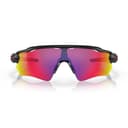
The Radar EV’s defining feature is lens height. It raised the lens over the original Radar specifically to add coverage at the top, and that matters for one posture: head down, eyes up. On a bike in the drops, or in the last miles of a long run when your head drops, a normally proportioned lens puts its own top edge — or the frame above it — right where you are trying to look. The Radar EV does not.
The second half of the design is the open bottom edge. There is no rim under the lens, so there is nothing in your lower field and nothing to trap heat against your cheekbones. That open edge is also why this frame does better in heat and on climbs than a sealed wrap: air moves across the back of the lens. Our anti-fog roundup makes the general case — fog is condensation, so airflow beats coatings — and an open-edge shield is the shape that argument favors.
What you give up is looks. This is a frame with one giant lens across your face, and it does not read as anything but sport. If you want the coverage in something you can wear to lunch, you want a different shape; our wraparound roundup covers the frames that compromise in that direction and the shield roundup covers the ones that commit even harder than this.
The three lenses, and why this is the whole review
Prizm Road: a contrast tint, not a glare filter
Prizm is Oakley’s range of contrast-tuned lens dyes, each formulated to exaggerate the differences between the colors that matter in a specific environment. Prizm Road is tuned for pavement: it is built to make a change in road surface, a patch of gravel or an unlit pothole stand out from the asphalt around it. It is a real engineering difference, not a marketing color, and no value brand has a genuine equivalent. We explain what it is and is not in our Prizm explainer.
It is also not polarized, and that is the single most common misunderstanding about this frame. Prizm and polarization are unrelated: one is a tint that changes how colors separate, the other is a filter that removes light reflected off flat surfaces. The standard Prizm Road trim has the first and not the second. Oakley does not hide this, but the listing title does not say it either, so the only way to know is to know. We wrote Prizm vs polarized because this exact confusion comes up more than any other question about the brand.
Plain gray: the cheapest trim, and sometimes the right one
The same OO9208 Path frame is sold with a plain gray lens and no Prizm, and on the date we checked it was the least expensive of the three trims in stock. A neutral gray lens dims everything evenly and keeps color accurate, which is what you want if your priority is comfort in bright light rather than reading a road surface. If you are buying the Radar EV for the frame — the coverage, the fit, the weight — and you do not need a tuned tint, this is the honest trim to buy and the money you save is real.
Prizm Black Polarized: both, at the top of the range
The trim that is both a Prizm tint and a polarized lens exists, it was in stock when we looked, and it is the most expensive of the three. If your riding or running involves wet roads, long stretches beside water, or a lot of low sun coming off car hoods, this is the one that actually solves that, and the upcharge over the standard trim is the price of the filter.
One caveat, and it is the reason most cyclists do not buy it: a polarizing filter can dim or blotch an LCD screen depending on how the screen is oriented, which includes a bike computer or a phone on a stem mount. That is not a defect, it is physics, and we walk through exactly why it happens in polarized lenses and screens. If you ride to numbers on a head unit, think twice before you polarize.
Path, Pitch, Advancer: what we can and cannot tell you
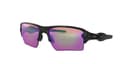
Autocomplete suggests people are searching for the Radar EV Path, the Radar EV Pitch and the Radar EV Advancer as if they were trims of one product. They are not: the listings we read carry different Oakley model numbers — the Path is OO9208 and the Advancer is OO9442 — which makes them different frames in the same family rather than colorways of one.
Beyond the model numbers we are not going to tell you how they differ, because we could not read a source that says. Oakley’s own pages returned 403 Forbidden on the date of this review, the Amazon listing titles for the Advancer we found were replacement lenses rather than frames, and we do not publish a difference we have not read. If you are choosing between them, the frame measurement on the listing and a shop that will let you try both are worth more than any article, including this one.
Replacement lenses: the part of the value case nobody mentions
Oakley sells replacement lenses for this frame as their own products, including Prizm Road lenses for the Path. That is a genuine advantage over almost every cheaper sport frame: one frame can be a contrast lens in winter and a dark lens in summer, and a scratched lens is a repairable fault rather than a dead pair. The frame is also covered by Oakley’s warranty, which is worth reading before you assume what it covers.
Be clear-eyed about the cost, though. A single official replacement lens is not a cheap part; it is a meaningful fraction of the price of a complete frame from a value brand. The lens-swap case is real if you were going to own two pairs anyway. It is not a saving if you were going to own one.
There is a thriving market in third-party lenses for this frame, which we will not recommend specifically: an aftermarket lens that states no UV figure is exactly the failure the American Academy of Ophthalmology warns about, since a dark lens with no ultraviolet filtering opens your pupil while letting UV through. If you buy aftermarket, buy one that publishes a UV figure, and read how to test sunglasses for UV protection on what you can and cannot check at home.
Is it worth the money, honestly?
For the protection, no. Every frame in the comparison table above states full ultraviolet protection, including the cheapest, and the AAO is explicit that price is not a proxy for UV protection. If what you want is a sport frame that protects your eyes, stays on, and does not fog, the value tier has been solving that for years — see Tifosi vs Oakley for the version of this argument with the specs laid side by side.
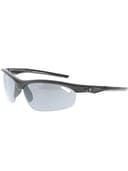
For the tint and the platform, there is a real case. A Prizm lens engineered for a specific surface is something no value brand genuinely matches, the lens height is a measurable advantage in one riding position, and replaceable lenses mean the frame can outlive several lenses. If you ride or run most days and you would notice a road surface change half a second earlier, that is worth paying for. If you are buying sunglasses twice a decade, the Tifosi in the table does the honest 85% for a fraction of it, with three lenses in the box instead of one.
Finally: buy from somewhere you trust. US Customs and Border Protection publishes guidance on counterfeit goods for a reason, and sport Oakleys are among the most counterfeited eyewear on the market. Our guide to spotting fake sunglasses covers the tells, and the broader Oakley brand review covers how the rest of the range compares.