Shade & Temple

Ray-Ban Aviator Review

One model number, two lens sizes and a hundred-dollar spread across live trims. The RB3025 is a genuinely good frame that is bought in the wrong size more often than any other - and the size is printed in the listing title, if you know to look.

By Stephen V.Last updated How we pick

The Ray-Ban Aviator is the most recognizable pair of sunglasses ever made, and it is also one of the easiest to buy wrong. Not because it is a bad frame — it is a very good one, and it is a pick on more pages of this site than any other metal frame. Because “Ray-Ban Aviator” is not a product. It is a model number, RB3025, sold in two lens sizes and a long list of lens trims, at prices that spanned about a hundred dollars across the live listings we checked on the day we wrote this.

The decision almost nobody explains is the size. The RB3025 is sold at 55 mm and at 58 mm, and the 58 is the one the brand is famous for. On a lot of faces — narrower ones especially — 58 mm is simply too much lens, and the frame that looked iconic in photographs looks borrowed in the mirror. The number is printed in the listing title. It is the first thing to read and the last thing most buyers notice.

The second decision is the lens, and it is smaller than the marketing implies: the standard G-15 lens is not polarized, the polarized version is a separate and more expensive listing, and a gradient lens is lighter at the bottom than a solid one. Below we pick the trim we would actually buy, the size for a smaller face, the polarized upgrade and the honest cheap alternative. One disclosure first, because it shapes everything that follows: ray-ban.com returned HTTP 403 Forbidden on the date we wrote this, so every specification on this page comes from an Amazon listing title, and we say so each time it matters.

How this is funded: we earn a commission if you buy through our links, at no extra cost to you. It never changes which product we recommend, and we’ll tell you when we’d skip one. Full disclosure.

The case for

  • Sold in two lens sizes under one model number, so the frame genuinely can fit a narrower face
  • Double bridge and adjustable nose pads - real fit adjustment, which most metal frames do not offer
  • Several live listings state "100% UV Protection" in their own titles
  • Thin metal frame and a wide teardrop lens give an unusually open field of view for driving
  • A frame that has been in continuous production long enough that replacement parts and lenses are easy to find

The trade-offs

  • The standard G-15 trim is not polarized, and the polarized RB3025 is a separate, more expensive listing
  • ray-ban.com returned 403 Forbidden on the date of this review, so no specification here comes from Ray-Ban itself
  • No published weight, no lens category and no bridge or temple measurement in any source we could read
  • A roughly $100 spread across live listings of the same model number, with trim differences that are easy to misread
  • Thin metal temples and a glass lens - durable in use, unforgiving when dropped

Best for: Anyone who wants the original metal aviator and is willing to pick a size and a lens trim deliberately rather than buying the first listing. It flatters square and heart-shaped faces particularly well, and the double bridge with adjustable nose pads gives it more fit adjustment than most metal frames.

Skip it if: You want polarization included at the base price (it is a separate, dearer listing), you need a stated frame weight or lens category (Ray-Ban publishes neither in any source we could reach), or you are hard on your sunglasses - a thin metal frame with glass lenses at this price is not the pair to leave loose in a bag.

Quick picks

Ranked on lens spec, UV protection, tint fit and buyer value. Select a row to jump to the full write-up. We have not field-tested these — here is exactly what we do instead.

#ProductBest forPrice
1
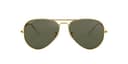
Ray-Ban RB3025 Classic Aviator

Ray-Ban RB3025 Classic Aviator

The original aviator — a thin metal frame and teardrop lens that reads as timeless rather than trendy. Great for driving thanks to the wide field of view, though the standard lens is non-polarized; step up to the polarized version if dashboard and road glare bother you.

The one to buy
$191.00 · View on Amazon

Price as of November 3, 2026. #ad How we’re funded

2
Ray-Ban RB3025 Classic Aviator, 55 mm (Gradient Brown)

Ray-Ban RB3025 Classic Aviator, 55 mm (Gradient Brown)

The same RB3025 as the standard aviator, in the 55 mm size - which is the single thing most people get wrong when they buy this frame. The 58 mm is the size the brand is famous for and it is too much lens for a lot of faces, especially narrower ones; the 55 mm is the same frame with the same double bridge and adjustable pads, scaled down. This trim is a clear gradient brown lens, so it is lighter at the bottom than a solid G-15.

Best for a smaller face
$207.00 · View on Amazon

Price as of November 3, 2026. #ad How we’re funded

3
Ray-Ban RB3025 Classic Aviator Polarized

Ray-Ban RB3025 Classic Aviator Polarized

The Aviator most buyers assume they are getting when they buy the standard one. Same 1937 teardrop, same gold metal frame, same crystal lens with 100% UV — but this trim adds the polarizing filter that the base RB3025 lacks, so it actually removes glare off a road or a hood rather than just dimming it. It costs more than the standard Aviator, and that premium buys the single feature that changes what you see.

Best for glare
$174.00 · View on Amazon

$244.0029% off

Price as of November 3, 2026. #ad How we’re funded

4
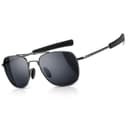
SUNGAIT A285 Military Style Pilot Aviator

SUNGAIT A285 Military Style Pilot Aviator

A 55mm polarized pilot aviator with bayonet temples — the straight, hookless arms designed to slide under a flight helmet, which in ordinary life means they slide under a beanie or a cycling helmet without lifting it. Under twenty dollars for a polarized metal aviator is the cheapest honest version of this shape we found.

The honest cheap alternative
$16.99 · View on Amazon

Price as of November 3, 2026. #ad How we’re funded

The models, in full

#1The one to buy

Ray-Ban RB3025 Classic Aviator

The original aviator — a thin metal frame and teardrop lens that reads as timeless rather than trendy. Great for driving thanks to the wide field of view, though the standard lens is non-polarized; step up to the polarized version if dashboard and road glare bother you.

Strengths

  • Wide teardrop lens gives an open field of view for driving
  • Blocks 100% UV; thin, light metal frame
  • Suits square and heart-shaped faces particularly well

Trade-offs

  • Standard lens is not polarized
  • Metal frame and thin temples suit narrower faces better than wide ones
Lens feature100% UV, teardrop metal aviator
PolarizedNo
Lens tintG-15 green
Frame materialMetal
UV protection100% UV protection
Best forDriving, Everyday, Square & heart faces

Spec note. The RB3025 standard trim is non-polarized G-15; a polarized version of the same frame is sold separately.

Specs read from the product listing, on July 18, 2026. “Not published” means the brand does not state that figure.

#2Best for a smaller face

Ray-Ban RB3025 Classic Aviator, 55 mm (Gradient Brown)

The same RB3025 as the standard aviator, in the 55 mm size - which is the single thing most people get wrong when they buy this frame. The 58 mm is the size the brand is famous for and it is too much lens for a lot of faces, especially narrower ones; the 55 mm is the same frame with the same double bridge and adjustable pads, scaled down. This trim is a clear gradient brown lens, so it is lighter at the bottom than a solid G-15.

Strengths

  • Identical RB3025 frame and construction, one size down from the famous one
  • Gradient lens is lighter at the bottom, which keeps a dashboard or a book readable
  • Double bridge and adjustable nose pads, so there is real fit adjustment in a metal frame

Trade-offs

  • The gradient means the lower half of the lens is doing less work in bright overhead sun
  • This trim is not polarized - the polarized RB3025 is a separate, more expensive listing
  • ray-ban.com returned 403 Forbidden on this date, so no specification here comes from Ray-Ban
Lens featureRB3025 in 55 mm, clear gradient brown lens
PolarizedNo
Lens tintClear gradient brown
Frame materialMetal
UV protectionNot published
Best forEveryday, Smaller & narrower faces, Driving, City

Spec note. Read from the Amazon listing title: "Ray-Ban RB3025 Classic Aviator Sunglasses, Gold/Clear Gradient Brown, 55 mm" - which states the model number, the colorway and the 55 mm size, and states NO UV figure, no lens material and no polarization. Other live RB3025 listings read the same day DO state "100% UV Protection", "Double Bridge" and "Adjustable Nosepads" in their own titles; this entry does not transfer those words onto this listing. ray-ban.com returned 403 Forbidden for the RB3025 product page on this date.

Specs read from the product listing, on November 3, 2026. “Not published” means the brand does not state that figure.

#3Best for glare

Ray-Ban RB3025 Classic Aviator Polarized

The Aviator most buyers assume they are getting when they buy the standard one. Same 1937 teardrop, same gold metal frame, same crystal lens with 100% UV — but this trim adds the polarizing filter that the base RB3025 lacks, so it actually removes glare off a road or a hood rather than just dimming it. It costs more than the standard Aviator, and that premium buys the single feature that changes what you see.

Strengths

  • Polarized green crystal lens — the listing states it filters reflected glare
  • 100% UV protection stated; crystal (glass) resists scratching better than polycarbonate
  • The reference aviator shape, made in Italy, with case and cloth included

Trade-offs

  • Meaningfully more expensive than the non-polarized RB3025 for the same frame
  • Glass lens is heavier on the nose and does not belong in a sport frame
  • The listing publishes no frame weight and no bridge or temple measurement
Lens featurePolarized crystal lens, 100% UV, classic 58mm aviator
PolarizedYes
Lens tintGreen (polarized)
Frame materialMetal
UV protection100% UV protection
Best forDriving, Everyday, Square & heart faces, Travel

Spec note. The listing states 'green polarized lenses filter reflected glare' and 'crystal lenses coated with 100% UV protection', a 58mm lens described as a medium fit for an average face, and Italian manufacture. It is the same RB3025 frame as the site's standard Aviator entry with the polarizing filter added — which is exactly the trim to compare against an always-polarized Maui Jim.

Specs read from the product listing, on September 15, 2026. “Not published” means the brand does not state that figure.

#4The honest cheap alternative

SUNGAIT A285 Military Style Pilot Aviator

A 55mm polarized pilot aviator with bayonet temples — the straight, hookless arms designed to slide under a flight helmet, which in ordinary life means they slide under a beanie or a cycling helmet without lifting it. Under twenty dollars for a polarized metal aviator is the cheapest honest version of this shape we found.

Strengths

  • Polarized at under twenty dollars
  • Bayonet (straight) temples slide under a helmet or hat without lifting it
  • 55mm lens is a moderate size that suits most faces rather than only large ones

Trade-offs

  • Straight temples grip less than curved ones — they can slide forward when you look down
  • Budget plating and hinges; a season or two of daily use, not a decade
Lens featurePolarized aviator, bayonet temples
PolarizedYes
Lens tintGray
Frame materialMetal
UV protectionNot published
Best forDriving, Everyday, Under a helmet or hat

Spec note. The listing states a polarized military-style pilot aviator with bayonet temples in a 55mm size, gunmetal frame with gray lens.

Specs read from the product listing, on August 11, 2026. “Not published” means the brand does not state that figure.

The size decision, which comes first

The lens size in a Ray-Ban listing title is the lens widthin millimeters, and on the RB3025 it is either 55 or 58. That three-millimeter difference sounds trivial written down and is not trivial on a face, because it scales the whole frame — a wider lens means a wider total frame and a taller teardrop.

Here is the practical rule. If you have worn aviators before and liked them, buy 58 mm. If you have tried them on and felt the lens reached your cheekbone or the frame overhung your temples, buy 55 mm. If you have never worn them and you have a narrow or small face, start at 55 mm — the shape still reads as an aviator at 55, and the version that is too big never looks like anything but too big. Our sizing guide explains how to read frame numbers against a pair you already own, which is the only reliable method when you cannot try them on.

One thing the size numbers do not solve: how the frame sits on your nose. A metal aviator hangs from a double bridge and two adjustable pads, which is genuinely more adjustment than an acetate frame gives you, and it still will not fix a bridge that is fundamentally wrong for you. If your sunglasses slide regardless of size, read our guide to low nose bridges and why sunglasses slide down before blaming the size.

The lens decision, which is smaller than it looks

G-15 green — the standard, and not polarized

The default RB3025 lens is G-15, a dark green-gray glass tint that Ray-Ban has used since the frame was designed. It is a neutral, high-quality lens and it is not polarized. This catches people out constantly, because at around two hundred dollars most buyers reasonably assume polarization is included. It is not. The polarized RB3025 is a separate listing at a higher price, and the gap between them is the subject of our page on Ray-Ban polarized versus non-polarized.

Polarized — worth it if you drive or boat

Polarization is a filter that removes light reflected off flat surfaces: wet road, car hood, water, snow. On an aviator it is particularly worth having, because the frame’s traditional job is driving and a windshield-and-hood combination is exactly the reflector a polarizing filter is built for. The AAO describes polarized lenses as reducing glare from reflective surfaces, and it is clear that polarization is a comfort and vision feature rather than a UV feature — the two get conflated in listing copy constantly, which is why we keep a page dedicated to separating them.

The one place to skip it: if you fly, or if you spend real time reading LCD screens through your sunglasses. Polarized lenses can black out cockpit instrument displays, which is why the FAA’s own pilot guidance cautions against them — covered on our pilots page, which is a fair irony for a frame originally designed for aviators. The screen version of the same problem is in polarized lenses and screens.

Gradient — lighter at the bottom, for a reason

A gradient lens is dark at the top and fades toward clear at the bottom. The logic is that overhead sun comes from above and the things you need to read — a dashboard, a phone, a menu — sit below your eyeline. It is a genuinely useful trim in a car and in a city, and the trade is that the lower half of the lens is doing less work when the sun is high and in front of you. Our 55 mm pick is a gradient brown trim, which stacks the gradient benefit on top of the smaller size.

Mirrored and flash — mostly aesthetic

A mirror coating reflects some light before it enters the lens, so a mirrored lens is a little darker than the same tint unmirrored, and it hides your eyes. The live mirrored and flash RB3025 trims were the most expensive listings we found. Buy them for the look, which is a legitimate reason — our mirrored lens page is honest about what a mirror does and does not add, and mirrored versus polarized separates the two features people assume travel together.

What a hundred-dollar spread on one model number means

Across the live RB3025 listings we resolved and availability-checked on the date of this review, prices ran from roughly a hundred and fifty-five dollars to roughly two hundred and fifty-four. Same model number. The cheapest was a listing titled “Aviator Large Metal” — which is, in fact, the frame’s official name — and the dearest were polarized mirror and flash trims.

Two things follow. First, if you do not care which lens trim you get, there is real money in reading past the first listing, because a chunk of that spread is trim rather than quality. Second, a large discount on an RB3025 is a thing to look at twice rather than to celebrate: this is among the most counterfeited frames in the world, and a convincing fake copies the logo long before it copies the lens. Our guide to spotting fake sunglasses lists the checks worth running, and the single most useful one is simply buying from a seller the brand would recognize.

Prices on this page are pulled live and dated for exactly this reason. We do not quote a number in prose that might be wrong by the time you read it.

What Ray-Ban would not let us read

This needs stating plainly, because it is unusual for a frame at this price. On the date of this review, ray-ban.com returned HTTP 403 Forbiddenfor the RB3025 product page — the second Ray-Ban model page to refuse us in two months, after the RB3016 Clubmaster did the same when we built our browline roundup. So every specification on this page comes from an Amazon listing title.

That is a better source than it sounds for some fields and useless for others. Several live RB3025 listings state “100% UV Protection”, “Double Bridge”, “Adjustable Nosepads” and “Crystal Lenses” in their own titles, and those are claims we can attribute. What no listing states is a weight, a lens category, a bridge width or a temple length — so those rows on the cards above read “Not published”. And crucially, we do not move a UV figure from one trim’s listing onto another’s: the 55 mm gradient listing states no UV figure, so its card says so, even though its siblings do. That is the same rule that kept the Clubmaster off the browline page, and we would rather look under-researched than quietly launder a spec across SKUs.

None of this is a suggestion that the RB3025 lacks UV protection. Ray-Ban states full UV blocking across its range in material this site has cited from a dated earlier read, and the brand’s warranty terms are in our repair and replacement guide. It is a statement about what we can verify for a specific listing today.

Does the aviator suit your face?

Better than its reputation suggests, and the reason is geometric rather than fashionable. The teardrop is wider at the top and tapers toward the bottom, which draws the eye outward across the brow and softens a strong jaw. That makes it a default recommendation on our square face guide and a strong option for a heart-shaped face, where the taper balances a narrower chin.

Where it struggles is a long or oblong face, because a tapering lens emphasizes length rather than interrupting it — our long-face page recommends height and a strong horizontal instead. For the full map, our face shape guide covers all six shapes, and Wayfarer versus Aviator is the head-to-head if you are choosing between Ray-Ban’s two famous silhouettes.

The cheap alternative, honestly

A sub-twenty-dollar polarized metal aviator will give you the shape, a polarized lens and a stated UV figure, which is the entire protective job. It will not give you Ray-Ban’s glass lens, its hinge quality, its resale value or the certainty of owning the original, and those are legitimate things to pay for. What it will do is let you find out whether the shape suits you for the price of lunch, and if you lose sunglasses regularly it is the better buy outright. That is the trade our aviator roundup ranks across five brands, and whether expensive sunglasses are worth it runs the numbers on what the premium buys.

We would rather tell you that than steer you to the expensive pair for the sake of a commission. If you want the original, buy the original — in the right size.
Frequently asked questions

Should I buy the 55mm or the 58mm Ray-Ban Aviator?

Buy 58 mm if you have worn aviators before and liked how they sat. Buy 55 mm if the lens has reached your cheekbone or the frame has overhung your temples, or if you have a narrow or small face and have never worn the shape. The number is the lens width in millimeters and it scales the whole frame, so three millimeters is a visible difference. It is printed in the listing title, which is the single most useful thing to read before buying this frame.

Are Ray-Ban Aviators polarized?

The standard RB3025 with the G-15 green lens is not. Ray-Ban sells a polarized RB3025 as a separate, more expensive listing. This surprises a lot of buyers at this price point, so check the listing title for the word polarized rather than assuming it. Polarization is a glare filter, not UV protection - the two are different features and get conflated in listing copy constantly.

Do Ray-Ban Aviators have UV protection?

Several live RB3025 listings state "100% UV Protection" in their own titles, and we attribute that claim to those listings. We will not transfer it onto a trim whose listing does not say it - our 55 mm gradient pick states no UV figure, so its spec table reads "Not published". ray-ban.com returned 403 Forbidden on the date of this review, so no figure on this page comes from Ray-Ban directly. None of that is a suggestion the frame lacks UV protection; it is a statement about what we could verify for a specific listing today.

What does RB3025 mean?

It is the model number for the Classic Aviator, and it is the thing to search rather than the word "aviator" - which Ray-Ban also uses for several other frames. The frame's official name is Aviator Large Metal, which appears in some listing titles on its own. One model number covers two lens sizes and a long list of lens trims, which is why a price spread of around a hundred dollars across live listings of the same number is normal rather than suspicious.

Is the Ray-Ban Aviator worth the money?

If you want the original and you buy the right size, yes - it is a well-made thin metal frame with glass lenses, real fit adjustment at the bridge, and a production history long enough that parts and replacement lenses are easy to find. What you are not buying is protection you cannot get for twenty dollars: a cheap polarized metal aviator with a stated UV figure does the protective job. The premium buys materials, build and the real thing.

What is the difference between G-15 and a gradient lens?

G-15 is a solid dark green-gray glass tint, uniform across the lens, and it is the frame's standard lens. A gradient lens is dark at the top and fades toward clear at the bottom, on the logic that sun comes from above and dashboards and phones sit below your eyeline. The gradient is genuinely useful in a car; the cost is that the lower half of the lens is doing less work with the sun high and in front of you.

Are Ray-Ban Aviators good for driving?

Yes, and it is close to what the shape was designed for - a thin metal frame and a wide teardrop lens give an unusually open field of view, with very little frame in your peripheral vision. One caveat: buy the polarized trim if road and hood glare is your complaint, because the standard G-15 is not polarized. Our driving roundup covers the decision across brands.

Can pilots wear polarized Ray-Ban Aviators?

This is the frame's own irony: FAA pilot guidance cautions against polarized lenses in the cockpit, because a polarizing filter can black out LCD instrument displays and reduce the visibility of some windscreen coatings. So for actual flying, the non-polarized G-15 is the appropriate choice and the polarized trim is not. Our pilots page covers the reasoning in full.

Sources

Keep reading