Shade & Temple

Best Sunglasses for Low Light

Overcast cloud, dawn, dusk and dappled tree cover are the conditions a dark lens makes worse. Four brands sell a lens named for exactly this, and not one of them publishes the number that would let you compare them - so here is what each will state, and what to buy.

By Stephen V.Last updated How we pick

Most sunglasses are designed for the problem of too much light. Low light is the opposite problem, and it is more common than the bright-day version for anyone who starts a ride before sunrise, fishes the first hour, skis a flat gray afternoon or rides a trail where the canopy keeps switching the light on and off. In those conditions a standard dark gray lens does not help you. It removes light you needed.

There is a real product category for this, and it is better specified than most of what we rank. Four brands sell a lens tier named for the condition: Oakley calls it Prizm Low Light, Smith calls it ChromaPop Low Light, Suncloud calls it Low Light Yellow and Costa calls its version Sunrise. Those are not colorways with optimistic names — they are separate lenses sold for dim conditions, and three of the four are available in frames you can buy today.

And here is the finding that shaped this page. A low-light lens is defined by one number: how much visible light it transmits. Not one source we could read on this date publishes that number for any of these lenses. Suncloud does something stranger than omitting it — its own product pages print a specification field reading “Visible Light Transmission = %” with nothing in it, on every model we read. Oakley and Costa would not serve us a lens page at all. So below we rank on what each maker will actually state, we name what none of them will, and we are blunt about the part of this category that is marketing: the cheap end is sold almost entirely as “night vision driving” eyewear, which is a claim our night driving glasses page takes apart, and nothing here walks that back.

How this is funded: we earn a commission if you buy through our links, at no extra cost to you. It never changes which product we recommend, and we’ll tell you when we’d skip one. Full disclosure.

Quick picks

Ranked on lens spec, UV protection, tint fit and buyer value. Select a row to jump to the full write-up. We have not field-tested these — here is exactly what we do instead.

#ProductBest forPrice
1
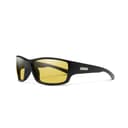
Suncloud Hull (Low Light Yellow)

Suncloud Hull (Low Light Yellow)

The only frame we found at a normal price whose maker names the lens for the job: the listing sells this trim as a "Polarized Low Light Yellow Lens", and Suncloud's own page for the frame states polarized polycarbonate lenses, 100% UV protection and a bio-based frame. A yellow lens does not make dim light brighter - it removes blue wavelengths, which raises apparent contrast in flat, grey, overcast light. That is a real effect on an overcast ride or a dawn start, and it is not a night-driving tool.

Best overall
$59.95 · View on Amazon

Price as of November 3, 2026. #ad How we’re funded

2
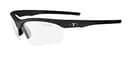
Tifosi Vero Fototec

Tifosi Vero Fototec

A photochromic lens for people who keep starting rides or runs in shade and finishing them in glare. Fototec is Tifosi's light-reactive tint: it darkens in UV and clears when you drop back into tree cover, so one lens covers the whole outing. The Light Night version starts nearly clear, which makes it the dawn-and-dusk pick rather than the midday one.

Best for dawn and dusk
$89.95 · View on Amazon

Price as of November 3, 2026. #ad How we’re funded

3
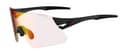
Tifosi Rail (Clarion Red Fototec)

Tifosi Rail (Clarion Red Fototec)

The answer when the light will not stay low. Fototec is Tifosi's light-reactive tint, so one lens covers a start in the dark and a finish in sun rather than committing you to either. The Rail is the rimless shield version of that lens, and Tifosi publishes a weight for it - 32 grams - which almost nobody in this category does. Buy it for mixed light at speed, not for a fixed dim condition.

Best for mixed light at speed
$89.95 · View on Amazon

Price as of November 3, 2026. #ad How we’re funded

4
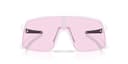
Oakley Sutro Lite S OO9496 (Prizm Low Light)

Oakley Sutro Lite S OO9496 (Prizm Low Light)

Oakley is the one brand that treats low light as a named lens rather than a colorway, and Prizm Low Light is it - a very pale tint built to separate detail when there is not much light to separate it with. The Sutro Lite S is the smaller, lighter half-frame version of the shield, which matters because the full-size Sutro is too much frame for a lot of faces. The honest limit is that we could not verify a single Prizm specification from Oakley this run.

Best premium contrast tint
$204.00 · View on Amazon

Price as of November 3, 2026. #ad How we’re funded

5
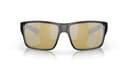
Costa Del Mar Reefton Pro 580G (Sunrise Silver Mirror)

Costa Del Mar Reefton Pro 580G (Sunrise Silver Mirror)

Costa's low-light lens is called Sunrise, which tells you what it is for, and the Reefton Pro is the frame it belongs on - a big, wrapped, salt-tolerant fishing frame in Costa's 580G glass. If your low light happens on water at first light, this is the serious version of the answer and it is priced accordingly. If your low light happens on a bike path, it is far too much frame.

Best on the water
$309.00 · View on Amazon

Price as of November 3, 2026. #ad How we’re funded

The picks in full

#1Best overall

Suncloud Hull (Low Light Yellow)

The only frame we found at a normal price whose maker names the lens for the job: the listing sells this trim as a "Polarized Low Light Yellow Lens", and Suncloud's own page for the frame states polarized polycarbonate lenses, 100% UV protection and a bio-based frame. A yellow lens does not make dim light brighter - it removes blue wavelengths, which raises apparent contrast in flat, grey, overcast light. That is a real effect on an overcast ride or a dawn start, and it is not a night-driving tool.

Strengths

  • Lens is explicitly sold as a low-light tint, not a dark lens with a marketing line
  • Brand's own page states polarized polycarbonate lenses and 100% UV protection
  • Polarized, so it still kills reflected glare off wet roads and water at low sun angles

Trade-offs

  • Suncloud prints a "Visible Light Transmission" field on its own product page and leaves it blank, so the figure that defines a low-light lens is unpublished
  • A yellow lens is conspicuous in a way a grey one is not - this reads as sport eyewear off the bike
  • Medium fit only, and no lens width, bridge or temple measurement is published anywhere
Lens featurePolarized low-light yellow lens, 100% UV protection
PolarizedYes
Lens tintLow Light Yellow (polarized)
Frame materialEvolve bio-based frame material
UV protection100% UV protection
Best forOvercast light, Dawn & dusk, Cycling, Fishing

Spec note. Suncloud's own Hull page states "Polarized polycarbonate injection molded lenses", "100% UV protection" and an "Evolve bio-based frame material", and describes the fit as "Medium fit, medium coverage". It prints a specification field reading "Visible Light Transmission = %" with no value in it, and publishes no weight and no frame measurements. The Low Light Yellow lens is named in the Amazon listing title for this trim; the brand page's default colorway is a polarized gray lens.

Specs read from the product listing, on November 3, 2026. “Not published” means the brand does not state that figure.

#2Best for dawn and dusk

Tifosi Vero Fototec

A photochromic lens for people who keep starting rides or runs in shade and finishing them in glare. Fototec is Tifosi's light-reactive tint: it darkens in UV and clears when you drop back into tree cover, so one lens covers the whole outing. The Light Night version starts nearly clear, which makes it the dawn-and-dusk pick rather than the midday one.

Strengths

  • Fototec lens darkens and clears on its own as light changes
  • Light Night tint starts almost clear, so it works at dawn and dusk
  • Grilamid TR-90 frame with hydrophilic grips, 100% UVA/UVB

Trade-offs

  • Photochromic lenses barely react behind a car windshield, which blocks most UV
  • Not polarized, so it does not cut reflected glare off water
Lens featureFototec photochromic lens, Grilamid TR-90, 100% UVA/UVB
PolarizedNo
Lens tintLight Night Fototec (light-reactive)
Frame materialGrilamid TR-90
UV protection100% UVA/UVB
Best forCycling, Running, Hiking, Changing light

Spec note. Tifosi's Fototec lenses are photochromic — they darken in response to UV and lighten again indoors or in shade. Light Night is the lightest-starting tint in the range.

Specs read from the product listing, on August 10, 2026. “Not published” means the brand does not state that figure.

#3Best for mixed light at speed

Tifosi Rail (Clarion Red Fototec)

The answer when the light will not stay low. Fototec is Tifosi's light-reactive tint, so one lens covers a start in the dark and a finish in sun rather than committing you to either. The Rail is the rimless shield version of that lens, and Tifosi publishes a weight for it - 32 grams - which almost nobody in this category does. Buy it for mixed light at speed, not for a fixed dim condition.

Strengths

  • Light-reactive Fototec lens, so the tint follows the conditions instead of guessing them
  • Tifosi publishes a stated weight of 32 grams - a figure most makers simply omit
  • Listing states 100% UVA/UVB and shatterproof polycarbonate, with hydrophilic nose pads

Trade-offs

  • No source states the transmission range the Fototec lens moves between, so you cannot compare it to a fixed low-light tint
  • Nothing we read claims polarization for this trim, so treat it as unpolarized
  • Photochromic lenses barely react behind a car windshield, which blocks most of the UV that triggers them
Lens featureClarion Red Fototec photochromic lens, 32 g, 100% UVA/UVB
PolarizedNot published
Lens tintClarion Red Fototec (light-reactive)
Frame materialNot published
UV protection100% UVA/UVB
Best forChanging light, Cycling, Gravel & MTB, Baseball

Spec note. Tifosi's own Rail page states "Weighing just 32 grams" and sells the frame in four configurations, of which exactly one is the "Matte Black Frame - Clarion Red Fototec" trim this entry describes. That page calls the lens only "shatterproof" and the UV claim only protection from "harmful UV rays" with no figure; the Amazon listing title for the same trim states "100% UVA/UVB, shatterproof polycarbonate". Neither source states a visible light transmission range, what the lens lightens and darkens between, a polarization claim for this trim, or the frame material.

Specs read from the product listing, on November 3, 2026. “Not published” means the brand does not state that figure.

#4Best premium contrast tint

Oakley Sutro Lite S OO9496 (Prizm Low Light)

Oakley is the one brand that treats low light as a named lens rather than a colorway, and Prizm Low Light is it - a very pale tint built to separate detail when there is not much light to separate it with. The Sutro Lite S is the smaller, lighter half-frame version of the shield, which matters because the full-size Sutro is too much frame for a lot of faces. The honest limit is that we could not verify a single Prizm specification from Oakley this run.

Strengths

  • Prizm Low Light is a lens tier Oakley names and sells for this exact condition, not a repurposed dark lens
  • Half-frame shield in the smaller Lite S size, so it suits faces the full Sutro overwhelms
  • Oakley's lens-swap ecosystem behind it if you want a second tint for bright days

Trade-offs

  • oakley.com returned 403 Forbidden on this date - the sixth consecutive run - so no Prizm figure here comes from Oakley
  • 34 mm lens height is a genuinely small shield; check it against a frame you already own
  • Premium price for a lens you will want to swap out the moment the sun is properly up
Lens featurePrizm Low Light tint, half-frame shield, Lite S size
PolarizedNo
Lens tintPrizm Low Light
Frame materialNot published
UV protectionNot published
Best forDawn & dusk, Overcast light, Road cycling, Running

Spec note. Everything stated here comes from the Amazon listing title - "Oakley OO9496 Sutro Lite S Sunglasses, Matte White/Prizm Low Light, 34 mm" - which gives the model number, the lens name and a 34 mm size and states NO UV figure, no lens material and no polarization. oakley.com returned 403 Forbidden for its lens-technology page on this date, the sixth consecutive run, so this site's Prizm material is cited only through its dated 2026-07-18 read of oakley.com and is not restated as a current figure. Prizm Low Light is not a polarized lens.

Specs read from the product listing, on November 3, 2026. “Not published” means the brand does not state that figure.

#5Best on the water

Costa Del Mar Reefton Pro 580G (Sunrise Silver Mirror)

Costa's low-light lens is called Sunrise, which tells you what it is for, and the Reefton Pro is the frame it belongs on - a big, wrapped, salt-tolerant fishing frame in Costa's 580G glass. If your low light happens on water at first light, this is the serious version of the answer and it is priced accordingly. If your low light happens on a bike path, it is far too much frame.

Strengths

  • Sunrise is a lens tint Costa sells specifically for low light, mirrored to cut the glare that comes with a low sun
  • 580G is glass - the most scratch-resistant and optically stable lens material Costa makes
  • Polarized and wrapped, which is the combination that works across water rather than on it

Trade-offs

  • costadelmar.com returned 403 Forbidden for its lens-technology page on this date, so no Sunrise transmission figure here comes from Costa
  • 63 mm and glass - this is a heavy, large frame that will not suit a smaller face
  • The most expensive pick on this page by a wide margin, for a tint you will use at two ends of the day
Lens featureSunrise Silver Mirror 580G glass lens, polarized
PolarizedYes
Lens tintSunrise Silver Mirror (580G)
Frame materialNot published
UV protectionNot published
Best forDawn & dusk, Fishing, Boating, Overcast light

Spec note. Read from the Amazon listing title: "Costa Del Mar Mens Reefton Pro Rectangular Sunglasses, Black/Polarized Sunrise Silver Mirrored 580G, 63 mm" - which states the model, the polarization, the lens tint, the 580G glass designation and a 63 mm size, and states NO UV figure and no frame material. costadelmar.com returned 403 Forbidden for its lens-technology page on this date, so no visible light transmission figure for the Sunrise tint is published here. This site's Costa warranty citation dates from its 2026-08-13 read of the same domain.

Specs read from the product listing, on November 3, 2026. “Not published” means the brand does not state that figure.

How to choose a low-light lens

1. Decide whether your light is low, or changing

This is the first fork and it eliminates half the field for you. A fixed low-light tint— a yellow, amber, rose or pale copper lens — is the right answer when the condition is stable: a solidly overcast day, a flat gray afternoon on snow, an hour of fishing at first light. It is the wrong answer when the sun comes out an hour in, because a pale lens in bright sun is uncomfortable and you will take it off.

A photochromic lensis the right answer when the light will not hold still: a 6 a.m. start that finishes at 9 a.m., a trail that keeps dropping in and out of canopy, a long day with weather in it. Two of our five picks are photochromic for exactly that reason. The honest trade is that a photochromic lens is never the darkest nor the lightest thing you could be wearing — it is a compromise that follows the day. Our photochromic roundup ranks that category on its own terms, and photochromic versus polarized covers why you usually have to pick one.

2. Understand what a yellow lens actually does

It does not brighten anything. A tinted lens can only subtract light, so a yellow lens transmits less total light than no lens at all. What it does is subtract selectively: it cuts the short blue wavelengths and passes the rest. In flat, hazy, overcast light — which is dominated by diffuse blue scatter — removing that blue makes edges and texture separate more cleanly, so the scene looks crisper even though it is technically dimmer. That is why the tint is standard in shooting, clay, gravel riding and winter sport.

Two consequences follow, and both matter. First, the effect is about contrast, not brightness, so it helps most where contrast is the thing you lack and least where you simply lack light. Second, it shifts color: a yellow lens makes everything look warmer and makes some colors harder to tell apart, which is a real cost if you need to read color accurately. Our lens color guide runs through what each tint does to what you see.

3. The number that decides this category is the number nobody prints

Visible light transmission — VLT — is the percentage of light a lens lets through. It is the single specification that would let you compare a low-light lens to another low-light lens, because it is literally the definition of the category. A lens around 60–80% transmission is a low-light lens; one around 10–15% is a bright-sun lens. The European filter-category scale our lens category guide explains exists to compress that number into a single digit from 0 to 4.

Not one of the five frames on this page states a VLT figure, and not one states a filter category either. Suncloud’s own site prints the field and leaves it empty. Tifosi publishes a weight for the Rail — 32 grams, which is more than most makers give you — and no transmission range for its Fototec lens, and does not even use the word photochromic in the product description. Oakley returned HTTP 403 Forbidden for its lens-technology page, the sixth consecutive run on which it has done so, and Costa returned 403 for the equivalent page. We could have filled the gap with figures from memory. We publish nothing a maker has not published, so the spec tables above read “Not published” wherever that is the truth.

4. Polarization is a separate decision, and it is not automatic here

Low light and glare arrive together more often than people expect. A low sun is the worst glare condition there is, because the light comes in at the angle that reflects hardest off a wet road, a car hood or a water surface. So a polarized low-light lens is genuinely useful — two of our picks are polarized, and the Costa is polarized glass.

But polarization is not free in dim conditions. A polarizing filter removes light on top of whatever the tint removes, and it can dim an LCD screen — which, on a bike computer at dawn, is exactly when you most want to read it. That is the subject of our page on polarized lenses and screens. Both of our photochromic picks are unpolarized, and for a cyclist watching a head unit that is a feature rather than an omission. If the distinction is new, start with polarized versus non-polarized.

5. UV protection does not relax because the light does

This is the point on which a low-light lens is most often bought badly. The American Academy of Ophthalmology is explicit that ultraviolet exposure is not proportional to how bright the day feels, and its winter-eye-safety material makes the same point about overcast conditions. Cloud scatters visible light, which is why a gray day looks dim, and passes a large share of the ultraviolet. A pale lens with no stated UV figure is the worst combination available: you get a wide-open pupil and an unverified filter.

Three of our five picks state a UV figure in a source we read. Two do not — the Oakley and the Costa — and we say so in their spec tables rather than borrowing a figure from the brand’s other material. If you want the number itself, what UV400 means is the short version and our UV protection guide is the long one.

What about driving at night?

Search for a yellow lens and the marketplace will try to sell you “night vision driving glasses.” A live catalog search on the date we built this page returned a whole field of them under twenty-six dollars, with listing copy promising reduced headlight glare and improved low-light visibility after dark. We are not ranking any of them, and this is not a squeamishness about cheap products — three of our picks cost under a hundred dollars.

It is that the claim inverts the physics. Driving at night is not a low-light contrast problem you can tint your way out of; it is a situation where you need every photon the road will give you, and any tinted lens removes some. The AAO’s own guidance on night driving says so, and our dedicated page on night driving glasses goes through the evidence and lands on the uncomfortable conclusion that the honest recommendation is to buy nothing. That page and this one agree completely, and the line between them is simple: this page is about low daylight— cloud, dawn, dusk, canopy — where there is still daylight to shape. After dark there is not.

If headlight glare at night is your actual problem, the two things that measurably help are a clean windshield and a clean pair of prescription glasses, and our guide to cleaning lenses properly covers the second one. If glare bothers you in daylight too, the answer is polarization, which is the subject of our driving roundup.

The four brands that name a low-light lens

Worth laying out plainly, because the names are the only thing distinguishing these products and three of the four are proprietary.

  • Suncloud — Low Light Yellow.The most literal name in the category and the only one on a frame at a normal price. Suncloud’s own pages state a polarized polycarbonate lens and 100% UV protection, which is more documentation than anything else here at the price.
  • Oakley — Prizm Low Light. A tier inside the Prizm family, sold on a pale tint that separates detail rather than on darkness. It is not polarized. Everything we can state about it comes from the listing title, because oakley.com would not serve us a page; what a Prizm tint does in principle is covered in our Prizm explainer and the feature it is routinely confused with in Prizm versus polarized.
  • Costa — Sunrise.Named for the hour rather than the condition, and sold as a mirrored low-light tint on serious fishing frames in Costa’s glass. The lens-material question behind that is in 580G versus 580P.
  • Smith — ChromaPop Low Light. Real, currently sold on large fishing frames, and not one of our picks for one reason: the frames it is on are the most expensive thing in the category by a distance, and the Costa already occupies the premium-on-water slot with a lens we can at least read the designation of. It is the one to look at if you want the tint on a Smith frame specifically.

Tifosi, which supplies two of our picks, does something different: instead of a fixed low-light tint it sells Fototec, a light-reactive lens in trims that start pale. That is why the Vero Fototec’s tint is called Light Night and why it earns the dawn-and-dusk slot rather than the overcast slot. Our Tifosi review covers how the brand labels its lenses, which takes some decoding.

What nobody in this category publishes

We read every source we could reach for all five picks. Across the category:

  • Visible light transmission. Zero of five. In a category whose entire reason to exist is light transmission. Suncloud prints the field and leaves it blank on all three models we read.
  • Filter category (0–4). Zero of five, which means no pick here can be matched to the one standardized scale that exists for exactly this purpose.
  • Weight.One of five — the Tifosi Rail, at a stated 32 grams on Tifosi’s own page. This is the first category in ten where we have been able to publish a weight from a maker at all.
  • Frame measurements. Two of five, and both only because the lens size happens to be in the Amazon listing title: 34 mm on the Oakley, 63 mm on the Costa. No lens width, bridge width or temple length for any of them. Our sizing guide explains how to read those three numbers when a listing gives them.

Where to spend, and where not to

Unusually for a category we rank, the money here buys something real at the top and something real at the bottom, and almost nothing in the middle.

At the bottom, around sixty dollars, you get a documented lens: polarized polycarbonate, a stated UV figure, a named low-light tint, from a brand that publishes a spec sheet. That is the whole protective and optical job done, and it is why our top pick sits there rather than three hundred dollars up. At the top, past two hundred, you are buying frame engineering and lens material — Costa’s glass is genuinely the most scratch-resistant and optically stable thing in this comparison, and if you spend your dawns on salt water that matters. In between, you are mostly buying a logo. Our page on whether expensive sunglasses are worth it runs that argument with numbers.

One cheap thing genuinely worth buying instead of a second frame: an interchangeable-lens kit, if your sport is one where the background keeps changing. A four-lens shooting set gives you the amber, the clear and the smoke for less than one mid-tier frame, which is the right answer at a range or on clays. We do not rank one on this page because the sets we checked state no UV figure, and a stated UV figure is our floor for a pick — the same rule that kept the Ray-Ban Clubmaster off our browline roundup. Our shooting and hunting roundup covers the tint-swapping argument in full.

And the thing not to spend on: a darker lens to deal with a dim day. It is the single most common mistake in this category, and the inverse page — sunglasses for bright sunlight — is where a dark lens earns its keep.
Frequently asked questions

What color lens is best for low light?

Yellow, amber, rose and pale copper tints are the ones makers sell for dim conditions. They work by cutting short blue wavelengths and passing the rest, which raises apparent contrast in the flat, diffuse, blue-dominated light of an overcast day. They do not make a scene brighter - any tint subtracts light - so the gain is in how cleanly edges and texture separate, not in how much light reaches your eye.

Do yellow lens sunglasses actually work?

For raising contrast in flat daylight, yes, and that is why the tint is standard in clay shooting, gravel riding and winter sport. For seeing better in genuinely dark conditions, no - there is no tint that adds light. The distinction matters because the cheap end of this category is marketed for the second job while only being capable of the first.

Can you wear yellow lens glasses for night driving?

We would not, and our dedicated night driving glasses page explains why at length. A tinted lens removes light at the exact moment you need all of it, and the American Academy of Ophthalmology's guidance on night driving does not support tinted eyewear for the job. The honest recommendation after dark is a clean windshield and clean glasses, not a yellow lens - whatever a listing promises about headlight glare.

What VLT should a low-light lens have?

Broadly, a lens transmitting somewhere around 60 to 80 percent of visible light is in low-light territory, against roughly 10 to 15 percent for a bright-sun lens. We cannot tell you where any specific pick on this page falls, because not one of the five publishes a transmission figure and not one states a filter category either - Suncloud prints the field on its own product pages and leaves it empty. That is the single biggest gap in this category.

Should a low-light lens be polarized?

It is worth having if your dim conditions involve reflection - a low sun is the worst glare angle there is, off wet roads and water alike. It is worth skipping if you need to read a screen, because a polarizing filter can dim an LCD and a bike computer at dawn is exactly when you want it legible. Two of our picks are polarized and two are deliberately not.

Do I still need UV protection on an overcast day?

Yes, and this is the most commonly mishandled part of buying a low-light lens. Cloud scatters visible light, which is why the day looks dim, while passing a large share of the ultraviolet - the AAO's own material makes the point for both overcast and winter conditions. A pale lens with no stated UV figure is the worst case: your pupil opens wide behind an unverified filter. Buy a low-light lens that states a UV figure.

Is a photochromic lens better than a fixed low-light tint?

It depends on whether your light holds still. If the condition is stable - a solidly gray day, an hour at first light - a fixed pale tint is the better and cheaper answer. If you start in the dark and finish in sun, or keep dropping in and out of tree cover, a photochromic lens follows the day and a fixed tint does not. The trade is that a photochromic lens is never the lightest nor the darkest thing you could be wearing, and it barely reacts behind a windshield, which blocks most of the UV that triggers it.

Is Oakley Prizm Low Light polarized?

No. Prizm Low Light is a contrast tint, and polarization is a separate filter that Oakley sells on separate trims - the two get conflated constantly because both are presented as lens upgrades inside a colorway name. Our Prizm versus polarized page covers the distinction. Note also that we could not verify any Prizm specification from Oakley on the date we built this page: oakley.com returned 403 Forbidden, so everything we state about this lens comes from the Amazon listing title.

Sources

  • Suncloud Optics — Hull (brand product page) — The brand's own page for the frame this site ranks first for low light, and the only brand page in the whole low-light batch that could be read on this date. Stated: "Polarized polycarbonate injection molded lenses", "100% UV protection", an "Evolve™ bio-based frame material", "Polarized lens technology cuts glare from surfaces like water, snow, and roads", and a fit described as "Medium fit, medium coverage." NOTE WHAT IT DOES NOT SAY, because it is the finding behind this site's low-light page: the page prints a specification field reading "Visible Light Transmission = %" with no value in it. No lens width, bridge width, temple length or weight is published either. The brand page's default colorway is a polarized gray lens; the Low Light Yellow lens this site features is one of the trim options and is named in the Amazon listing title (accessed November 3, 2026)
  • Tifosi Optics — Rail (brand product page) — Cited for a figure almost no sunglasses maker publishes and for one it does not. Tifosi states the Rail is "Weighing just 32 grams" and sells it in four configurations, of which exactly one is the photochromic trim this site features — "Matte Black Frame - Clarion Red Fototec". The lens is described only as "shatterproof" and the UV claim only as shielding "your eyes from debris, wind, and harmful UV rays", with no figure; the Amazon listing title for the same trim does state "100% UVA/UVB, shatterproof polycarbonate". NOTE WHAT IT DOES NOT SAY: no visible light transmission range for the Fototec lens, no statement of what it lightens and darkens between, no polarization claim for this trim, and no frame material. The page's own description does not use the word photochromic at all (accessed November 3, 2026)
  • American Academy of Ophthalmology — Night Driving Glasses May Hurt, Not Help — AAO on why tinted/polarized lenses reduce light and are the wrong choice at night (accessed July 18, 2026)
  • American Academy of Ophthalmology — Winter UV Eye Safety — AAO on UV reflected off snow and ice, and preventing snow blindness at elevation (accessed August 11, 2026)
  • American Academy of Ophthalmology — What Are Polarized Lenses For? — AAO on how polarized lenses cut reflected glare from water, pavement and glass (accessed July 18, 2026)
  • American Academy of Ophthalmology — How to Pick the Best Sunglasses to Protect Your Eyes — AAO: look for 100% UV / UV400; darker lenses are not more protective; price does not equal protection (accessed July 18, 2026)
  • Prevent Blindness — Choosing UV Protection — Buy only sunglasses with a clear statement of UV blocking; block 99–100% UVA/UVB (accessed July 18, 2026)

Keep reading