Are Suncloud sunglasses worth it?
Yes, with a specific reason that is not the usual one. The reason is not that the lens is better than a thirty-dollar polarized lens — we have no evidence for that and we are not going to claim it. Both are polarized polycarbonate with a stated UV figure, and on the protective job that genuinely matters they are doing the same thing. The American Academy of Ophthalmology is blunt that price is not a proxy for ultraviolet protection, and we apply that to this brand as readily as to any other.
The reason is documentation. When we rank a sub-thirty-dollar frame, roughly every spec field on its card reads “Not published,” because the only readable source is a listing title and listing titles state polarization and UV and then stop. Suncloud publishes a page per model with a consistent lens construction, a consistent UV claim, a named frame material and a curvature figure. That turns buying from a gamble into a decision, and at sixty dollars that is what you are paying the premium for.
It is also worth being clear about what you are not paying for. Suncloud publishes no weight, no frame measurements, no lens category and no transmission figure. Costa publishes a lens material distinction between its 580G and 580P lines that genuinely changes what you get, which is the subject of our 580G versus 580P page. KastKing, at a third of Suncloud’s price, publishes a lens thicknessper model — see our KastKing review — which is more granular than anything on Suncloud’s sheet. So this is a good spec sheet by the standards of its price band, not a complete one.
The base curve is the thing to actually use
If you take one practical thing from this page, take this. Base curve is the curvature of the lens, expressed as a single number: a low number is a flat lens, a high number wraps around your face. It decides two things that people usually discover only after buying — how much light sneaks in at the sides, and whether the frame sits on your cheekbones.
Suncloud states a 4 base curvature for the Rambler and a 6 basefor the Mayor, and describes the first as a small-to-medium fit and the second as medium. That is not marketing language; it is a published geometry difference you can match against a frame you already own. A flatter 4 base suits a narrower face and a less aggressive look and lets more side light past. A 6 base wraps more, seals better against peripheral glare, and is too much curvature for some faces. Sport frames run higher still, which is why a wrap sits so differently — the full explanation is in our base curve and wrap guide.
We have ranked over a hundred frames on this site. We can count on one hand the makers who publish this number. That it comes from a sixty-dollar brand rather than a three-hundred-dollar one is the most surprising thing in this review.
Which Suncloud should you buy?
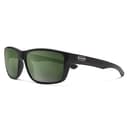
Mayor — the default
A medium-fit frame with a 6 base lens and nine colorways, including several polarized mirrors. It is the model that shows the line at full strength: the lens spec, the UV claim, the frame material and the curvature are all published, and the price sits where the brand lives. If you do not have a reason to pick something else from the line, pick this. Its limitation is that there is no size variation inside the model — medium or nothing.
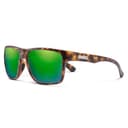
Rambler — if frames sit too wide on you
Same lens, same frame material, flatter at 4 base, and stated as a small-to-medium fit. This is the one to buy if your sunglasses usually look oversized or slide, and it is the clearest case we have seen of a brand making that decision answerable from a spec sheet rather than from a returns policy. It is frequently also the cheapest live listing in the line. The cost of the flatter curve is less peripheral coverage, which matters on water and on a bike and matters very little in a city.
If you already know that frames sit badly on you for a different reason, read our guide to low nose bridges and our small-faces roundup first — base curve solves width, not bridge height, and the two get confused.
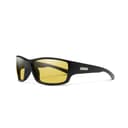
Hull — the low-light one
Same frame platform, sold in a trim whose Amazon listing names the lens a “Polarized Low Light Yellow Lens.” This is a genuinely differentiated product rather than a colorway: a pale yellow tint cuts short blue wavelengths and raises apparent contrast in the flat, diffuse light of an overcast day, which is a real effect and a different job from a dark gray lens. It is our top pick on our low-light roundup, mostly because it is the only frame in that whole category at a normal price whose maker publishes anything at all.
The irony is sharp and we are not going to soften it: this is the model where the blank transmission field hurts most. A low-light lens is defined by how much light it passes, and Suncloud prints the field for that number and leaves it empty. Buy it on the tint being the right kind of tint, not on a figure, because there is no figure.
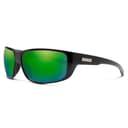
Milestone — the cheap way in
The lowest-priced live listing in the line, and the only one whose own listing title states the lens material. Two honest caveats. First, it is an older frame, so colorways appear and disappear. Second — and this is a rule we apply to every brand — its listing states no UV figure of its own, and we have not moved the 100% UV claim from Suncloud’s pages for the other three models onto it. Its spec table says “Not published,” because that is what is true for this specific listing. It is the same reason the Ray-Ban Clubmaster is not a pick on our browline roundup.
Suncloud against the alternatives
The comparison that matters is downward, not upward, because the brands above Suncloud are three to five times the price.
Against the sub-$35 field— Knockaround, SUNGAIT, goodr and the rest — the step up buys you a spec sheet and a more substantial frame, and it does not buy you better eye protection. Both tiers give you polarized polycarbonate and a UV claim. If you have been happy with a thirty-dollar pair and you lose sunglasses regularly, there is no argument for spending double; our Knockaround review and budget roundup cover that field properly. If you have been frustrated by not knowing what you are buying, this is the brand that fixes it.
Against the premium brands, Suncloud loses on lens material and on documentation depth. Costa’s 580G is glass, which is a materially different lens, and Maui Jim publishes more about its lens construction than Suncloud does — see our Maui Jim review. It wins on the base curve, which neither of them publishes per model, and on costing a quarter as much. Whether that trade is worth it is the question our page on whether expensive sunglasses are worth it exists to answer.
One place Suncloud is the obvious answer: a pair you will actually use in conditions, where losing it would annoy you rather than ruin your month. That is the slot a sixty-dollar documented frame fills better than either neighbor, and it is why we would put the Mayor in front of a reader shopping under a hundred dollars.
What Suncloud does not publish
- Visible light transmission. The field is printed on the product page. It is empty on all three models we read. This is the brand's most conspicuous omission because it is the only one it visibly intended to fill.
- Lens category (0–4). Nothing. So no Suncloud lens can be matched to the standardized filter scale our lens category guide explains.
- Weight. Nothing, on any model. The tenth consecutive category in which we have hit this.
- Frame measurements. No lens width, bridge width or temple length. The base curve and the coarse fit label are the only geometry you get, which is more than most and less than enough. Our sizing guide covers how to read those three numbers when a maker gives them.
We could have filled those rows with plausible figures. We publish nothing a maker has not published, which is why the cards above say “Not published” where they do.
Buying advice
Buy the Mayor unless you have a reason not to. Buy the Ramblerif frames usually sit too wide — the 4 base is a real reason, not a hedge. Buy the Hull only if your problem is specifically dim daylight, and read the low-light roundup first so you know what a yellow lens does and does not do. Buy the Milestone if price is the constraint, accepting that its listing states no UV figure of its own.
Whatever you buy, buy from a seller the brand would recognize. A marketplace warranty exclusion for unauthorized sellers is standard across this industry and it is the single most common way a legitimate purchase ends up uncovered — the terms we have read on another brand’s own warranty page spell that out explicitly. And if you are weighing a mid-market brand against a heavily discounted premium one, our guide to spotting fake sunglasses is worth five minutes first.