Shade & Temple

Best Glass Lens Sunglasses

Glass is the only lens material whose advantages are measurable rather than marketed — and the only one with no budget tier at all. Five picks, two brands, and an honest cost of entry.

By Stephen V.Last updated How we pick

The verdict first. Our top pick is the Costa Fantail in 580G, for the angler or boater who spends hours looking at and into water and wants the clearest, most scratch-resistant lens sold at any price. The budget pick — and that word needs quote marks on this page — is the Costa Reefton Pro in 580G, the cheapest route into a genuine glass lens here, and the cheapest pick anywhere in our registry that is both glass and polarized.

That is the finding this page exists for. Across the 114 listings in our registry, glass lenses appear at exactly two brands — Costa and Ray-Ban — and the cheapest glass pair costs more than six of our best-rated polycarbonate picks combined. There is no budget tier in glass. If you came here hoping for a thirty-dollar glass lens, it does not exist, and anything advertising one is almost certainly describing a coating.

What the money buys is real and measurable: glass has the highest optical clarity and the best scratch resistance of any lens material in common use. What it costs is equally real: it is heavier, and it is the one material that can shatter. That second point is not a style note — it is why polycarbonate, not glass, is the material used in sports eyewear and safety eyewear. Our glass vs polycarbonate guide settles the question of whether you should want glass at all before you read the list.

The five below are ranked on what the glass is doing for you, the tint it carries, and whether polarization is part of the package. Every price comes from our live feed and is dated on the button.

How this is funded: we earn a commission if you buy through our links, at no extra cost to you. It never changes which product we recommend, and we’ll tell you when we’d skip one. Full disclosure.

Quick picks

Ranked on lens spec, UV protection, tint fit and buyer value. Select a row to jump to the full write-up. We have not field-tested these — here is exactly what we do instead.

#ProductBest forPrice
1
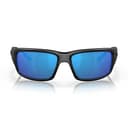
Costa Del Mar Fantail 580G

Costa Del Mar Fantail 580G

If you fish, this is the benchmark. Costa's 580G glass lens is polarized, scratch-resistant and cuts the yellow wavelength to sharpen contrast on the water — so you see structure and fish, not surface glare. Glass costs more and weighs more than polycarbonate, but the optical clarity is the reason anglers pay it.

Best overall
$207.20 · View on Amazon

$296.0030% off

Price as of November 19, 2026. #ad How we’re funded

2
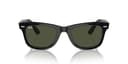
Ray-Ban RB2140 Original Wayfarer

Ray-Ban RB2140 Original Wayfarer

The default answer to 'one pair that goes with everything.' The Wayfarer's angular acetate frame flatters most faces (and rounder ones especially), and the G-15 lenses block 100% UV. The base version isn't polarized, but a polarized SKU exists if glare is your priority.

Best everyday glass
$191.00 · View on Amazon

Price as of November 19, 2026. #ad How we’re funded

3
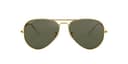
Ray-Ban RB3025 Classic Aviator Polarized

Ray-Ban RB3025 Classic Aviator Polarized

The Aviator most buyers assume they are getting when they buy the standard one. Same 1937 teardrop, same gold metal frame, same crystal lens with 100% UV — but this trim adds the polarizing filter that the base RB3025 lacks, so it actually removes glare off a road or a hood rather than just dimming it. It costs more than the standard Aviator, and that premium buys the single feature that changes what you see.

Best polarized classic
$244.00 · View on Amazon

Price as of November 19, 2026. #ad How we’re funded

4
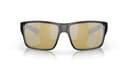
Costa Del Mar Reefton Pro 580G (Sunrise Silver Mirror)

Costa Del Mar Reefton Pro 580G (Sunrise Silver Mirror)

Costa's low-light lens is called Sunrise, which tells you what it is for, and the Reefton Pro is the frame it belongs on - a big, wrapped, salt-tolerant fishing frame in Costa's 580G glass. If your low light happens on water at first light, this is the serious version of the answer and it is priced accordingly. If your low light happens on a bike path, it is far too much frame.

Cheapest glass here, and polarized
$154.50 · View on Amazon

$309.0050% off

Price as of November 19, 2026. #ad How we’re funded

5
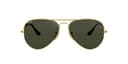
Ray-Ban RB3025 Classic Aviator

Ray-Ban RB3025 Classic Aviator

The original aviator — a thin metal frame and teardrop lens that reads as timeless rather than trendy. Great for driving thanks to the wide field of view, though the standard lens is non-polarized; step up to the polarized version if dashboard and road glare bother you.

Best for the cockpit
$191.00 · View on Amazon

Price as of November 19, 2026. #ad How we’re funded

The picks in full

#1Best overall

Costa Del Mar Fantail 580G

If you fish, this is the benchmark. Costa's 580G glass lens is polarized, scratch-resistant and cuts the yellow wavelength to sharpen contrast on the water — so you see structure and fish, not surface glare. Glass costs more and weighs more than polycarbonate, but the optical clarity is the reason anglers pay it.

Strengths

  • 580G glass lens is polarized and exceptionally scratch-resistant
  • Cuts glare and sharpens contrast on and under the water
  • Blocks 100% UV; encapsulated mirror survives salt and spray

Trade-offs

  • Glass lens is heavier than polycarbonate
  • Premium price — the most expensive way to see fish
Lens feature580G polarized glass, glare-cutting tint, 100% UV
PolarizedYes
Lens tintGray / copper (580G, varies)
Frame materialBio-based nylon
UV protection100% UV protection
Best forFishing, Boating, Bright water

Spec note. Costa's 580 lenses filter high-energy yellow light to boost contrast; the 580G variant is glass (vs. 580P polycarbonate) for maximum scratch resistance and clarity.

Specs read from the product listing, on July 18, 2026. “Not published” means the brand does not state that figure.

#2Best everyday glass

Ray-Ban RB2140 Original Wayfarer

The default answer to 'one pair that goes with everything.' The Wayfarer's angular acetate frame flatters most faces (and rounder ones especially), and the G-15 lenses block 100% UV. The base version isn't polarized, but a polarized SKU exists if glare is your priority.

Strengths

  • Iconic angular shape that adds definition to softer, rounder faces
  • Ray-Ban lenses block 100% UV
  • Hand-assembled acetate frame that holds up for years

Trade-offs

  • The standard G-15 lens is not polarized — check the SKU if you want glare control
  • Premium price for a non-polarized base lens
Lens feature100% UV, iconic acetate Wayfarer shape
PolarizedNo
Lens tintG-15 green
Frame materialAcetate
UV protection100% UV protection
Best forEveryday, Round & oval faces, City

Spec note. The RB2140 in its standard trim uses a non-polarized G-15 lens that blocks 100% UV; Ray-Ban also sells the same frame with a polarized lens at a higher price.

Specs read from the product listing, on July 18, 2026. “Not published” means the brand does not state that figure.

#3Best polarized classic

Ray-Ban RB3025 Classic Aviator Polarized

The Aviator most buyers assume they are getting when they buy the standard one. Same 1937 teardrop, same gold metal frame, same crystal lens with 100% UV — but this trim adds the polarizing filter that the base RB3025 lacks, so it actually removes glare off a road or a hood rather than just dimming it. It costs more than the standard Aviator, and that premium buys the single feature that changes what you see.

Strengths

  • Polarized green crystal lens — the listing states it filters reflected glare
  • 100% UV protection stated; crystal (glass) resists scratching better than polycarbonate
  • The reference aviator shape, made in Italy, with case and cloth included

Trade-offs

  • Meaningfully more expensive than the non-polarized RB3025 for the same frame
  • Glass lens is heavier on the nose and does not belong in a sport frame
  • The listing publishes no frame weight and no bridge or temple measurement
Lens featurePolarized crystal lens, 100% UV, classic 58mm aviator
PolarizedYes
Lens tintGreen (polarized)
Frame materialMetal
UV protection100% UV protection
Best forDriving, Everyday, Square & heart faces, Travel

Spec note. The listing states 'green polarized lenses filter reflected glare' and 'crystal lenses coated with 100% UV protection', a 58mm lens described as a medium fit for an average face, and Italian manufacture. It is the same RB3025 frame as the site's standard Aviator entry with the polarizing filter added — which is exactly the trim to compare against an always-polarized Maui Jim.

Specs read from the product listing, on September 15, 2026. “Not published” means the brand does not state that figure.

#4Cheapest glass here, and polarized

Costa Del Mar Reefton Pro 580G (Sunrise Silver Mirror)

Costa's low-light lens is called Sunrise, which tells you what it is for, and the Reefton Pro is the frame it belongs on - a big, wrapped, salt-tolerant fishing frame in Costa's 580G glass. If your low light happens on water at first light, this is the serious version of the answer and it is priced accordingly. If your low light happens on a bike path, it is far too much frame.

Strengths

  • Sunrise is a lens tint Costa sells specifically for low light, mirrored to cut the glare that comes with a low sun
  • 580G is glass - the most scratch-resistant and optically stable lens material Costa makes
  • Polarized and wrapped, which is the combination that works across water rather than on it

Trade-offs

  • costadelmar.com returned 403 Forbidden for its lens-technology page on this date, so no Sunrise transmission figure here comes from Costa
  • 63 mm and glass - this is a heavy, large frame that will not suit a smaller face
  • The most expensive pick on this page by a wide margin, for a tint you will use at two ends of the day
Lens featureSunrise Silver Mirror 580G glass lens, polarized
PolarizedYes
Lens tintSunrise Silver Mirror (580G)
Frame materialNot published
UV protectionNot published
Best forDawn & dusk, Fishing, Boating, Overcast light

Spec note. Read from the Amazon listing title: "Costa Del Mar Mens Reefton Pro Rectangular Sunglasses, Black/Polarized Sunrise Silver Mirrored 580G, 63 mm" - which states the model, the polarization, the lens tint, the 580G glass designation and a 63 mm size, and states NO UV figure and no frame material. costadelmar.com returned 403 Forbidden for its lens-technology page on this date, so no visible light transmission figure for the Sunrise tint is published here. This site's Costa warranty citation dates from its 2026-08-13 read of the same domain.

Specs read from the product listing, on November 3, 2026. “Not published” means the brand does not state that figure.

#5Best for the cockpit

Ray-Ban RB3025 Classic Aviator

The original aviator — a thin metal frame and teardrop lens that reads as timeless rather than trendy. Great for driving thanks to the wide field of view, though the standard lens is non-polarized; step up to the polarized version if dashboard and road glare bother you.

Strengths

  • Wide teardrop lens gives an open field of view for driving
  • Blocks 100% UV; thin, light metal frame
  • Suits square and heart-shaped faces particularly well

Trade-offs

  • Standard lens is not polarized
  • Metal frame and thin temples suit narrower faces better than wide ones
Lens feature100% UV, teardrop metal aviator
PolarizedNo
Lens tintG-15 green
Frame materialMetal
UV protection100% UV protection
Best forDriving, Everyday, Square & heart faces

Spec note. The RB3025 standard trim is non-polarized G-15; a polarized version of the same frame is sold separately.

Specs read from the product listing, on July 18, 2026. “Not published” means the brand does not state that figure.

What glass actually gives you

Optical clarity you can see

Glass is a more optically uniform material than any plastic lens. The practical effect is at the edges rather than the center — a polycarbonate lens of any quality is sharp where you are looking, and the difference shows up in how little distortion you notice in your peripheral vision when you turn your head rather than your eyes. On a flat, moderately curved lens this is subtle. On a strongly wrapped lens it matters more, which is part of why premium wrap frames make such a point of their lens geometry; our base curve and wrap guide covers that.

Scratch resistance that is not a coating

This is the strongest practical argument for glass and the one most buyers underrate. Every plastic lens relies on a hard coating for scratch resistance, and a coating is a layer that can fail. Glass is scratch-resistant as a material, all the way through. A glass lens cleaned carelessly for five years will still look better than a coated plastic lens cleaned carelessly for one. Our lens coatings guide explains what the coatings on a plastic lens are doing and in what order they fail.

A tint that does not fade

In a glass lens the color is usually in the material rather than applied to it, so the tint does not lift or wear thin at the edges the way a surface tint on a cheap plastic lens eventually can. Ray-Ban’s G-15 green and Costa’s copper and gray 580 tints are both long-standing formulations rather than seasonal colourways, which is part of why both frames hold their value.

The three real costs

  • It can shatter. The reason polycarbonate exists. Glass is the one lens material that breaks into pieces rather than cracking or deforming, and that is why it has no place in sport, on a work site, or anywhere a ball, a branch or a tool can reach your face. Prevent Blindness and the AAO both point sports wearers at polycarbonate specifically. If you want glass, keep it for the boat, the car and the street — and buy a separate polycarbonate pair for everything else. Our safety sunglasses roundup covers that side.
  • It is noticeably heavier. Most people feel it within an hour, on the bridge of the nose rather than the ears. A glass lens in a large frame is the combination that produces the complaint — and a heavier frame slides down more, which is the single commonest fit problem we get asked about. Our page on sliding frames covers the fixes and our adjustment guide covers the pads.
  • It costs roughly ten times as much. And it buys you nothing at all in ultraviolet protection, which is the only thing sunglasses do for your eye health. The AAO is explicit that price is not a proxy for protection; a $14 lens stating UV400 protects exactly as well as a $300 glass one. Our honest answer on expensive sunglasses is the page that puts that in proportion.

How to choose between these five

  • “I am on the water for hours.” The Fantail in 580G. This is the single best case for buying glass that exists — long sessions, high glare, no impact risk, and a polarized lens whose whole job is letting you see past the surface. Our fishing roundup and 580G vs 580P comparison cover the decision inside the brand.
  • “I want one glass pair for everyday.” The RB2140 Wayfarer, in crystal G-15. It is the most-copied frame ever made and the base version is not polarized, which matters less than you would think for city use. Our Wayfarer roundup ranks the field including the cheaper alternatives.
  • “I want glass AND polarization, as cheaply as possible.” The Reefton Pro in 580G, which is the lowest price of entry to a polarized glass lens on this page. If you want that combination in an everyday frame rather than a 63 mm fishing wrap, the polarized RB3025 is the next step up — and be aware that Ray-Ban sells the same model number in both polarized and non-polarized trims at quite different prices, which is why our polarized vs non-polarized Ray-Ban page exists because of exactly that spread.
  • “I fish at first light.” The Reefton Pro in Sunrise Silver Mirror. A deliberately pale glass lens with a mirror on it, built for the part of the day a dark lens ruins. Our low-light roundup covers that condition across brands — and records that none of them publishes a transmission figure for it.
  • “I fly.” The non-polarized G-15 RB3025. This is the one page on the site where the non-polarized trim is the right buy: FAA guidance cautions pilots against polarized lenses, because they can interact with laminated windshields and glass cockpit displays. Our pilots roundup covers it, and our RB3025 review covers the trap in that model, which is the size rather than the lens.

Worth knowing before you shop the band: two of the picks here — the Fantail and the polarized RB3025 — sit between $200 and $300, which is also where the houses that treat polarization as a house standard keep their core frames. Our under-$300 ranking covers that whole rung, including the two frames on this page and the five non-glass alternatives competing with them at the same money.

When you should not buy glass

Four cases, stated plainly, because the honest version of a page like this has to include them.

  • Any sport, at all. Impact risk. Buy polycarbonate. Our sport hub covers every activity we rank.
  • If you lose or sit on sunglasses. A broken glass lens is not a repair, it is a replacement, and at these prices that hurts. Our repair guide covers what is actually fixable.
  • If weight bothers you. Try a pair on before committing. There is no spec that will tell you how a glass lens feels on your bridge after three hours.
  • If your real goal is protecting your eyes. Then spend $20 on a lens stating UV400 and put the rest somewhere else. Our under-$25 roundup and UV protection guide are the pages for that, and they are not a consolation prize.
Frequently asked questions

Are glass lens sunglasses better?

Better optically and for scratch resistance, worse for weight and safety. Glass is the most optically uniform lens material in common use and is scratch-resistant all the way through rather than relying on a coating. It is also heavier and it is the only common lens material that shatters, which is why polycarbonate is the material used in sports and safety eyewear. For ultraviolet protection — the only eye-health function sunglasses have — glass offers no advantage at all.

Why are glass lens sunglasses so expensive?

Because the material is harder to grind, polish, curve and mount without introducing stress, and because the brands that still use it position it as a premium feature. In our registry of 114 live listings, glass appears at only two brands and the cheapest glass pair is a three-figure frame. There is no budget glass tier, and a cheap pair advertising a 'glass-like' lens is describing a coating on plastic.

Do glass sunglass lenses break easily?

They do not break in normal wear, but when they fail they shatter rather than crack — and that is the difference that matters. Prevent Blindness and the American Academy of Ophthalmology both point sports wearers at polycarbonate for exactly this reason. Keep glass for driving, boating and street wear, and own a polycarbonate pair for anything where a ball, a branch or a tool can reach your face.

Is 580G glass? What about 580P?

580G is Costa's glass lens and 580P is its polycarbonate one — the same tint technology in two materials. 580G is clearer and far more scratch-resistant; 580P is lighter and impact-resistant, and costs less. Our 580G vs 580P comparison covers the decision in detail, including which of the two is the better buy for a boat you also fish from.

Is Ray-Ban's G-15 lens glass?

On the classic RB2140 Wayfarer and RB3025 Aviator trims we cover, the listings describe a crystal lens, which is Ray-Ban's term for glass. Ray-Ban also sells the same model numbers with plastic lenses and in polarized trims at different prices, so the lens material is a per-listing fact rather than a per-model one. Every spec on our cards is read from the specific listing the buy link points at, on the date shown.

Do glass lenses block more UV?

No. Ultraviolet blocking comes from the material's UV-absorbing properties and any additive in it, and a stated UV400 or 100% UVA/UVB figure means the same thing whether the lens is glass or polycarbonate. The AAO is explicit that price is not a proxy for protection. Buy glass for clarity and scratch resistance if you want those; do not buy it believing it protects your eyes better.

Sources

Keep reading