Shade & Temple

Best UV400 Sunglasses

UV400 is a floor, not a tier — it costs about ten dollars and nothing you can buy exceeds it. What actually varies is whether the listing in front of you states it. Seven that do, and the 28 in our registry that do not.

By Stephen V.Last updated How we pick

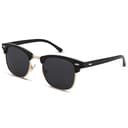
The verdict first. Our top pick is the polarized Knockaround Premiums, which states UV400 and polarization together on one listing, at a price where neither is a premium feature. The budget pick is the Pro Acme semi-rimless browline, because it is the cheapest frame in our registry that still prints the figure — and the figure is the entire point of this page.

Start with the part nobody selling sunglasses wants to lead with. UV400 means the lens blocks ultraviolet light up to 400 nanometers, which is essentially all of the ultraviolet that reaches the ground. It is not a grade, it is not a tier, and there is no better version of it. “100% UVA/UVB” and “100% UV protection” describe the same thing in different words. The American Academy of Ophthalmology says plainly that price is not a proxy for protection, and the FDA and Prevent Blindness both frame the buying advice the same way: look for a clear statement of UV blocking, and treat darkness as unrelated to it. A $10 lens that states UV400 protects your eyes exactly as well as a $300 one that states the same.

So a page called “best UV400 sunglasses” cannot honestly rank lenses by how much ultraviolet they block, because they all block the same amount. What it can do is rank the thing that genuinely varies, and here is the finding this page is built on. Across the 114 live listings in our registry, 28 state no ultraviolet figure at all. Forty-five state “UV400” in those words, 38 state a “100% UV” equivalent, three say protection exists without giving a rating, and 28 say nothing. We record that last group as a null rather than assuming it, which is why we can count them.

The 28 sit at both ends of the market, for opposite reasons. At the bottom, listings omit it because nobody is checking. At the top, the brand assumes you already know — six of the 28 are frames priced over $200, including two Maui Jims, a Julbo, an Oakley, a Costa and one trim of the Ray-Ban Aviator. Those brands all publish their ultraviolet claim somewhere on their own sites, and this page is not suggesting otherwise — Maui Jim states it for its entire range, which is the subject of our Maui Jim alternatives page. The gap is between what the brand publishes centrally and what the listing you actually buy from repeats, and our cards only ever carry what the dated source we read said. Our UV400 explainer covers what the number means and our UV protection guide covers why a dark lens without it is worse than nothing.

The seven below all state it. They are ranked on what each one does in addition — because once ultraviolet is settled at ten dollars, every remaining dollar is buying something else, and you should know what.

How this is funded: we earn a commission if you buy through our links, at no extra cost to you. It never changes which product we recommend, and we’ll tell you when we’d skip one. Full disclosure.

Quick picks

Ranked on lens spec, UV protection, tint fit and buyer value. Select a row to jump to the full write-up. We have not field-tested these — here is exactly what we do instead.

#ProductBest forPrice
1
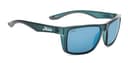
Knockaround Premiums (Polarized)

Knockaround Premiums (Polarized)

The customizable cheap classic. Knockaround's Premiums come polarized with UV400 protection in a squared shape, and you can mix frame and lens colors endlessly. Genuinely inexpensive, genuinely UV-protective — the pair to buy when you want something specific-looking without spending real money.

Best overall
$26.00 · View on Amazon

$38.0032% off

Price as of November 19, 2026. #ad How we’re funded

2
Oakley Holbrook OO9102

Oakley Holbrook OO9102

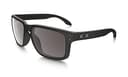
The frame that bridges sport and street. The squared-off Holbrook is built on Oakley's O Matter frame and Plutonite lens, which blocks 100% of UV on its own. This base SKU isn't polarized — Oakley sells Prizm and polarized versions if you want them.

Best UV engineering
$129.80 · View on Amazon

Price as of November 19, 2026. #ad How we’re funded

3
Hobie Cove Float

Hobie Cove Float

The floating frame that behaves like a proper sunglass rather than a novelty. Hobie is the one established eyewear brand running a full float line, and the Cove is its most sensible expression: a polarized gray nylon lens, a frame the brand states will float, and a water-repellent lens treatment that matters more on a boat than any tint decision. It is also the largest fit in that line, at a 58mm lens, which is the one to pick if wraparound sport frames usually sit narrow on you.

Most complete stated spec
$99.99 · View on Amazon

Price as of November 19, 2026. #ad How we’re funded

4
BEASVFE Z87.1 Polarized Safety Sunglasses

BEASVFE Z87.1 Polarized Safety Sunglasses

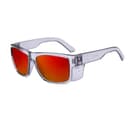
The rare listing that states all three specs at once: ANSI Z87.1 impact certification, UV400, and polarization. Most work eyewear publishes the impact rating and stays quiet about UV, which is exactly backwards if you spend eight hours a day outdoors. Removable side shields let it pass as ordinary sunglasses on the drive home.

Best for outdoor work
$26.32 · View on Amazon

$38.9032% off

Price as of November 19, 2026. #ad How we’re funded

5
CAXMAN Cat.4 Fit-Over (Side Shields)

CAXMAN Cat.4 Fit-Over (Side Shields)

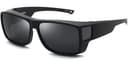
The answer to the question the glacier-glasses category normally ignores: what do you wear at altitude if you already wear glasses? This is a fit-over — it goes on over your own prescription frames — with a category 4 dark lens and polarized side shields, which is a combination nothing else we found sells for twenty dollars. It is not a technical mountaineering frame and it does not pretend to be. It is the pair that lets a glasses wearer go up onto snow without ordering prescription category 4 lenses from an optician for several hundred dollars.

Best over prescription glasses
$21.59 · View on Amazon

$26.9920% off

Price as of November 19, 2026. #ad How we’re funded

6
Paleshy HD Auto-Darkening Photochromic Polarized

Paleshy HD Auto-Darkening Photochromic Polarized

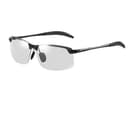
A polarized photochromic lens at a price where that pairing normally does not exist — Tifosi's equivalent costs several times more. This listing keeps to what it can stand behind: a polarized, auto-darkening lens with UV400, in a square frame aimed at driving and cycling. The brand's headline 0.1-second transition claim, which it prints on other listings in the range, is not on this one, and that is to its credit; the feature set itself is real and unusually complete for the money.

Best photochromic
$15.99 · View on Amazon

Price as of November 19, 2026. #ad How we’re funded

7
Pro Acme Classic Semi-Rimless Browline

Pro Acme Classic Semi-Rimless Browline

The frame to buy if what you actually want is less frame rather than no frame. A semi-rimless browline keeps a metal brow across the top — where a rim does the most structural work and the least visual damage — and leaves the bottom of the lens open, so the frame vanishes from your field of view while the lens stays properly supported. It costs a fraction of the others here, it states polarized and UV400, and it is the honest answer for most people who think they want rimless: you get the open view without drilling screw holes through the lens.

Best budget
$7.99 · View on Amazon

$9.9920% off

Price as of November 19, 2026. #ad How we’re funded

The picks in full

#1Best overall

Knockaround Premiums (Polarized)

The customizable cheap classic. Knockaround's Premiums come polarized with UV400 protection in a squared shape, and you can mix frame and lens colors endlessly. Genuinely inexpensive, genuinely UV-protective — the pair to buy when you want something specific-looking without spending real money.

Strengths

  • Polarized and UV400 at a low price
  • Endless frame/lens color combinations
  • Squared shape works for round faces and everyday wear

Trade-offs

  • Base plastic build is exactly what you'd expect for the money
  • One size fits most, not all
Lens featurePolarized, UV400, customizable
PolarizedYes
Lens tintVaries by colorway
Frame materialPolycarbonate (plastic)
UV protectionUV400
Best forEveryday, Round faces, Budget

Spec note. Knockaround lists the polarized Premiums with UV400 protection; non-polarized trims of the same frame also exist, so check the SKU.

Specs read from the product listing, on July 18, 2026. “Not published” means the brand does not state that figure.

#2Best UV engineering

Oakley Holbrook OO9102

The frame that bridges sport and street. The squared-off Holbrook is built on Oakley's O Matter frame and Plutonite lens, which blocks 100% of UV on its own. This base SKU isn't polarized — Oakley sells Prizm and polarized versions if you want them.

Strengths

  • Plutonite lens blocks 100% of UV (UVA, UVB and UVC to 400nm)
  • Squared shape flatters round faces and stays out of your lashes
  • Huge range of Prizm and polarized lens upgrades

Trade-offs

  • This base SKU is a non-polarized warm-gray lens
  • Premium price before you add a Prizm or polarized lens
Lens feature100% UV Plutonite lens, squared O Matter frame
PolarizedNo
Lens tintWarm Gray
Frame materialO Matter (nylon)
UV protection100% UV (Plutonite, to 400nm)
Best forEveryday, Golf, Driving, Round & oval faces

Spec note. Oakley's Plutonite lens material filters 100% of UVA, UVB and UVC and harmful blue light up to 400nm regardless of tint.

Specs read from the product listing, on September 5, 2026. “Not published” means the brand does not state that figure.

#3Most complete stated spec

Hobie Cove Float

The floating frame that behaves like a proper sunglass rather than a novelty. Hobie is the one established eyewear brand running a full float line, and the Cove is its most sensible expression: a polarized gray nylon lens, a frame the brand states will float, and a water-repellent lens treatment that matters more on a boat than any tint decision. It is also the largest fit in that line, at a 58mm lens, which is the one to pick if wraparound sport frames usually sit narrow on you.

Strengths

  • Polarized, and Hobie states 100% UVA, UVB and UVC blocking across its lenses
  • Gray lens keeps color accurate, which is the right call for reading water and navigation marks
  • HydroClean 360 treatment sheds water, grime and oils — the practical difference on spray

Trade-offs

  • Costs roughly twice what the marketplace floating frames do
  • A 58mm lens on a frame Hobie describes as a large fit — no published weight, and small faces should look elsewhere
  • No published buoyancy test — 'floating frame' is a manufacturer claim, not a measured spec
Lens featureFloating frame, polarized, HydroClean 360
PolarizedYes
Lens tintGray
Frame materialPlastic (floating frame)
UV protection100% UVA, UVB and UVC
Best forBoating, Kayaking, Fishing, Paddleboarding

Spec note. The listing states a floating frame built from high-buoyancy materials, a HydroClean 360 dual-sided water- and oil-repellent coating, and a polarized gray nylon lens, with a 58mm lens width, a 17mm bridge, 136mm temples, Megol rubber nose pads and an RX-ready build. It records 'Ultraviolet Light Protection: UV Protection' without a figure; Hobie's own eyewear pages state that all its lenses block 100% of UVA, UVB and UVC and that they meet or exceed ANSI Z80.3 for refractive power, light transmission and impact resistance — a standard almost nothing else in this category cites.

Specs read from the product listing, on September 25, 2026. “Not published” means the brand does not state that figure.

#4Best for outdoor work

BEASVFE Z87.1 Polarized Safety Sunglasses

The rare listing that states all three specs at once: ANSI Z87.1 impact certification, UV400, and polarization. Most work eyewear publishes the impact rating and stays quiet about UV, which is exactly backwards if you spend eight hours a day outdoors. Removable side shields let it pass as ordinary sunglasses on the drive home.

Strengths

  • ANSI Z87.1 certified AND UV400 AND polarized — all three stated on the listing
  • Removable side shields, so it works on site and off
  • Polarization genuinely helps on concrete, glass, water and sheet metal

Trade-offs

  • Mirror coatings scratch faster than a plain tint in a dusty environment
  • Polarized lenses can make some LCD screens and machine displays hard to read
Lens featureANSI Z87.1, UV400, polarized
PolarizedYes
Lens tintGray with red mirror
Frame materialNot published
UV protectionUV400 (100% UV protection stated)
Best forConstruction, Outdoor work, Yard work, Driving

Spec note. The listing states ANSI Z87.1 certification, UV400 / 100% UV protection, polarization and impact resistance, with removable side shields.

Specs read from the product listing, on August 11, 2026. “Not published” means the brand does not state that figure.

#5Best over prescription glasses

CAXMAN Cat.4 Fit-Over (Side Shields)

The answer to the question the glacier-glasses category normally ignores: what do you wear at altitude if you already wear glasses? This is a fit-over — it goes on over your own prescription frames — with a category 4 dark lens and polarized side shields, which is a combination nothing else we found sells for twenty dollars. It is not a technical mountaineering frame and it does not pretend to be. It is the pair that lets a glasses wearer go up onto snow without ordering prescription category 4 lenses from an optician for several hundred dollars.

Strengths

  • Category 4 dark lens with side shields, over prescription glasses — a combination almost nobody sells
  • Listing states a polarized lens and UV400 protection
  • Side windows and a full undercarriage, so light is blocked from below and beside as well as in front

Trade-offs

  • A category 4 lens is not approved for driving, and a fit-over is the worst possible thing to be wearing when you get back in the car
  • Fit-overs are bulky by definition, and this one adds side shields on top of that
  • The listing states 'Cat.4' but publishes no VLT figure, so the exact light transmission is not known
Lens featureCategory 4 lens, polarized, side shields, fits over glasses
PolarizedYes
Lens tintExtra dark (category 4)
Frame materialNot published
UV protectionUV400
Best forGlacier travel, Altitude, Snow, Over prescription glasses

Spec note. The listing is titled 'CAXMAN Polarized Sunglasses Fit Over Glasses Side Shields Cat.4 Dark Lens' and its overview states '100% Polarized Lens and UV400 Protection'. The brand's own description adds 'side windows that enhance your peripheral vision', 'polarized side shields block peripheral light without restricting your field of vision', a 'full undercarriage and maximum-sized lenses' for '360° protection' and an oleophobic lens coating. No VLT number is published, so the category 4 claim is recorded as the listing states it rather than as a measured figure.

Specs read from the product listing, on October 6, 2026. “Not published” means the brand does not state that figure.

#6Best photochromic

Paleshy HD Auto-Darkening Photochromic Polarized

A polarized photochromic lens at a price where that pairing normally does not exist — Tifosi's equivalent costs several times more. This listing keeps to what it can stand behind: a polarized, auto-darkening lens with UV400, in a square frame aimed at driving and cycling. The brand's headline 0.1-second transition claim, which it prints on other listings in the range, is not on this one, and that is to its credit; the feature set itself is real and unusually complete for the money.

Strengths

  • Polarized and photochromic together, which is rare below three figures
  • UV400 stated on the listing
  • Aimed at general day-to-day outdoor use rather than one narrow activity

Trade-offs

  • The brand's 0.1-second transition claim, printed elsewhere in the range, has no published test behind it
  • Photochromics barely darken behind a windshield, which blunts the driving case
Lens featurePolarized photochromic, UV400
PolarizedYes
Lens tintPhotochromic
Frame materialNot published
UV protectionUV400
Best forDriving, Cycling, Changing light

Spec note. The listing states a polarized, auto-darkening photochromic lens with UV400 on an ultra-light square frame, marketed for driving and cycling. It publishes no lens material and no transition-time figure. Car glass blocks most of the UV that triggers photochromic darkening.

Specs read from the product listing, on November 3, 2026. “Not published” means the brand does not state that figure.

#7Best budget

Pro Acme Classic Semi-Rimless Browline

The frame to buy if what you actually want is less frame rather than no frame. A semi-rimless browline keeps a metal brow across the top — where a rim does the most structural work and the least visual damage — and leaves the bottom of the lens open, so the frame vanishes from your field of view while the lens stays properly supported. It costs a fraction of the others here, it states polarized and UV400, and it is the honest answer for most people who think they want rimless: you get the open view without drilling screw holes through the lens.

Strengths

  • Semi-rimless browline keeps the structural rim where it helps and removes it where you look
  • States polarized polycarbonate lenses and UV400 protection
  • The cheapest pick here by a wide margin, and the least fragile

Trade-offs

  • Not actually rimless — if you want nothing above the lens either, this is the wrong frame
  • Browline metal plus a plastic brow is a two-material joint, and joints are what fail on cheap frames
  • No weight or frame measurement is published
Lens featureSemi-rimless browline, polarized polycarbonate, UV400
PolarizedYes
Lens tintNot published
Frame materialMetal (brow and temples)
UV protectionUV400
Best forEveryday, Driving, Travel, Retro styling

Spec note. The listing is titled 'Pro Acme Classic Semi-Rimless Polarized Sunglasses for Women Men | Retro Browline Driving Shades with Metal Rivets and UV400 Protection, Lightweight Eyewear for Travel and Everyday Wear'. The semi-rimless browline build, polarization, the metal frame and UV400 are each stated; the listing also states polycarbonate lenses. No weight or frame geometry is published.

Specs read from the product listing, on October 20, 2026. “Not published” means the brand does not state that figure.

What we ranked on

Since the ultraviolet performance is identical across every pick, the criteria are about documentation and about what else the lens is doing.

  1. The figure is stated on the listing or the brand’s own page, on a dated visit. Not inferred from the brand, not transferred from a sibling model. A Ray-Ban listing stating “100% UV Protection” earns that line for that listing only; the 55 mm RB3025 trim in our registry states none and its card reads “Not published” as a result.
  2. Where the protection physically lives. Most lenses get ultraviolet blocking from an additive in the plastic, which is permanent. A few get it from a coating, which is a layer that can fail. Oakley’s Plutonite is the clearest example of the first kind in our registry and it is why that frame ranks second here despite not being polarized.
  3. Coverage, not just the lens. Ultraviolet arrives from the sides and from below as well as straight ahead, which is why the CDC and the FDA both specifically recommend wraparound shapes. Three of the picks below add side coverage, a shield or a full undercarriage.
  4. A second real feature. Polarization, an impact standard, a photochromic lens, a fit-over build. If a pick is here only because it is cheap, we say so — and exactly one of them is.

What UV400 does not tell you

It says nothing about darkness

This is the single most common buying mistake in the category and it runs in a dangerous direction. Tint and ultraviolet filtering are independent: a clear lens can block 100% of UV and a near-black lens can block none. The dark lens with no stated figure is the worst product sold in this market, because the darkness opens your pupil while the lens lets ultraviolet through — more exposure than wearing nothing. Our page on whether sunglasses can damage your eyes is about that one product, and our lens category guide explains the 0–4 darkness scale that is a separate axis entirely.

It says nothing about polarization

Two different specifications, routinely confused because they appear in the same bullet list. Ultraviolet filtering protects your eyes; polarization cuts reflected glare off water, wet road and glass and does nothing for your eye health. Our page on polarization and UV untangles it, and our polarized picks under $100 rank the other axis.

It says nothing about blue light

Ultraviolet stops at 400 nm; visible blue light starts there. A UV400 lens is not a blue-light lens, and the AAO’s position on blue-light eyewear is considerably more skeptical than the marketing. Our blue light page covers what a tint actually does at those wavelengths.

It is not a test result

“UV400” on a listing is a manufacturer claim, not a certificate. In the US, sunglasses are regulated by the FDA as medical devices and the relevant transmittance standard is ANSI Z80.3, but compliance is not routinely printed on the product and almost nothing in our registry cites the standard by name — the one exception is Hobie, which is a large part of why it is ranked third. There is also no reliable way to check a lens yourself at home: our page on testing for UV explains why the internet’s tricks do not work and what an optician’s photometer does instead.

How to choose between these seven

  • “One pair, cheap, and I want both specs.” The polarized Knockaround Premiums. UV400 and polarization on one listing, in a squared shape that suits round faces, with a huge range of frame and lens colorways. Note that non-polarized trims of the same frame exist, so check the SKU you are adding to the cart. Our Knockaround review covers the brand.
  • “I want the protection built into the lens, not coated on.” The Oakley Holbrook. Plutonite filters 100% of UVA, UVB and UVC up to 400 nm through the lens material regardless of tint, so there is no coating to wear off and no trim where the protection changes. It is also the clearest demonstration of this page’s argument that UV and glare are separate specs: this base lens is not polarized. Our Oakley review and Holbrook review go deeper, and Oakley alternatives covers the cheaper routes to the same shape.
  • “Show me the most thoroughly documented lens here.” The Hobie Cove Float. Hobie states 100% UVA, UVB and UVC blocking across its lenses — the only brand in our registry to name all three bands — and is the only one to cite ANSI Z80.3 for refractive power, light transmission and impact resistance. The frame also floats and the lens carries a water-repellent treatment. Two honest caveats: the listing itself records only “UV Protection” without a figure, so the claim is attributed to the brand’s own pages, and the buoyancy claim has no published test behind it. Our floating roundup covers that category.
  • “I am outside for eight hours a day, on a site.” The BEASVFE Z87.1. Work eyewear usually publishes an impact rating and goes quiet about ultraviolet, which is backwards for anyone outdoors all day; this listing states ANSI Z87.1 certification, UV400 and polarization together, with removable side shields. Our safety sunglasses roundup explains the Z87.1 marking system properly.
  • “I wear prescription glasses and I am going up on snow.” The CAXMAN Cat.4 fit-over. A category 4 dark lens with polarized side shields and a full undercarriage, worn over your own frames — a combination that otherwise means ordering prescription category 4 lenses from an optician. Two warnings that belong on the same line as the recommendation: a category 4 lens is not legal for driving, and the listing publishes no transmission figure to support the category claim. Our glacier glasses roundup and fit-over guide cover both sides.
  • “My light changes all day.” The Paleshy auto-darkening lens, which is photochromic and polarized and states UV400, at a price where that combination normally does not exist. The honest limit is physical rather than commercial: car glass blocks most of the ultraviolet that triggers the darkening, so a photochromic barely reacts behind a windshield. Our photochromic roundup ranks the field and our photochromic explainer covers the mechanism.
  • “Cheapest thing you will actually stand behind.” The Pro Acme semi-rimless browline. Polarized and UV400, stated, for less than the price of lunch — and a semi-rimless build that keeps the metal brow where a rim does the most structural work. It is included to make the rest of the page justify itself. Our under-$25 roundup is the band page, and its finding is the mirror image of this one: below ten dollars, the ultraviolet figure is what starts going missing.

How to shop for UV400 without being sold something

  • Read the listing, not the brand. The figure is a per-listing fact. The same model number from the same maker can state it in one trim and not another — we have two Ray-Ban Aviator entries that differ in exactly that way.
  • Treat silence as silence. Not as a yes, and not as a no either. A $300 frame from a brand that publishes a UV claim on its own site is almost certainly protective; a $9 frame that says nothing is a gamble you have no reason to take when the alternative costs the same.
  • Do not pay for it twice. If ultraviolet protection is your only requirement, stop at the cheapest pick on this page and spend the rest elsewhere. Our honest answer on expensive sunglasses is the page that puts the rest of the money in proportion.
  • Buy coverage as well as a lens. The CDC and FDA both point at wraparound shapes, because light arriving from the side skips the lens entirely. A wrap or a shield is a cheaper upgrade than a better lens and does more. Our wraparound roundup and shield roundup cover the shapes.
  • Replace a scratched lens rather than living with it. Deep scratches and a degraded coating change how a lens behaves, and no label survives being sat on for five years. Our page on whether sunglasses expire covers what actually ages.
Frequently asked questions

Is UV400 better than 100% UV protection?

No — they are two ways of writing the same claim. UV400 means the lens blocks ultraviolet up to 400 nanometers, which covers essentially all UVA and UVB that reaches the ground; '100% UVA/UVB' and '100% UV protection' describe the same coverage. There is no higher grade to buy, which is why this page ranks on what else a lens does rather than on how much ultraviolet it stops.

Are expensive UV400 sunglasses better at blocking UV?

Not at blocking ultraviolet. The AAO states directly that price is not a proxy for protection, and in our registry the cheapest frame that states UV400 costs under $10. What more money buys is lens material, optical uniformity, published measurements, coverage, build quality and warranty. One genuine technical difference is where the protection lives: a lens like Oakley's Plutonite blocks UV through the material itself, so there is no coating that can wear off.

How many sunglasses actually state a UV figure?

In our own registry of 114 live listings, 45 state 'UV400' in those words, 38 state a '100% UV' or '100% UVA/UVB' equivalent, three say UV protection exists without giving a rating, and 28 state nothing at all. The 28 appear at both ends of the market: cheap listings that nobody checks, and six frames over $200 whose brands publish the figure on their own websites instead of in the listing you buy from.

Does a darker lens block more UV?

No, and assuming so is the most harmful mistake in this category. Tint and ultraviolet filtering are independent — a clear lens can block 100% of UV and a very dark one can block none. A dark lens with no stated UV figure is worse for your eyes than no sunglasses at all, because the darkness relaxes your pupil open while the lens passes ultraviolet through.

Does UV400 mean the lens is polarized?

No. Polarization is a separate filter that cuts reflected glare from water, wet road and glass; it has no effect on ultraviolet. Plenty of UV400 lenses are not polarized — the Oakley Holbrook on this page states 100% UV through its lens material and an explicitly non-polarized base lens. If you want both, the listing has to say both.

Can I test UV400 protection at home?

Not reliably. Banknote security features, UV flashlights and phone-camera tricks all produce results that do not correspond to how much ultraviolet the lens actually transmits. An optician's photometer can measure it in seconds and many will do it free. Our page on testing for UV protection explains each home method and why it fails.

Do UV400 sunglasses block blue light?

Only incidentally. Ultraviolet ends at 400 nanometers and visible blue light begins there, so a UV400 rating says nothing about blue light. Any tinted lens reduces some visible blue simply by being tinted, and the AAO's position on blue-light eyewear is considerably more cautious than the marketing around it.

Does UV400 wear off over time?

Usually not, because in most lenses the ultraviolet blocking comes from an additive in the plastic rather than a surface coating — it is part of the material. Where protection is applied as a coating it can in principle degrade, which is one argument for lenses like Plutonite that build it in. What genuinely ages is the rest of the pair: scratches, a failing hard coat, a stretched frame. If a lens is deeply scratched, replace it.

Sources

Keep reading