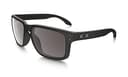
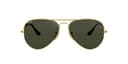
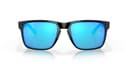
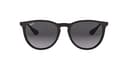
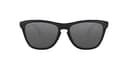
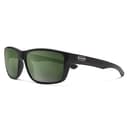
The verdict first. Our top pick is the Oakley Holbrook, for the buyer who wants one frame that reads as lifestyle and performs as sport — a Plutonite lens that blocks 100% of ultraviolet through the material rather than a coating, in an O Matter frame that survives being owned. The budget pick is the Suncloud Mayor, which is the cheapest pick on this page by a wide margin, publishes more about its own fit than anything else here, and is included specifically to make you justify the rest.
This is the band where buying advice usually goes vague, so here is the finding plainly: between $100 and $200, this market is almost entirely two heritage brands’ back catalogue. Ray-Ban and Oakley. That is not a criticism — both make genuinely good frames and both honour warranties — but it means the decision is a shape and a fit rather than a technology.
And the single most defensible reason to spend here is the one nobody advertises: fit. This is the first band where frames are made in sizes and geometries other than average — an XL lens for a wider head, a low-bridge fit for a flatter bridge, a narrow 54 mm front for a smaller face. Three of the seven picks below exist only because of that, and no amount of money at the $30 tier buys it. Our size guide explains the numbers that decide it.
What the band does not buy is ultraviolet protection, which is available at $14 and is the only thing sunglasses do for your eye health. The American Academy of Ophthalmology says plainly that price is not a proxy for protection. If that is your only concern, our under-$25 roundup is the honest page and you can keep the difference.
Every pick below was listed under $200 when our price feed last refreshed, on November 19, 2026. Heritage frames move in price more than most — the same model number can sit a hundred dollars apart across trims — so the button on each row carries the current number and the date it was read.
One honest correction, because this band moves. This page originally ranked the polarized trim of the RB3025 here. Its live price has since crossed $200, so it has moved to our under-$300 ranking and the classic G-15 trim of the same frame takes its place below — non-polarized, which is exactly the trap this band is famous for. The two trims are the clearest illustration we have that at this rung you are buying a lens rather than a better frame.
What $100 to $200 actually buys
A frame cut for a face other than average
The strongest argument in the band, and the one worth paying for. Three distinct things appear here that do not exist below it: a genuinely XL frame, where the lens is taller and wider and the front is longer rather than just the temples being stretched; an alternative-fit bridge, designed for a lower or flatter nose bridge so the frame stops sliding and the lashes stop touching the lens; and a genuinely small front, in the low fifties of millimetres, for a face that standard frames swamp.
Each of those solves a problem that no lens upgrade touches. Our wide-face roundup, low nose bridge guide and small-face roundup each go deeper, and all three point back into this band for a reason.
Lens material rather than lens coating
A real technical difference. Oakley’s Plutonite filters 100% of UVA, UVB and UVC up to 400 nm through the material itself, regardless of tint — which is why a non-polarized Prizm lens is still fully UV-protective. Ray-Ban’s crystal lenses are glass, with the tint in the material. Both mean the protection and the color cannot wear off, which on a cheap lens relying on a surface treatment is a genuine long-term question. Our lens coatings guide covers what fails and in what order.
A warranty that exists and a frame that can be serviced
A heritage frame can be re-lensed, re-hinged and adjusted by an optician for years, and both brands run published warranty programmes. That is where the economics flip: under $100 a replacement costs less than a repair, and above it a repair starts making sense. Our repair guide covers what is worth fixing.
Resale and the fact that you will keep them
Less measurable but not nothing. A Wayfarer or a Holbrook bought this year will still look current in five, because both shapes have outlasted every trend since they were introduced. That is the most defensible version of the “it is an investment” argument, and it is a styling argument rather than an optical one.
What it does not buy
- Better ultraviolet protection. Not even marginally. A $14 lens stating UV400 blocks the same ultraviolet. Our UV protection guide covers the standard.
- Polarization, necessarily. This is the trap in the band. The base Wayfarer, the G-15 aviator, the standard Holbrook and the standard Frogskins are all not polarized — polarized trims are separate, dearer listings of the same model number, and the polarized RB3025 has now priced itself out of this band entirely. Our Ray-Ban polarized vs non-polarized page and Prizm vs polarized page both exist because of this exact confusion.
- The top-tier engineered tints. Maui Jim’s PolarizedPlus2 and Costa’s 580G sit mostly above $200 — 580G glass appears below it in exactly one frame, a 63 mm fishing wrap, and our glass lens roundup shows where that floor is. One pick here gets you into PolarizedPlus2 at the small-fit end.
- A frame you can be careless with. Acetate snaps, metal bends, and a $180 pair in a bag with keys is a $180 pair with a scratch down the middle. Our storage guide is the dull answer and it works.
How to choose between these seven
- “One pair, and I want it to do everything.” The Holbrook. Squared lifestyle frame, Plutonite lens, and the shape that appears on more roundups here than any other Oakley. Our Holbrook review covers the three fits it comes in.
- “The classic.” The G-15 RB3025. A crystal glass lens with 100% UV in the aviator everyone pictures — but not a polarized one, and the polarized trim of the same model now sits in our under-$300 band. Our RB3025 review covers the real trap in that frame, which is the size.
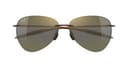
- “I want the best lens I can get under $200.” The Sugar Beach. PolarizedPlus2 in a small fit — the cheapest route into Maui Jim’s lens, and a genuinely narrow frame. Our Maui Jim review covers what the brand states about its lenses.
- “Standard frames pinch my temples.” The Holbrook XL. A 59 mm lens on a longer front, not just longer arms. This is the fit argument in its clearest form.
- “Everything swamps my face.” The RB4171 Erika, on a 54 mm round lens with a narrow fit. Our women’s roundup covers the field it sits in.
- “Frames slide down my nose, always.” The Frogskins Low Bridge Fit. A re-cut bridge and nose pad geometry on the same retro soft-square, and the single most useful frame on this page for anyone it applies to. Our low bridge guide explains who that is.
- “Convince me I need to spend this much.” The Suncloud Mayor, at about a third of the top pick. Polarized polycarbonate, 100% UV, and a published 6 base curvature and medium fit — more fit information than any heritage listing here publishes. If it fits you, the rest of this page is a styling decision, and you should know that before you spend. Our Suncloud review covers the brand and what it still leaves blank.
Should you spend $200 or $60?
The useful way to decide is to name what is wrong with the sunglasses you own now.
- “Nothing fits me.” Spend the money. This band is where the geometry exists, and no cheaper tier offers it.
- “I keep breaking them.” Do not spend it here. Buy a TR-90 sport frame for $30 — our under-$100 roundup covers them — because a $180 acetate frame breaks just as easily and hurts more.
- “Glare is the problem.” Buy polarization, which costs $20. Just make sure the trim you are buying in this band actually has it.
- “I want to own something good.” A perfectly legitimate reason, and this is the right band for it. Our honest answer on expensive sunglasses and brands roundup cover who is genuinely best at what.