What we ranked on
Four criteria, in this order, and the first one is the whole reason the page is not simply the cheapest polarized frame we could find.
- A stated UV figure alongside the polarized claim. These are two separate specifications and neither implies the other. A polarizing filter cuts reflected glare; it does nothing about ultraviolet, and ultraviolet is the only part of sunlight that damages your eyes. The American Academy of Ophthalmology is explicit on both halves of that. Every pick here states both. Our page on polarization and UV covers why the two get conflated so often.
- Something published about the fit. Below $100 this is rare to the point of being a tiebreaker. Suncloud gives a base curve and a fit class. NEVEN puts the size in the model name. Cocoons sells its frames in sizes keyed to the eyeglasses you already own. Everything else in the band asks you to guess from a photograph.
- A problem the $20 tier cannot solve. A wide face, a narrow face, prescription glasses underneath, light that changes while you are moving through it. Where a pick is here only because it is cheap, we say so.
- Honest omissions, recorded rather than filled in. Where a maker does not publish a weight, a lens material or a transmission figure, the spec table says “Not published” instead of carrying a number we invented. Three of the seven picks below have real gaps in their sheets and the cards show them.
What $100 buys in a polarized lens, and what it does not
It buys the filter itself, completely
This is the good news and it is worth being blunt about: a polarizing filter is not a premium feature. It is a layer laminated into the lens, it works the same way in a $25 frame as in a $300 one, and by this price band it is close to universal. If glare off water, wet road or a car hood is the problem you are solving, you have already solved it at a quarter of this budget. Our under-$25 roundup is the page that proves it.
It does not buy a measurable filter
Two polarized lenses can perform differently — the axis can be off, the laminate can be uneven, the filter can be weaker — and there is no published figure anywhere in this market that lets you compare them. We looked: no listing in our registry, and no brand page we have read, states a polarization efficiency. What you can do instead is test the pair you receive, which takes seconds, costs nothing, and catches the only failure that really matters — a lens sold as polarized that is not. Our polarization test is two methods, one using any phone screen and one using a second pair of sunglasses.
It does not buy a transmission figure either
None of these makers publishes how much visible light the lens passes. Suncloud goes furthest and still stops short: its own product pages print a field reading “Visible Light Transmission = %” with nothing in it, on every model including the two we rank. That is better than most of this band, which does not print the field at all, and it is still not a number. Our lens category guide explains the 0–4 scale that would tell you this, and how few frames sold in the US carry it.
It does not buy glass, and that is fine
Every lens on this page is polycarbonate or an unstated plastic. Glass does not exist under $100 — across our whole registry it appears at exactly two brands and the cheapest glass frame is a three-figure purchase. For anything with impact risk you would not want it anyway. Our glass lens roundup covers what the material actually buys and what it costs you.
The trap in this band
It is worth saying plainly, because it is the finding that produced this page: in the $50–$100 range, several of the best-regarded frames are deliberately not polarized, and the buyer who assumes otherwise is the buyer who gets caught.
- Sport and performance lenses often skip it on purpose. A polarizing filter can make it harder to read a wet patch on the road, a sheen on a green, or a glass instrument panel — so brands building for those tasks leave it out and tune the tint instead. Tifosi’s Seek FC and Vero Fototec are both non-polarized by design. Our golf roundup explains why that category mostly avoids polarization altogether.
- Photochromic rarely means polarized. Light-reactive lenses are usually sold without a polarizing filter, because combining the two is harder and dearer. The Tifosi Crit on this page is the exception rather than the rule, and it is the single reason it is ranked second. Our photochromic vs polarized comparison is the page for that decision.
- “Mirrored” is not a synonym. A mirror coating sits on the outside of the lens and reflects light before the lens sees it. It is not a filter and it tells you nothing about polarization — our mirrored roundup includes a frame that is mirrored and explicitly not polarized.
- Silence is not a yes. A listing that does not state polarization is recorded here as unknown, not as polarized. Two picks on the general under-$100 page are in exactly that position, which is why they are not on this one.
How to choose between these seven
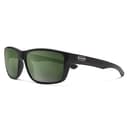
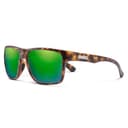
- “One good everyday pair, and I want the spec written down.” The Suncloud Mayor. Polarized polycarbonate, 100% UV, a 6 base curve and a medium fit, all from the brand’s own page rather than a marketplace bullet. Nine colorways, several of them polarized mirrors. Our Suncloud brand review covers how unusual that level of publishing is at this price and where the brand still falls short.
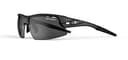
- “I ride, and the light changes while I am out.” The Tifosi Crit in polarized Fototec. Photochromic and polarized in one lens, which normally costs far more — and the honest trade-off is that it never clears fully, so it is a bright-to-mixed lens rather than a dawn one. This is the pick sitting closest to the $100 ceiling, so check the number on the button. Our cycling roundup ranks the wider field.
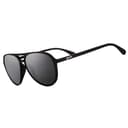
- “I want the aviator shape without the heritage price.” The goodr VRG. Polarized, UV400, and the same no-slip grip as the rest of the line, in a metal-look plastic frame. It will not feel like a metal aviator, because it is not one. Our aviator roundup covers the whole range and our driving picks cover the use case.
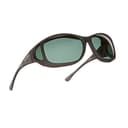
- “I wear prescription glasses.” The Cocoons Style Line MX. A purpose-built fit-over rather than an oversized sunglass, sold in sizes keyed to your own frame dimensions, with polarized lenses and real top and side coverage. It costs several times what a generic fit-over costs and the fit is where that goes. Measure the frame you own first — our fit-over guide explains which numbers matter, and clip-on vs fit-over covers the alternative.
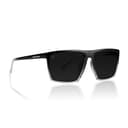
- “Standard frames leave marks on my temples.” The NEVEN Doc Robbins. Built L/XL from the outset rather than as an afterthought size variant, polarized and UV400, in a rectangular shape that adds horizontal width. What it does not have is a published lens material or weight, and a large frame is not a light one. Our roundup for larger heads covers the fit question properly.
- “Everything slides down my face.” The Suncloud Rambler, at a stated 4 base curvature and a “Small–Medium fit” against the Mayor’s 6 base and medium. Those two figures are the only published difference between the pair, and they are a genuine fit lever in a band where fit is otherwise guesswork. Our small-face roundup and page on frames that slide go further.
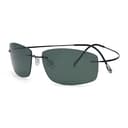
- “As cheap as possible, without giving anything up.” The Eyekepper titanium rimless. Titanium, polarized and UV400 are each stated in the listing title, which is three things rimless buyers are usually asked to trade away. No measurement of any kind is published, and a rimless lens has no rim protecting its edge. Our rimless roundup covers that risk in detail.
When a polarized lens is the wrong buy
Three cases, and they are the reason we would never tell you polarization is simply better.
- Flying, and some driving. FAA guidance cautions pilots against polarized lenses, because the filter can interact with laminated windshields and glass cockpit displays. The same effect shows up in cars with certain LCD instrument clusters and heads-up displays. Our pilots roundup covers it and polarized lenses and screens explains why your phone goes dark when you tilt it.
- Snow and ice where you need to read the surface. Polarization can flatten the visual cue that tells you a patch is ice rather than wet. Our snow roundup handles the whole condition, including the category-4 lenses that belong at altitude.
- After dark, in any lens. Not a polarization question so much as a tint one: the AAO is clear that a tinted lens at night removes light you need. Our night driving glasses page is the honest answer, and it is no.
If none of those three applies to you, polarization is the single most useful thing you can ask of a lens in this band — and you should not have to spend the whole hundred dollars to get it.
And if you would rather not be held to a ceiling at all, our best polarized sunglasses ranking runs the same question across every price band, from a sub-$20 frame to a glass lens — including the band directly above this one, where the filter becomes much harder to find than it is here.