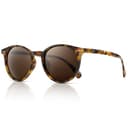
Shade & Temple

Best Polarized Sunglasses

Polarization is not a price tier — it is a brand policy. Of the 114 listings we track, 17 state the lens is not polarized, and eight of those sit between $100 and $200. Seven frames that do state it, from $15 to the top of the market.

By Stephen V.Last updated How we pick

The verdict first. Our top pick is the Maui Jim Red Sands, and the reason is a policy rather than a lens review: Maui Jim is the only house on this site that answers “are they all polarized?” with an unqualified yes on its own support pages. You cannot buy the wrong trim by accident. The budget pick is the SUNGAIT Classic Vintage, whose listing states polarized and UV400 together for less than the price of a cocktail — because the one thing this market gets right is that the filter itself is cheap.

Here is the finding that organizes this page. We track 114 live listings in our product registry, and we record polarization as a three-state field — stated, stated as absent, or not stated at all, never guessed. 83 of those listings state a polarized lens. 17 state that the lens is not polarized. 14 say nothing either way. And the 17 are not where you would expect them. They are not the $12 four-packs. They are the famous frames: eight of the nine Oakley listings here and four of the seven Ray-Ban listings are non-polarized base trims, by design, while every Maui Jim, Costa, Suncloud, Hobie, goodr, Knockaround, KastKing, SUNGAIT and SOJOS listing we track states the filter.

Sharpest version of the same point: of the eleven frames this registry lists between $100 and $200, eight state a non-polarized lens. Polarization is close to universal below $50, nearly disappears through the heritage band, and comes back above $200. It is not a quality you buy your way up to. It is a decision each brand makes about its range, and the only way to know is to read the specific listing in front of you.

That is what the seven picks below are ranked on: whether the brand treats the filter as standard rather than as an upcharge, what lens medium the filter is laminated into — glass, polycarbonate, nylon or a light-reactive lens — and what else the maker is willing to publish next to the word. Every pick states polarization on its own listing or the brand’s own page. Every pick has real cons, and they are on the cards.

Prices on this page are live. Each row carries the number our feed read and the date it read it; the last refresh was November 19, 2026. The picks span roughly $15 to the top of the market on purpose, because the honest answer to “how much do I need to spend for polarized?” is “almost nothing — and then quite a lot for everything around it.”

How this is funded: we earn a commission if you buy through our links, at no extra cost to you. It never changes which product we recommend, and we’ll tell you when we’d skip one. Full disclosure.

Quick picks

Ranked on lens spec, UV protection, tint fit and buyer value. Select a row to jump to the full write-up. We have not field-tested these — here is exactly what we do instead.

#ProductBest forPrice
1
Maui Jim Red Sands Polarized

Maui Jim Red Sands Polarized

Maui Jim's calling card is color. Its PolarizedPlus2 lenses don't just cut glare — they lift color saturation and detail so the world looks crisper, not just dimmer. The Red Sands is a wearable everyday and driving frame that shows off that lens. The clarity is real; so is the price.

Best overall
$259.00 · View on Amazon

Price as of November 19, 2026. #ad How we’re funded

2
Costa Del Mar Reefton Pro 580G (Sunrise Silver Mirror)

Costa Del Mar Reefton Pro 580G (Sunrise Silver Mirror)

Costa's low-light lens is called Sunrise, which tells you what it is for, and the Reefton Pro is the frame it belongs on - a big, wrapped, salt-tolerant fishing frame in Costa's 580G glass. If your low light happens on water at first light, this is the serious version of the answer and it is priced accordingly. If your low light happens on a bike path, it is far too much frame.

Best glass lens
$154.50 · View on Amazon

$309.0050% off

Price as of November 19, 2026. #ad How we’re funded

3
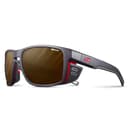
Julbo Shield (REACTIV 2-4 Polarized)

Julbo Shield (REACTIV 2-4 Polarized)

The reference glacier frame, and the one pick here that solves high-altitude snow properly. The REACTIV lens is photochromic across categories 2 to 4, meaning it self-adjusts from ordinary bright daylight all the way to the category 4 darkness you want on a glacier, and it is polarized on top of that. Removable side shields block the light coming up off the snow at your cheekbones.

Best polarized photochromic
$249.95 · View on Amazon

Price as of November 19, 2026. #ad How we’re funded

4
Hobie Cove Float

Hobie Cove Float

The floating frame that behaves like a proper sunglass rather than a novelty. Hobie is the one established eyewear brand running a full float line, and the Cove is its most sensible expression: a polarized gray nylon lens, a frame the brand states will float, and a water-repellent lens treatment that matters more on a boat than any tint decision. It is also the largest fit in that line, at a 58mm lens, which is the one to pick if wraparound sport frames usually sit narrow on you.

Best for the water
$99.99 · View on Amazon

Price as of November 19, 2026. #ad How we’re funded

5
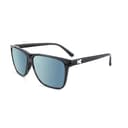
Knockaround Fast Lanes Sport

Knockaround Fast Lanes Sport

Knockaround's sportier frame — a slightly wrapped, grippier take on the Premiums that suits running and active wear better than the flat classic. Polarized and UV400, still cheap. The value sport pick when goodr's shape isn't for you.

Best for sport and running
$25.65 · View on Amazon

$38.0033% off

Price as of November 19, 2026. #ad How we’re funded

6
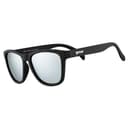
goodr OG

goodr OG

The best $25–35 in sunglasses. The OG is genuinely polarized, UV400, and its rubberized grip coating means it doesn't bounce or slide on a run — the reason it became runners' cult favorite. A squared retro shape that flatters round faces, in dozens of colorways. The value pick, full stop.

Best everyday value
$30.00 · View on Amazon

Price as of November 19, 2026. #ad How we’re funded

7
SUNGAIT Classic Vintage Round Polarized

SUNGAIT Classic Vintage Round Polarized

A genuinely polarized, UV400 lifestyle frame for the price of two coffees. The retro round-ish shape is style-first rather than sport, but for an everyday pair you won't panic about losing, it's hard to argue with polarized glare control at this price.

Best budget
$13.59 · View on Amazon

$16.9920% off

Price as of November 19, 2026. #ad How we’re funded

The picks in full

#1Best overall

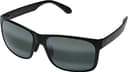
Maui Jim Red Sands Polarized

Maui Jim's calling card is color. Its PolarizedPlus2 lenses don't just cut glare — they lift color saturation and detail so the world looks crisper, not just dimmer. The Red Sands is a wearable everyday and driving frame that shows off that lens. The clarity is real; so is the price.

Strengths

  • PolarizedPlus2 lens boosts color and contrast, not just darkness
  • Blocks 100% UV; treated to resist glare from every angle
  • Wearable everyday frame, not a sport-only wrap

Trade-offs

  • Premium price
  • Warm, high-contrast tint isn't for people who want neutral color
Lens featurePolarizedPlus2, color-boosting tint, 100% UV
PolarizedYes
Lens tintHCL Bronze (varies)
Frame materialNylon
UV protection100% UV protection
Best forDriving, Everyday, Beach

Spec note. Maui Jim's PolarizedPlus2 combines polarization with tint layers the brand says enhance color and block UV and some high-energy blue light.

Specs read from the product listing, on July 18, 2026. “Not published” means the brand does not state that figure.

#2Best glass lens

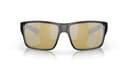
Costa Del Mar Reefton Pro 580G (Sunrise Silver Mirror)

Costa's low-light lens is called Sunrise, which tells you what it is for, and the Reefton Pro is the frame it belongs on - a big, wrapped, salt-tolerant fishing frame in Costa's 580G glass. If your low light happens on water at first light, this is the serious version of the answer and it is priced accordingly. If your low light happens on a bike path, it is far too much frame.

Strengths

  • Sunrise is a lens tint Costa sells specifically for low light, mirrored to cut the glare that comes with a low sun
  • 580G is glass - the most scratch-resistant and optically stable lens material Costa makes
  • Polarized and wrapped, which is the combination that works across water rather than on it

Trade-offs

  • costadelmar.com returned 403 Forbidden for its lens-technology page on this date, so no Sunrise transmission figure here comes from Costa
  • 63 mm and glass - this is a heavy, large frame that will not suit a smaller face
  • The most expensive pick on this page by a wide margin, for a tint you will use at two ends of the day
Lens featureSunrise Silver Mirror 580G glass lens, polarized
PolarizedYes
Lens tintSunrise Silver Mirror (580G)
Frame materialNot published
UV protectionNot published
Best forDawn & dusk, Fishing, Boating, Overcast light

Spec note. Read from the Amazon listing title: "Costa Del Mar Mens Reefton Pro Rectangular Sunglasses, Black/Polarized Sunrise Silver Mirrored 580G, 63 mm" - which states the model, the polarization, the lens tint, the 580G glass designation and a 63 mm size, and states NO UV figure and no frame material. costadelmar.com returned 403 Forbidden for its lens-technology page on this date, so no visible light transmission figure for the Sunrise tint is published here. This site's Costa warranty citation dates from its 2026-08-13 read of the same domain.

Specs read from the product listing, on November 3, 2026. “Not published” means the brand does not state that figure.

#3Best polarized photochromic

Julbo Shield (REACTIV 2-4 Polarized)

The reference glacier frame, and the one pick here that solves high-altitude snow properly. The REACTIV lens is photochromic across categories 2 to 4, meaning it self-adjusts from ordinary bright daylight all the way to the category 4 darkness you want on a glacier, and it is polarized on top of that. Removable side shields block the light coming up off the snow at your cheekbones.

Strengths

  • REACTIV photochromic across categories 2 to 4 — one lens from bright daylight to glacier glare
  • Polarized as well as photochromic, which is rare and genuinely useful on snow
  • Removable side shields cut the reflected light coming up from below

Trade-offs

  • Category 4 lenses are not legal for driving in many places — this is a mountain tool, not a road pair
  • The most expensive pair on this site by some distance
Lens featureREACTIV photochromic category 2-4, polarized, side shields
PolarizedYes
Lens tintBrown, REACTIV photochromic (category 2-4)
Frame materialNot published
UV protectionNot published
Best forSkiing, Mountaineering, Glacier travel, Altitude

Spec note. The listing states a brown REACTIV 2-4 polarized lens — a photochromic lens that darkens across filter categories 2 to 4. Category 4 lenses transmit under 8% of visible light and are not approved for driving.

Specs read from the product listing, on August 11, 2026. “Not published” means the brand does not state that figure.

#4Best for the water

Hobie Cove Float

The floating frame that behaves like a proper sunglass rather than a novelty. Hobie is the one established eyewear brand running a full float line, and the Cove is its most sensible expression: a polarized gray nylon lens, a frame the brand states will float, and a water-repellent lens treatment that matters more on a boat than any tint decision. It is also the largest fit in that line, at a 58mm lens, which is the one to pick if wraparound sport frames usually sit narrow on you.

Strengths

  • Polarized, and Hobie states 100% UVA, UVB and UVC blocking across its lenses
  • Gray lens keeps color accurate, which is the right call for reading water and navigation marks
  • HydroClean 360 treatment sheds water, grime and oils — the practical difference on spray

Trade-offs

  • Costs roughly twice what the marketplace floating frames do
  • A 58mm lens on a frame Hobie describes as a large fit — no published weight, and small faces should look elsewhere
  • No published buoyancy test — 'floating frame' is a manufacturer claim, not a measured spec
Lens featureFloating frame, polarized, HydroClean 360
PolarizedYes
Lens tintGray
Frame materialPlastic (floating frame)
UV protection100% UVA, UVB and UVC
Best forBoating, Kayaking, Fishing, Paddleboarding

Spec note. The listing states a floating frame built from high-buoyancy materials, a HydroClean 360 dual-sided water- and oil-repellent coating, and a polarized gray nylon lens, with a 58mm lens width, a 17mm bridge, 136mm temples, Megol rubber nose pads and an RX-ready build. It records 'Ultraviolet Light Protection: UV Protection' without a figure; Hobie's own eyewear pages state that all its lenses block 100% of UVA, UVB and UVC and that they meet or exceed ANSI Z80.3 for refractive power, light transmission and impact resistance — a standard almost nothing else in this category cites.

Specs read from the product listing, on September 25, 2026. “Not published” means the brand does not state that figure.

#5Best for sport and running

Knockaround Fast Lanes Sport

Knockaround's sportier frame — a slightly wrapped, grippier take on the Premiums that suits running and active wear better than the flat classic. Polarized and UV400, still cheap. The value sport pick when goodr's shape isn't for you.

Strengths

  • Polarized and UV400 with a light sport wrap
  • Grippier fit than the flat Premiums for activity
  • Still inexpensive

Trade-offs

  • Not as no-slip as a dedicated running frame
  • Budget hinges and coatings
Lens featurePolarized, UV400, light sport wrap
PolarizedYes
Lens tintVaries by colorway
Frame materialPolycarbonate (plastic)
UV protectionUV400
Best forRunning, Everyday sport, Budget

Spec note. Knockaround lists the Fast Lanes Sport as polarized with UV400 protection.

Specs read from the product listing, on July 18, 2026. “Not published” means the brand does not state that figure.

#6Best everyday value

goodr OG

The best $25–35 in sunglasses. The OG is genuinely polarized, UV400, and its rubberized grip coating means it doesn't bounce or slide on a run — the reason it became runners' cult favorite. A squared retro shape that flatters round faces, in dozens of colorways. The value pick, full stop.

Strengths

  • Genuinely polarized and UV400 at a sub-$35 price
  • No-slip, no-bounce grip coating stays put on a run
  • Squared retro shape flatters round faces; dozens of colors

Trade-offs

  • One size — a narrow face may find the OG a touch wide
  • Plastic frame and standard lens won't match a glass premium lens for clarity
Lens featurePolarized, UV400, no-slip grip
PolarizedYes
Lens tintVaries by colorway
Frame materialPolycarbonate (plastic)
UV protectionUV400
Best forRunning, Everyday, Round faces

Spec note. goodr lists the OG as polarized with UV400 protection and a no-slip coating; colorways change but the lens spec is consistent.

Specs read from the product listing, on October 6, 2026. “Not published” means the brand does not state that figure.

#7Best budget

SUNGAIT Classic Vintage Round Polarized

A genuinely polarized, UV400 lifestyle frame for the price of two coffees. The retro round-ish shape is style-first rather than sport, but for an everyday pair you won't panic about losing, it's hard to argue with polarized glare control at this price.

Strengths

  • Polarized and UV400 at a rock-bottom price
  • Lightweight metal frame with a retro look
  • Low stakes if you sit on them or lose them

Trade-offs

  • Rounder shape is less flattering on already-round faces
  • Budget hinges and coatings won't last like a heritage frame
Lens featurePolarized, UV400, retro lifestyle
PolarizedYes
Lens tintNot published
Frame materialMetal
UV protectionUV400
Best forEveryday, City, Budget

Spec note. Listing states polarized lenses with UV400 protection.

Specs read from the product listing, on July 18, 2026. “Not published” means the brand does not state that figure.

What we ranked on

Four criteria, in this order. The first one exists because of the count above, and it is the criterion most roundups skip.

  1. Does the brand treat polarization as standard, or as a trim level? This is the difference between buying confidently and buying carefully. Maui Jim states on its own support site that every pair is polarized. Costa, Suncloud, Hobie, goodr and Knockaround have no non-polarized listing anywhere in our registry. Oakley and Ray-Ban both sell excellent polarized trims — the Split Shot and the Chromance line among them — but their most famous frames ship non-polarized by default, so the model name tells you nothing and the SKU tells you everything.
  2. What medium is the filter laminated into? A polarizing film has to sit inside something, and that something is the actual difference between two “polarized” lenses. Glass is the most optically stable and the most scratch-resistant, and the heaviest. Polycarbonate is lighter and far more impact-tolerant. Nylon sits between them and resists water better. A light-reactive lens can do both jobs at once, but rarely does — see below.
  3. What else does the maker publish next to the claim? No brand at any price publishes a polarization efficiency figure you can compare, so the surrounding specifications are the only evidence of care: a stated ultraviolet figure, a lens width, a standard the lens meets, a repair route. Hobie cites ANSI Z80.3. Costa states the glass designation and the millimeter size. Those are the tiebreakers.
  4. Honest cons, including the cases where the filter is wrong. A polarizing filter removes information as well as glare. On three or four specific jobs that is a problem, and we say which on every card.

Polarization is a brand policy, not a price tier

The single most useful thing we can tell you about this category is that the word is distributed almost at random with respect to price. Our registry spans a sub-$10 browline to a $300-plus glass fishing frame, and the correlation between what you pay and whether the lens is polarized is close to nothing.

Below roughly $50, polarization is near-universal. Every SUNGAIT, SOJOS, Knockaround, goodr, KastKing and Duco listing we track states it, and so do most of the no-name multipacks. That is not generosity; polarizing film is a commodity, and at that price it is the only lens feature a seller can put in a title that sounds technical.

Through the heritage band it inverts. Eight of the eleven frames we track between $100 and $200 state a non-polarized lens: the Wayfarer and the classic Aviator in their standard G-15 trims, the Holbrook, the Holbrook XL, the Asian Fit Holbrook, the Frogskins, the Frogskins Low Bridge Fit and the Erika. These are deliberate choices, not omissions — a sport lens may skip the filter so a rider can read a wet road, and a heritage frame may skip it so the brand can sell the polarized trim above it.

Above $200 it returns, because that is where the brands whose whole identity is the lens live. Maui Jim and Costa together account for most of our premium tier and not one of their listings is non-polarized. The practical consequence is simple and slightly annoying: there is no price at which you can stop checking, and no brand name that lets you stop reading the SKU — except the handful that have made the filter a house standard. Those are the ones that lead this page.

That is also why those two brands are the ones people search for substitutes to. If the house-standard part is what you want but the price is not, our Costa alternatives and Maui Jim alternatives pages are built around exactly that question — and both are organized by which part of the brand you are actually replacing, because the filter is the cheap part.

Photochromic and polarized is rarer than it sounds

“Self-tinting” and “polarized” are often sold as though they arrive together. They mostly do not. We track eight light-reactive lenses in this registry: four state polarization, two state explicitly that they are not polarized, and two state nothing. Tifosi’s Fototec range contains both kinds, which is the clearest illustration there is: the Vero Fototec states that it is not polarized, and the Crit Polarized Fototec states that it is. Julbo’s own REACTIV page says the quiet part out loud: the family is offered with a Glare Control option or a High Polarization option, meaning polarization is something you select, not something the technology implies.

That is why the Julbo Shield is on this page rather than a cheaper light-reactive frame. A lens that moves across filter categories 2 to 4 and is polarized on top of that is a genuinely unusual object, and on snow at altitude it is the right tool. It is also a mountain tool: category 4 lenses transmit under 8% of visible light and are not approved for driving in many jurisdictions. Our photochromic versus polarized comparison covers the choice when you can only have one, and our photochromic roundup ranks the light-reactive field on its own terms.

Four things that are not polarization

  • A mirror coating. A mirror is a reflective layer on the front surface that bounces light away before the lens filters anything. It is not a filter and it tells you nothing about one. A lens can be mirrored and polarized, either, or neither — our mirrored versus polarized page takes that apart, and our mirrored roundup features a frame whose own listing states a mirror and no filter.
  • A UV rating. UV400 and “100% UVA/UVB” describe ultraviolet blocking, which is the part of sunlight that actually damages your eyes. Polarization describes glare. Neither implies the other, and we track listings that state one and not the other in both directions. Our page on whether polarized blocks UV and our UV400 roundup cover the other half of the card.
  • A dark tint. Darkness is visible light transmission; the filter is orientation. A very dark lens can be unpolarized and a lightly tinted lens can be polarized. Our lens category guide explains the 0–4 scale that actually describes darkness.
  • Silence. Fourteen listings in our registry state nothing about polarization. We record that as a null and the specification table says “Not published” rather than guessing. On a $200 sport frame, silence usually means the lens is a tint technology instead. On a $15 multipack, it usually means nobody wrote the copy. Either way it is not a yes.

When a polarized lens is the wrong buy

The filter removes reflected light, and reflected light is sometimes the information you need. Four cases, and they are the honest limits of this whole category:

  • Flying, and some driving. FAA guidance for pilots cautions against polarized lenses because of how they interact with laminated windshields and glass cockpit displays. The same effect appears in cars with certain LCD instrument clusters and heads-up displays. Our pilots roundup and our polarized lenses and screens page cover it.
  • Reading ice, or a green. Polarization can flatten the sheen that tells you a patch is ice rather than water, or which way a putt will break. Our snow roundup and golf roundup both deal with it, which is why several of the best golf lenses on this site are deliberately not polarized.
  • After dark. Not a filter question but a light question: the American Academy of Ophthalmology is direct that a tinted lens at night removes light you need. Our night driving glasses page is the honest answer, and it is no.
  • Any job where you need to see into a screen you cannot rotate. Boat electronics, ATMs, some phone displays. Worth knowing before you spend, not after.

How to confirm it in four seconds

This is the one lens specification you can verify yourself without equipment, which makes the absence of published figures less infuriating than it sounds. Look at an LCD screen through the lens and rotate the glasses about ninety degrees: a polarized lens darkens dramatically, often to near-black, at one angle. Or hold the pair in front of another pair and rotate one of them; if both are polarized, the overlap goes dark. Our polarization test page walks through both, including the false negatives that make people return a lens that was fine.

Run the test the day your pair arrives, while a return is still easy. It is the only quality check this market hands you for free.

How much do you actually need to spend?

For the filter alone, very little. Below $25 you can buy a listing that states polarized and UV400 together, and our under-$25 roundup ranks seven of them. What more money buys is everything around the filter: the medium it sits in, a published size, a frame that survives being sat on, a repair route, and a fit cut for a face that is not average.

If you want the band-by-band version of this answer, we have built it out: under $50, polarized under $100 (seven picks, none of them on this page), under $200 — the band where you have to read the SKU hardest — and under $300, where the glass lenses and the house-standard brands live. And if you have decided on a brand rather than a budget, our brand guide says which houses make the filter standard.
Frequently asked questions

Are all polarized sunglasses the same?

In one sense yes, and it is the uncomfortable truth of this category: no brand at any price publishes a polarization efficiency or extinction-ratio figure that would let you compare one filter with another. We checked all 114 listings in our registry and every brand page we could read. What differs is the lens the filter is laminated into — glass, polycarbonate or nylon — the optical quality of that lens, the frame around it, and whether the maker publishes anything else you can check.

Do more expensive sunglasses mean a polarized lens?

No, and the data runs the other way in the middle of the market. Of the eleven frames we track between $100 and $200, eight state a non-polarized lens — including the standard Wayfarer, the classic Aviator, the Holbrook and the Frogskins. Polarization is near-universal below $50 and returns above $200, where the lens-first brands live. Price is not a proxy for the filter; the listing is the only source.

Which brands make every pair polarized?

Maui Jim states it without qualification on its own support pages: all its sunglasses are polarized, with 100% UV protection. In our registry, Costa, Suncloud, Hobie, goodr, Knockaround, KastKing, SUNGAIT and SOJOS also have no non-polarized listing at all. Oakley and Ray-Ban both sell very good polarized trims, but their best-known frames ship non-polarized by default, so with those two you have to read the specific SKU.

Is a photochromic lens polarized?

Usually not, and it is worth checking every time. Of the eight light-reactive lenses in our registry, four state polarization, two state that they are not polarized and two state nothing. Tifosi sells both kinds inside one lens family, and Julbo's own REACTIV page describes polarization as an option you select rather than something the technology includes.

Does polarized mean UV protection?

No. They are two independent specifications and neither implies the other — polarization cuts reflected glare, while ultraviolet filtering is what protects your eyes from damage. You can buy a polarized lens with no stated UV figure and a non-polarized lens that blocks 100% of UV. Every pick on this page states both, which is part of why they are the picks.

How can I tell if a lens is really polarized?

Look at an LCD screen through the lens and rotate the glasses roughly ninety degrees — a polarized lens goes dramatically darker, often nearly black, at one angle. Or hold the pair in front of another pair of sunglasses and rotate one; if both are polarized the overlapping area goes dark. Do it the day the pair arrives, while returning it is still easy.

When should I not wear polarized sunglasses?

Four cases. In a cockpit, where FAA guidance cautions against the filter because of laminated windshields and glass displays. On ice and snow where the sheen you are removing is the cue that tells you a patch is frozen. On a golf green, where the same sheen tells you how a putt will break. And at night, in any tint at all — the American Academy of Ophthalmology is clear that a tinted lens after dark removes light you need.

Sources

Keep reading