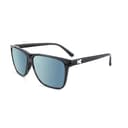
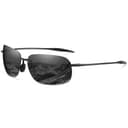
Matched model by model
Six of the ten autocomplete suggestions for this query name a specific Oakley model, which tells you what people actually want: not a brand, a substitute for one frame.
Instead of a Radar EV or a Flak 2.0
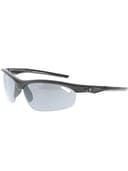
The Tifosi Veloce. A vented sport frame with three interchangeable lenses and a published 28 g weight, which is the figure that matters most in a frame you wear for four hours and which Oakley does not state for the frames this replaces. The vented lens ports also address the one real complaint about a tall shield lens, which is that it fogs the moment you stop climbing. The honest gap: no engineered contrast tint, and a less sophisticated lens geometry at the edges. Our Flak vs Radar EV comparison covers the originals, our Tifosi vs Oakley head-to-head covers the brands, and our interchangeable-lens roundup ranks the format.
Instead of a Holbrook
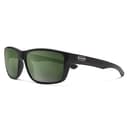
The Suncloud Mayor. A polarized polycarbonate squared frame with 100% UV, and — almost uniquely at any price — a published 6 base lens curvature and a stated medium fit. That is a real fit lever in a category where fit is otherwise guesswork, and it is the specification our base curve guide exists to explain. It is also polarized as standard, where the standard Holbrook is not. The gap: no heritage, no Plutonite, and Suncloud prints an empty “Visible Light Transmission” field on its own product pages, which our Suncloud review records rather than glosses over. Our Holbrook review covers the original and its three fits, and our square frames roundup ranks the shape.
Instead of Prizm
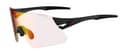
The Tifosi Rail in Clarion Red Fototec. The substitution here is a change of approach rather than a copy: instead of a fixed tint engineered for one condition, a photochromic lens that darkens in ultraviolet and clears in shade, so it covers the range rather than a point in it. It also publishes a 32 g weight. Honest limits: a photochromic barely reacts behind a car windshield because glass blocks most UV, and this trim states no polarization, so our spec table reads “Not published” rather than assuming it. Our photochromic roundup covers the field and our Prizm explainer covers what the original is doing.
Instead of Frogskins
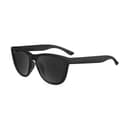
The Knockaround Premiums. A polarized UV400 lifestyle frame in a similar retro register, at a fraction of the price and with polarization included rather than sold separately. The gap is Plutonite and the frame’s substance in the hand. Our Knockaround vs Oakley comparison is the long version and our Holbrook vs Frogskins page covers the original pair.
Instead of a Sutro or a half-frame shield
The FAGUMA rimless, or the Knockaround Fast Lanes if you want a conventional frame. A rimless TR90 construction removes the frame line from your peripheral vision entirely, which is the same thing a half-frame shield is trying to achieve by a different route. Our rimless roundup and shield roundup cover both approaches.
What you give up, and what you do not
- You do not give up ultraviolet protection. Every pick on this page states UV400 or 100% UVA/UVB, and the American Academy of Ophthalmology is explicit that price is not a proxy for protection. Oakley’s Plutonite advantage is that the protection is in the material rather than a coating — a real durability argument over many years, not a difference in how much ultraviolet is blocked today.
- You usually gain polarization. Four of the six picks state it as standard, where the standard Holbrook, Holbrook XL and Radar EV trims do not. If your actual problem is glare off water or wet road rather than contrast, the cheaper frame may do the job better. Our polarized vs non-polarized page covers the distinction.
- You gain published specifications. Three picks here state a figure Oakley does not: two weights and a base curve. On a frame you will wear for hours, those are the numbers that decide comfort.
- You do give up the engineered tint. Prizm is doing something real with specific wavelengths, and nothing on this page attempts it. For golf and for mountain biking in dappled light, that is the strongest case for the original — our golf roundup and mountain biking roundup both rank Oakley at the top for exactly that reason.
- You give up the lens geometry at the edges and the frame’s impact pedigree. Oakley’s sport frames are engineered around a wrapped lens that stays optically honest at the periphery, which our base curve guide explains is harder than it sounds.
- You give up service and resale. Oakley publishes warranty terms and a service path; a $20 rimless frame is a replacement rather than a repair. Our repair guide covers the economics.
When you should just buy the Oakley
Four cases where the alternatives on this page are the wrong answer, stated plainly.
- You play golf seriously. Prizm Golf is the single most defensible Prizm tint, because reading a green is a contrast task rather than a brightness one.
- You ride in dappled tree light at speed. Same argument, higher stakes. Our cycling roundup covers it.
- Standard frames do not fit you. Oakley makes XL, Asian Fit and Low Bridge Fit versions of its core frames, and the value tier does not. Our low nose bridge guide and wide-face roundup both point there.
- You want one frame for ten years. A serviceable frame with a lens whose UV protection is in the material rather than a coating is the right buy for that, and our under-$200 roundup is the band it lives in.
Asking the same question of the other premium houses? Our Maui Jim alternatives page covers the brand whose differentiator is a policy, and our Costa alternatives page covers the one whose differentiator is a material — a glass lens that, across the 114 listings we track, exists at exactly two brands.
And if what you are really asking is which brand to trust rather than which frame to buy, our Oakley brand review and brands roundup are the two pages for that. Our Ray-Ban alternatives page does this same job for the other half of the group — both are EssilorLuxottica brands, so switching between them is a change of design language rather than of company. And our Maui Jim alternatives page completes the set from the opposite direction: that brand polarizes every pair it sells, which is exactly the thing Oakley does not do and the reason the substitution test there is a per-SKU one.