What you are actually buying
A tint for each condition, not a better tint
An interchangeable set does not give you a better lens. It gives you the right lens more of the time, which is a different and often more valuable thing. A dark grey lens is correct at noon in July and actively unsafe on a wooded trail at seven in the evening. A clear or yellow lens is correct in flat overcast light and useless in midsummer glare. One frame with two or three lenses covers a span that no single fixed tint can.
That span is the entire argument, and it is measured. Our lens categories guide explains the 0–4 filter scale, and our lens color guide explains which base tint suits which task. Read those two and the lens in the box stops being a colour and starts being a specification.
A cheaper route than two frames
The honest financial case. Two decent sport frames cost more than one frame with three lenses, and the second frame duplicates everything you already own — the temples, the nose pads, the hinges. If you do two sports with genuinely different light, an interchangeable set is the cheaper answer. Our under-$100 roundup makes the opposite case for people who would rather own two simple pairs, and both can be right.
The four real costs of a swappable lens
- You handle the lens. Every swap means fingers on an optical surface, usually outdoors, often with sweat or grit involved. This is the commonest way an interchangeable lens gets scratched, and it is a scratch you put there. Hold the lens by its edge and clean it afterwards, not before — our cleaning guide covers why the order matters.
- The retention mechanism wears. A lens that clips into a frame relies on a tolerance, and that tolerance loosens with repeated use. A frame that holds its lens by tension through the temple arms — the common design on single-lens shields — wears differently but still wears. If a frame rattles after a season, that is the mechanism telling you something.
- The spare lenses need to be somewhere. A three-lens set is only three lenses if you have the pouch with you. Most of these ship with a hard case that lives at home, which means in practice you have whichever lens you guessed right about this morning. The frames that work are the ones whose spare lens fits in a jersey pocket.
- Polarization is usually only on one lens. In most sets, the dark lens is the polarized one and the low-light and clear lenses are not, which is sensible — a polarizing filter costs light you need in the dark. Just know that your low-light lens is probably not cutting glare. Our polarized guide covers the trade.
How to choose between these five
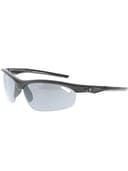
- “I ride or run and the light changes.” The Veloce. Three lenses, vented lens ports that resist the fog you get when you stop climbing, and a published 28 g weight — a figure almost nothing in this category states. See our cycling roundup and running roundup for the wider field.
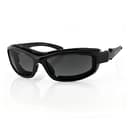
- “I ride a motorcycle, including after dark.” The Road Hog II. Three lenses plus a removable foam gasket, which is the feature that actually matters at road speed — wind in the eye, not light. Our motorcycle roundup ranks that field, and note that a clear lens is the only honest night option; our night driving page explains why yellow is not.
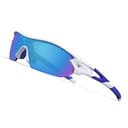
- “I want the format cheaply.” The Torege. A polarized interchangeable sport wrap at under twenty-five dollars, which is roughly the price of a single replacement lens from a premium brand.
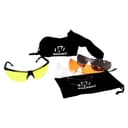
- “I shoot, or I want the most lenses for the money.” The Walker’s set. Four polycarbonate lenses including the amber and vermilion tints that lift a target against a background, which is the specific job our shooting and hunting roundup ranks for.
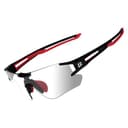
- “Honestly, I will never swap.” Then do not buy an interchangeable set. The ROCKBROS photochromic does the swap for you — one lens that darkens in ultraviolet and clears in shade — and it takes a prescription insert, which no lens-swapping frame here does. Our photochromic roundup covers that field and its two real limits.
Interchangeable, photochromic, or two pairs?
Three routes to the same problem, and the right one depends on a single honest answer about yourself.
- Interchangeable suits someone whose activities have distinct, predictable light — a morning ride and a midday round of golf — and who packs deliberately. The lens you need is the one you chose at the door.
- Photochromic suits someone whose light changes mid-activity: trail running under tree cover, a long ride into dusk, a hike that starts in cloud. The two limits are real — it barely reacts behind a car windshield because glass blocks most UV, and a polarized photochromic never goes fully clear.
- Two fixed pairs suits someone who loses things, sweats on things, or simply will not stop to change a lens. Two pairs at thirty dollars each solve more problems than one clever frame at ninety, and our budget roundup is the page for that.
For the activity-by-activity view, our sport hub collects every roundup; for the lens side, the lens guide explains the specs these frames are swapping between. And if fogging is the reason you are here rather than tint, our anti-fog roundup ranks on venting instead.