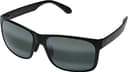
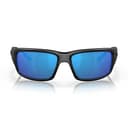
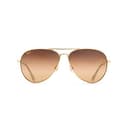
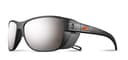
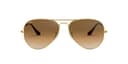
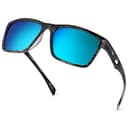
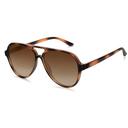
What we ranked on
- Does the listing state the tint? This is the entry requirement and it eliminates most of the market. “HD vision”, “high-definition brown” and “warm tone” are not specifications. HCL Bronze, 580G copper, Spectron 4 brown and “gradient brown” are.
- How strong the colour cast is. Brown lenses are not one tint. A light bronze is close to neutral and works all day; a deep copper fishing lens shifts colour hard and is tiring in a city. We say which end each pick sits at, because this is the single most common reason a brown lens gets returned.
- Polarization, and whether it is stated. All seven picks state a polarizing filter. That is not us filtering for it — it is what the brown family looks like in this registry, because the brands that treat polarization as a house standard are the same ones that publish their contrast tints.
- Lens material, which changes the tint in practice. Glass holds a tint with slightly more optical stability and is far more scratch-resistant; polycarbonate is lighter and much more impact-tolerant. One pick here is glass. Our glass versus polycarbonate guide works through the trade-off.
Brown versus grey, decided properly
If you are only going to own one pair, the honest answer depends on where you live and what you do with your eyes. In the UK, the Pacific Northwest, New England — anywhere with a lot of flat, overcast, low-angle light — brown wins, because the contrast lift is doing real work most days. In Arizona, Florida, Hawaii or anywhere you are squinting at midday on open water, grey wins, because the problem is quantity of light rather than lack of contrast and you do not want a colour cast on top of it.
If you are buying a second pair, buy the opposite of what you already own. That is a more useful upgrade than spending twice as much on the same tint. Our lens colour guide covers the full range including amber, yellow, green and rose, and low-light lenses covers the far end of the same spectrum — the yellow and rose tints built for dawn, dusk and overcast conditions, where a brown lens is already too dark.
Copper, bronze, amber and brown are not interchangeable
Brands use these words loosely, so here is what they tend to mean in practice. Bronze is the mildest — a warm neutral that most people can wear all day without noticing the cast. Brown is a step stronger and the standard driving tint. Copper is a fishing and golf tint: a strong cast that separates greens and browns dramatically, which is the point, and makes a city street look orange, which is the cost. Amber is lighter than all of them and belongs with the low-light tints rather than here, because it transmits far more visible light.
Two of the picks here also carry a mirror coating over the tint. A mirror reflects light away from the outside of the lens before it reaches the tint, which cuts brightness further without making the tint stronger. It is the right combination for open water and the wrong one for a frame you want to look ordinary in. Our mirrored ranking and lens coatings guide cover it.
What a brown lens does not do
- It does not add ultraviolet protection. UV400 is a ceiling available for about ten dollars, and the American Academy of Ophthalmology is explicit that price is not a proxy for protection. Tint and UV are separate rows on the spec table for a reason. Our UV400 ranking counts how many listings in this registry actually state a figure.
- It is not a substitute for polarization. Contrast and glare are different problems. A brown lens makes edges easier to read; a polarizing filter removes reflected light off a surface. You can have either without the other, and the listing is the only place that tells you which you are getting.
- It is not graded. No brand publishes a contrast figure for a brown lens any more than they publish a polarization efficiency figure. There is no number to compare, at any price, which is why this page argues from what the tint physically does rather than from a ranking of tints.
If you are shopping by use rather than by tint
Several of these frames are also picks on the pages built around their jobs, and those rank on the whole frame rather than on the lens colour: driving, fishing, hiking and golf are the four where a contrast tint earns its place most clearly. If you want the premium end of the brown family read as a brand decision instead, our Maui Jim verdict and Costa verdict cover the two houses that dominate it — and our Maui Jim alternatives page covers what to buy when the tint is what you want and the price is not.